From the hide at La Arenilla, the mudflat looks almost empty until a Eurasian curlew 'Numenius arquata' lifts its head and reveals its long, downcurved bill. Follow it through your binoculars and you may notice a flock of small birds just a few metres further along, pecking at the water’s edge. Come back a few hours later and that same stretch of shore may be entirely under water.
Scenes like this are common in winter on the Santoña marshes, on Cantabria’s eastern coast. While waders probe the mud, ducks spread out across the channels and shallows of the bay. Closer to the harbour, you might even make out the low silhouette of a diver before it slips beneath the surface again.
Between November and February, the birds that live in the estuary all year are joined by others that have travelled thousands of kilometres to spend the winter here. December and January are particularly good for seeing large flocks, but choosing a month is only part of planning a visit. Once you’re in Santoña, is it better to arrive on a falling tide, wait for the water to start coming in or head to a hide at high tide?
Why do so many birds gather in the Santoña marshes?
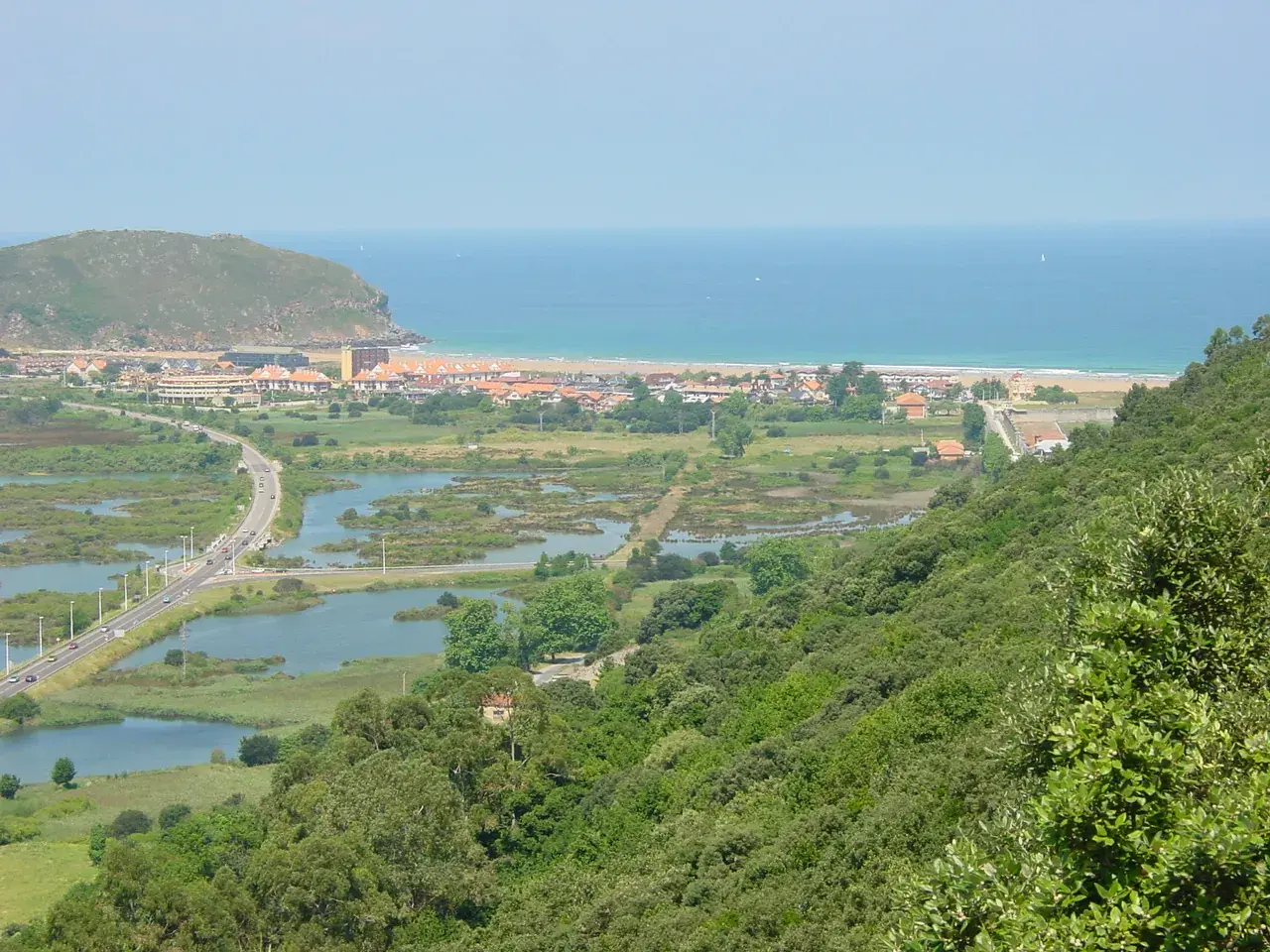
Santoña marshes, Cantabria | Photo: Lourdes Cardenal, CC BY-SA 3.0
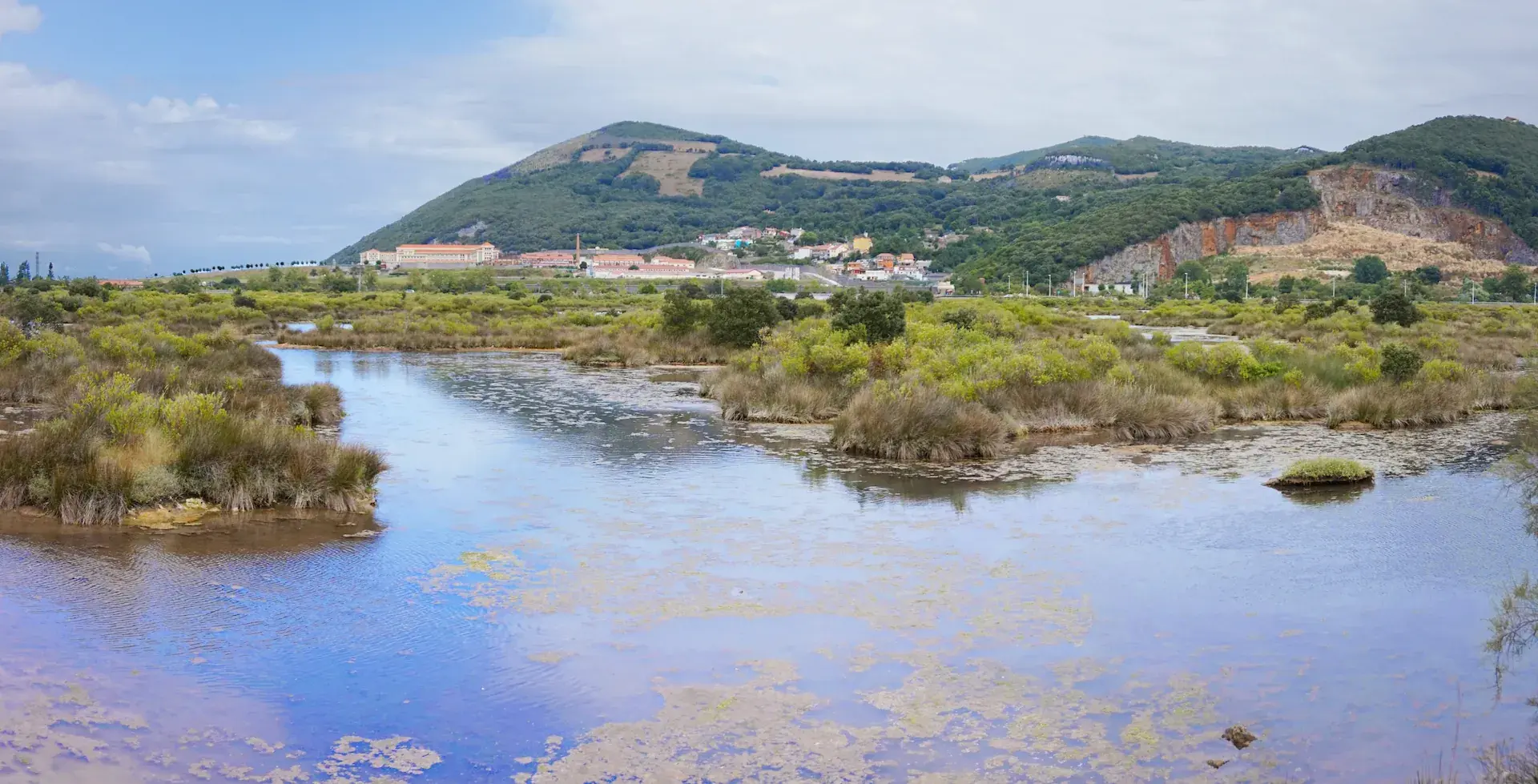
At the foot of Monte Buciero, the River Asón flows into a bay sheltered from the swell of the Cantabrian Sea. Here, where fresh water mixes with seawater, the tide covers and uncovers a wide expanse of mudflats. The estuary forms part of Santoña, Victoria and Joyel Marshes Natural Park, but you can get to know its winter birds by exploring just a few of the channels, embankments and wetlands around Santoña Bay.
What looks like a uniform stretch of shore offers birds a surprising variety of food. Worms and molluscs beneath the mud come within reach of probing bills as the water recedes, while plants growing in the shallows feed members of the duck and goose family. Out in the channels, fish attract birds that can pursue them underwater. This helps explain why the mix of birds changes as you sweep your binoculars from the mudflats to open water.
For birds arriving from northern Europe, Santoña can be a stopover on a longer journey or a place to spend the colder months. The distinction becomes clearer as autumn progresses. Some of the birds that rested here in September continue south, while from November others start settling in and can still be seen on the bay in January.
At times, the wetland as a whole has held more than 20,000 waterbirds. As they spread out across the estuary, any one viewpoint gives you only a glimpse of what’s happening around the bay. The flocks have also changed over the years. More brent geese winter here than they did a few decades ago, while numbers of some of the waders that feed in the same estuary have fallen.
Which birds can you see in Santoña in winter?
Where to look depends on which birds you’d like to see. For waders, follow the wet edge of the mud, whereas for ducks and geese it pays to scan the flocks swimming or feeding in the shallows. Diving birds call for a little patience. Give the open water a few minutes, even if all you can see at first are reflections.
The brent goose, a small winter visitor from the Arctic
Brent goose | Photo: Kev Chapman, CC BY 2.0
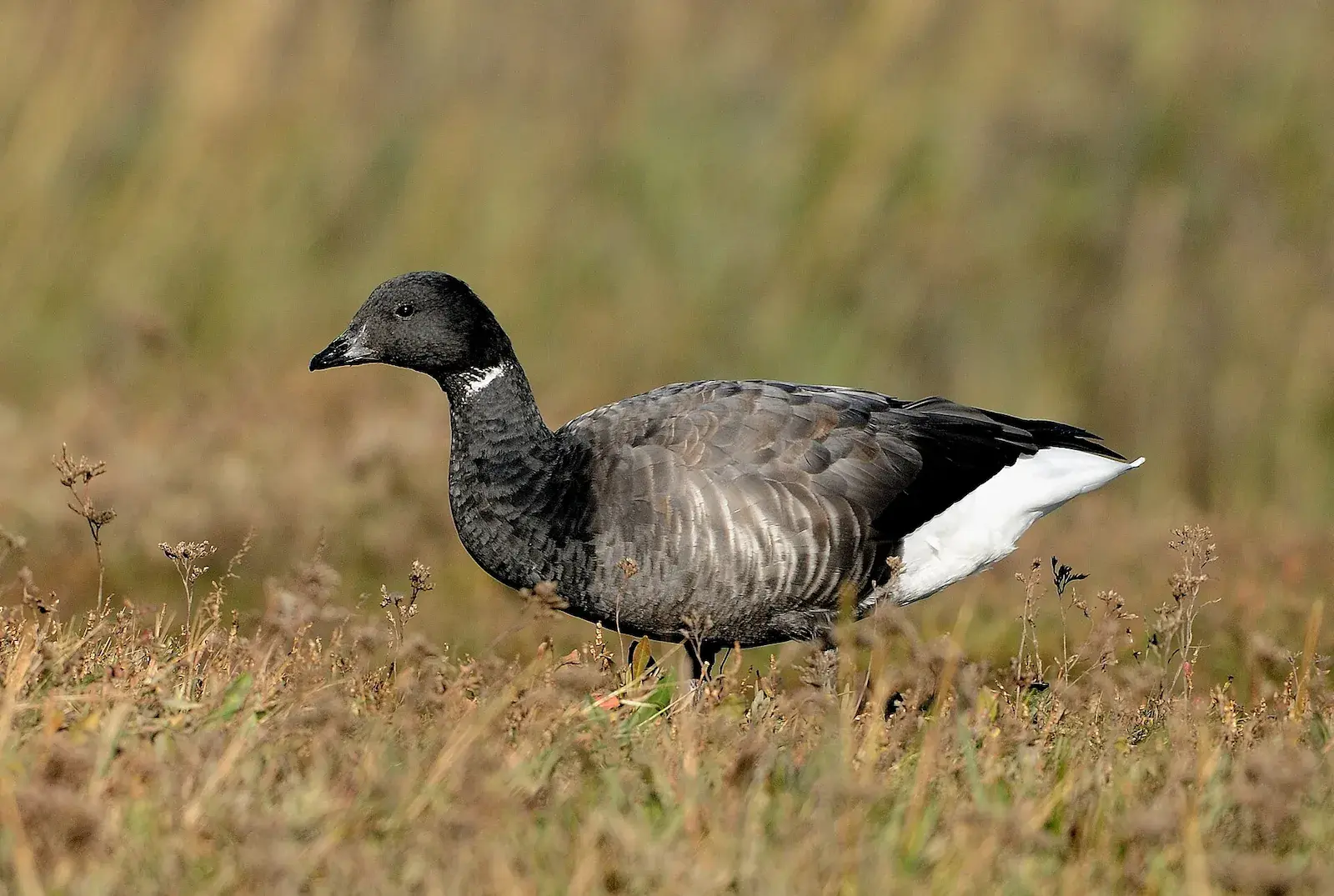
One of Santoña’s distinctive winter birds is the brent goose 'Branta bernicla', a small, dark goose that comes from the Arctic. Even at a distance, its short bill and black head and neck stand out, while on adults you may also make out a small white patch on either side of the neck. If the bird is too far away for that, wait for it to tip up to feed, revealing the white feathers at its rear.
A scarce visitor a few decades ago, the brent goose has since become one of the characteristic migrants of these marshes. In the shallows it finds some of the marine vegetation it feeds on, so as well as looking for dark shapes afloat in the channels, check the patches where the receding tide is starting to expose the plants.
If you find a flock, spend a few minutes watching how the birds’ outlines change. A goose swimming with its neck drawn in looks much more compact than one stretching up to look around. Once you recognise both postures, you’ll find it easier to keep track of the geese even when they move further away and the little white neck patch is lost to view.
The Eurasian wigeon, a duck you can recognise by ear
Eurasian wigeon | Photo: Dinesh Madushanka
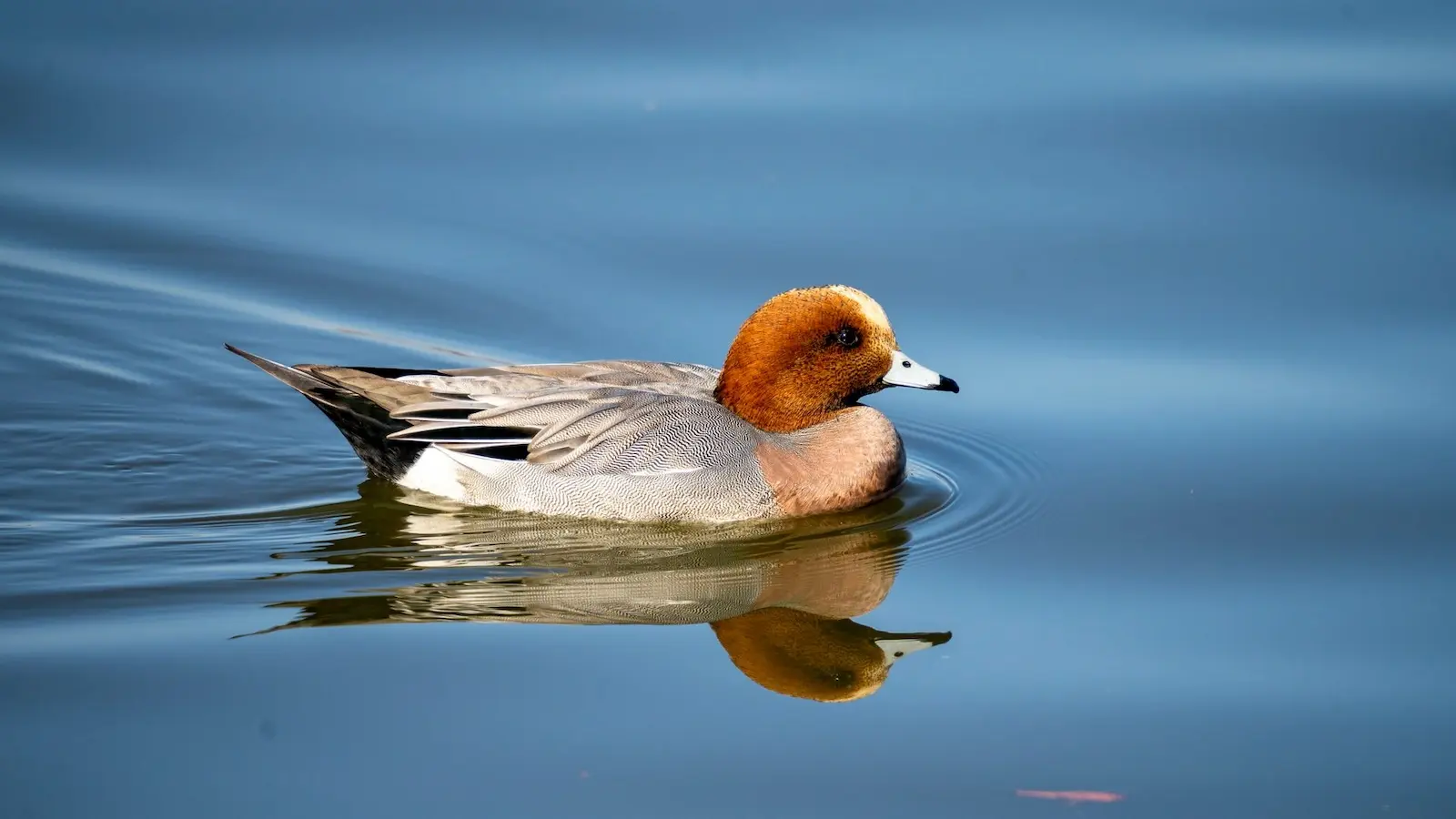
The Eurasian wigeon 'Mareca penelope' is one of the estuary’s characteristic winter ducks. While the females are a fairly subdued brown, a male in breeding plumage has a cream stripe running up his forehead, contrasting with his chestnut head and grey body. Those colours are easily lost when the flock is backlit, but there’s another clue to its presence.
On a still morning you may hear the males before you can pick out their heads, thanks to a short whistle that carries distinctly above the calls of other ducks. Listening to it before your visit makes it easier to recognise on the marsh. Once there, try lowering your binoculars for a moment to work out which part of the flock the sound is coming from.
Around Cicero, ducks can come closer to shore as the tide rises. If you want to compare plumages, this can be a better time than low tide, when some of the ducks remain far out in the channels. Try the edges of the flock, where a single bird swimming side-on a few metres from the rest gives you a much clearer view of its head and bill than a tightly packed group facing you.
Eurasian curlew and bar-tailed godwit: two bills to look for on the mudflats
Eurasian curlew | Photo: Richard Block
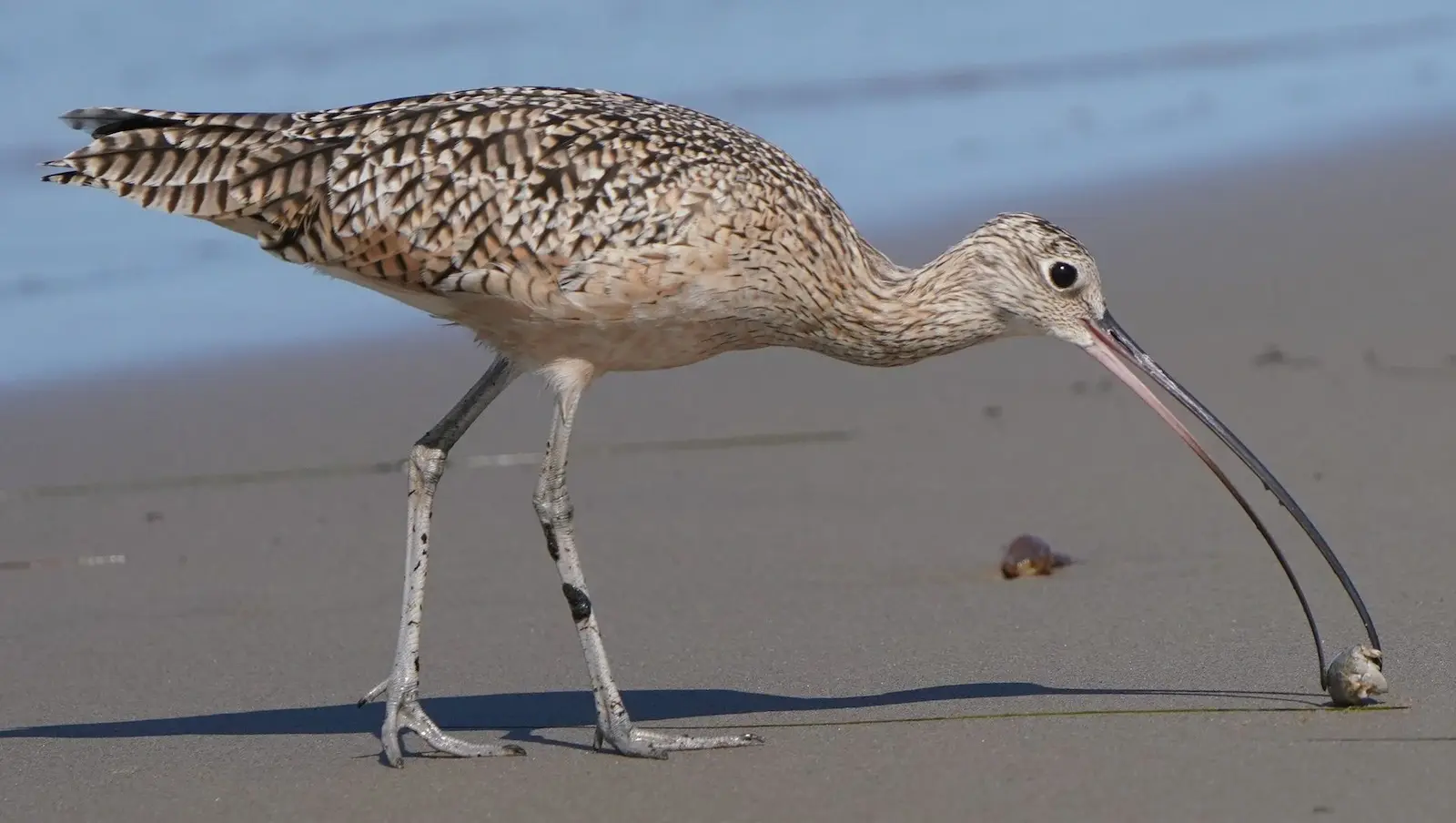
At first glance, two large, brownish waders can be difficult to tell apart, especially on an overcast day when colour is of little help. Wait for them to raise their heads and turn side-on, though, and the difference becomes clear. The Eurasian curlew 'Numenius arquata' has a long bill that curves downwards, while the slender bill of the bar-tailed godwit 'Limosa lapponica' turns slightly upwards towards the tip.
The curlew walks across the exposed flats, probing the sediment for invertebrates. Watch for a while and you’ll see that in some places a quick peck at the surface is enough, whereas elsewhere it sinks much of its bill into the mud and keeps its head down for several seconds. The brief pause when it comes up again is often your best chance to see the curve.
The godwit also probes the mud, although its winter plumage is much more subdued than the reddish tones many birds show in the breeding season. If you’re preparing for your visit with an illustrated field guide, look for the bird in winter plumage and note the shape of the bill. Out on the marsh, give it time to lift its head. Even that distinctive shape is difficult to judge on a bird facing you with half its bill buried.
Dunlin and Eurasian oystercatcher: a contrast in size along the same shore
Dunlin | Photo: Berkan İyili
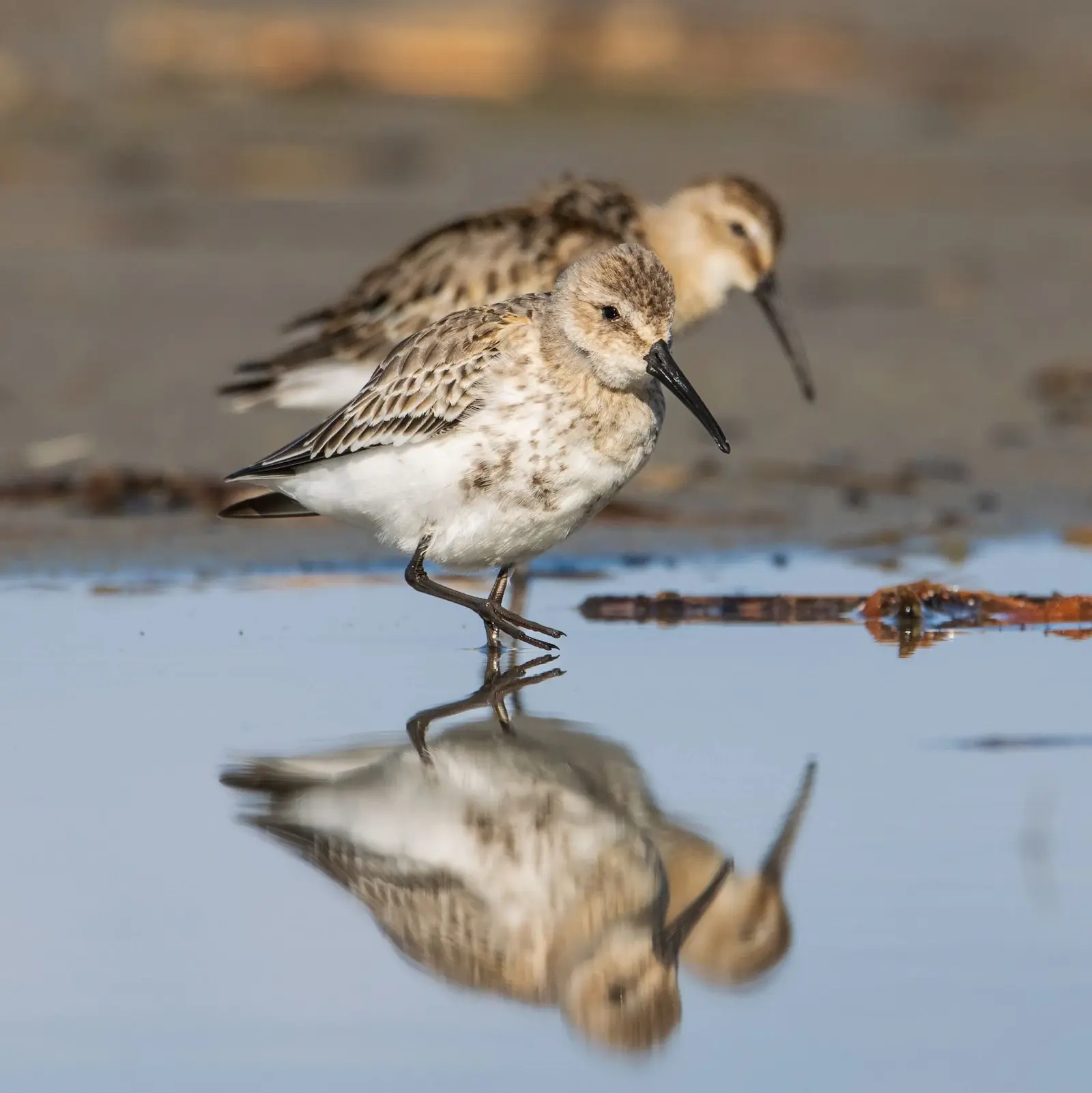
Among the smaller birds hurrying along the waterline, look out for the dunlin 'Calidris alpina'. In winter it is grey above and white below, so if you’re going by a photograph taken in spring, you may wonder what happened to the black belly patch. That patch is part of its breeding plumage. In Santoña, its small size, dark legs and bill curving gently down at the tip will serve you better.
Sometimes you notice the whole flock before you can pick out a single bird. As the birds take off almost together and turn over the water, the grey shape flashes white for an instant. Once they settle, each bird goes back to foraging for itself. To watch one dunlin, choose a bird on the edge of the flock, where it’s easier to keep it in sight as others cross its path.
The Eurasian oystercatcher 'Haematopus ostralegus' is easier to spot, both because it is considerably larger and because its black-and-white plumage stands out against the mud. Through binoculars you can pick out the straight orange bill it uses to prise open shellfish. If you visit La Lastra as the water recedes, look for that outline on the exposed shore and watch how the bird pauses between steps to examine the ground.
Eurasian spoonbill and little egret: two white birds with different ways of fishing
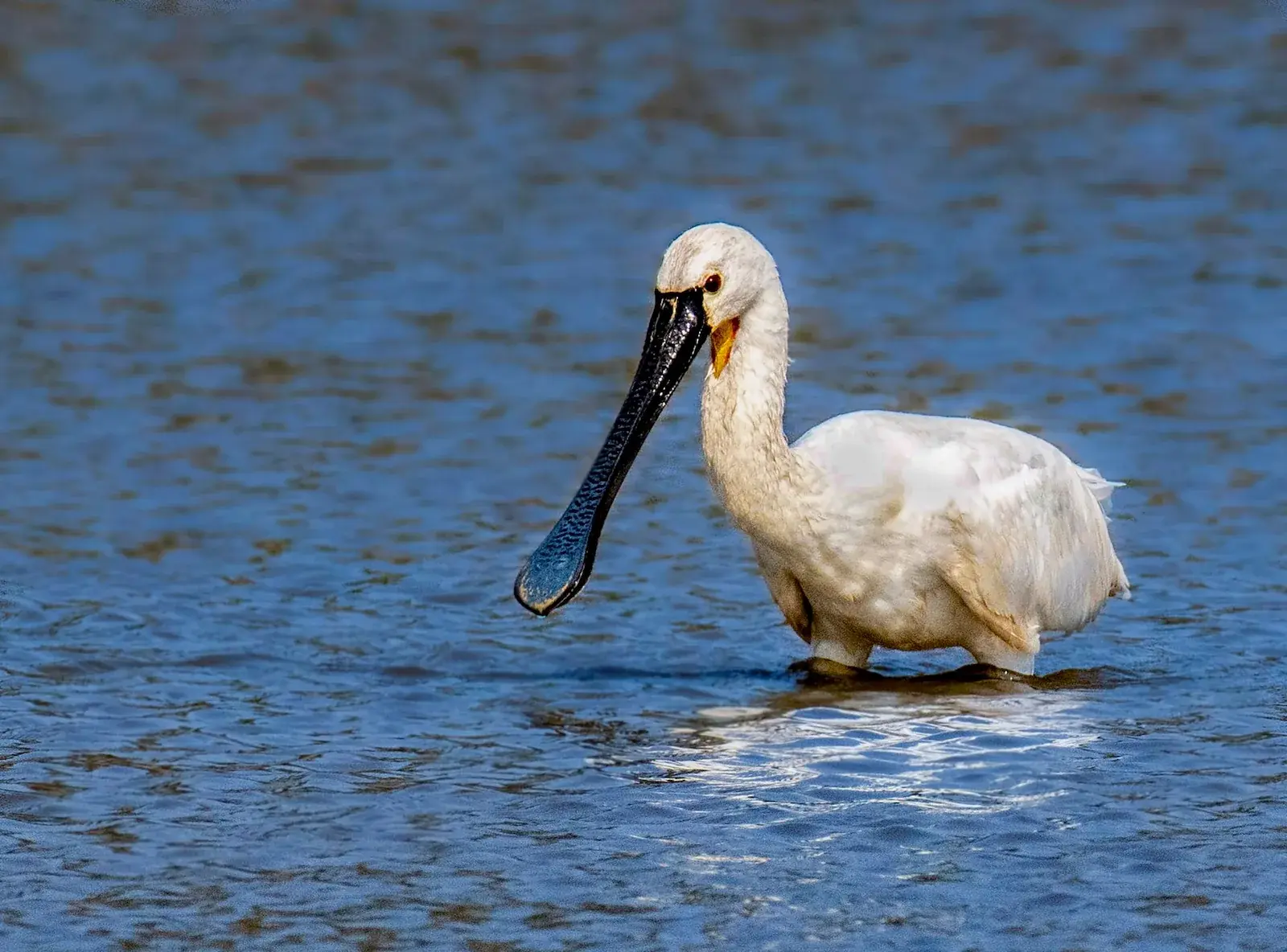
Eurasian spoonbill | Photo: Rajukhan Pathan
When a white bird walks slowly through the shallows, pay attention to what it does with its head. The Eurasian spoonbill 'Platalea leucorodia' wades forwards with its bill in the water, sweeping it from side to side in search of food. Although the broad, flattened tip gives the bird its name, at a distance that sweeping motion can be easier to recognise than the shape of the bill itself.
During autumn migration, many spoonbills stop in Santoña to rest and feed before continuing south. You can still come across individual birds in winter, though the flocks seen on autumn passage belong to a different stage of their journey. When the water is shallow, La Arenilla gives you a good view of them working their way along the shore, bills submerged.
In the same shallows you may see a little egret 'Egretta garzetta' pause as it spots prey, then strike swiftly with its slender, dark, pointed bill. Once it steps onto the shore, you can also see the contrast between its black legs and yellow feet, a detail that disappears as soon as it wades back into the water. If all you can see is a white bird with its head tucked into its feathers, wait for it to stretch or start feeding again. That first movement will often settle the question.
Black-necked grebe and great northern diver: birds that vanish beneath the surface
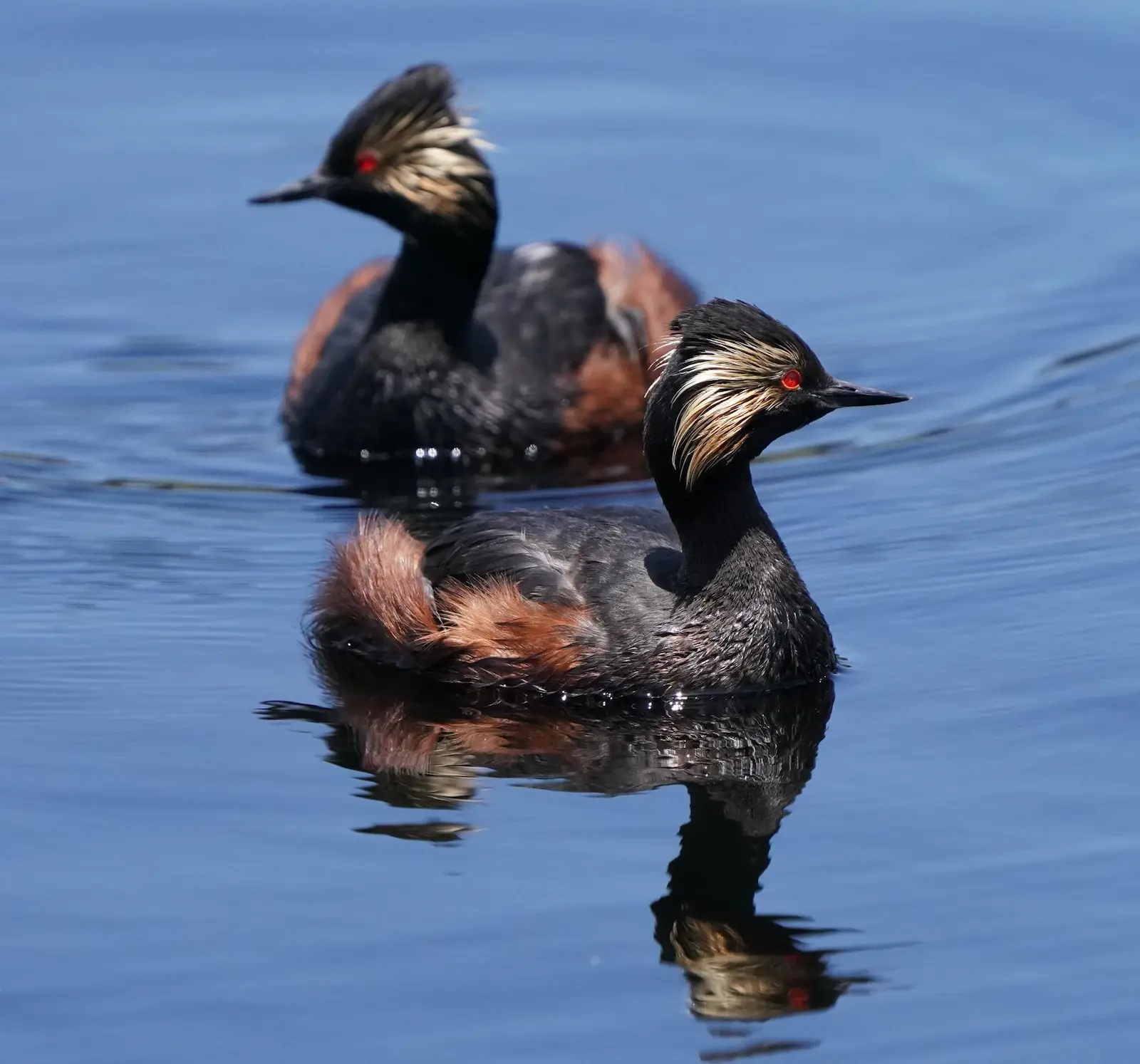
Black-necked grebe | Photo: Richard Block
The black-necked grebe 'Podiceps nigricollis' is easy to overlook because it is small and spends much of its time underwater. The golden tufts at the sides of its head are conspicuous in the breeding season, but in winter it is more helpful to look for the contrast between its dark cap and pale cheeks. When the bird turns side-on, you may also notice its fine, slightly upturned bill.
The great northern diver 'Gavia immer' makes a rather different impression, with a much larger body, a thick neck and a strong, pointed bill. It sits low in the water and can vanish just as you’ve got it in view. When that happens, lower your binoculars and take a bearing from a landmark on the far shore. You can then watch a wider stretch of water in case the bird surfaces some distance from where it dived.
Santoña harbour and the channels give you a chance to look for these birds from land. Grebes spend the colder months here, while divers are less regular visitors. On a first visit, you could spend the morning watching the birds on the mudflats and set aside some time for the harbour afterwards. That way you can give yourself a chance of seeing a diver while still enjoying the flocks feeding just a few metres from the shore.
Where to watch birds in the Santoña marshes
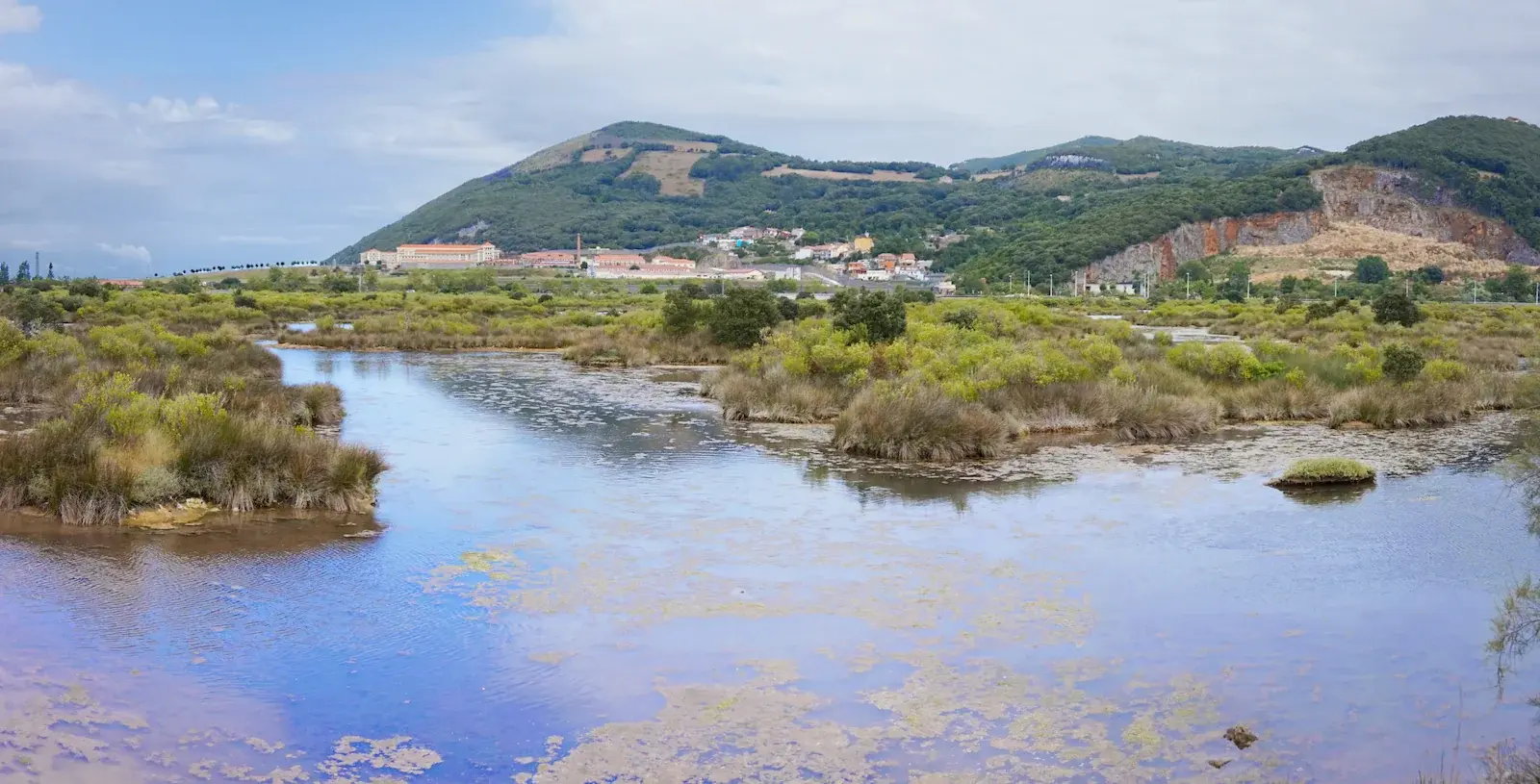
Santoña Marshes Natural Park | Photo: Tiia Monto, CC BY-SA 3.0
On a map, the hides and viewpoints all seem to overlook the same stretch of water, yet each offers a different view. At Bengoa you can watch the birds on either side of an embankment, while at La Arenilla you can follow the waterline as it moves with the tide, all from one spot. The harbour is particularly good for watching birds that swim and dive. Visiting two different habitats will often give you more variety than trying to stop at every viewpoint around the bay.
La Arenilla, a hide overlooking the changing waterline
The hide at La Arenilla stands beside the road known as the Carretera de los Puentes, on the approach to Santoña from Cicero and Montehano. It’s a good first stop for getting a feel for an intertidal mudflat. Find the line where the water meets the mud and follow it slowly with your binoculars. Gradually, small movements that you barely noticed with the naked eye begin to resolve into whole groups of birds.
Once the mud is exposed, La Arenilla is a good place to watch spoonbills, egrets and dunlin, though how close they come depends on the water level. At a particularly low tide, much of the activity may be a long way from the hide. As the tide starts to rise, the waterline shifts again and the scene in front of you changes with it.
Before training your binoculars on the far side of the bay, check the shore just in front of you. A bird with its back the colour of the mud can go unnoticed until it stretches a leg or raises its bill. If you have a camera, try leaving some of the mudflat in the frame. As well as showing how well the bird blends in, it brings out the pattern of the little channels it’s walking along.
Bengoa, an embankment with birds on both sides
At Bengoa it’s worth getting your binoculars out before you reach the hide, as the path along the embankment runs between the lagoons and the Boo channel. On one side lie sheltered waters where you might find ducks and long-legged wading birds. On the other, a wider channel opens out, with narrow strips of shore appearing as the tide falls. Stop halfway along and look in both directions to see the difference.
Around high tide, flocks of waders rest on the embankments or on small patches of ground that remain above water. Birds that were scattered across the mud, heads down as they fed, may now be roosting alongside several other species. With the birds at much the same distance, it becomes easier to compare their sizes. A bill sticking out behind a small bird might belong to a much larger neighbour resting beside it.
When only a small patch of the embankment remains exposed, it’s particularly important to watch from the path. Moving closer could put the whole roost to flight. If you stay in the hide, you can compare the birds as they stretch or change position, especially towards the end of the afternoon when new arrivals join those already settled.
Santoña harbour, a different view of diving birds
The harbour front gives you the chance to spend part of your visit looking over deeper water. Here the clues are subtler than at La Arenilla: a low silhouette, a head appearing between two small waves or a ring of ripples left by a diving bird. In winter, divers have been seen from the harbour itself, so give the surface a slow scan even if you see nothing but water at first.
Start with the stretch of water nearest to you and work outwards with your binoculars. If you look straight across to the far shore, it’s easy for a bird close in to slip below your field of view. When the surface is choppy or reflections make it difficult to pick out an outline, walking a few paces along the promenade can be enough to bring the light round to one side.
The harbour is also home to the park visitor centre, in the El Mirador de las Marismas building. If this is your first visit, or if the weather has changed on the way, you can ask about the state of the paths before deciding which hide to visit next. Check the opening hours before setting off, as they vary with the season.
Sollagua, a stop in Cicero overlooking the mudflats and the Asón channel
If you have time to go a little further, the Sollagua viewpoint in Cicero offers another perspective on the same estuary. A boardwalk leads to two platforms overlooking the mud where waders feed. Just beyond lies the Asón channel, where ducks, geese and other waterbirds move about. From much the same spot, you can follow a bird foraging beside the boardwalk and then lift your binoculars to scan the open water.
From here it’s easy to see just how much distance affects what you can identify. On the mud nearby you might make out a small bird’s legs or even the curve of its bill. With the same binoculars, you may only be able to tell whether a group out in the channel is swimming or diving. This is where a spotting scope comes into its own, whereas if you’re visiting with children, the birds moving about just in front of the platform are a good place to start.
Which tide is best for birdwatching in Santoña?
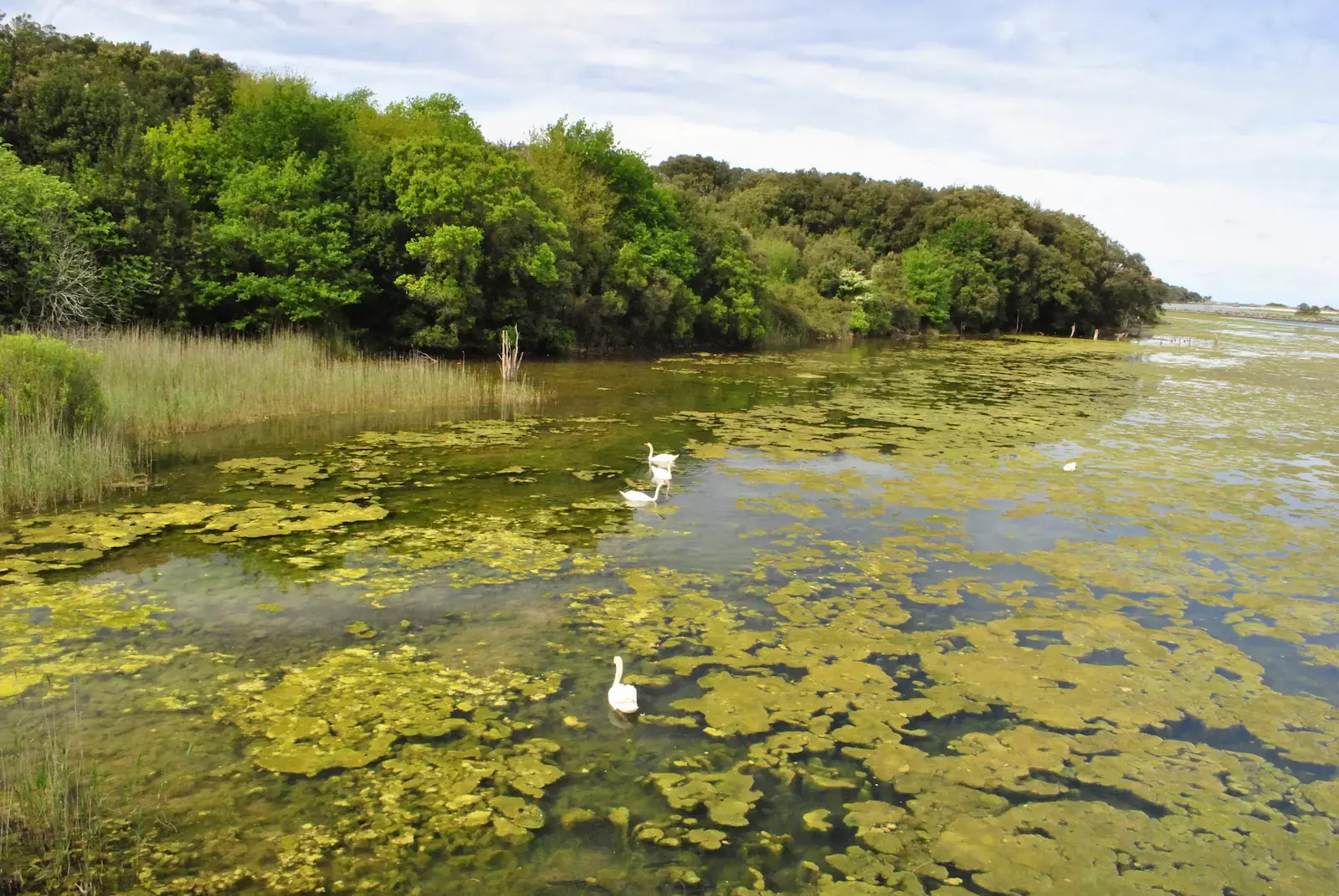
Santoña Marshes Natural Park | Photo: Malenaban, CC BY-SA 3.0 ES
Low tide is the point at which the water reaches its lowest level, while high tide marks its highest. Several hours separate the two, during which the waterline moves and the birds shift with it. When planning a visit, check the Santoña tide table for your chosen day against the hours of daylight available. A tide that’s partway in or out may suit what you want to see particularly well.
On a falling tide, watch the newly exposed mud
As the water retreats, little islands of wet sediment appear, along with narrow strips of mud beside the channels. Birds that feed here have more ground to choose from and spread out across it. Watch the waders for a while and you’ll see some hurrying along, pecking as they go, while others take a few steps, pause and probe one spot. Their food may be hidden from view, but you can still follow the search.
As more mud emerges, the birds can end up a long way from the boardwalk, especially at low water on a spring tide. If you’re visiting Santoña to photograph waders, allow some time either side of the low tide shown in the table. Even if you stay in the same place, the distance to the water’s edge changes considerably as the tide goes out and comes back in.
On a rising tide, follow the last strips of exposed shore
As the water flows back into the channels, birds that were feeding well apart have less and less ground to walk on. From the hide, you can follow one flock and see whether the birds draw together along the last strip of mud or take flight to feed elsewhere in the bay before the water covers it.
An incoming tide can also make ducks easier to watch, as in some parts of the bay they swim closer to shore. To see the detail of their plumage, as well as waiting for the flock to come closer, try to choose a position where you aren’t looking straight into the sun. A duck swimming close by in silhouette can be harder to identify than one a little further away with the light falling on it from the side.
At high tide, look for the roosts
Once the tide covers their feeding grounds, many waders move onto islets, embankments and other patches of dry ground. Some remain in view from a hide such as Bengoa, while others roost further away or out of sight of the public paths. That’s why two viewpoints only a short distance apart can offer quite different sightings at high tide.
Ducks and diving birds are still active on the water, so you can use this part of the tide to watch the ducks or walk along the harbour front. If you arrive at high tide and find nothing but open water in front of your chosen hide, you could head for the harbour, or stay and see which birds are the first to return as the mud begins to reappear.
How to plan a winter visit to the marshes
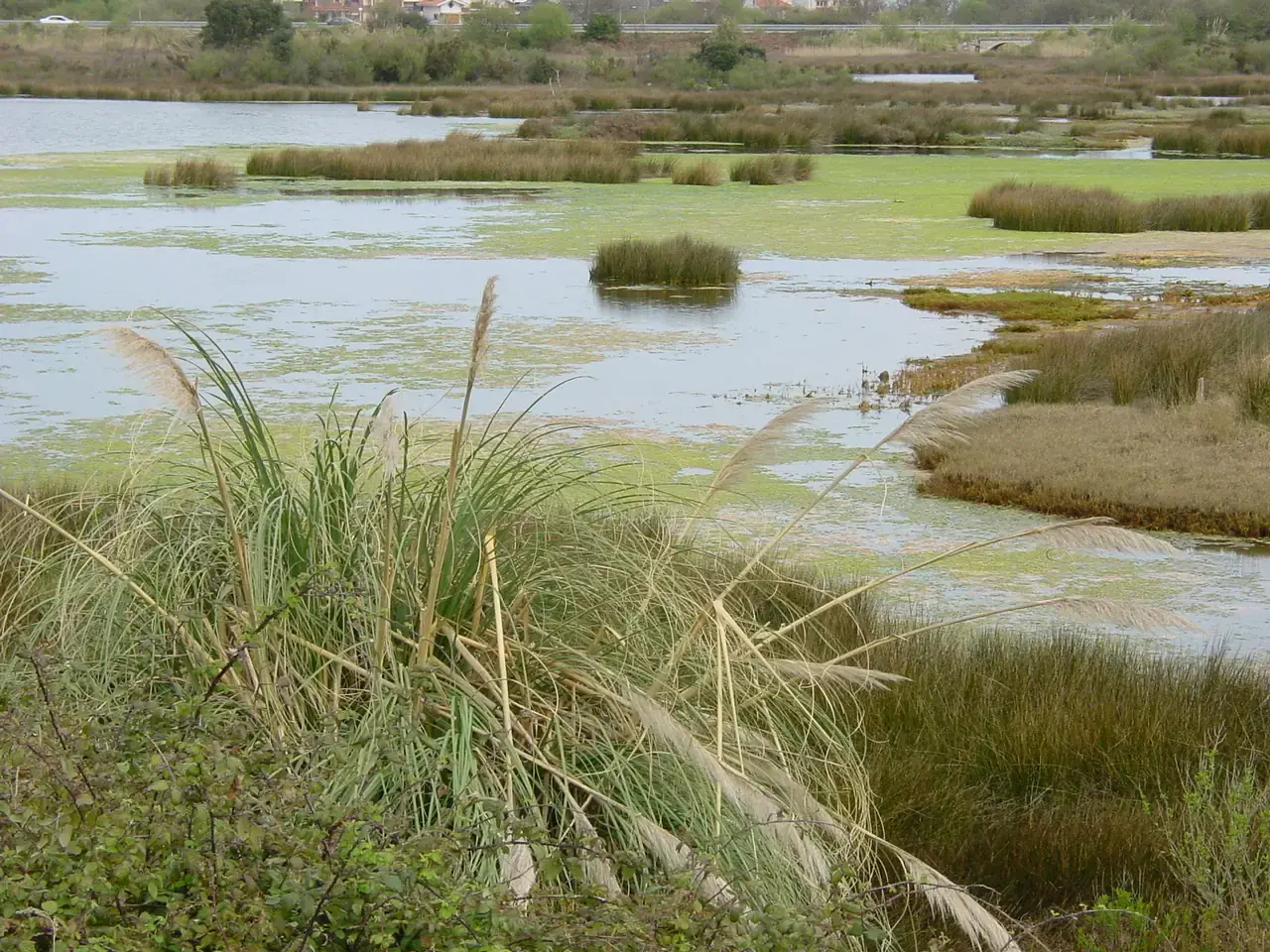
Santoña marshes, Cantabria | Photo: Lourdes Cardenal, CC BY-SA 3.0
If you only have a morning
La Arenilla and Bengoa work well together for a morning’s birdwatching. If the tide is rising but there is still plenty of mud in view, start at La Arenilla to watch the waders feeding, then head for the Bengoa embankment as the water covers the shore. In the space of one morning you can see how the birds use the marsh at two different stages of the tide.
If you arrive close to high tide and the water is about to turn, do the route the other way round. Start at Bengoa with the ducks swimming beside the embankment and the waders at roost, so that by the time you reach La Arenilla the first stretches of shore are beginning to emerge. You can also swap either stop for the harbour if you’d like to spend some of the morning looking for diving birds.
If you can stay until dusk
With a full day, you could carry on to Sollagua or return to your first hide at a different stage of the tide. If you have a camera, the second option gives you the chance to photograph the same landscape twice. Include a fixed reference point, such as a bend in a channel or the end of an embankment, and frame the view the same way when you return. Comparing the two photographs will show how far the water has moved and where the birds were each time.
It’s worth saving some time for the last of the light, when flocks start arriving at their roosts around Bengoa. The colours of individual birds become harder to distinguish, but you can still see the shapes and movement of the flock as a whole. Check when it gets dark and choose a familiar spot for your last stop, so you can enjoy the change of light without having to rush back.
What to take for watching and photographing birds from the shore
A pair of binoculars that feels comfortable to hold, a windproof layer and footwear that will keep your feet dry are a good starting point. Birdwatching on a marsh can involve long spells standing still, so a morning that feels mild while you’re walking can seem much colder after half an hour in a hide. If you take a field guide, choose one that shows birds in winter plumage. A picture of a male in spring colours may be of little help in January.
Before framing a photograph, spend a few minutes watching what the bird is doing. If it’s probing the mud, wait for it to lift its head for a shot in profile. With a flock at rest, look instead at the repeating shapes of the birds and their reflections. Keep your distance, watching from the path or hide, and if the birds stop feeding or begin to edge away as you approach, step back and let them settle.
Frequently asked questions about Santoña’s winter birds
What is the best month to visit the Santoña marshes?
If your dates are flexible, large numbers of waterbirds often gather between late December and early January. Winter visitors start arriving in November and can still be seen in February, so if you’re choosing between two weekends, it’s worth comparing the tide times and how much daylight you’ll have for visiting the hides.
Which hide should I choose for a first visit with binoculars?
La Arenilla is a good choice when the mud is exposed, as you can follow the birds while they feed. Bengoa offers a wider range of habitats on a single walk and is worth considering if you arrive on a rising tide. For a short visit, choose whichever best suits the state of the tide when you get there.
Can you see the birds without taking a boat trip?
Yes. From the hides and the harbour front, you can see ducks, geese, waders and, with a little luck, diving birds. If you’d like to explore the channels from the water, there are birdwatching boat trips from Santoña harbour between November and March. Check the dates and departure times when planning your visit.
Is it worth visiting the same hide twice?
Yes, especially if the tide changes between visits. Arrive while the mud is exposed and you can watch the waders feeding. By the time you return, that same stretch of shore may be underwater and the flock roosting on an embankment you barely noticed earlier. Retracing your steps lets you see that change for yourself, even on a visit lasting just a few hours.