
A long yowl breaks the silence and, for a few seconds, everyone turns towards the same hillside. Those with binoculars at the ready may be looking for two lynx among the bushes. Yet you might hear one without ever seeing it, spot a solitary animal or watch two cross a clearing with little to tell you what brought them together.
The Iberian lynx 'Lynx pardinus' mates in winter, usually between late December and February, with January at the heart of the mating season. It’s one of the few times of year when an adult male and female may spend time together. It’s also a time when this elusive cat gives away its presence by calling to another lynx.
January is a good starting point if you’re planning a trip. Then comes an equally important choice. Would you rather spend a morning watching a hillside in the Sierra de Andújar, learn about lynx in Doñana or head out with a local guide who can help you make sense of what you see? Each offers something different, even on a day when the hills stay quiet.
When is the Iberian lynx mating season?
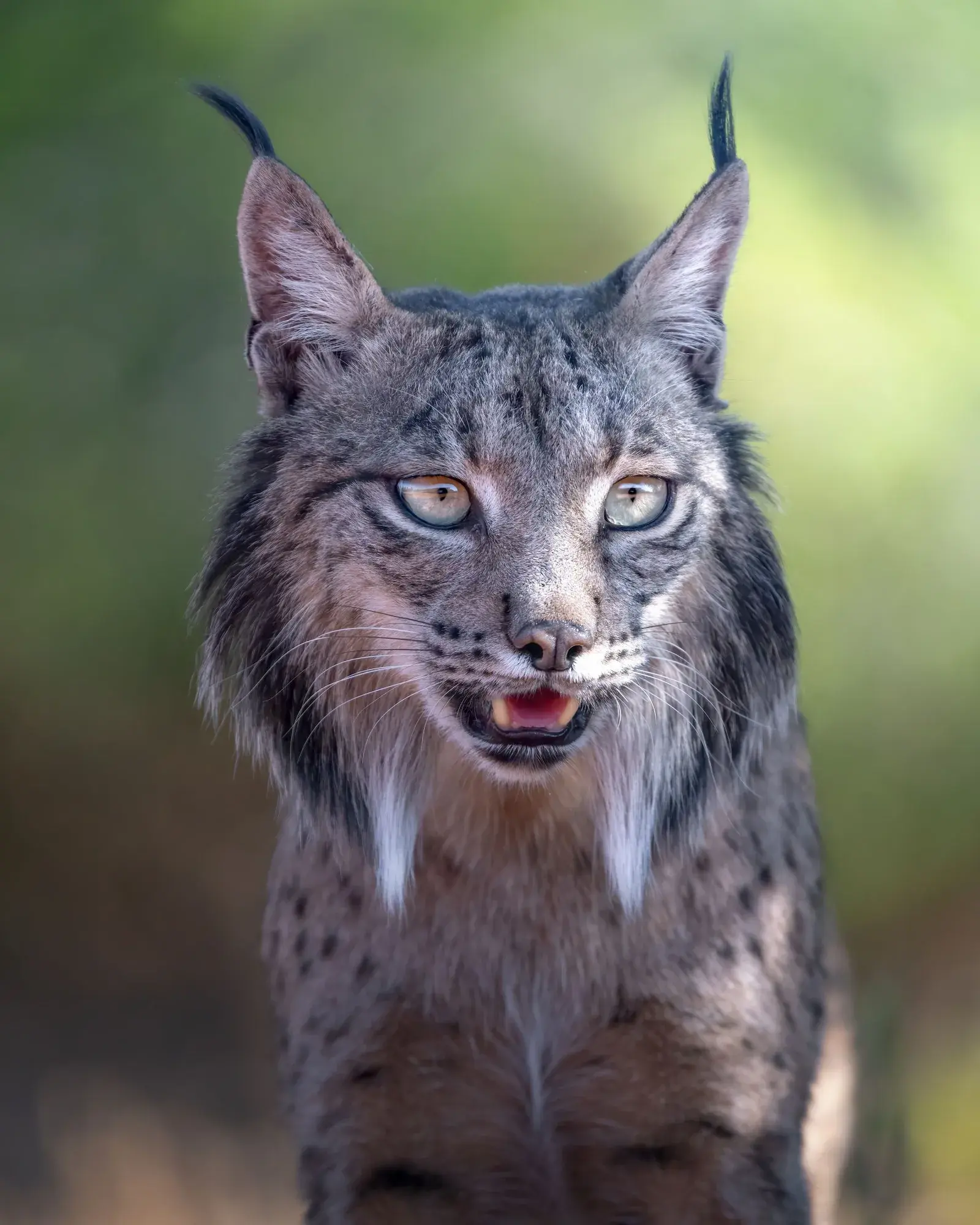
Close-up of an Iberian lynx | Photo: Gabriele Brancati
The first signs can appear in late December, and mating can still take place in February. That window of several weeks covers the species as a whole. An individual female is receptive to a male for a much shorter time, which helps explain why two people visiting the same hills a week apart might see quite different things.
Late December, January or February: which month should you choose?
If you can choose just one month and you’re particularly interested in courtship, January is a good choice. It’s the month when female receptivity typically peaks. That can help you decide when to travel, though it tells you little about whether two adults will be visible from a particular path on the Saturday you’ve picked.
A late December visit gives you a chance to listen for the first calls and enjoy the winter landscape. February is worth considering too, as it falls within the mating season recorded in Doñana. Whichever you choose, plan a day you’ll enjoy even if all you see is the habitat. A walk with time for a long stop at a viewpoint gives you more to look forward to than an outing that depends entirely on hearing a call.
What if you’re thinking of going in November? It’s a chance to watch other wildlife and get to know the terrain, although it’s worth waiting a few weeks if the mating season is your main reason for visiting. You can also use November to choose an outing, ask how much time you’ll spend in the field and check whether you need to book ahead.
How long is a female Iberian lynx in heat?
At the El Acebuche breeding centre, individual females have typically been observed mating over a period of three to five days. Close monitoring allows staff to record the first and last encounters with some precision. Watching from a viewpoint in the wild, you’ll see only a fraction of what goes on.
Courtship can begin before the first mating. The breeding programme’s behavioural records describe lynx following and sniffing one another and giving long, drawn-out calls. What each animal does makes more sense when you can see what came before and what happens next. From a footpath, you might catch only the moment when one lifts its head and follows the other until both disappear into the scrub.
What changes in the hills during the mating season?
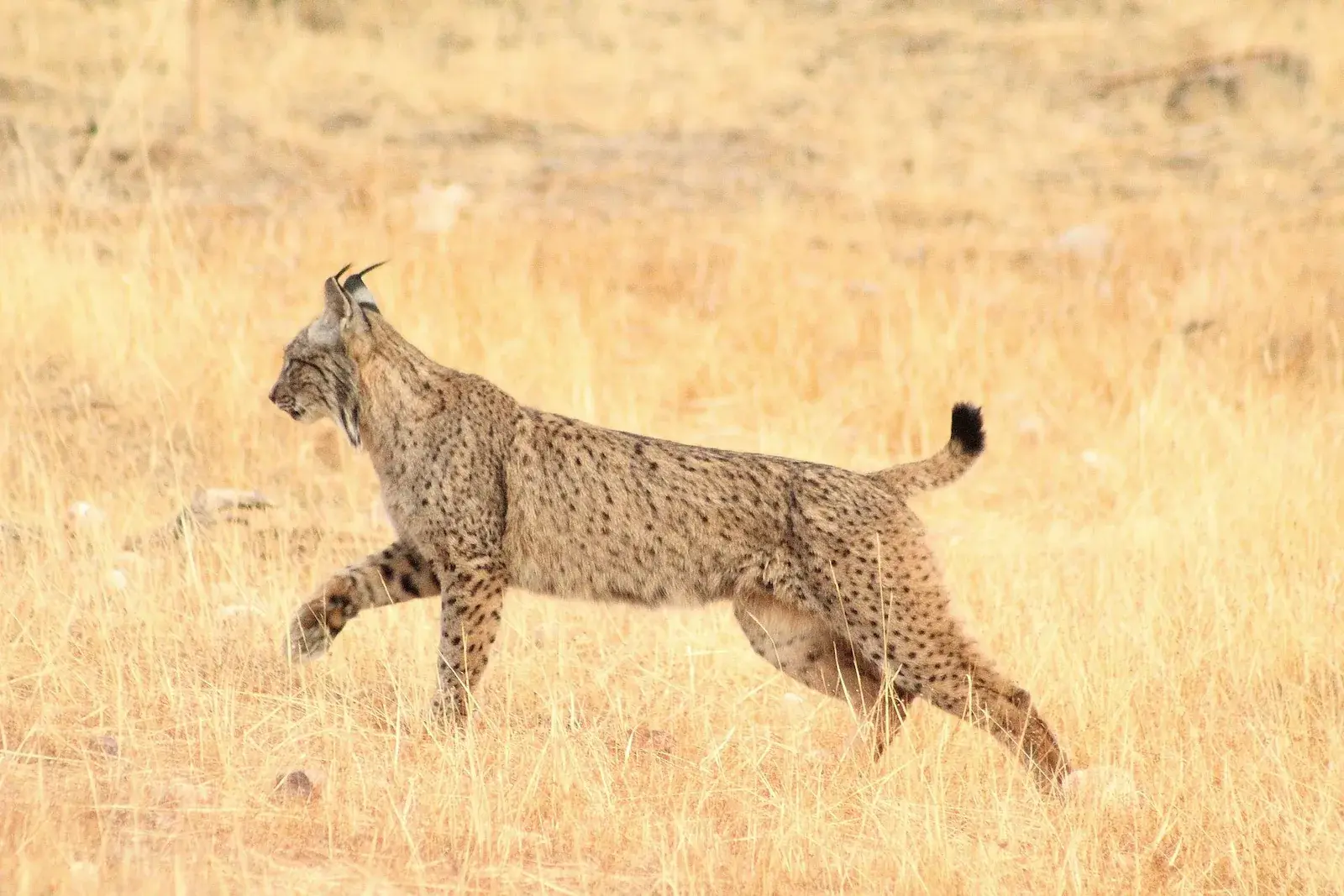
Iberian lynx walking | Photo: Álvaro Barriga Cano
A lynx can live alone and still know there’s another nearby. Adults leave scent marks that signal their presence and reproductive state, so two animals passing the same spot hours apart can exchange information without ever meeting. During the mating season, they also call to one another, and those calls sometimes carry as far as the path.
What do Iberian lynx calls sound like?
A mating call is a long yowl that can carry clearly on a still morning. If you hear one, lower your binoculars for a moment and listen. You might hear it again from the same direction, catch a second call or hear nothing more. Remembering where the first sound came from will tell you more about what happens next than walking towards its apparent source.
Sound can be deceptive. It’s hard to judge how far away an animal is on the other side of a ridge, and two calls in succession are little evidence of a pair. If you manage to record a few seconds, listen back through headphones later or ask your guide about it. While you’re in the field, let the exchange take its course. Playing back calls to attract a lynx can draw it towards people and interrupt what it was doing.
What does it mean if you see two lynx together?
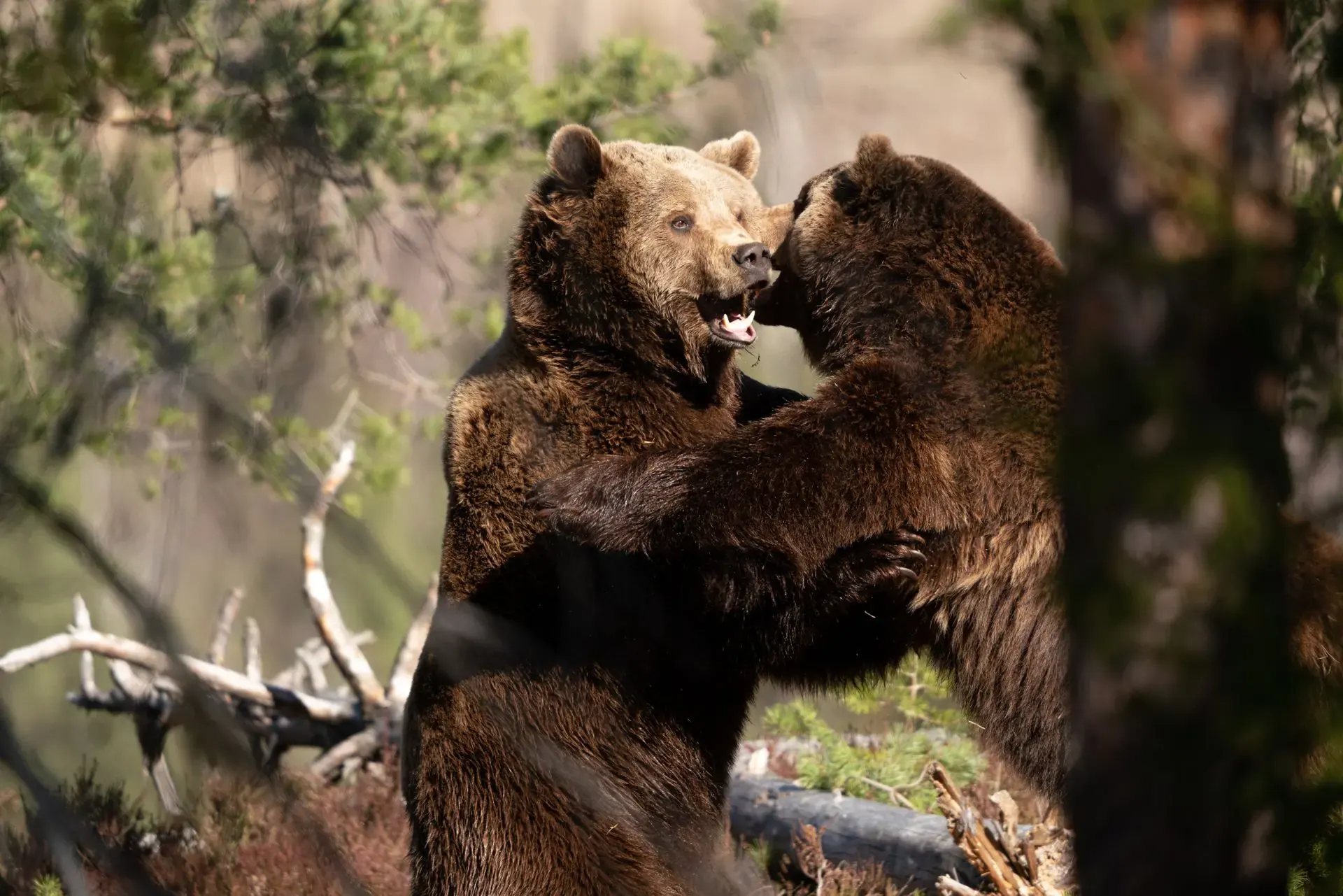
January is a time when you might see two adults together, but the date alone won’t tell you whether they’re a mating pair. You may also see a female with young from her previous litter, particularly between summer and early winter. If two shapes appear one behind the other in December, it’s worth watching what they do before deciding what you’ve seen.
Does the second lynx stop when the first one does? Do they sniff one another when they meet, or simply pass through the same gap in the scrub? If you keep a field notebook, ‘two lynx crossed the clearing, paused together and continued along the same slope’ tells you much more than ‘mating pair’. And if all you saw was a short tail disappearing behind a bush, that’s a fair record of a fleeting encounter too.
From mating to the birth of the cubs

Iberian lynx with its cub | Photo: Bharath Kumar Venkatesh
Gestation lasts about 70 days, and many litters are born in March. In one Doñana population monitored for nine years, researchers recorded the timing of 16 births. Fourteen were in March, one in April and one in June. It’s a good illustration of how births can cluster within a fairly short period while still leaving room for exceptions.
There’s another difference between winter and spring for anyone watching lynx. In January you might see adults seeking each other out, whereas newborn cubs spend their first weeks in a den. Looking for it or waiting nearby for the mother to return can interfere with her care of the litter. If you come across cubs on a walk, leave their way clear and move away quietly. Your presence can affect the mother’s behaviour even if you never see her.
What time of day should you look for lynx in winter?
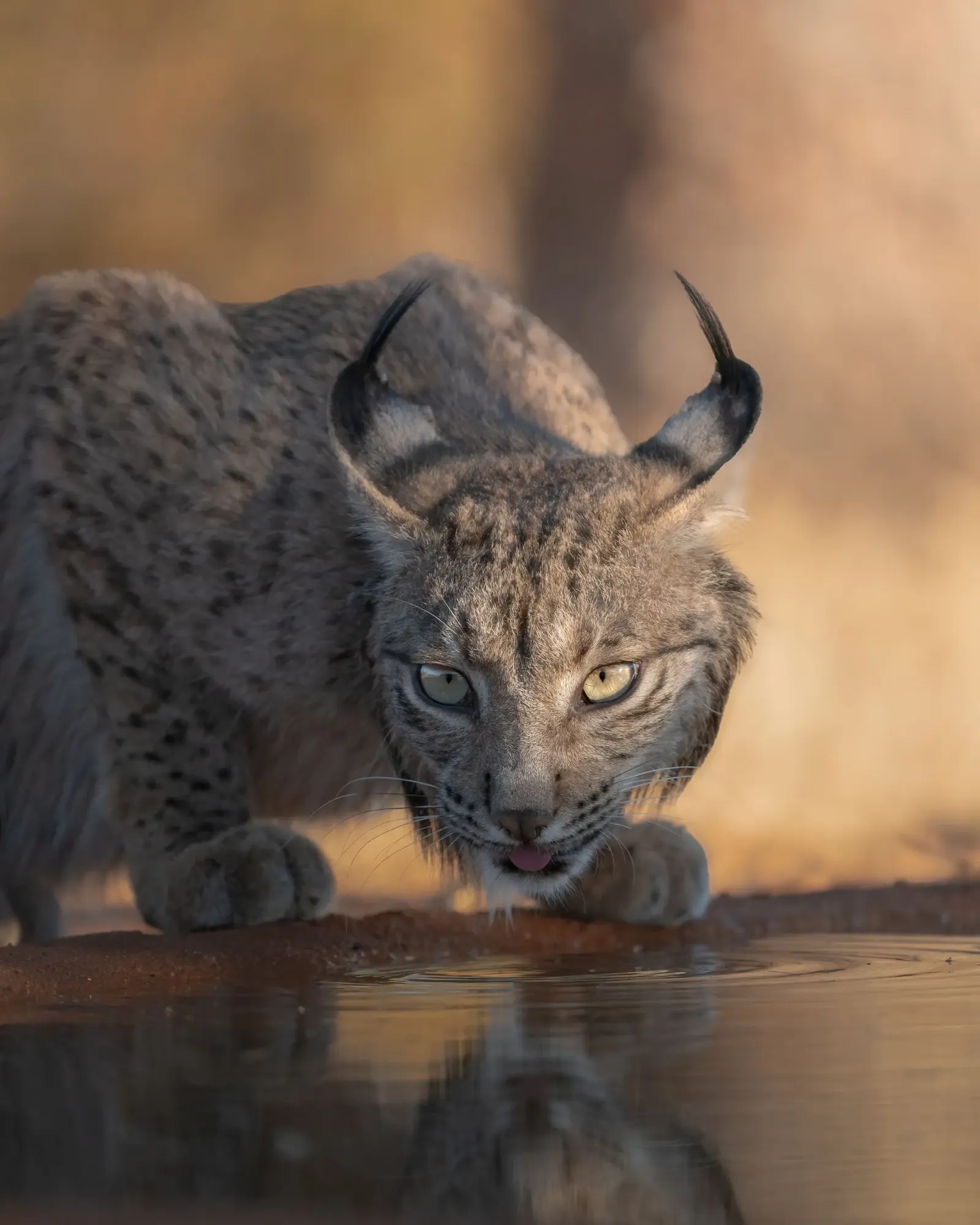
Iberian lynx drinking water in its natural habitat | Photo: Gabriele Brancati
Dawn and dusk are good times to settle in at a viewpoint. Iberian lynx are most active around twilight and at night, although in winter more of their activity takes place during daylight and around dusk. So if the trail opens after sunrise, or your group can only go in the afternoon, it’s still worth taking your binoculars.
How active a lynx is and how much you can see are two different things. Early on, you may hear clearly while barely being able to make out the hillside. An hour later, the light can reveal clearings where you’d seen a single dark patch. In the afternoon the change runs the other way. Before settling in, check the closing time and how long it will take to walk back, so you’re within easy reach of the exit as the last light fades.
Food also shapes the lynx’s movements. Its main prey is the European rabbit 'Oryctolagus cuniculus', and it uses landscapes where it can move between dense scrub and open ground where it can hunt. Spotting rabbits from the path helps explain how the area can support a predator. Whether a lynx is about to step out behind them is another matter.
Where to plan a lynx-watching trip
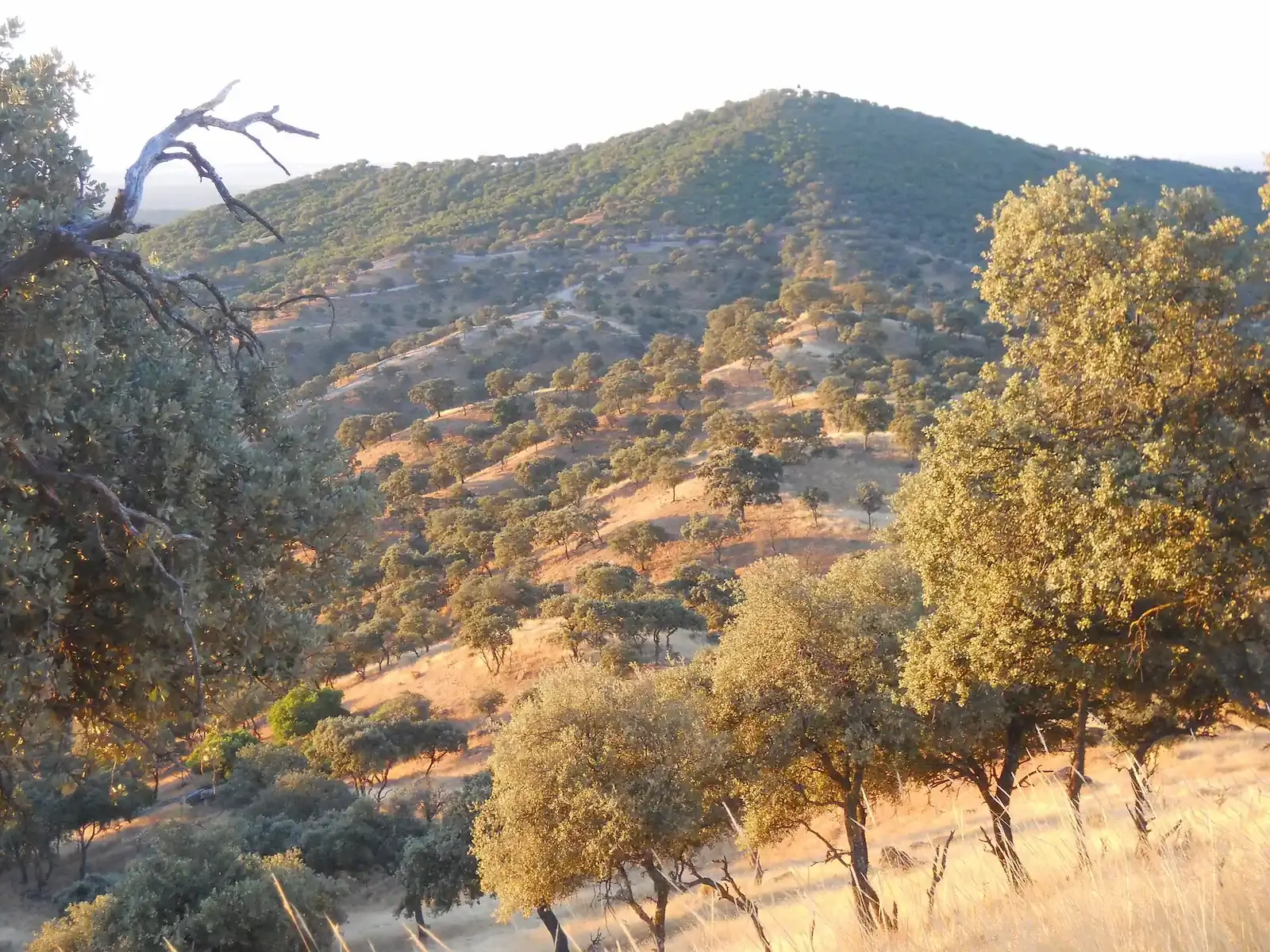
Sierra de Andújar | Photo: Lichinga, CC BY-SA 4.0
The Sierra de Andújar and Doñana offer two quite different ways to spend a day. In the former, you can explore Mediterranean scrubland and scan the hills from public viewpoints. In Doñana, as well as getting to know the habitat, you can book a guided visit dedicated to the species. When choosing between them, think about what you’d enjoy doing during the hours when the lynx are out of sight.
Looking for wild lynx in the Sierra de Andújar
The Viñas de Peñallana visitor centre is a good starting point for this natural park in the province of Jaén. Its exhibition introduces the park’s habitats and shows where lynx fit into the landscape you’ll be exploring. Check which trails and viewpoints are open on the day and where you can park. If you’d like to start at dawn, find this out in advance.
For a walk with time to watch wildlife, the El Encinarejo trail follows the River Jándula, where you can compare the vegetation on the riverbank with the open wooded pasture known as dehesa. It’s an easy, linear trail of 2.7 kilometres each way. Allow for about 5.4 kilometres if you retrace your steps, plus however long you’d like to spend at each stop. You could also walk part of the trail and spend the rest of the morning somewhere with a clear view. The shift from one habitat to the next gives you plenty to look at, even if the only movement you spot is a rabbit slipping in and out of cover.
For a wider view, the Jándula reservoir viewpoint looks out over rounded hills and wooded pasture. The scale takes some getting used to. What looks like a single slope to the naked eye can resolve through binoculars into one ridge close by and another far behind. Pick one and scan it slowly, rather than trying to watch the whole valley at once. Both the trail and the viewpoint offer a chance to get to know lynx habitat, though a sighting at either is a matter of luck.
Visiting the El Acebuche lynx observatory in Doñana
Along some stretches in Doñana you can see only a few metres through the vegetation. Elsewhere it opens out into the cotos, a patchwork of scrub and small stands of trees. The El Acebuche visitor centre in Huelva is a good place to look at the routes and decide how you’d like to explore that landscape.
If you’d like to learn about the species with specialist staff, the Iberian lynx observatory on the Huerto y Pajas trail is near the centre. The official visit is free and must be booked in advance. You can book through the visitor centre on +34 959 439 629. Check the available times for the day you have in mind before planning the rest of your trip around the visit.
The observatory is an educational facility where visitors can learn about lynx. If your aim is to spend the day looking for one in the wild, ask specifically for a field trip and check what it includes. That distinction also matters if you’re travelling with children or someone who prefers an activity with a set duration. A booked visit might suit you well, while watching in the hills means setting aside time for an animal that may never come into view.
How to plan a morning of lynx watching
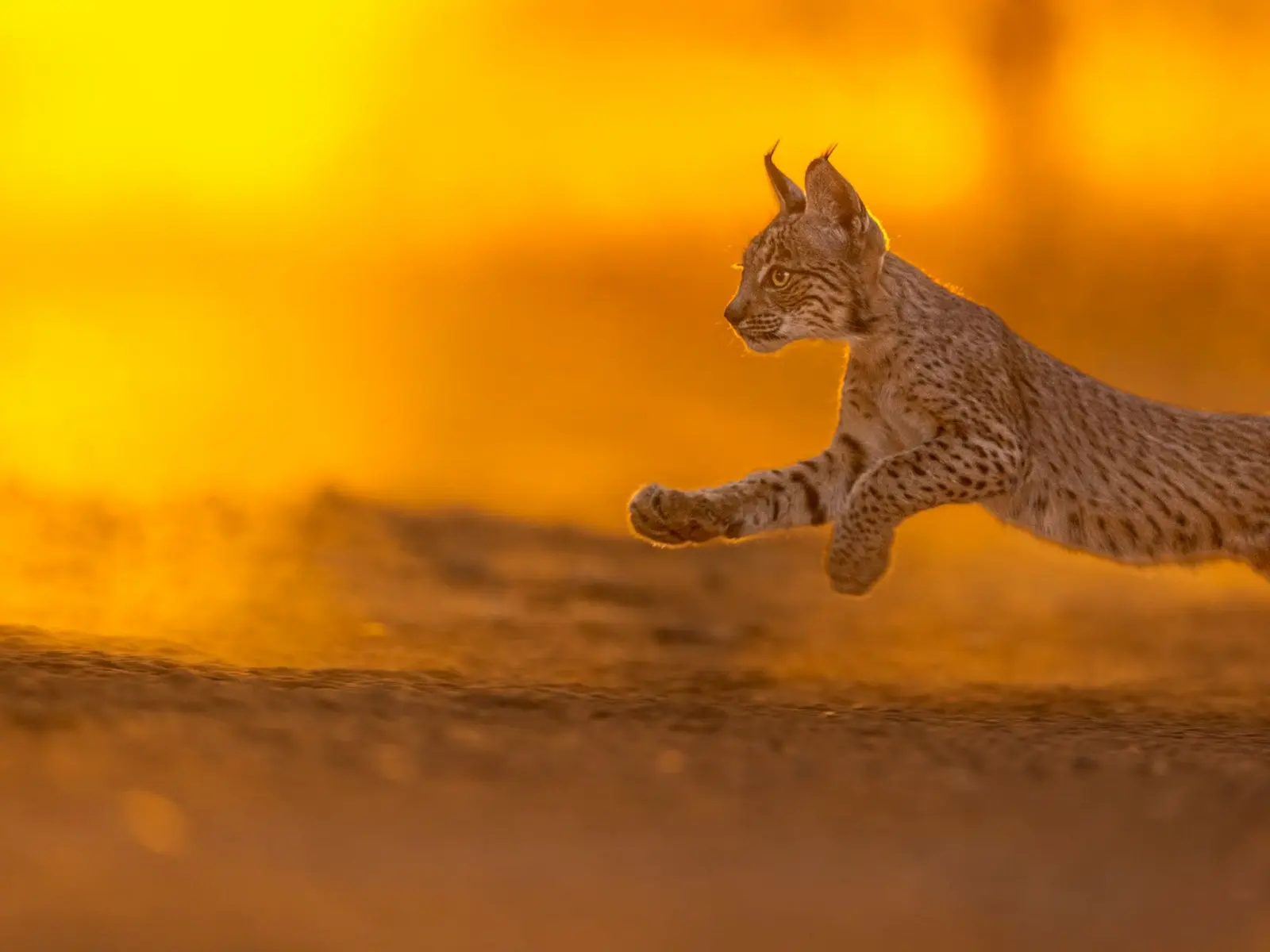
Iberian lynx leaping gracefully | Photo: Bharath Kumar Venkatesh
Before thinking about your camera, settle three practical details. Choose a spot where you’re allowed to stop, work out how to get there and check how long you can stay while leaving enough time to get back. Then decide whether you’d rather spend most of the morning walking or watching from one place. That will shape everything from the clothes you take to where you make your first stop.
What to bring and how to start looking
On a first outing, a pair of binoculars you can focus quickly will serve you better than more powerful equipment you’ve never practised with. Focus on a rock or tree trunk on the hillside before anything appears. If your guide or someone in the group has a spotting scope, ask if you can share it. Once someone has a distant animal in view, the others can take turns at the eyepiece.
Pack a warm layer for the stops. A jacket you barely need while walking across the dehesa may feel very welcome after twenty minutes standing still. Keep your water and a snack within reach so you don’t have to empty your rucksack, and if you bring a tripod, set it to one side so others can get past.
Start by looking with the naked eye. Pick two or three landmarks you can all recognise, such as a pale rock, a strip of grass and the edge of a patch of shade. Then scan the gaps between them through your binoculars. If someone spots movement, a few quiet words like ‘just below the pale rock’ give everyone a chance to see it from where they are.
A half-day itinerary you can adapt
- Before setting off, check access, the weather forecast and when there will be enough light to follow the path. If you’ve booked a guide, confirm the meeting point.
- Spend your first stop watching a single stretch of hillside. As the light improves, alternate between listening and slowly scanning the clearings.
- When you start walking again, choose a waymarked stretch that takes in two habitats. In Andújar, the transition from wooded pasture to riverbank is a good place to notice how vegetation affects what you can see.
- Leave some time free at the end of the morning. If the group spots something interesting, you can watch from where you are without having to rush off to another activity.
If you have a whole weekend, you could take a guided trip on the first day and return to a public trail on the second. It’s worth seeing a familiar slope in the afternoon light. The shadows fall the other way, and gaps that stood out between the bushes in the morning can all but disappear.
What to ask before booking a guided trip
First, ask how much of the outing is spent looking for wild lynx and how the group will watch them. A trip combining drives with stops to scan through a spotting scope may suit you if you want to watch distant hillsides. If you’d rather walk, ask how far you’ll cover on foot, how much climbing is involved and how long you’ll spend standing at each stop. If anyone in the group has limited mobility, check the path surface and the distance from the car park to the viewing point.
It’s also worth asking about the group size, whether you can borrow binoculars and what the guide has planned if no lynx appear. You can find local professionals in Andújar’s outdoor activities directory. When comparing trips, look for guides who explain the route, the access permissions and what the group will do if a lynx appears nearby. Those details will tell you more about the outing than a striking photograph in a brochure.
If a lynx appears, should you reach for your binoculars or your camera?
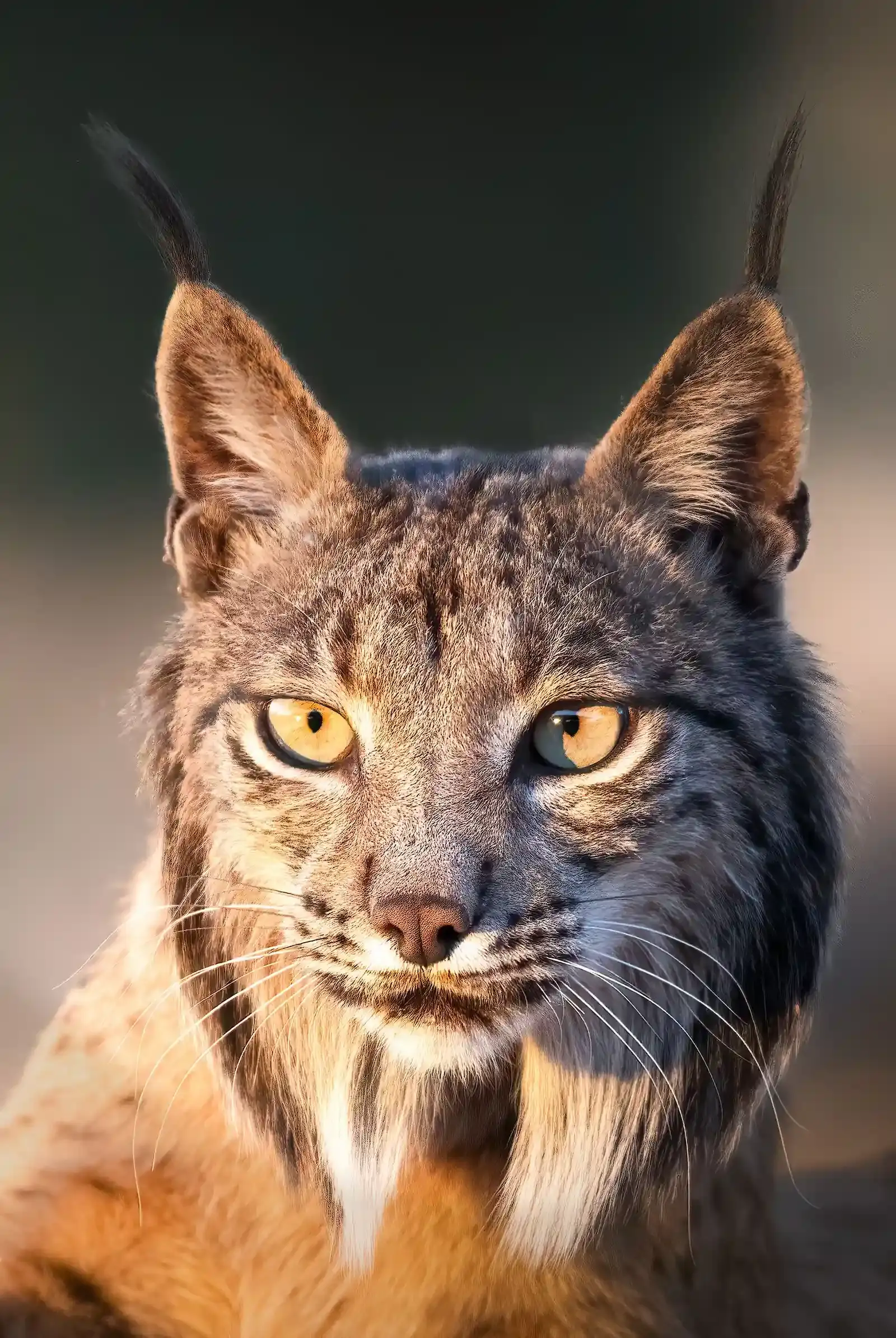
Iberian lynx in natural light | Photo: Lorenzo Boldorini
Stay where you are at first and give the lynx room to choose its own route. Even if you’ve spotted it, others may need a few seconds to find it. Speak quietly and use the landmarks you picked out earlier. If the animal pauses, you may notice details that are easy to miss through a viewfinder, from the direction it turns its ears to the moment it chooses to cross a clearing.
If it crosses a path, leave the far side clear too. Two well-meaning groups, each trying to see the lynx from a different position, can end up blocking its only clear way through. If it keeps lifting its head to look at people, moves away or breaks off what it was doing, give it more space. The guidance on responsible wildlife watching also advises against using spotlights at night, putting out bait or approaching dens.
When photographing a lynx at a distance, try framing it with the clearing it has just emerged from and a feature of the surrounding ground. A picture of a small figure on a hillside can show something a close-up misses, such as how closely the colour of its coat matches the dry grass. If two lynx appear together, leave enough room in the frame for the second to take a step without disappearing from the picture.
And if you have only three seconds, it’s fine to stick with the binoculars. You may have time to notice the lynx’s gait, the length of its legs and the short tail slipping behind a bush. By the time you’d switched to your camera, you might have missed the whole crossing. Afterwards, jot down what you saw and when. If you share a photograph, naming the mountain range or park is enough. Keep the animals’ precise location private.
Frequently asked questions about the Iberian lynx mating season
Is December or January better for watching courtship?
January is the better choice if you can pick your dates. The first signs of courtship can appear in late December, but each female is receptive for only a short time, and the timing varies between individuals.
Do male Iberian lynx call too?
Yes. Monitoring in the breeding programme has recorded long, drawn-out calls from both sexes as they approach one another before mating. A call on its own won’t tell you whether you’ve heard a male or a female.
Can you see a lynx in broad daylight?
Yes, particularly in winter, when some of their activity takes place in daylight. A daytime watch can work well with children or if you prefer to walk in good visibility, while dawn and dusk are also worth considering.
Do you need to book to go lynx watching?
It depends on the visit. You need to book ahead for the El Acebuche observatory or for an arranged outing with a guide. If you’re walking a trail independently, check the route description and current park notices, as access conditions vary.
Can you see newborn cubs during the mating season?
Cubs are usually born several weeks after mating and spend their earliest weeks in a den. If you see a female with young in early winter, they may be from the previous breeding season. Where it’s appropriate to stop, watch from a distance and leave them room to go on their way.