The largest land mammals in Spain are the brown bear, the red deer, the aoudad, the wild boar, the Iberian ibex, the fallow deer, the mouflon, the Iberian wolf, the roe deer and the chamois. Some are part of the native fauna, others arrived through historical or hunting-related introductions, and others have a more complex history, shaped by human management, conservation and changes in the landscape.
Spain is not usually imagined as a land of large mammals. We tend to think first of birds, reptiles, small carnivores or discreet species moving through scrubland, forests and mountains. However, a closer look reveals large animals spread across mountain ranges, dehesas, Mediterranean forests, rocky sierras, agricultural areas and high mountain landscapes.
Talking about the largest land mammals in Spain is not just about ranking animals by weight, but about understanding which species have survived on the peninsula for thousands of years, which were introduced by humans, which territories they occupy today and why some of them still generate debate around conservation, hunting management or coexistence with human activities.
What criteria we used for this ranking
This ranking focuses on wild land mammals present in Spain. The order is based on the approximate maximum weight of adult males, as many species show a clear difference between males and females.
That leaves out domestic, livestock or feral breeds, even if some individuals live in freedom or semi-freedom. The clearest example is the Retuertas horse, recognised as an autochthonous horse breed and with many individuals living in a feral state, but not as a wild species equivalent to the brown bear, the red deer or the Iberian wolf.
It is also worth reading this ranking with context, because in wild fauna, weight can vary depending on sex, age, population, diet and territory. That is why, rather than a closed mathematical list, this article is a naturalist guide to understanding which large land mammals live in Spain today and what history lies behind each one.
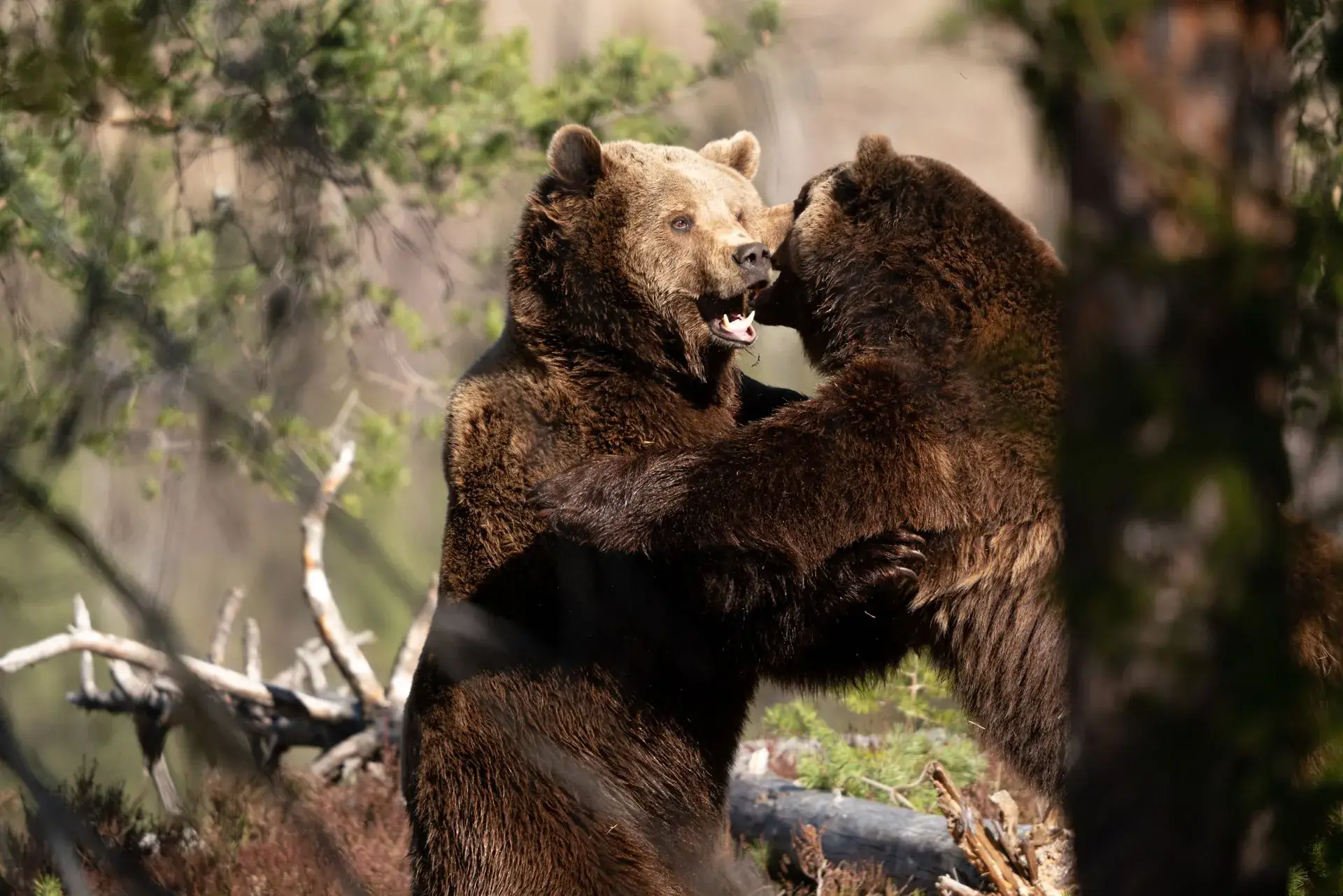
1. Brown bear, the giant of the northern mountains
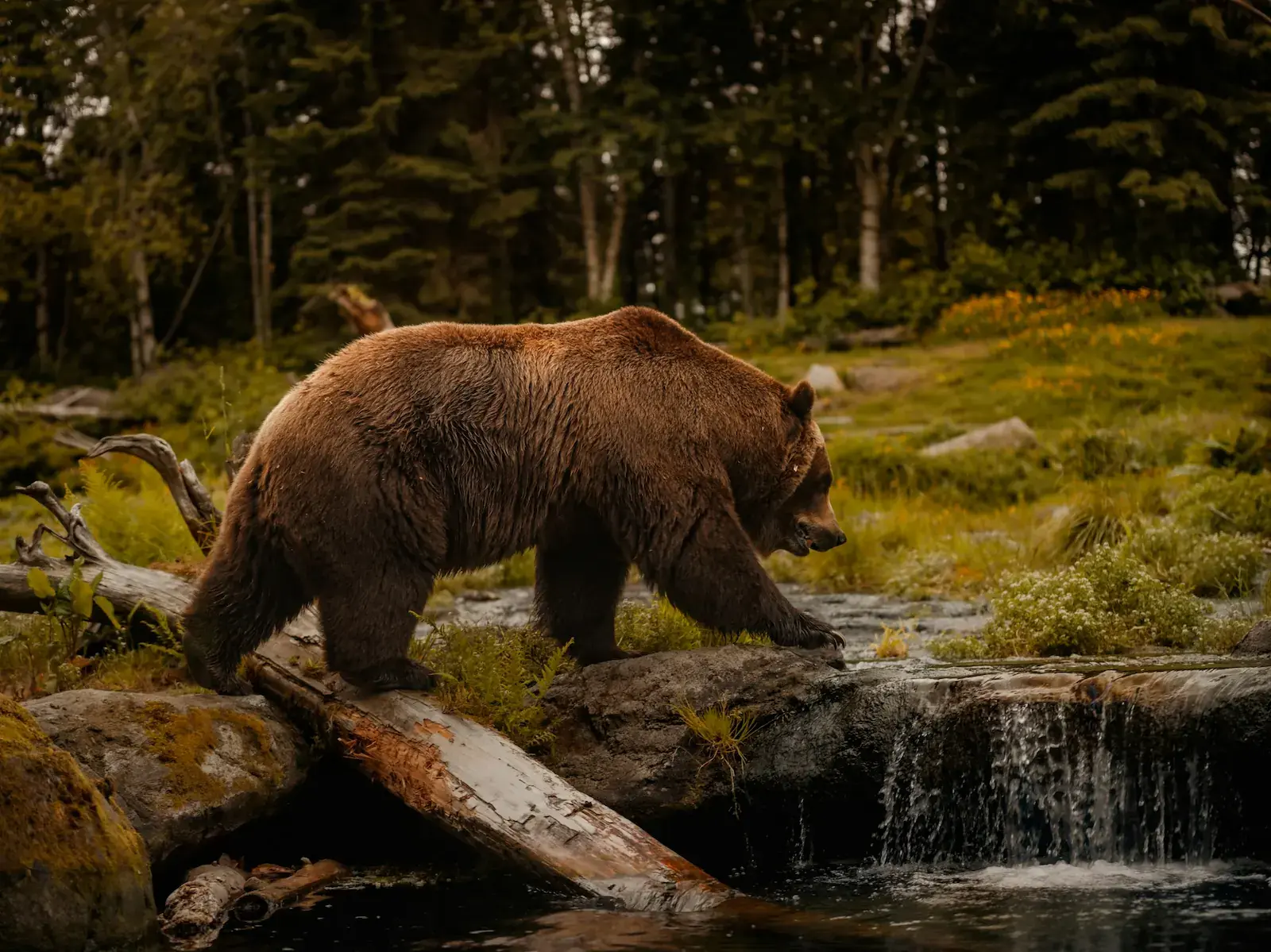
Brown bear | Photo: Kier in Sight Archives
The brown bear ‘Ursus arctos’ is the largest land mammal in Spain. Adult males can weigh between 90 and 250 kg, with larger exceptional cases, which clearly places it above the rest of the land species present in the country.
In Spain, it lives in two large areas. The most important is the Cantabrian Mountains, where the population is distributed across Asturias, Castile and León, especially León and Palencia, Cantabria and a small part of Lugo. This means it is not enough to say that the bear lives “in the north”, because its presence is especially important in specific territories such as western Asturias, Somiedo, Fuentes del Narcea, Degaña and Ibias, Alto Sil in León, the Ancares mountains, the Palentine Mountain and the Cantabrian valleys closest to the mountain range.
The second large area is in the Pyrenees, where the situation is different because the current population largely comes from reintroductions and reinforcement programmes. In this case, its distribution affects Catalonia, Aragon and Navarre, although the most stable presence is mainly concentrated in the central Pyrenees, with particular importance in the Val d’Aran, Pallars Sobirà and other sectors of the Lleida Pyrenees, connected to French and Andorran areas.
Its recent history sums up very well what happens with some large mammals in Spain. For centuries, it was persecuted and pushed into increasingly fragmented mountain areas, while today its conservation depends on corridors, connectivity, food availability, conflict reduction and coexistence with livestock farming, beekeeping, tourism and human activity in territories where the bear has never been just an animal, but also part of local culture.
2. Deer, the largest wild ungulate on the peninsula
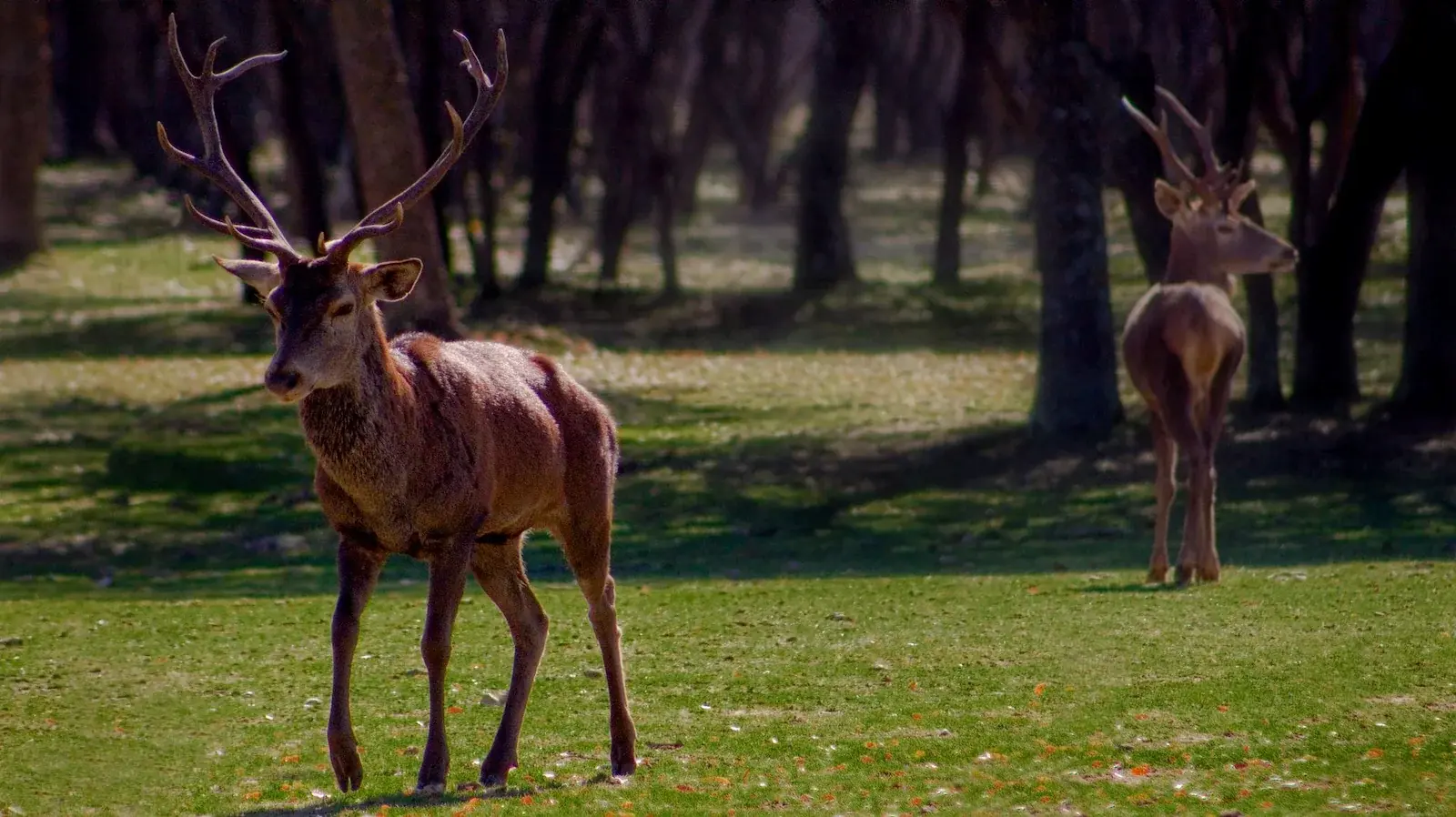
Two European deers | Photo: Francisco Fernández
The red deer ‘Cervus elaphus’ is the largest native wild ungulate on the Iberian Peninsula. Males can reach between 80 and 160 kg, much more than females, and in autumn they produce one of the most recognisable sounds of Iberian wildlife, the rutting call.
Its current distribution is very broad. It is present across much of mainland Spain, especially in Mediterranean scrubland, dehesas, sierras, open forests and mosaic landscapes where feeding areas alternate with refuge areas. It is especially common in territories such as Sierra Morena, Montes de Toledo, Extremadura, Cabañeros, Monfragüe, Doñana, the Baetic mountain ranges, the Central System and many hunting estates in central, western and southern Spain.
However, its presence is not uniform or completely “natural” in the simplest sense. The history of the deer on the peninsula goes back a long way, as the species has been documented at least since the Late Pleistocene, although the distribution we see today has also been shaped by restocking, hunting-related introductions, enclosures, estate management and expansion in territories where it found food and shelter.
That is why the red deer tells two stories at once. On the one hand, it is one of the peninsula’s historic large herbivores and a key species in many forest and Mediterranean ecosystems. On the other, its current abundance in some areas cannot be understood without big-game hunting, estate management and changes in land use. In some places it is a symbol of wild nature, while in others it has also become an indicator of how humans have reorganised the landscape.
3. Aoudad, the large North African bovid present in Spain
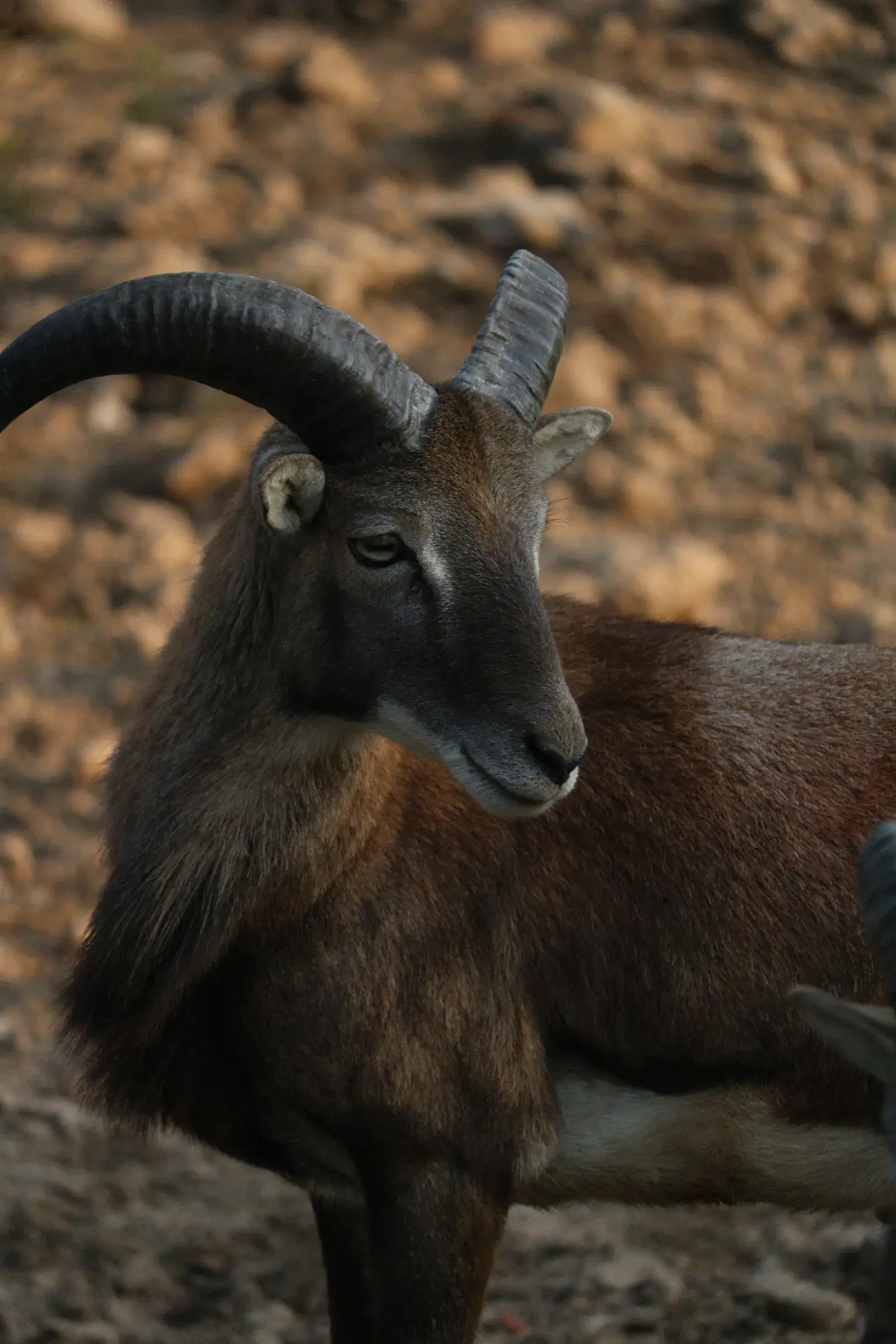
Aoudad | Photo: Click's by Rihan
The aoudad ‘Ammotragus lervia’ enters this ranking because of its size, although it needs a clear explanation. Males can reach between 50 and 132 kg, which places it among the large land mammals present in Spain. However, it is not a native species, but an alien species of North African origin.
Its history in Spain is linked to introductions for hunting purposes, especially in the south-east of the peninsula. The best-known case is Sierra Espuña, in Murcia, which became one of the main nuclei from which the species began to establish itself and expand through mountainous, dry and rocky environments. From there, its presence has been associated with mountain ranges in Murcia, Alicante, Almería, Granada and other Mediterranean sectors where it finds slopes, cliffs, open scrubland and arid or semi-arid landscapes similar to those of its area of origin.
The aoudad is a good example of why this article cannot talk only about size. If ordered by weight, it undoubtedly belongs here. However, from an ecological point of view, it does not occupy the same place as a native species. Its presence raises questions about competition with native ungulates, hunting management, impact on vegetation and control of introduced species.
That is why talking about the aoudad in Spain is not about a “new large Iberian mammal”, but about a large, visible species adapted to certain landscapes, whose history in the territory is directly linked to relatively recent human decisions.
4. Wild boar, the robust omnivore that adapts to almost everything
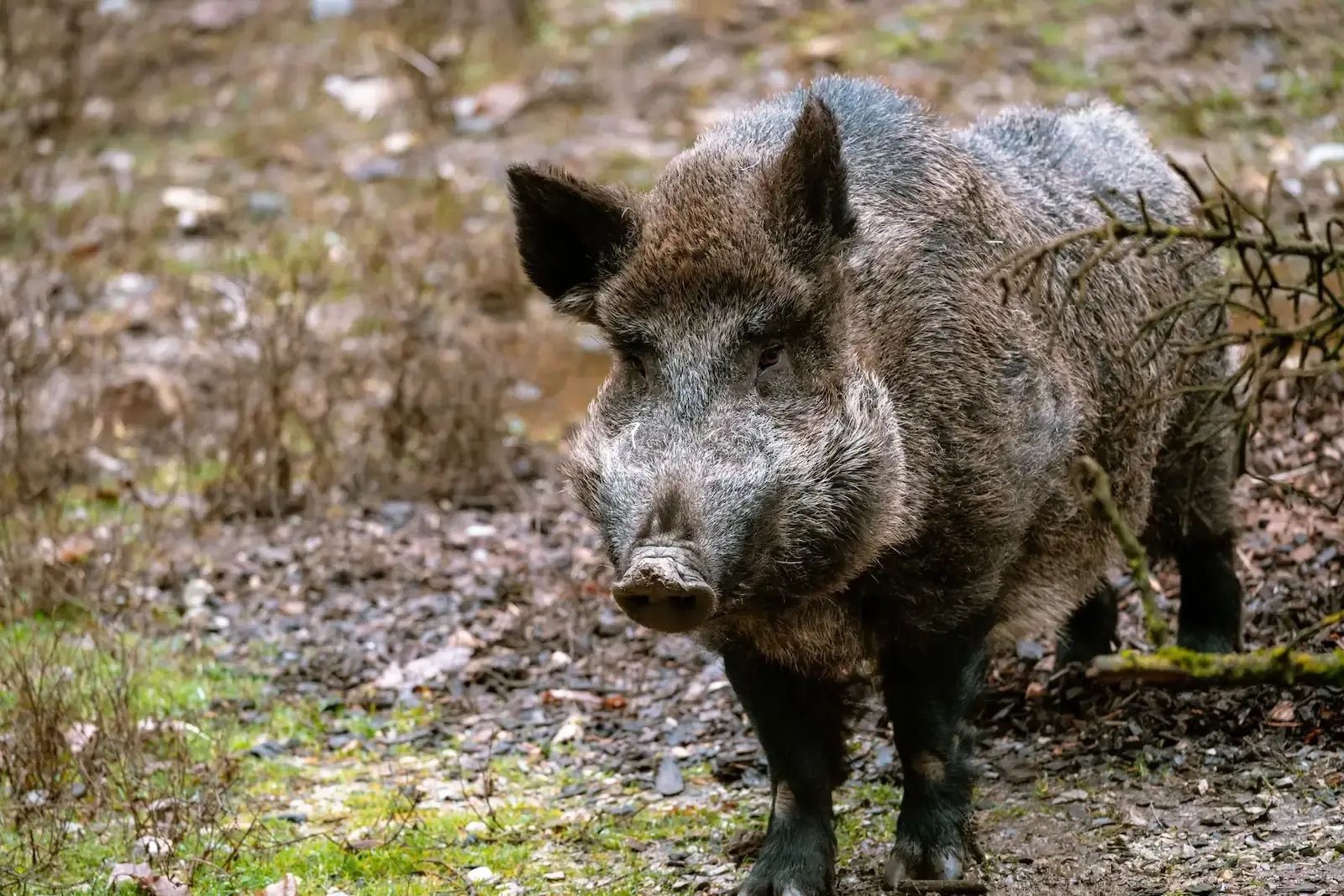
Wild boar | Poto: Matej Bizjak
The wild boar ‘Sus scrofa’ is one of the most widespread and adaptable large mammals in Spain. Its size varies greatly depending on the territory, diet and age, although some adult males can weigh well over 100 kg. In addition, its compact body, strong neck and ability to move through dense vegetation make it much more imposing than it may seem at first glance.
Unlike other animals on this list, the wild boar is not tied to a single type of landscape. It can live in forests, marshes, agroecosystems, scrubland, urban fringes and even mountain areas, as long as it can find cover, food and water. This flexibility explains its presence in places as different as Mediterranean holm oak forests, beech forests, pinewoods, crops, wetlands, peri-urban areas and high mountain zones.
Its recent history in Spain is strongly marked by expansion. The reduction of large predators in many areas, rural abandonment, the increase in forest cover, the availability of agricultural food and its enormous ecological flexibility have helped wild boar populations grow in many territories. That is why today it appears both in natural spaces and in humanised landscapes, where it can cause conflicts with crops, traffic, gardens, urban areas and road safety.
The wild boar is not only large in terms of weight, but also in terms of presence. Its rooting marks, left when it turns over the soil with its snout, are one of the most recognisable signs of its activity. Wherever it appears, it modifies the soil, disperses seeds, consumes fruits, roots, fungi, invertebrates, small vertebrates and carrion, which makes it a highly resilient species that is difficult to categorise.
5. Iberian ibex, the Iberian endemic of rocks and mountains
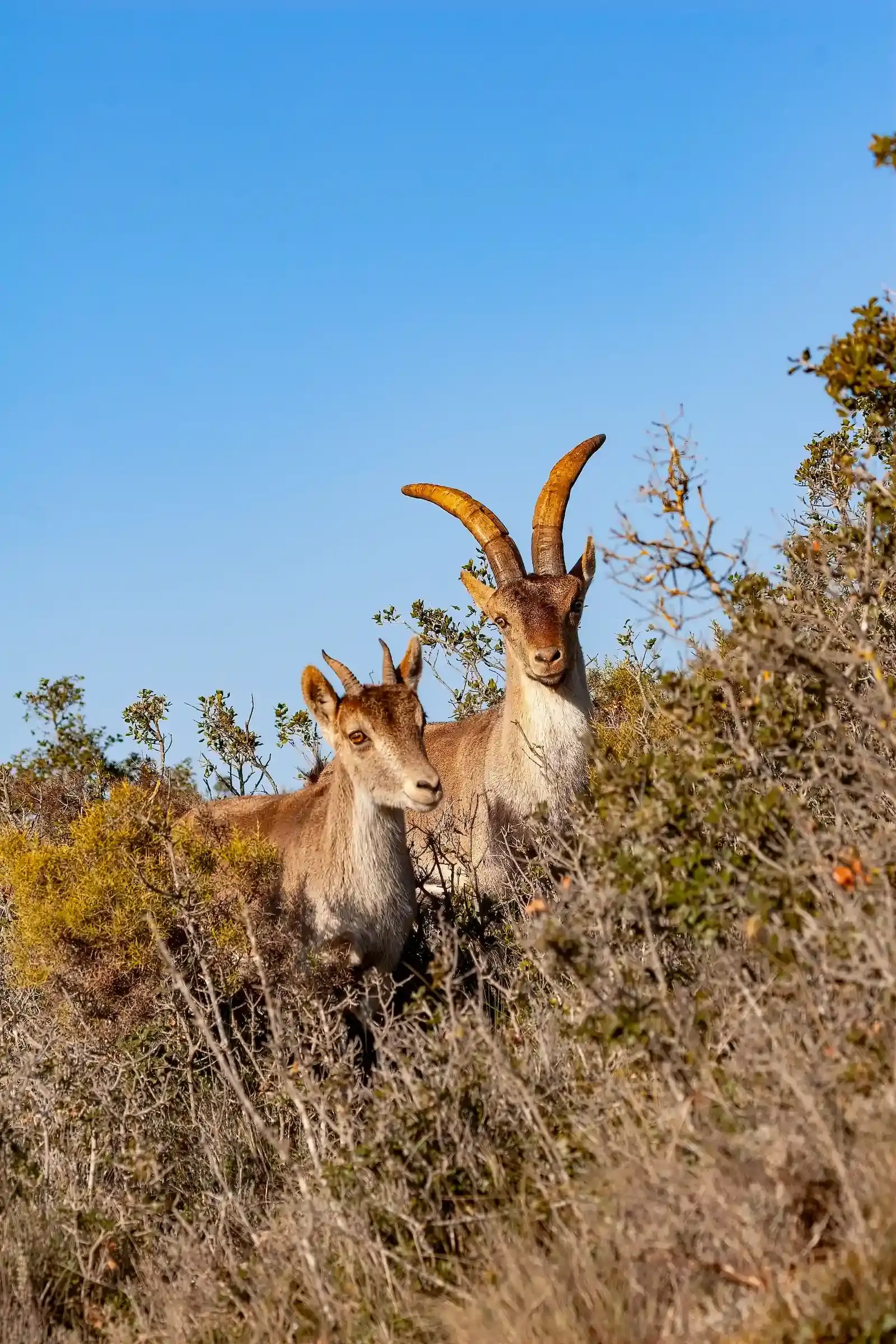
Male and female Iberian ibex | Photo: Erwan Grey
The Iberian ibex ‘Capra pyrenaica’ is one of the most representative species of Iberian fauna. It is native, an Iberian endemic and can weigh between 31 and 90 kg, with males being larger, more robust and having much more developed horns than females.
Its distribution is deeply linked to mountain systems. It lives in rocky areas, rugged sierras, ravines, cliffs, stony slopes and landscapes where steep terrain offers refuge from predators and disturbance. Today it is found in different nuclei across the peninsula, with particular importance in Gredos, the Central System, Sierra Nevada, the Baetic mountain ranges, Cazorla, Segura y Las Villas, the Serranía de Cuenca, the Maestrazgo, Els Ports and other mountain systems in eastern and southern Spain.
Its history is also one of the most interesting in the article. The Iberian ibex was once much more widespread across Iberian mountains, but during the 19th and 20th centuries it suffered very sharp declines. Some forms disappeared, such as the Portuguese ibex or Gerês ibex and the Pyrenean ibex, while other populations survived in mountain refuges and later became the basis for recoveries and reintroductions.
That is why, when we talk about the Iberian ibex, we are not only talking about a rock-dwelling animal. We are talking about a species that has survived in difficult landscapes, has lost part of its historical diversity and is now returning to mountains where its presence had declined or disappeared. Its history mixes conservation, hunting, reintroductions, diseases such as sarcoptic mange and a strong symbolic value as a large Iberian mountain ungulate.
6. Fallow deer, a cervid with an ancient and debated history
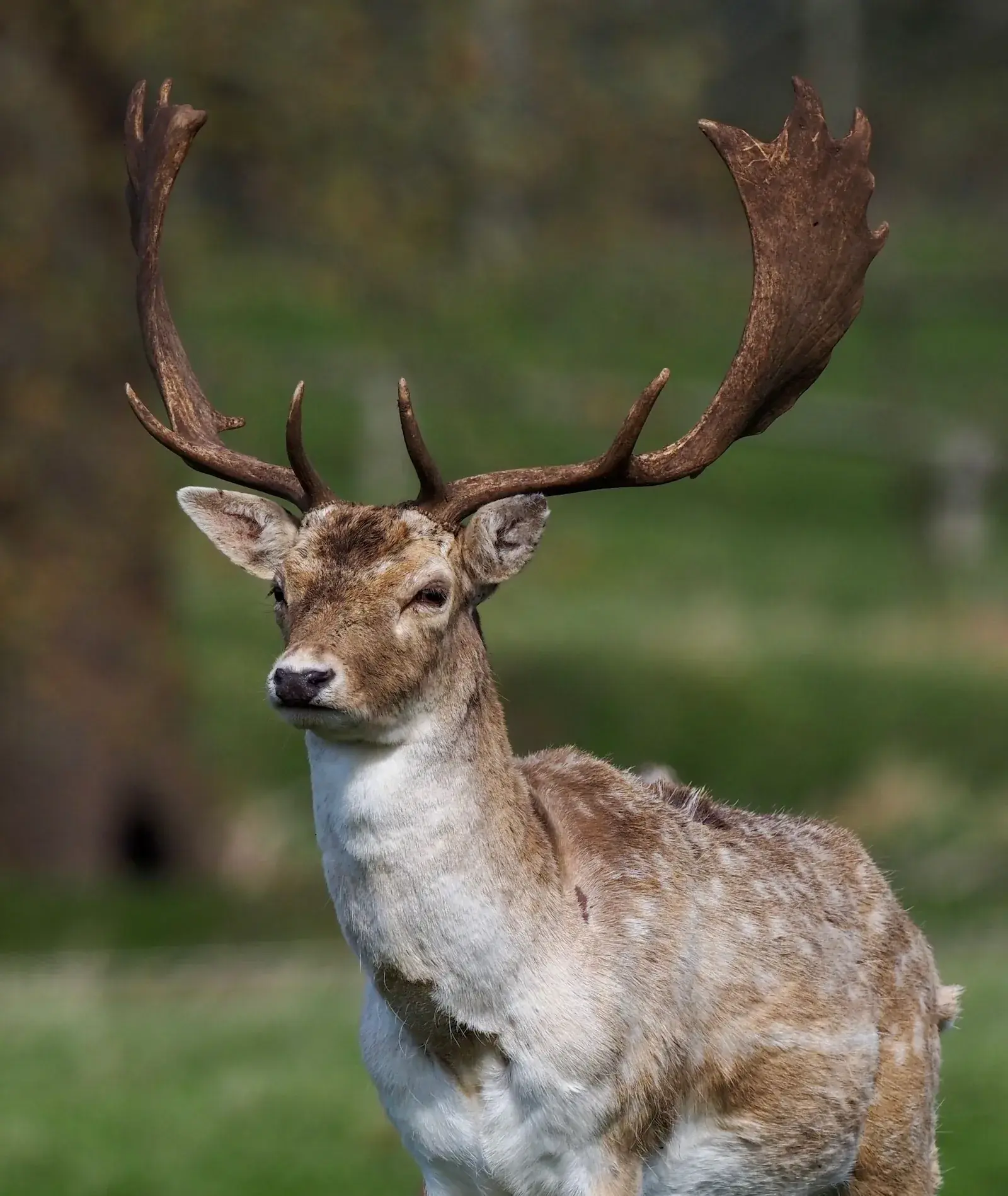
Fallow deer | Photo: Barbara Sheldrake
The fallow deer ‘Dama dama’ is smaller than the red deer, although it is still one of the large land mammals present in Spain. It is easy to recognise by its spotted coat, pale rump patch and, in males, by its broad, flattened antlers, which set it apart from the other Iberian cervids.
Its history on the peninsula is not as simple as that of other species. It was introduced to the Iberian Peninsula by the Romans, although today it maintains populations in different territories and appears in fauna inventories. That ancient arrival makes many people perceive it as a familiar part of the landscape, but its origin and current distribution are strongly conditioned by human management.
In Spain, it is associated with dehesas, estates, hunting grounds, forest clearings, woodland edges and open spaces with nearby refuge areas. Some of the best-known nuclei are in Doñana, Montes de Toledo, Sierra Morena, Extremadura and hunting areas in central and south-western Spain, although it can also appear in other territories where it has been introduced or managed.
The fallow deer is interesting because it occupies an intermediate space between nature and human history. It is not a recently arrived species like the aoudad or the mouflon, but it also cannot be described as if its current distribution were completely spontaneous. Its presence speaks of centuries of introductions, estates, managed Mediterranean landscapes and a very long relationship between wildlife and human uses of the territory.
7. Mouflon, the wild sheep introduced for hunting
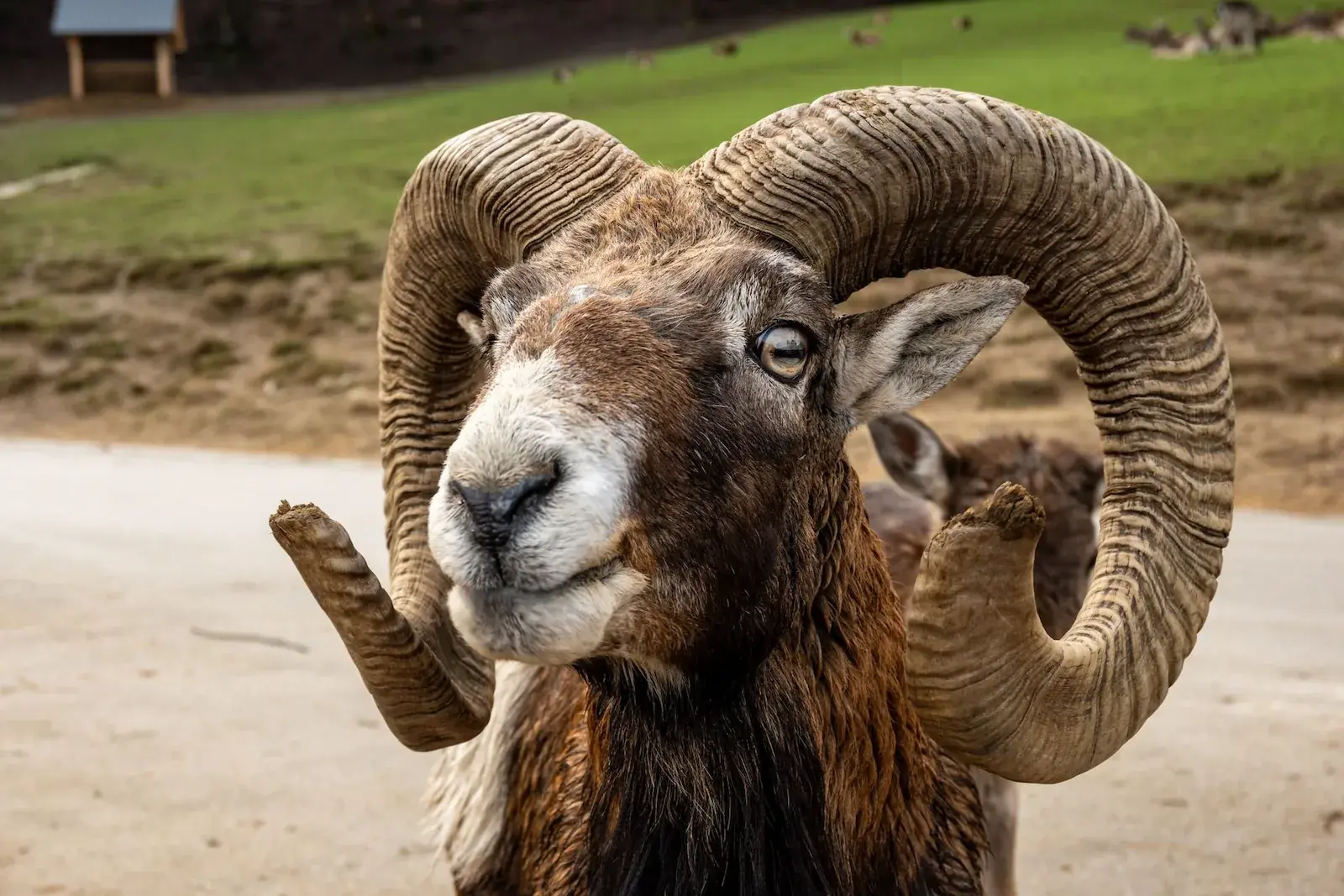
Mouflon | Photo: Vladimir Srajber
The mouflon ‘Ovis aries’ also enters the ranking because of its size, not because of native origin. Males can weigh between 40 and 60 kg, and the species appears catalogued as alien in the Atlas and Red Book of Terrestrial Mammals of Spain.
Its presence in Spain is mainly linked to hunting-related introductions. It has established itself in specific areas, often small or isolated, from releases for big-game hunting or escapes from fenced facilities. That is why it does not have a continuous distribution like the red deer or the wild boar, but rather a fragmented presence closely related to estates, mountains and managed territories.
The mouflon usually occupies sierras, Mediterranean scrubland, pinewoods, holm oak forests, open slopes and terrain with a certain gradient, where it can move with agility and find food. Even so, its presence should not be confused with that of a historic Iberian ungulate. It is a large animal, yes, and part of the fauna that can be found in freedom in some parts of Spain, although its history is the result of human introduction.
That nuance is important because it completely changes the way it should be told. It is not the same to talk about the Iberian ibex, an Iberian endemic with its own evolutionary history on the peninsula, as it is to talk about the mouflon, whose current presence is understood within the context of big-game hunting, estate management and the introduction of alien species.
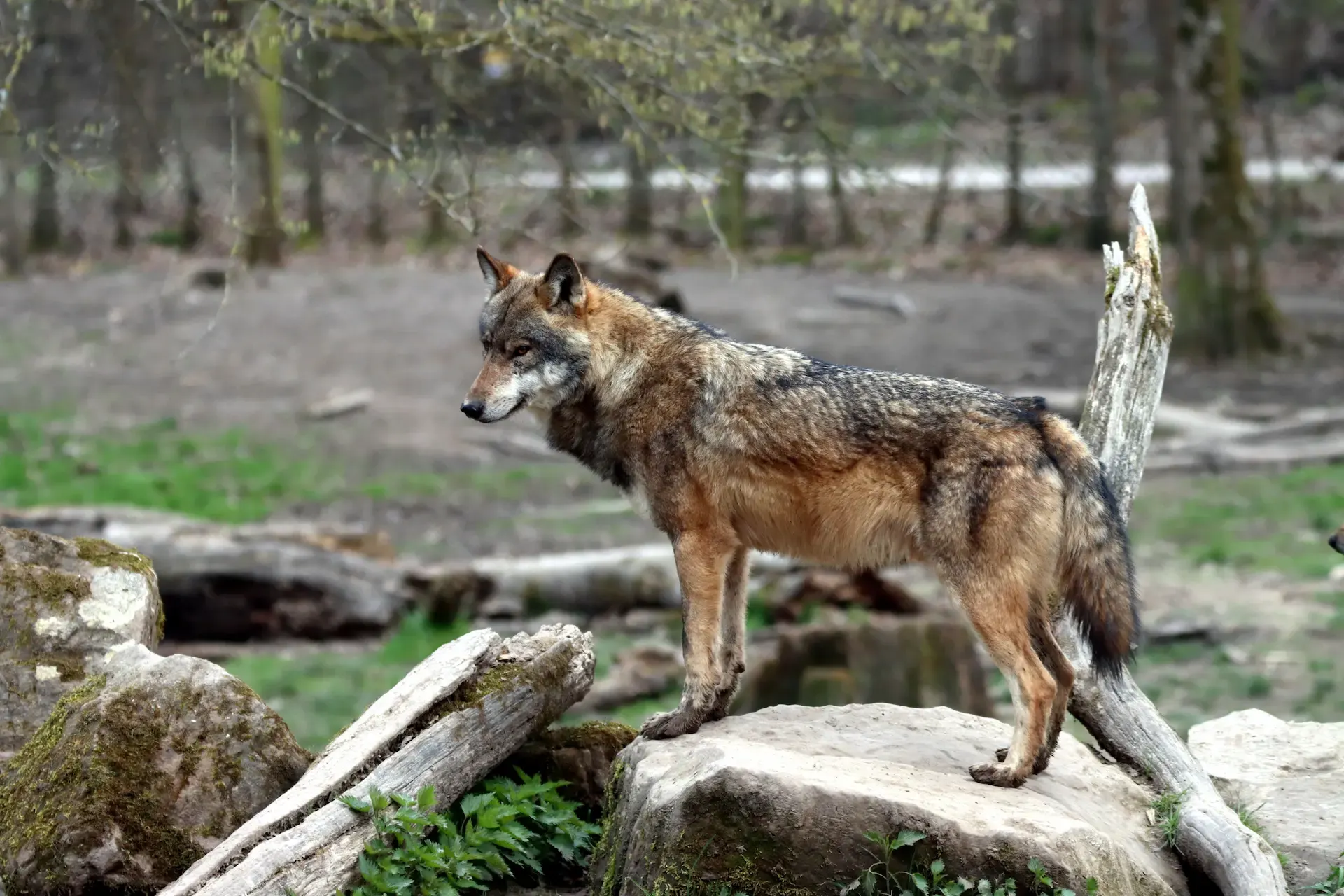
8. Iberian wolf, the great social carnivore of the peninsula
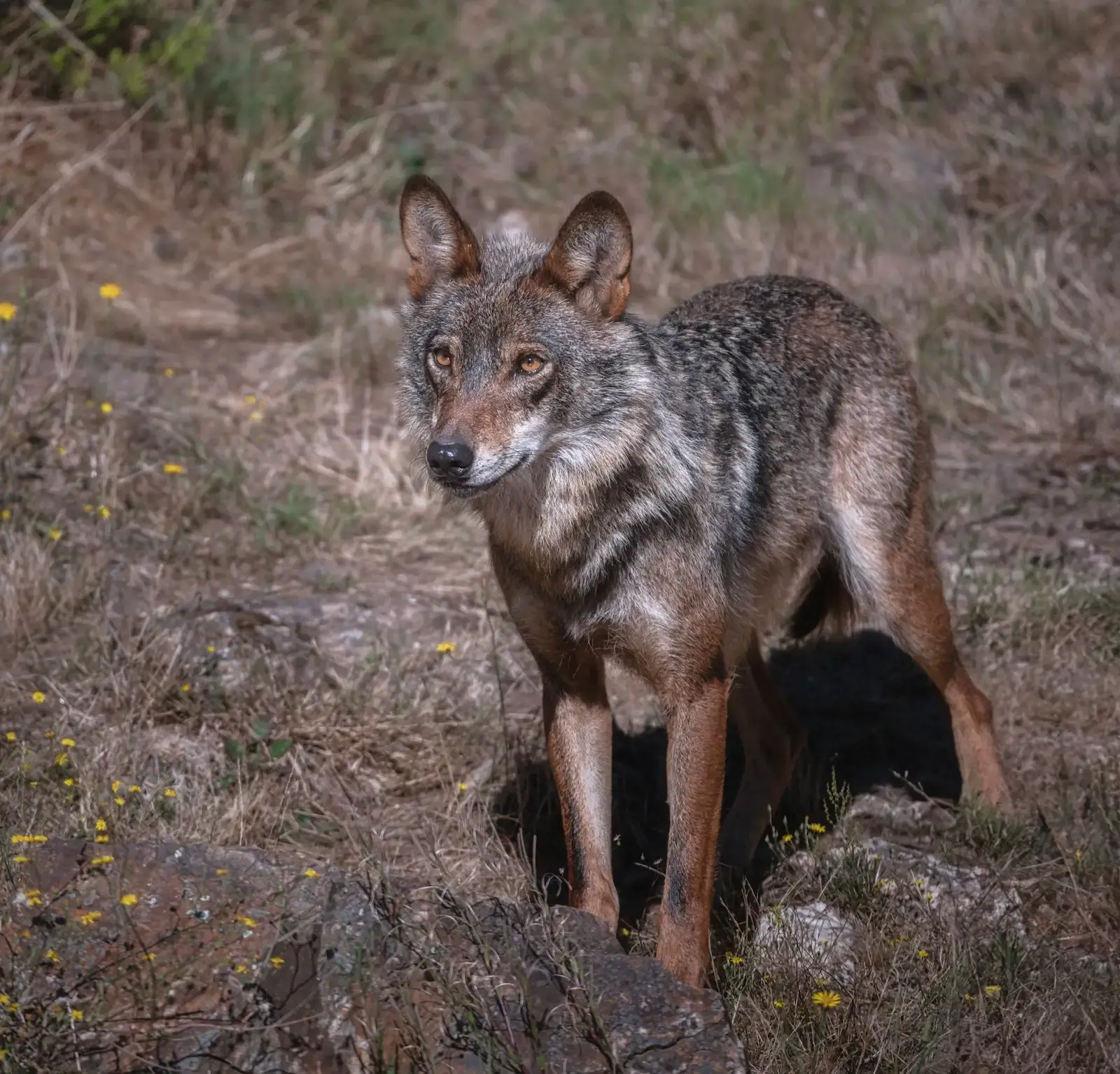
Iberian wolf | Photo: Jesús Esteban San José
The Iberian wolf ‘Canis lupus’ does not reach the weight of the large ungulates, but it is the great social carnivore of the peninsula. Males weigh around 32 kg on average, with confirmed maximums of 46 kg, which places it above other Spanish land carnivores.
Its current distribution is mainly concentrated in the north-western quadrant of the peninsula. It is present across large areas of Castile and León, Galicia, Asturias, Cantabria and northern Portugal, and also appears in areas of expansion or more irregular presence towards the Central System, La Rioja, the Basque Country, Guadalajara or Soria. The Spanish Inventory of Terrestrial Species summarises this evolution well by noting that, after reducing their range during the 19th and 20th centuries, wolves from the north-west recovered and expanded their distribution from 1970 onwards.
Historically, the wolf occupied many more areas of the peninsula, but direct persecution, the use of poison, landscape transformation and conflict with livestock gradually pushed it back. Some isolated populations disappeared, such as those in Extremadura, Salamanca or Sierra Morena, while the large north-western nucleus survived and became the centre of the later recovery.
The wolf can live in very different landscapes. It does not need untouched wilderness in the strictest sense, as it can move through mountains, forests, scrubland, agricultural areas and humanised landscapes. What it needs is prey availability, territorial continuity and less conflictive coexistence with human activities. That is why talking about the wolf in Spain is never just talking about an animal, but also about territory, livestock, legislation, social perception and conservation.
9. Roe deer, small among cervids but large within the ranking
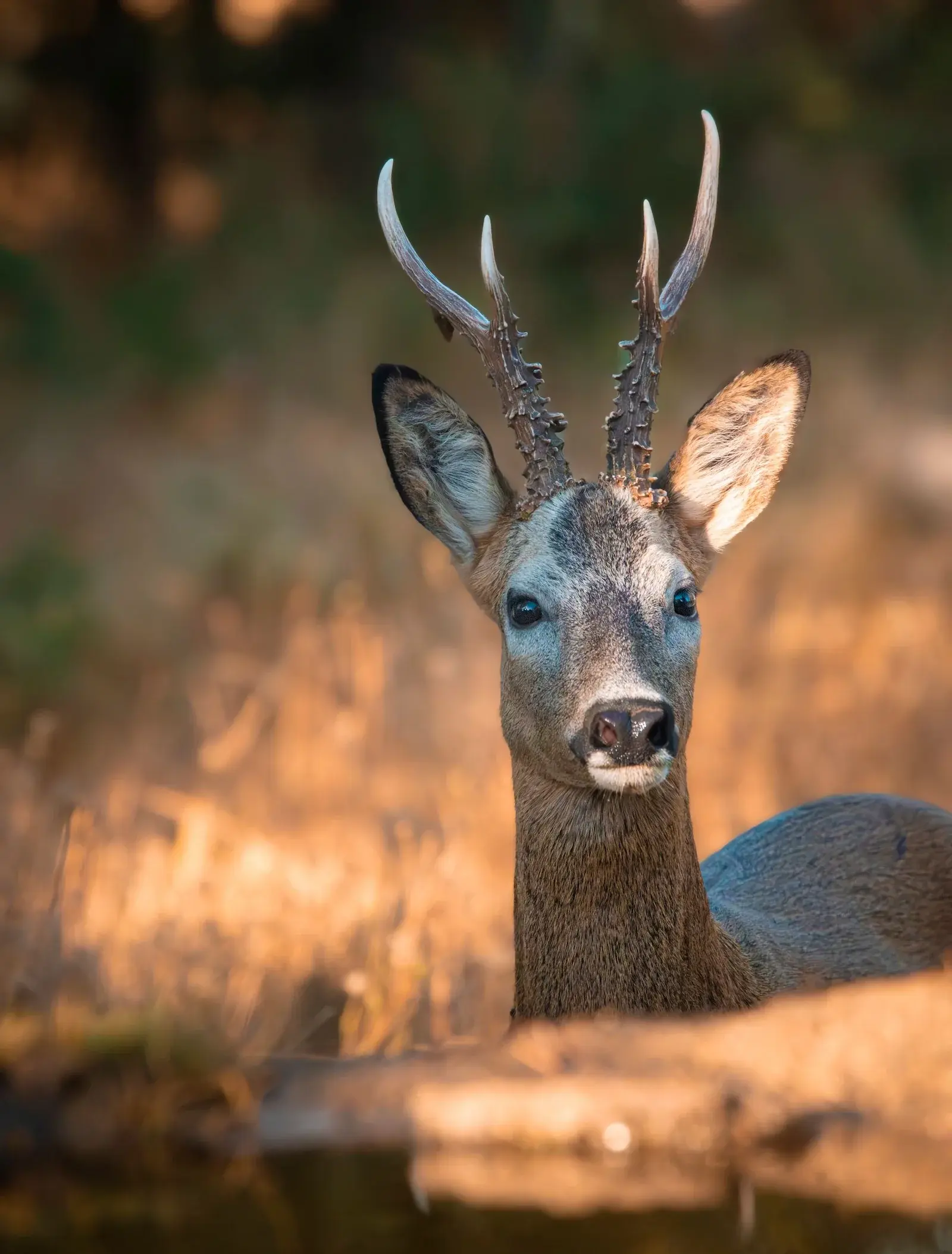
Roe deer | Photo: Jesús Esteban San José
The roe deer ‘Capreolus capreolus’ is the smallest European cervid, although it still enters this list when talking about the large land mammals present in Spain. Its weight usually ranges between 16 and 30 kg, which leaves it far from the red deer, but above many other Spanish wild mammals.
Its Spanish distribution has changed greatly. Traditionally it was more closely linked to the north, with an important presence in the Pyrenees, the Basque Country, the Cantabrian Mountains, Ancares, Montes de León and Galicia. From those nuclei, and with the help of restocking in some territories, it has colonised new areas of the interior of the peninsula, while in the south it remains more localised, with populations such as those in Montes de Toledo and other favourable enclaves.
The roe deer lives in forests, mosaics of scrub and meadow, crops with nearby cover, forest clearings and landscapes where it can feed without being too exposed. It is not an animal of large open spaces in the way the red deer is, but rather a discreet, nervous species closely linked to edges, ecotones and refuge areas.
Its recent history is one of silent expansion. The recovery of forest masses, the abandonment of certain rural uses, reduced pressure in some areas and reintroductions have favoured its return to territories where it was previously scarce or had disappeared. That is why, although it is small for a cervid, its presence says a lot about the transformation of rural and forest landscapes in Spain.
10. Chamois, the specialist of the Cantabrian and Pyrenean mountains
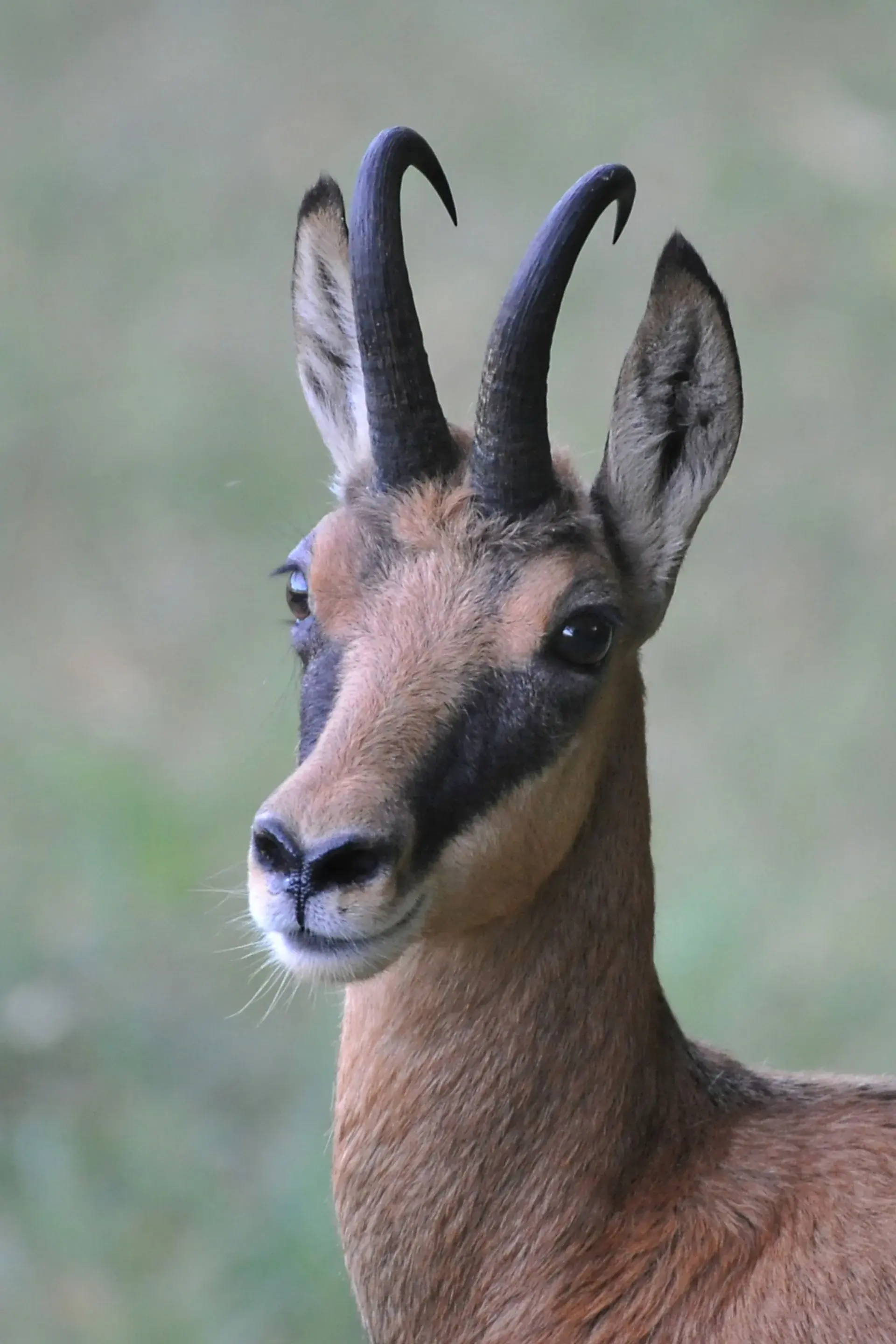
Chamois | Photo: Sylvain Rdlt
The chamois ‘Rupicapra pyrenaica’ closes this ranking. It is a mountain bovid, smaller and more slender than the Iberian ibex, with approximate weights of 20 to 28 kg.
On the Iberian Peninsula, it mainly lives in two large areas. One is in the Cantabrian Mountains, where the Cantabrian chamois occurs, and the other is in the Pyrenees, where the Pyrenean chamois or sarrio lives. There are recognised subspecies-level differences between both populations, although there has also been taxonomic debate about their classification over the years.
Its habitat is closely linked to the mountains. It can occupy forests and open spaces between 1,000 and 2,800 metres above sea level, alternating between pastures, rocky areas, slopes, scree, subalpine zones and forested areas depending on the season. In winter it may seek more sheltered or lower areas, while in favourable periods it uses high pastures and open terrain.
The chamois represents a very different way of being a large mammal. It is not impressive because of its weight, but because of its adaptation. It is built to move across slopes, escape through impossible terrain and live in landscapes where relief dictates everyday life. In addition, its recent history has also been shaped by disease, hunting pressure, conservation and population management in mountain areas.
Why some of these animals are not native
This ranking does not include only native fauna. It includes wild land mammals present in Spain and ordered by approximate size, and that difference matters.
The brown bear, the red deer, the wild boar, the Iberian ibex, the wolf, the roe deer and the chamois are part of Spain’s native fauna. In contrast, the aoudad and the mouflon are introduced alien species, while the fallow deer has a more nuanced history, with its current presence strongly influenced by ancient introductions, hunting management and localised populations.
That is why placing them all in the same list without explaining their origin would be confusing. At the same time, leaving them out entirely would also make a ranking of the largest land mammals currently living in Spain incomplete. The key is to tell it properly, distinguishing between size, current presence, origin and ecological role.
What about horses that live in freedom
The case of horses deserves a separate explanation. In Spain there are autochthonous horse breeds that may live in freedom or semi-freedom, such as the Retuertas horse in Doñana. Many individuals live in a feral state and the breed has important ecological and historical value.
The Retuertas horse is linked to the Doñana Natural Area, especially the Doñana Biological Reserve and the Guadiamar Reserve. Its history is tied to traditional work in the marshes, to the former inhabitants of Doñana and to the conservation of a singular equine population, to the point that it is considered one of the oldest breeds in Europe and was officially recognised as an autochthonous breed.
Even so, we do not include it in the main ranking because it does not belong to the same category as the wild species in this article. These are domestic, autochthonous or feral horse breeds, with their own management and a history linked to humans.
In other words, if the article were about large land animals living in freedom or semi-freedom in Spain, horses would have to be discussed. But if we are talking about wild land mammals, it is more rigorous to leave them out of the top 10 and explain the nuance.
What this ranking reveals about Spain’s fauna
This ranking shows that Spain preserves a larger, more diverse and more complex land fauna than we sometimes imagine. There are mountain giants like the brown bear, large ungulates like the red deer, adaptable species like the wild boar, Iberian endemics like the Iberian ibex and social carnivores like the wolf.
However, it also shows that today’s fauna is not a fixed picture. It has been shaped by glaciations, refuges, local extinctions, introductions, reintroductions, hunting management, conservation and landscape change. Some animals have been part of these ecosystems for thousands of years, while others arrived through human decision and today force us to think about management, impact and responsibility.
Knowing where the largest land mammals in Spain live is not only useful for placing them on a map. It helps us better understand the natural history of the territory, the traces we leave on it and the importance of looking at wildlife with more context.
At NatSnap, we believe that getting to know animals is also a way of getting closer to nature. And sometimes, a list of large species can open up a much more interesting question. What kind of landscape do we need to conserve so they can continue to be part of it?
Frequently asked questions about the largest land mammals in Spain
What is the largest land mammal in Spain?
The brown bear is the largest land mammal in Spain. Adult males can weigh well over 100 kg and reach much higher weights in some cases.
What is the largest wild ungulate in Spain?
The red deer is the largest native wild ungulate on the Iberian Peninsula. Males can reach between 80 and 160 kg.
What is the largest land carnivore in Spain?
The brown bear is the largest land carnivore in Spain. If we are talking about social carnivores and strict predators, the Iberian wolf plays a key role.
Is the aoudad native to Spain?
No. The aoudad is a North African species introduced to Spain. It is present in freedom in some territories, but it is not part of native Iberian fauna.
Is the fallow deer native or introduced?
The fallow deer has a complex history. It was introduced to the Iberian Peninsula by the Romans, although today it appears in official inventories and maintains populations in different territories.
Why is the Retuertas horse not included in the ranking?
Because the Retuertas horse is an autochthonous horse breed, not a wild species equivalent to the bear, deer or wolf. Although many individuals live in a feral state, it belongs to a different category.
Where do Spain’s large land mammals live?
They live in very varied habitats, from northern mountain ranges and the Pyrenees to Mediterranean forests, dehesas, rocky sierras, scrubland, agricultural areas and high mountain landscapes. Each species occupies different territories depending on its biology, origin and degree of adaptation.