Otters live in many of the rivers, reservoirs, wetlands and other aquatic ecosystems across mainland Spain, from the Atlantic river basins of Galicia and Asturias to the Ebro, Tagus, Guadiana and Guadalquivir. Although they disappeared from numerous areas during the 20th century, their recovery has allowed them to return to many of these places, including some close to cities.
However, the presence of otters in a river does not mean they are easy to spot. You could walk along its banks for years without ever encountering one, even though you regularly pass through places they visit. The explanation lies in their elusive behaviour, their ability to move through water and their capacity to adapt their activity patterns to human presence.
The protagonist of this story is the European otter 'Lutra lutra', one of the most fascinating mammals in our wildlife. Its return to many Spanish rivers is good news for conservation, but also an opportunity to learn to see aquatic ecosystems differently, because sometimes the most interesting signs are not found in the animal we see, but in the clues it leaves behind when nobody is watching.
The European otter, a resident of our rivers that we rarely see
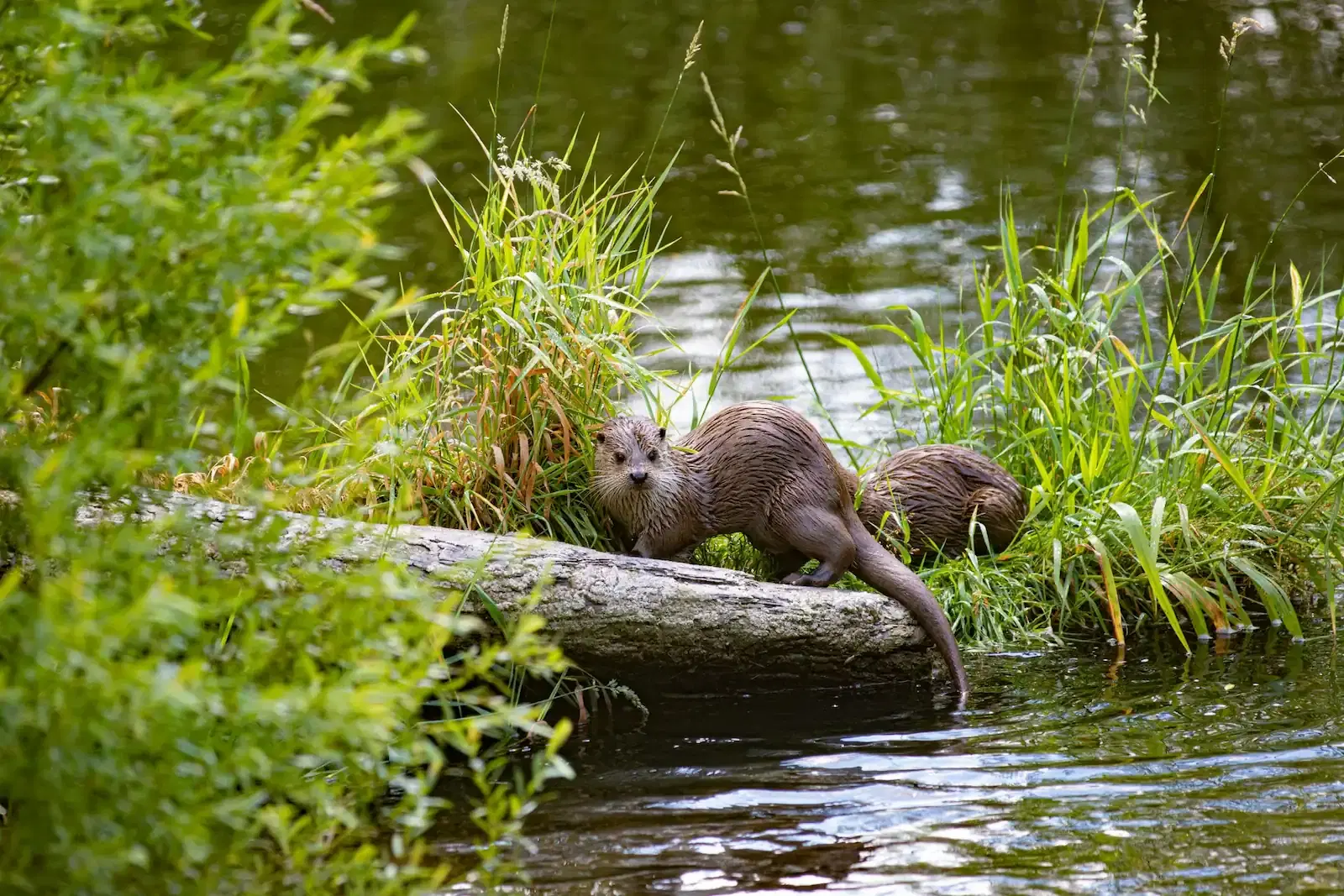
Otters emerging from the river | Photo: Andreas Schantl
The otter is a carnivorous mammal belonging to the mustelid family, which also includes weasels, badgers and polecats. However, its anatomy is particularly well adapted to aquatic life, with a long, flexible body, relatively short legs, webbed toes and a muscular tail that helps it manoeuvre while swimming.
Its fur is dense and water-resistant thanks to its structure and the care it takes to maintain it, while its eyes, ears and nostrils are positioned towards the top of its head, allowing it to observe its surroundings while keeping most of its body submerged. It also has highly sensitive whiskers that help it detect movement and locate prey underwater, even when visibility is poor.
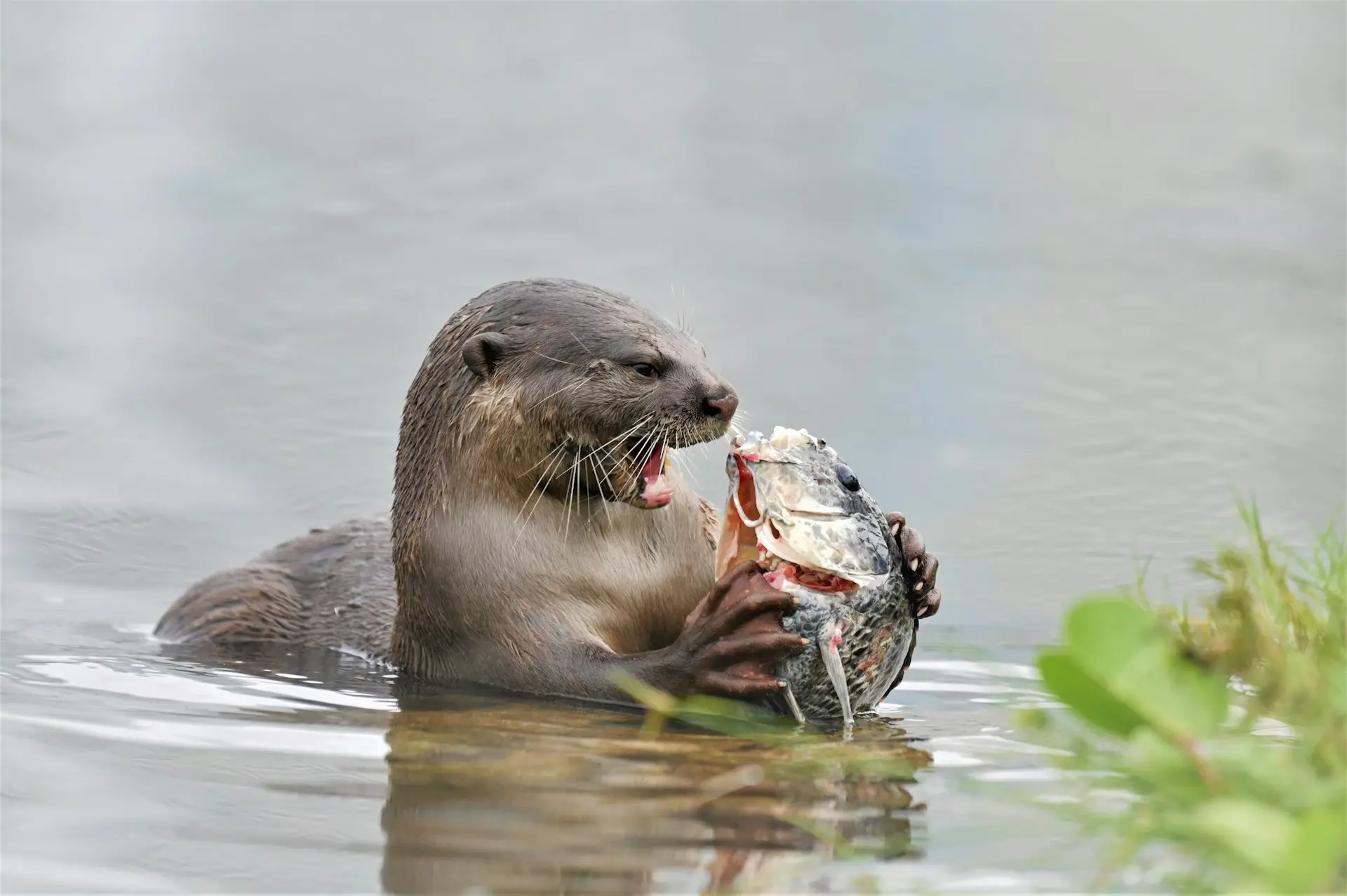
Although many people imagine otters feeding exclusively on fish, their diet is considerably more varied. They can eat crayfish, amphibians, reptiles and even small birds or mammals, depending on the resources available and the characteristics of the river. This dietary flexibility helps explain why they can live in such different environments, from cold mountain rivers to Mediterranean wetlands and estuaries.
But perhaps the most surprising thing is that otters do not need a river completely isolated from people to survive. They can use watercourses close to agricultural areas, villages and even cities, provided they find food, shelter and sufficiently favourable conditions, although it is precisely in these environments that they often adapt their behaviour to remain unnoticed.
Where otters live in Spain
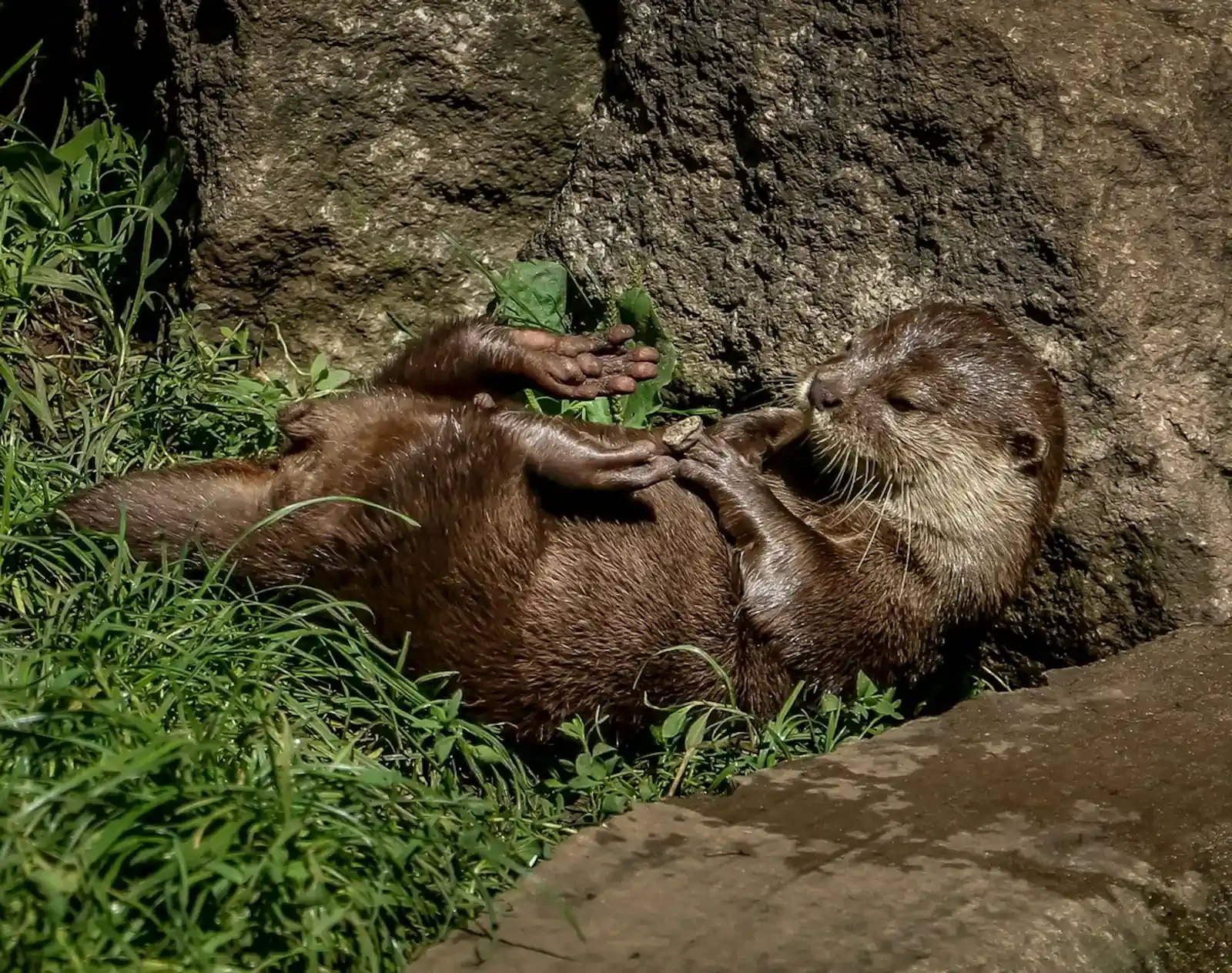
Otter lying down with a stone | Photo: Ray Harrington
The European otter has recovered a significant part of its historical range and can now be found in many aquatic ecosystems across the Iberian Peninsula, from mountain streams to major river basins, lagoons, reservoirs, estuaries and some coastal stretches.
Although we tend to associate otters with crystal-clear rivers surrounded by forests, their presence depends on a combination of factors such as food availability, shelter, habitat quality and connectivity between bodies of water. In fact, after decades of recovery, the species is once again present in much of the Iberian Peninsula's inland waters, although its distribution remains uneven and there are still areas where it is scarce.
To better understand where otters live in Spain, it is worth exploring some of the major river systems where their presence has been documented and discovering what makes each region distinctive.
Galicia and the Cantabrian coast, some of their major historical refuges
The north-west of the peninsula was essential to the otter's survival during its most difficult decades, as Galicia, Asturias and Cantabria retained populations in numerous rivers while the species disappeared from much of eastern and central Spain.
In Galicia, otters are associated with an extensive network of rivers and tributaries, including the Miño, Sil and Ulla basins. The latter contains numerous watercourses and riverside woodlands where the species finds favourable conditions, to the extent that it is part of the characteristic wildlife of the Ulla basin, alongside the kingfisher, white-throated dipper and Iberian desman.
In Asturias, the Eo, Navia, Narcea, Nalón and Sella river systems form part of a highly diverse river landscape, with watercourses connecting mountain areas, forests, livestock-farming valleys and estuaries. A similar situation exists in Cantabria, where otters find suitable habitats in different river basins flowing down from the Cantabrian Mountains towards the sea.
Nevertheless, the fact that northern Spain has retained important populations does not mean that all its rivers are in good condition. Barriers, pollution, changes to riverbanks and certain human activities continue to affect freshwater ecosystems, meaning that the future of these populations also depends on conserving the surrounding landscape.
Castile and León, between mountain rivers and the Douro basin
Castile and León occupies a particularly interesting position because its rivers connect mountain ranges with extensive agricultural areas, valleys and major watercourses, allowing otters to use very different habitats.
The Douro basin includes rivers such as the Esla, Órbigo, Tormes, Pisuerga and Carrión, along with numerous tributaries flowing through León, Zamora, Salamanca, Palencia, Valladolid, Burgos and other provinces. In these areas, otters can use both densely vegetated stretches and more open sections, provided they find food and places to shelter.
The Órbigo River, in León, is particularly interesting because it has featured in recent research into the species' behaviour. Studies in these rivers have shown that otters do not always follow the same schedule, but instead adjust their activity according to environmental conditions and human presence.
As a result, the river landscapes of Castile and León not only offer opportunities to study their distribution, but also help us understand how an apparently elusive animal manages to use territories where nature and human activities have coexisted for centuries.
Extremadura and the Tagus and Guadiana basins
Extremadura was also one of the great refuges for Iberian otters, particularly thanks to its extensive river networks, reservoirs, streams and areas of Mediterranean woodland.
The species is associated with the Tagus and Guadiana basins, with populations in different rivers and tributaries flowing through Cáceres and Badajoz. These networks connect landscapes as varied as the mountain ranges of northern Cáceres, the deeply incised valleys of the Tagus, the dehesas and the plains of the Guadiana.
Within the latter basin, otters are part of the wildlife found in different river environments, including sections of the Hojalora and Tirteafuera rivers, in Ciudad Real, illustrating how their distribution extends beyond administrative boundaries and depends on the ecological continuity of watercourses.
One of the most interesting aspects of Extremadura is that otters can use bodies of water strongly influenced by Mediterranean seasonality. During dry periods, some streams lose much of their flow and the animals need to move between sections that retain water and food, while rainfall can change connectivity and feeding opportunities.
Madrid and central Spain, where otters are also returning to the city
The history of otters in central Spain shows that their recovery is not limited to the most remote natural areas. Although they disappeared from numerous polluted or altered river stretches for decades, some river basins have once again developed conditions that allow them to return.
The Community of Madrid forms part of the Tagus basin, with rivers such as the Lozoya, Jarama, Manzanares and Henares, whose surrounding environments vary considerably from one stretch to another.
One of the most remarkable events took place in April 2026, when a municipal camera recorded an otter in the urban stretch of the Manzanares River, after tracks and droppings consistent with the species had been found. The sighting confirmed that at least one individual had returned to an environment from which otters had disappeared for decades, although a single record is not enough to establish that a breeding population has become established.
This case is particularly interesting because it shows that wild animals do not necessarily need to move far away from us to live nearby. Sometimes they use the same landscapes we walk through every day, only at times and under conditions that make encounters with them difficult.
Catalonia and the Ebro basin, a recovery that changed the map
The history of otters in Catalonia is one of the clearest examples of their recovery in Spain, as the species suffered a severe decline during the 20th century, particularly in the most polluted and heavily modified Mediterranean river basins.
Between 1995 and 2001, a reintroduction programme was carried out along the Muga and Fluvià rivers in Girona, using individuals from Asturias, Extremadura and Portugal. The programme helped establish a population that subsequently expanded into other territories, while different naturally occurring populations were also spreading through the river networks.
Today, the otter has a much wider distribution and has been recorded in the Segre, Noguera Pallaresa, Noguera Ribagorçana, Ter, Fluvià, Muga and Llobregat rivers, as well as other watercourses and sections of the Ebro.
Its expansion has even reached river mouths such as those of the Besòs and Llobregat, as well as the Ebro Delta, demonstrating that it can use very different environments and that its recovery is not limited to large mountain rivers.
However, important differences remain between river basins, meaning that the presence of otters in Catalonia does not imply that every watercourse supports an equivalent population.
Andalusia and south-eastern Spain, where water makes all the difference
In Andalusia, otters are associated with different river basins, from sections of the Guadalquivir and its tributaries to rivers in Sierra Morena and certain areas of the south-east.
The upper Guadalquivir basin, particularly in Jaén, has been important for the species, while conditions elsewhere vary more considerably due to water availability, agricultural pressure and modifications to river channels.
In Granada, for example, otters have been recorded in systems such as the Castril River and the Guadiana Menor, where river connectivity is essential for maintaining populations.
Further east, the Region of Murcia provides another example of recovery. Although this territory is particularly affected by water scarcity and the modification of many rivers, otters are once again using different watercourses within the Segura basin.
During monitoring carried out in 2024, signs of otter presence were detected at 49.6% of the 113 survey stations, distributed across the Segura, Alhárabe, Quípar, Argos, Mula and Luchena rivers. On the Segura itself, signs were found at 29 of the 47 surveyed locations, although these results refer to the stations studied and should not be interpreted as the percentage of all Murcian rivers occupied by otters.
Research of this kind helps us understand something fundamental. Otter recovery does not happen uniformly, but depends on the environmental history of each river basin and the actual opportunities to find water, food and connections with other territories.
From disappearing from many rivers to making a comeback
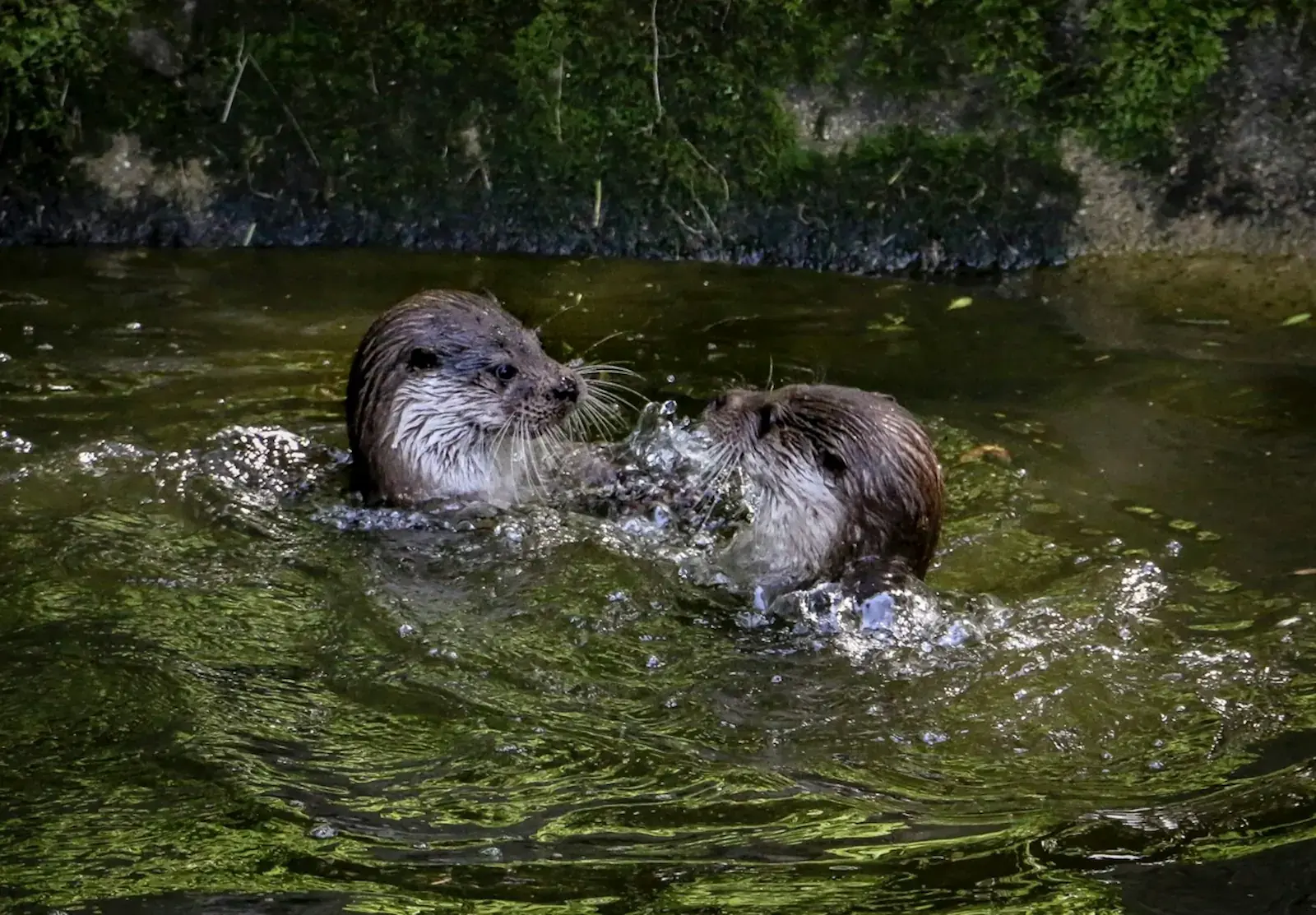
Otters in the river | Photo: Ray Harrington
To understand the current situation of otters in Spain, we need to look back several decades, when their distribution was much more restricted and many rivers had lost a significant part of their biodiversity.
Until the middle of the 20th century, the species occupied a wide variety of aquatic ecosystems across the peninsula, including territories we now associate with intensive agriculture, major cities or relatively dry climates. However, from the 1950s onwards, a decline began that intensified over the following decades, coinciding with a profound transformation of Spain's rivers.
Industrialisation, untreated wastewater, persistent pollutants, the destruction of riverside vegetation, water abstraction and direct persecution affected numerous populations. Furthermore, the fragmentation of watercourses made movement more difficult and left increasingly isolated groups, particularly in eastern Spain and the most heavily modified areas.
The situation became so concerning that, during the 1980s, national surveys had to be organised to establish where otters were surviving and how their distribution was changing.
How their recovery began
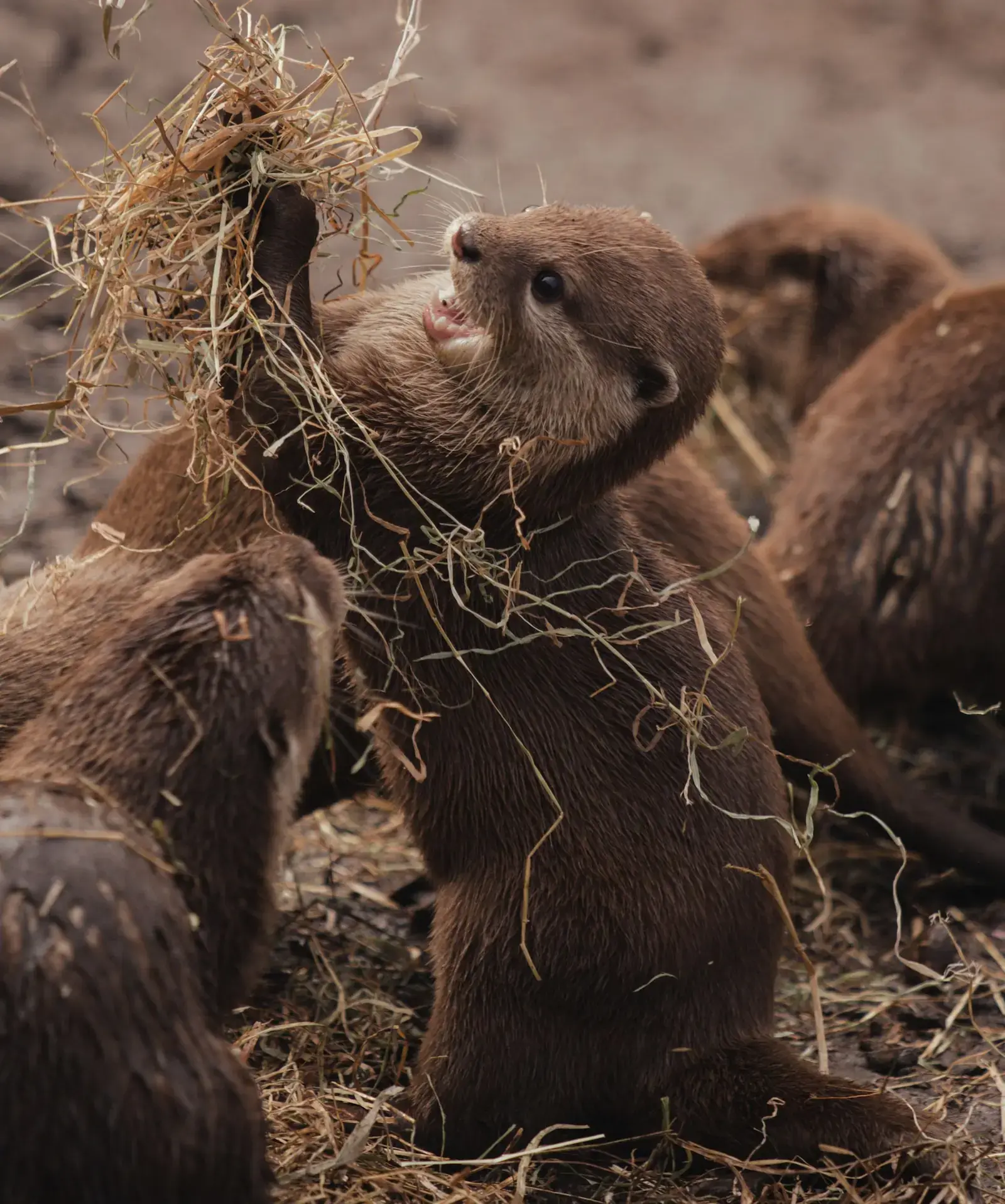
Otter with dry grass | Photo: Ellie Burgin
The recovery started to become noticeable from the mid-1980s onwards, helped by reductions in certain sources of pollution, improvements in wastewater treatment and the legal protection of the species, although results varied considerably between regions.
Opportunities for natural recolonisation from populations that had survived in better conditions also played a role, particularly in western and northern Spain. In some cases, such as Catalonia, specific reintroduction programmes were carried out, but much of the expansion across Spain can be explained by the animals' natural return to territories they had previously abandoned.
Successive national otter surveys have made it possible to document this recovery, particularly along the Mediterranean side of the peninsula. The first survey took place in 1984–1985, the fourth covered the period from 2014 to 2018, and the fifth began in 2024, with the aim of continuing to update our knowledge of the species.
Nevertheless, their return does not mean that every problem has been solved. Rivers continue to face pollution, droughts, changes in water flow, fragmentation and habitat loss, which means conserving otters also requires protecting the ecosystems on which they depend.
Why it is so difficult to spot an otter in the wild
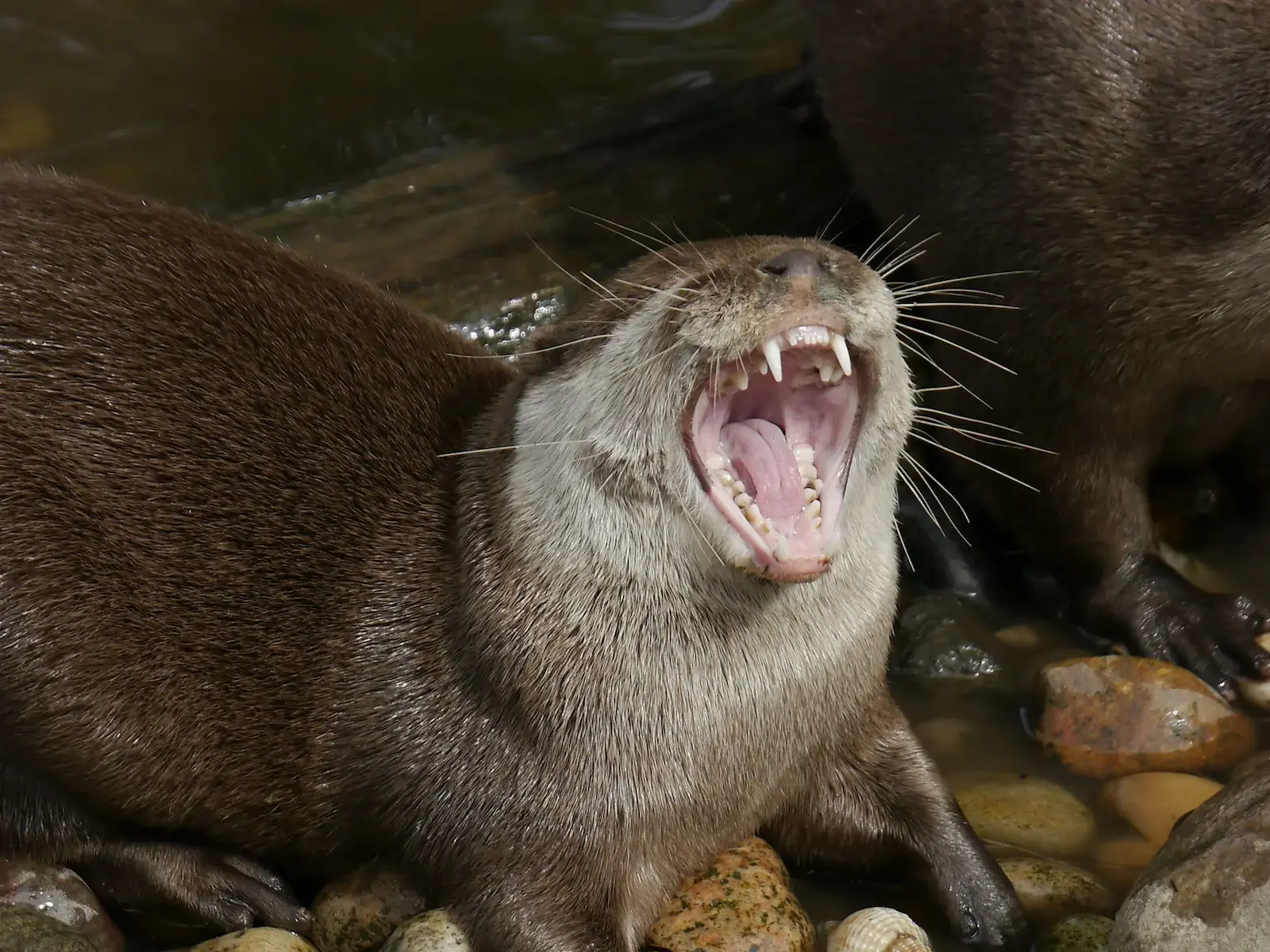
Yawning otter | Photo: Steve Payne
Unlike other mammals that can be observed in open spaces, otters combine a lifestyle closely linked to water with elusive behaviour and a remarkable ability to detect what is happening around them.
They can swim with only a small part of their head visible, disappear beneath the surface in a matter of seconds or shelter among roots, vegetation and other features along the riverbank. They also use different resting and feeding areas, so finding signs in one stretch does not mean an otter will remain there.
But there is another particularly interesting reason why they are so difficult to spot. Otters can change their activity patterns to avoid encounters with people.
Human presence also changes their routines
Research published in September 2025 analysed otter behaviour over two years in a dozen rivers across Asturias, León and Madrid, using camera traps.
The study collected more than a thousand otter records and showed that their activity was influenced both by environmental characteristics and human presence. During the fishing season, the animals reduced their daytime activity and became more nocturnal, while in wide rivers with abundant vegetation they were more active during the day.
Activity peaked around dawn and dusk, although the response varied according to vegetation cover and the intensity of disturbance.
This adaptation of activity patterns to human presence helps explain why we can walk beside a river regularly used by otters without ever spotting one. They have not necessarily disappeared from that location, but may simply use it when fewer people are around.
It also shows that responsible wildlife observation is not just about maintaining physical distance, because noise, movement and certain activities can alter animal behaviour even when we never actually see them.
How to tell whether otters live in a river without seeing them
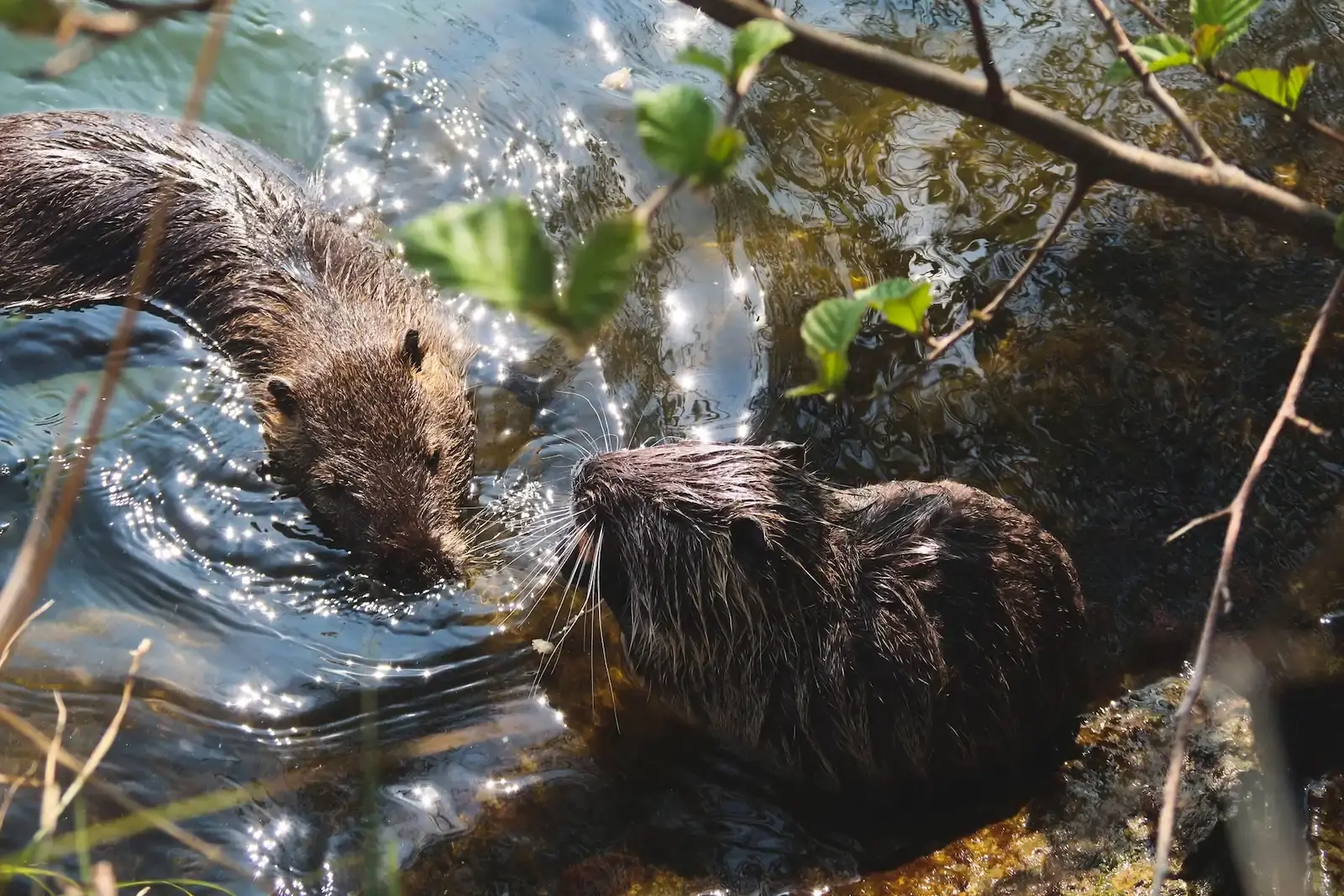
Two otters swimming | Photo: Lora Rikky
An otter can travel along a stretch of river for days without anyone seeing it, yet still leave signs of its activity along the banks. Although it spends much of its life in the water, it also uses riversides to move around, rest, feed and communicate with other individuals.
Learning to recognise these signs allows us to interpret what is happening in an aquatic ecosystem, even when there appear to be no animals nearby.
In fact, many studies of otter distribution rely primarily on signs of presence, because finding tracks, droppings or other characteristic marks is usually more effective than trying to observe an otter directly.
However, not all signs are equally reliable and some can be confused with those left by other animals. That is why it is important to understand their characteristics and consider the surrounding environment before drawing conclusions.
1. Five-toed footprints that do not always show five marks
Otter footprints are often found in wet mud, fine sand or soft sediments near the water, particularly where the animals enter and leave rivers.
Their feet have five toes, but that does not mean every footprint will show five perfectly defined marks. Depending on the moisture, depth and texture of the ground, some toes may be hidden or barely leave an impression, while the webbing between them is not always visible either.
The footprints tend to be relatively rounded and measure approximately 4 to 8 centimetres across, although there are differences between front and hind feet, as well as between individuals of different sizes.
In addition to the number of toes, it is worth examining the central pad and the overall arrangement of the footprint, as other semi-aquatic mammals, particularly the American mink, can also leave tracks near rivers.
Therefore, if we find a print that appears consistent with an otter, the most sensible approach is to photograph it without disturbing it and look for other signs in the surrounding area.
2. Droppings that act as messages to other otters
It may sound strange, but droppings are one of the most useful clues for recognising otter presence and understanding part of their behaviour.
These animals use scent signals to communicate information to other individuals, which is why they often leave their droppings in relatively prominent places, such as rocks, roots, logs or raised surfaces close to the water.
Their appearance varies depending on what the animal has eaten and how much time has passed since they were deposited. When fresh, they may be moist and dark, while as they dry they become paler and more fragmented.
They also frequently contain remains of prey, particularly small fish bones, scales, bone fragments or pieces of crustacean shells.
Recent research has also shown that otters can quickly detect the scent of other individuals, using olfactory information to recognise their presence and respond to it. These signals should therefore not be interpreted simply as a way of defending territory, but as part of a more complex communication system.
Most interestingly, droppings, also known as spraints, allow us to detect activity without finding the animal itself, although they should never be touched, handled or sniffed directly, both for safety reasons and to avoid disturbing the scent signals used by the otters.
3. Small trails connecting vegetation to the river
Although they are excellent swimmers, otters also move over land when they need to change river stretches, cross an area of riverside vegetation or connect different parts of their territory.
If they repeatedly use the same route, they may leave narrow trails where vegetation has been flattened or pushed aside, creating paths that connect more sheltered areas with the water.
These marks are easier to notice on banks with tall grass, reeds or scrub, where the contrast between undisturbed vegetation and the well-used route is more obvious.
However, interpretation requires caution. A small path leading to the river may also have been used by other mammals, so it does not prove the presence of an otter on its own.
These trails become more meaningful when found near compatible footprints or other signs of activity, although observing them should never be a reason to enter dense vegetation or approach natural refuges.
4. Slides and worn surfaces beside the water
In some stretches, otters use slopes to enter or leave the river and, when these movements are repeated, they can leave smoother patches of mud or strips of flattened vegetation.
These routes are often known as slides, although they do not always look the same and are not formed exclusively by an animal sliding on its belly.
The wear depends on the slope of the bank, the type of soil, moisture and how frequently the route is used. Sometimes a polished surface stands out from the surrounding ground, while at other times the only visible sign is a narrow strip of flattened vegetation.
It is important to avoid jumping to conclusions here too, because water, erosion and the movement of other animals can create similar marks.
Slides, footprints and flattened vegetation are among the clues that can reveal otter activity, but they must be interpreted in the context of the surrounding environment.
5. Fish and crayfish remains on the riverbank
Feeding can also leave clues to the presence of otters, particularly when they carry prey onto a rock, log or area close to the water to eat it.
In these places, we may find fish bones, scales, small skeletal fragments, fish remains or pieces of shells and crayfish claws.
In many Spanish rivers, crayfish form part of the otter's diet, including the red swamp crayfish, an invasive species present in numerous river basins across the peninsula.
In fact, a study carried out on the Francia River, in Salamanca, found that fish made up the main part of the otters' diet, while red swamp crayfish were among their most important supplementary prey.
However, finding a crayfish claw or fish remains beside a river does not automatically mean an otter was responsible, because waterbirds, mink and other predators can leave similar signs.
These remains are therefore more useful when they appear alongside other compatible evidence and are interpreted within the wider context of the ecosystem.
How to interpret tracks and signs without confusing them
A footprint may be incomplete, a trail may belong to several different animals and feeding remains do not always reveal which predator left them behind.
However, when several signs appear together and their characteristics are consistent with those of an otter, we can build a much more informed interpretation.
This does not mean that finding three different signs guarantees the species is present, because wildlife tracking does not work like a mathematical formula. What matters is learning to distinguish genuinely diagnostic signs from those that merely suggest animal activity.
The SECEM guide to mammal field signs allows readers to explore these differences in greater depth, which is particularly useful for anyone who wants to learn to recognise wildlife without necessarily seeing the animals themselves.
And there is something fundamental to remember here. Looking for tracks should never become an excuse to pursue otters, search for their dens or disturb stones and vegetation. Very often, it is enough to pay attention to what we find from paths and permitted access areas, photograph signs without touching them and continue along our route.
When are you most likely to see otters in Spain?
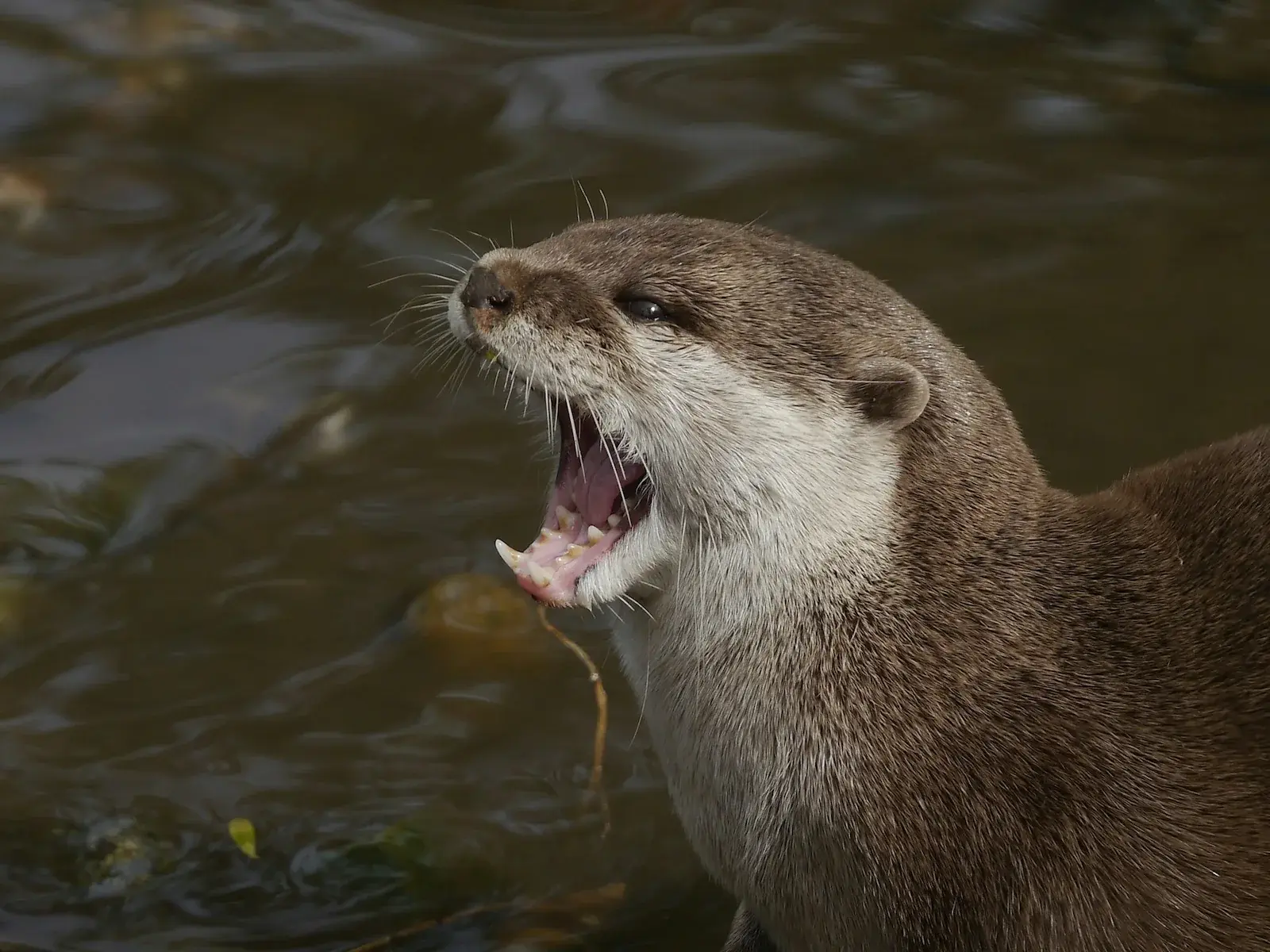
Close-up of an otter | Photo: Steve Payne
Although otters can be active at different times of day, dawn and dusk often offer good opportunities to observe them, particularly in quiet places with little human activity.
However, there is no single season that guarantees more sightings in Spain, because their activity depends on the characteristics of the river, food availability, weather conditions and disturbance in the surrounding area.
In some territories, otters can be seen during the day, especially where they have sufficient shelter and experience little disturbance, while elsewhere they maintain predominantly nocturnal habits.
Furthermore, unlike species with highly concentrated breeding seasons, otters can reproduce at different times of the year. In Iberian rivers, variations in breeding patterns linked to food and water availability have been observed, meaning there is no single season that can be recommended for finding them.
Rather than looking for a specific date, it is therefore better to choose quiet periods, use binoculars and remain in suitable observation areas.
It is also worth remembering that an otter is often first noticed through a ripple on the water, a small head appearing for a few seconds or an unexpected movement near the vegetation, rather than through a prolonged sighting.
How to observe otters without disturbing them

Photographer in the middle of the forest | Photo: Jean Paul Montanaro
Seeing an otter in the wild can be an extraordinary experience, although precisely because they are so difficult to find, it is important not to turn that moment into a pursuit.
If we are lucky enough to spot one, the best approach is to keep our distance and remain quiet, using binoculars or a camera with a telephoto lens if we want to appreciate its behaviour more closely.
We should also avoid following it along the riverbank, trying to approach its resting areas, blocking its routes into and out of the water or using food to attract it, because these practices can alter its natural behaviour.
Particular care is needed if cubs are present, as they require tranquillity and human presence may interfere with the mother's activities.
It is also important to remember that rivers are shared ecosystems. Their banks may contain nests, amphibian refuges, small mammals and numerous sensitive species, meaning that leaving paths or pushing through vegetation to look for an otter can affect other animals we have not even seen.
Responsible wildlife observation is not measured by how close we manage to get, but by our ability to enjoy an encounter without changing what the animal was doing.
The future of otters in Spain
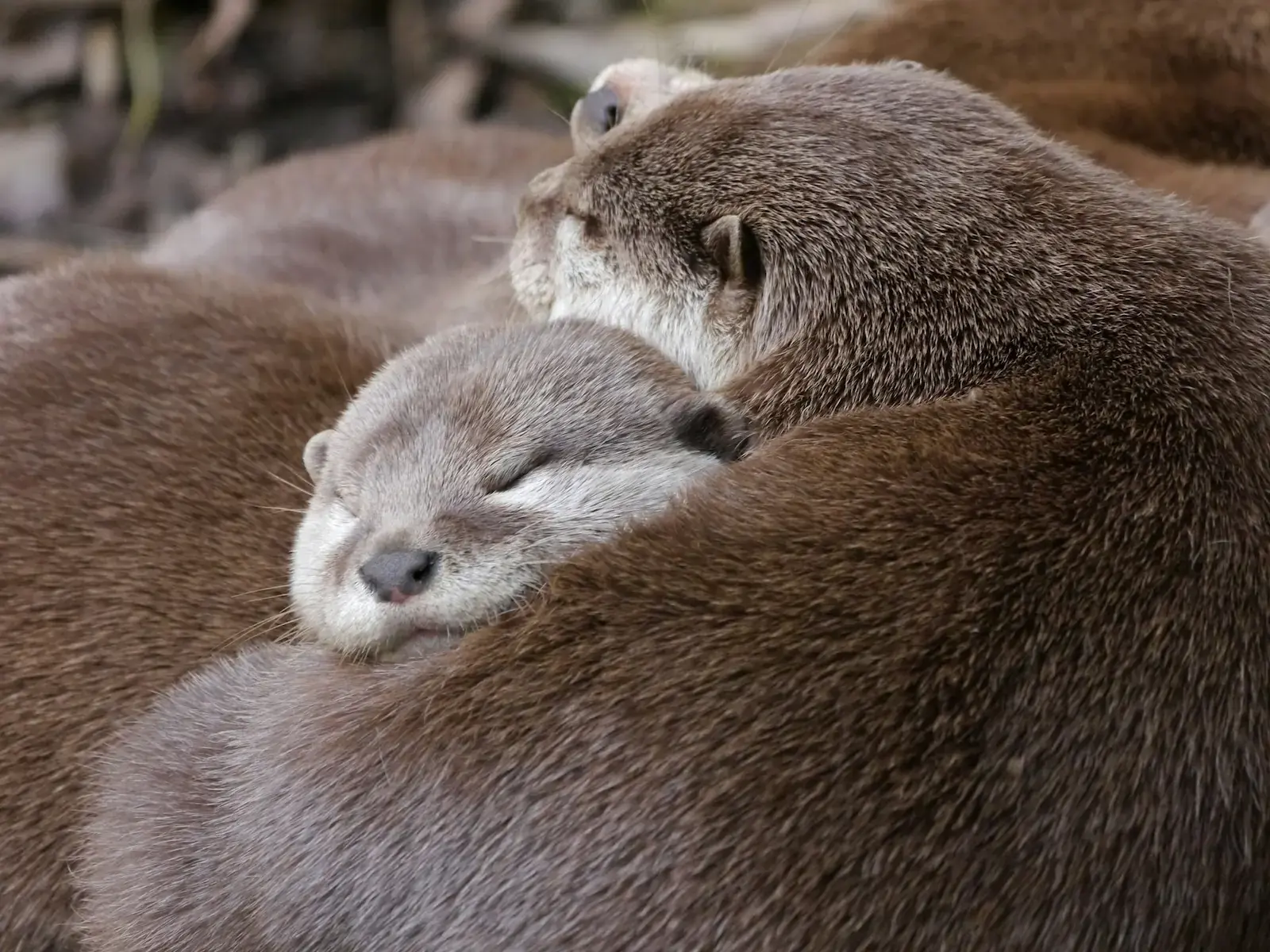
Sleeping otters | Photo: Jim
The recovery of otters is one of the most interesting examples of how a species can return to territories from which it had disappeared when certain environmental conditions improve.
However, it also reminds us that conservation does not end when an animal returns.
Although otters now occupy a much wider range than they did forty years ago, they remain exposed to threats such as pollution, the destruction of riverbanks, changes in water flow and the fragmentation of watercourses.
Road collisions are another significant problem, particularly when animals have to leave the river channel to get around infrastructure that interrupts their movements. In Catalonia, for example, road collisions have been identified as one of the main causes of mortality, demonstrating that maintaining connected rivers also means providing safe passages beneath roads and other structures.
On the other hand, the presence of otters is often interpreted as a positive sign of the health of river ecosystems, but it does not necessarily mean that the water is completely clean or free from threats. These mammals can tolerate certain environmental alterations as long as they find sufficient prey and shelter, so their presence should be assessed alongside other ecological indicators.
Conserving otters ultimately means conserving living, functioning rivers. Protecting the animal alone is not enough if riverside vegetation disappears, prey becomes scarce or watercourses lose the connectivity needed to sustain their populations.
Learning to notice what happens beside the water
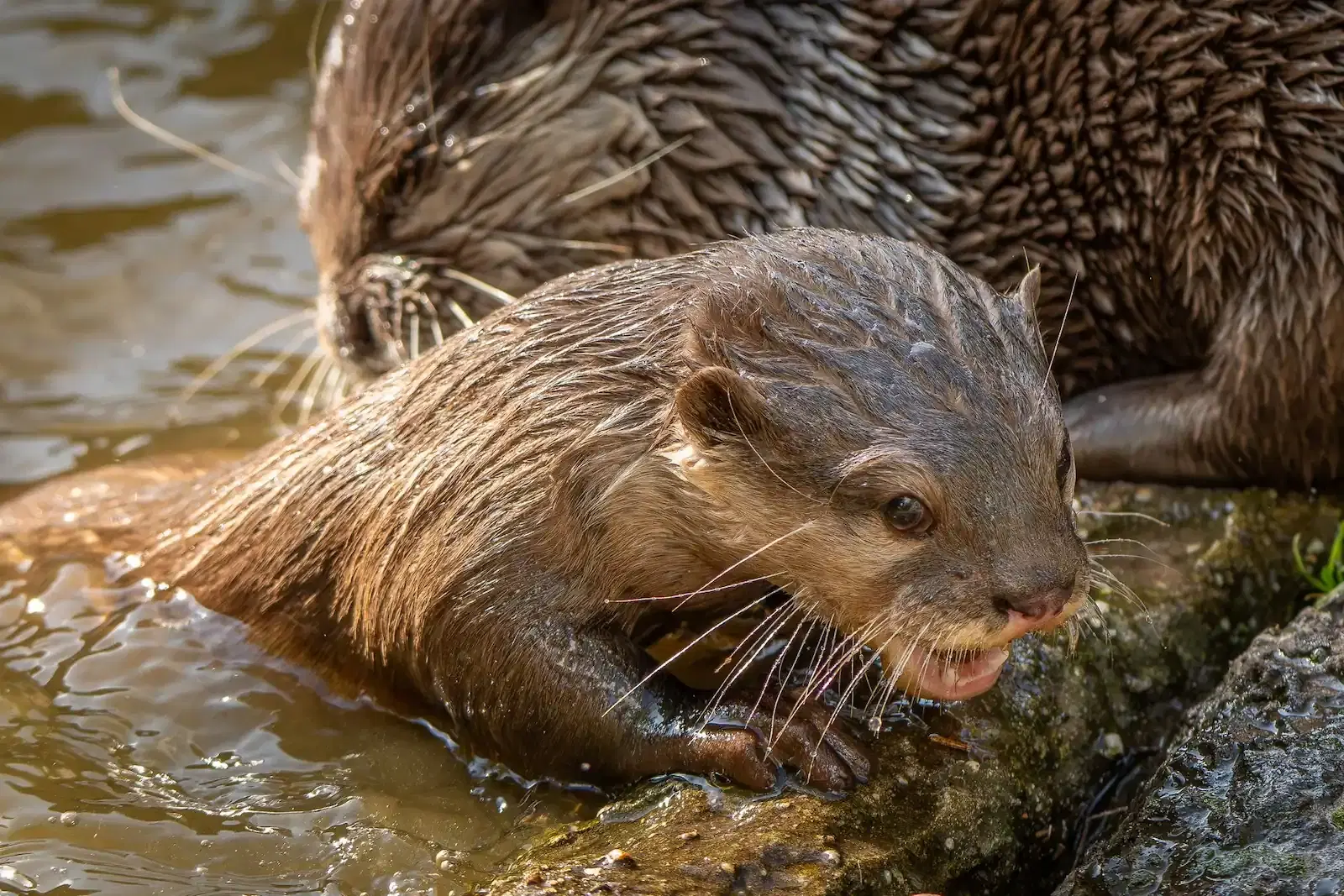
Otters playing in the water | Photo: Leon Aschemann
You may never have seen an otter in the wild, even if you have walked hundreds of times beside rivers where they live. That does not mean the animal is absent, but rather that its way of inhabiting the landscape is very different from our own.
While we walk along a path, an otter may be resting among roots, moving beneath the water or waiting for human activity to decrease before travelling through that same stretch.
That is why learning to recognise their tracks and signs has something special about it. It reminds us that nature does not begin when an animal appears in front of us, but is constantly unfolding, even when we do not know how to interpret it.
And perhaps that is one of the best reasons to approach a river with curiosity. Not necessarily to find an otter, but to discover how many stories an apparently peaceful landscape can tell.
Frequently asked questions about otters in Spain
Where can otters be found in Spain?
Otters are present in many aquatic ecosystems across mainland Spain, particularly in the major river basins of the north, west and centre, although they have also recovered in numerous Mediterranean rivers, including some in Catalonia, Andalusia and Murcia.
Is it difficult to see otters in the wild?
Yes, because they are elusive animals that spend much of their time in the water and can adjust their activity patterns to avoid human presence. They also use different resting and feeding areas, making it difficult to predict when they might appear.
What time of day are otters active?
They can be active at different times of day, although dawn and dusk are often favourable periods. In places with high levels of human activity, they may adopt more nocturnal habits, so there is no particular time that guarantees a sighting.
How can you tell if otters live in a river?
The most useful signs are their characteristic footprints and droppings, although trails, frequently used routes and feeding remains may also be found. It is important to interpret the signs together and remember that many can be confused with those left by other animals.
Do otters only live in clean rivers?
Not necessarily. Although they need food, shelter and sufficiently favourable environmental conditions, they can use rivers that have undergone a certain degree of alteration, including some close to cities. Their presence is therefore a positive ecological sign, but it does not guarantee that the water is completely free from pollution.
What do otters eat in Spain?
Their diet consists mainly of fish, although they can also eat crayfish, amphibians, reptiles and other prey depending on food availability. Its composition varies considerably between mountain rivers, Mediterranean river basins and wetlands.
Are otters endangered in Spain?
The species has undergone a significant recovery over recent decades and its situation is much better than it was in the 1980s, although it still requires protection and monitoring. Its distribution remains uneven and it continues to face threats such as habitat loss, road collisions and alterations to freshwater ecosystems.