Arrive a little before sunset and the first thing you see might be ten or twelve birds flying straight across the sky. A few minutes later, another group comes from the opposite direction. Above the reedbed, the two turn together. Try following a single starling. In the time it takes to raise your binoculars, the ribbon of birds in front of you has folded back on itself and now looks like a dark cloud.
Starlings gather at dusk to spend the night in a communal roost. Before settling, some flocks wheel and turn in what is known as a murmuration, a display that can bring thousands of birds together. There is good evidence that flying together helps protect them from predators. As for how they coordinate, the answer starts on a much smaller scale. Each starling adjusts its flight to match a handful of neighbours, and a change of direction spreads through the flock.
That helps explain how so many birds can turn together. It also raises a question you might ask as you watch from below. When a shadow sweeps from one end of the flock to the other, what has travelled so quickly? Have the birds themselves crossed the flock, or are you seeing a movement pass between them?
Why do starlings gather at dusk?
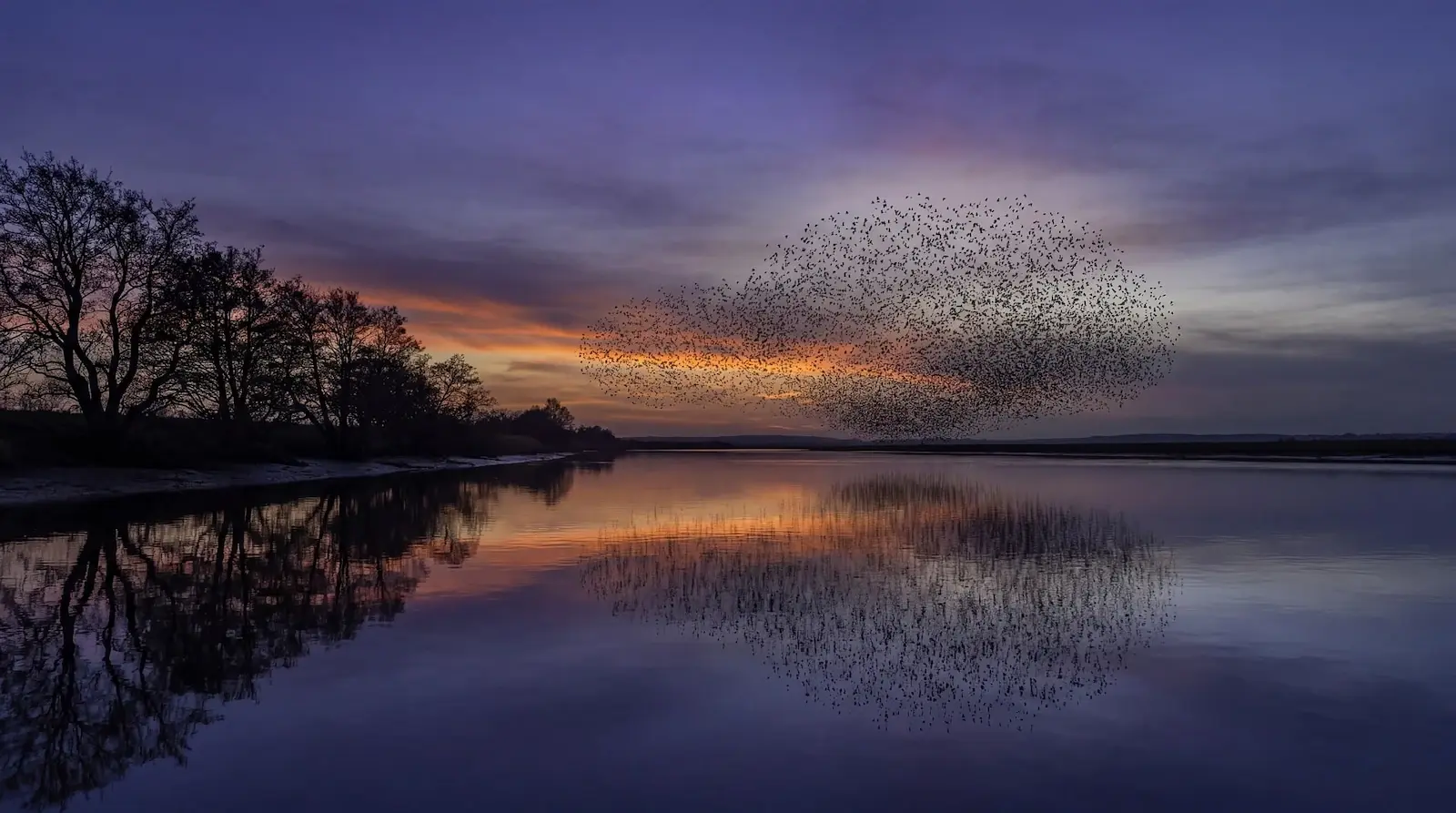
Starlings flying at sunset | Photo: Fernando
To understand what is happening in the sky, watch where the birds end up. During the day, small groups may spread out across the fields to feed. Towards evening, starlings from different feeding grounds head for the same stand of trees or patch of wetland. Groups join up along the way, so the flock you see above the roost can be much larger than any of those you saw arriving.
In Spain, the common starling 'Sturnus vulgaris' uses communal roosts in reedbeds, trees and built-up areas. You might witness much the same scene beside a lagoon or from a town square. At the lagoon, the birds seem to vanish the moment they drop below the tops of the reeds. In town, you might lose sight of them in the treetops and still hear them chattering from the pavement.
From the first arrivals to the moment they settle
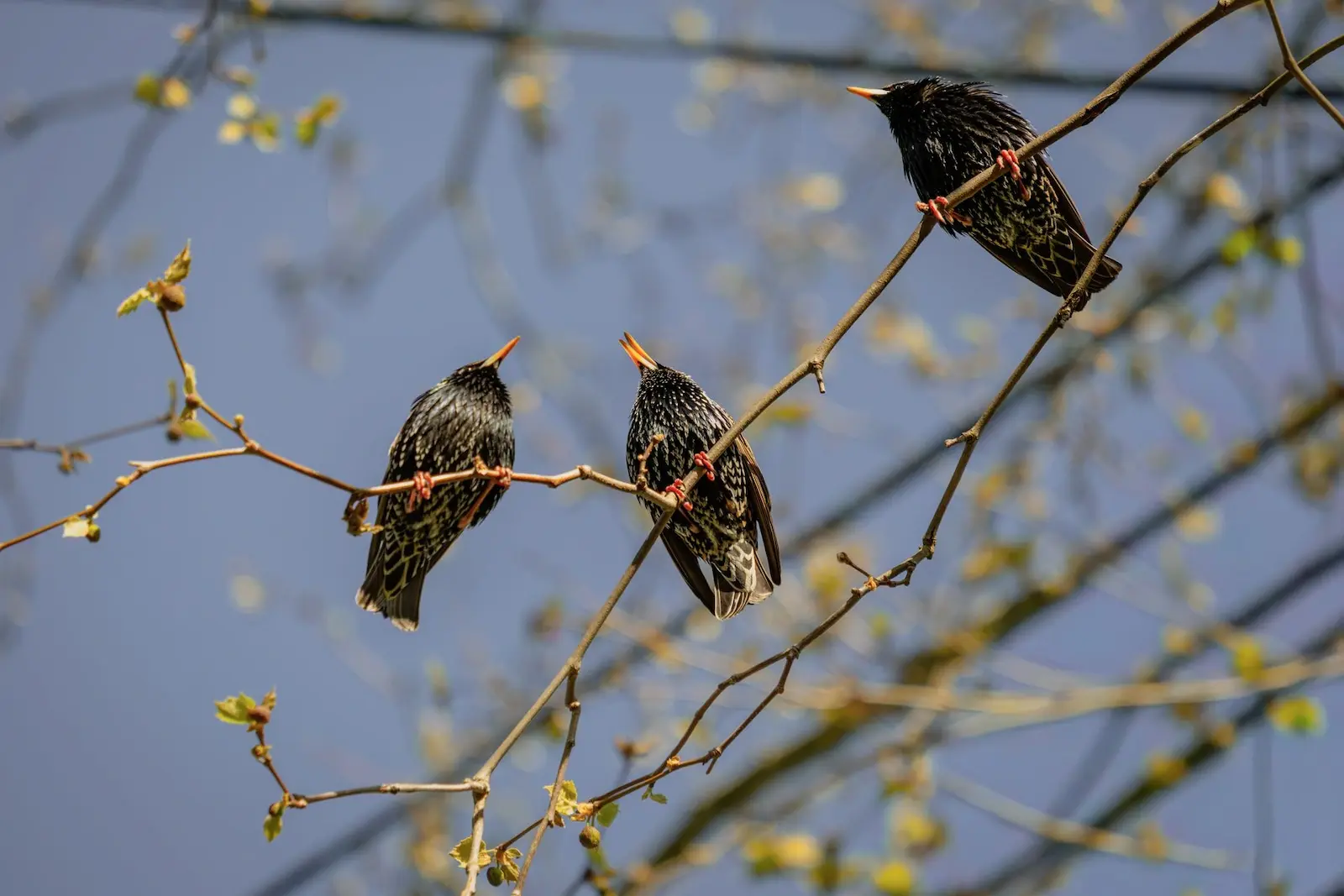
Three European starlings perched on a branch | Photo: Ilo Frey
Stay in one spot as the birds come in and try following the smallest group you can see on the horizon. While it flies alone, its outline is easy to make out. It may join the main flock at one end. Within seconds, it is almost impossible to tell where the newcomers end and the birds that were already there begin. This is one way to watch a flock grow, group by group.
The birds have their own rhythm as they settle. Some evenings, part of the flock is already roosting while others are still arriving. On other evenings, birds that have filled much of the sky for several minutes drop almost as one in a matter of seconds. Where the flight ends is one of the best clues to what you have seen. A flock that crosses the horizon and disappears into the distance may simply be on its way somewhere else.
If the roost is nearby, it is worth going back in the morning. You can see the movement in reverse as groups leave for their feeding grounds. The evening before, birds converged from several points on the horizon. Now they stream out of a strip of vegetation that looked empty only seconds ago.
Why flocks are easier to spot in autumn and winter
During the colder months, common starlings from central and northern Europe join the birds that live in Spain year-round. Autumn passage runs from September to November, and the species spends the winter across much of the Iberian Peninsula and the Balearic Islands. By November, you may start seeing large gatherings in places where you barely noticed a starling all summer.
Migration and the evening journey to roost happen on different scales. A starling may travel hundreds of kilometres to reach its wintering grounds, then make a short local flight each evening to the place where it sleeps. If you see flocks arriving from the same direction several evenings running and dropping into the same trees, that fits the pattern of a daily journey to roost.
What do starlings gain from flying in such a large flock?
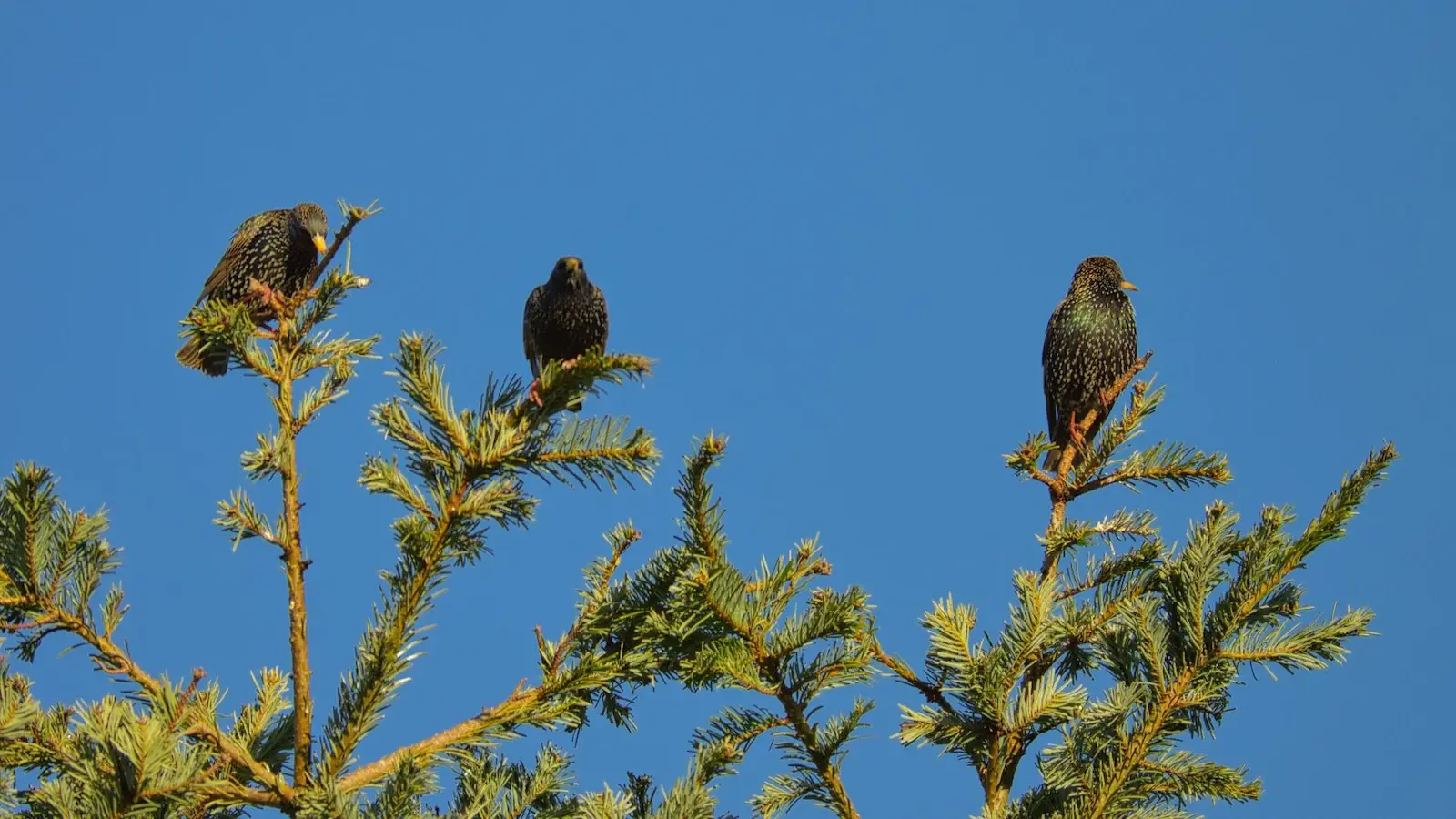
Trio of starlings | Photo: Townsend Walton
Imagine watching the flock through the eyes of a bird of prey. A starling that falls a little behind has a flight path you can follow. Within a turning flock, that path crosses dozens of similar silhouettes. One possible advantage for the starlings is precisely how difficult it becomes to keep track of a single bird.
Two other advantages may come into play at the same time. In a large group, more birds are in a position to spot danger. Some can react to their neighbours’ movements before they have seen what alarmed them. And if an attack ends with one bird being caught, the risk is shared among more individuals. Detecting danger early, making it harder for a predator to track its target and reducing each bird’s chance of being caught can all help explain the value of flocking.
What happens when a peregrine appears?
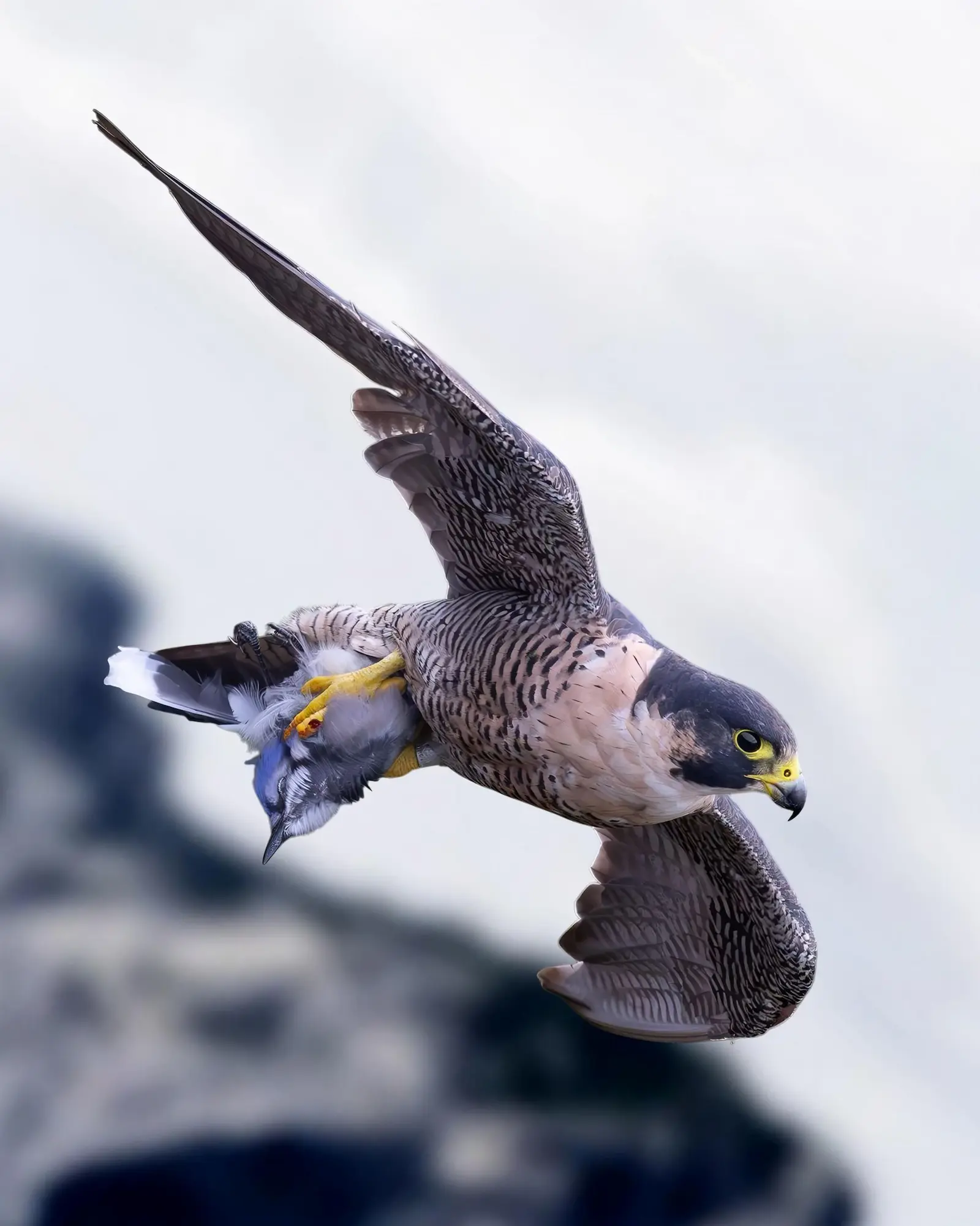
Peregrine falcon | Photo: Ali Vidi
When a peregrine falcon 'Falco peregrinus' approaches a flock, researchers have recorded dark waves travelling from the side under attack towards the far end. If you can keep both the falcon and the flock in view, watch the order of events. Which side does the falcon approach from? Where does the flock first change shape? Sometimes the starlings’ reaction can help you pick out a falcon you have lost sight of.
To investigate how much predators influence these flights, researchers compared more than 3,000 sightings of pre-roost displays. Reports came from 23 countries, although most were from the UK. Flocks tended to be larger and displays to last longer when certain birds of prey were nearby, particularly when they interacted with the starlings. The birds were also more likely to finish by dropping into the roost together.
Those observations help explain why staying together can pay off just before roosting. You may also see an entire flock turn from a lookout without spotting anything in pursuit. Researchers have documented spontaneous turns in wild flocks, so even a dramatic change of shape is not enough on its own to tell you that the birds are under attack.
Do starlings gather to keep warm?
It is a tempting explanation on a January evening, but there are two questions here. What do starlings gain from sharing a roost overnight? And what do they gain from spending several minutes wheeling above it before they settle?
One suggestion is that a flock visible from afar attracts more birds, eventually making for a warmer roost. When researchers compared air temperature, the duration of displays and the presence of birds of prey, the results gave stronger support to protection from predators. Picture two equally cold evenings. On one, the birds settle quickly. On the other, they keep circling while a falcon is nearby. The thermometer alone tells you little about the difference.
How do thousands of starlings move together without a leader?
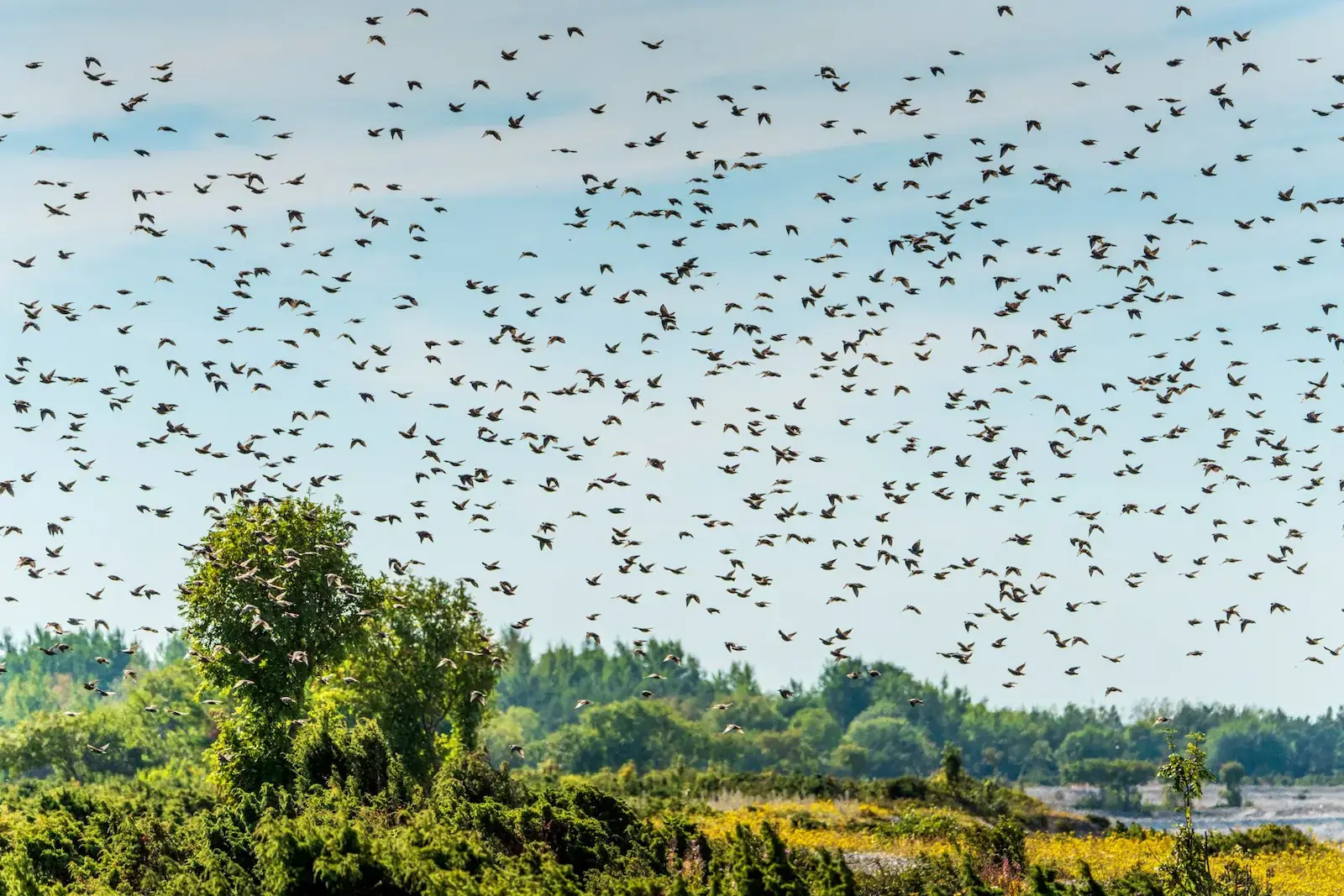
Flock of starlings | Photo: Raul Ling
From the ground, the whole flock seems to change its mind at once. For a starling flying within it, the immediate question is what the birds nearby are doing. If several begin to turn, adjusting its course keeps it alongside them. Birds on its other side can now respond to that adjustment in turn. Through enough of these local connections, a change that began with a few individuals can reach the whole flock.
What does it mean to follow six or seven neighbours?
The figure comes from three-dimensional reconstructions of real flocks. The positions of the birds best fitted a pattern in which each starling coordinated with about six or seven of its nearest neighbours on average. The number was similar in tightly packed flocks and in more widely spaced ones.
Think about what happens when a flock stretches out. A bird’s six nearest neighbours can still be its six nearest neighbours even as the gaps between them grow. If a starling responded only to birds within a fixed distance, it could suddenly lose track of several as the flock spread out. Keeping in touch with a small set of neighbours helps explain how a flock can hold together as the spacing changes.
You may hear this shortened to ‘each starling follows seven others’. What the researchers measured was a pattern in the positions of many birds. The cameras cannot show a starling choosing a seventh neighbour and ignoring an eighth. Nor need the neighbours always be the same individuals. A bird flying alongside another before a turn may be somewhere else a few seconds later.
Which bird starts the turn?
Some birds do turn first. In a study that reconstructed individual flight paths during spontaneous turns, changes of direction began with birds at the tips of an elongated flock. Small departures from the group’s direction were more frequent there. When one of those birds held its new course, the change could spread through the flock.
Starting one turn does not mean the same bird will lead the next. After a turn, the birds occupy different positions relative to the new direction of travel. Try following one end of a flock in a video. The tip that seemed to be leading may be off to one side by the time the birds complete the turn. It is easy to pick out the bird at the front of a still photograph and call it the leader, but the next turn may put it somewhere else entirely.
How does a turn reach the far side so quickly?
In some recorded flights, a change of direction travelled through the flock at 20 to 40 metres per second. In a flock of around 400 birds, it could reach the other side in just over half a second. That speed measures how quickly the response spreads. No individual needs to fly from the starting point to the back of the flock to pass it on.
If you film a turn and play it back slowly, you may see one part of the flock already rounding the bend while another briefly holds its original course. At normal speed those small delays all but disappear. That is why the birds can seem to react at the same instant even though the turn passes from bird to bird in sequence.
Measuring that sequence accurately takes more than a single recording from the ground. In an ordinary video, two starlings seem to brush past one another when their outlines overlap, even though one may be several metres behind the other. By photographing the same scene from different angles and synchronising the images, researchers can reconstruct depth, trace individual flight paths and work out which bird turned first. The difference between what the eye sees and what cameras can measure also helps explain the shapes you see at dusk.
Why does a flock seem to shrink, darken and change shape?
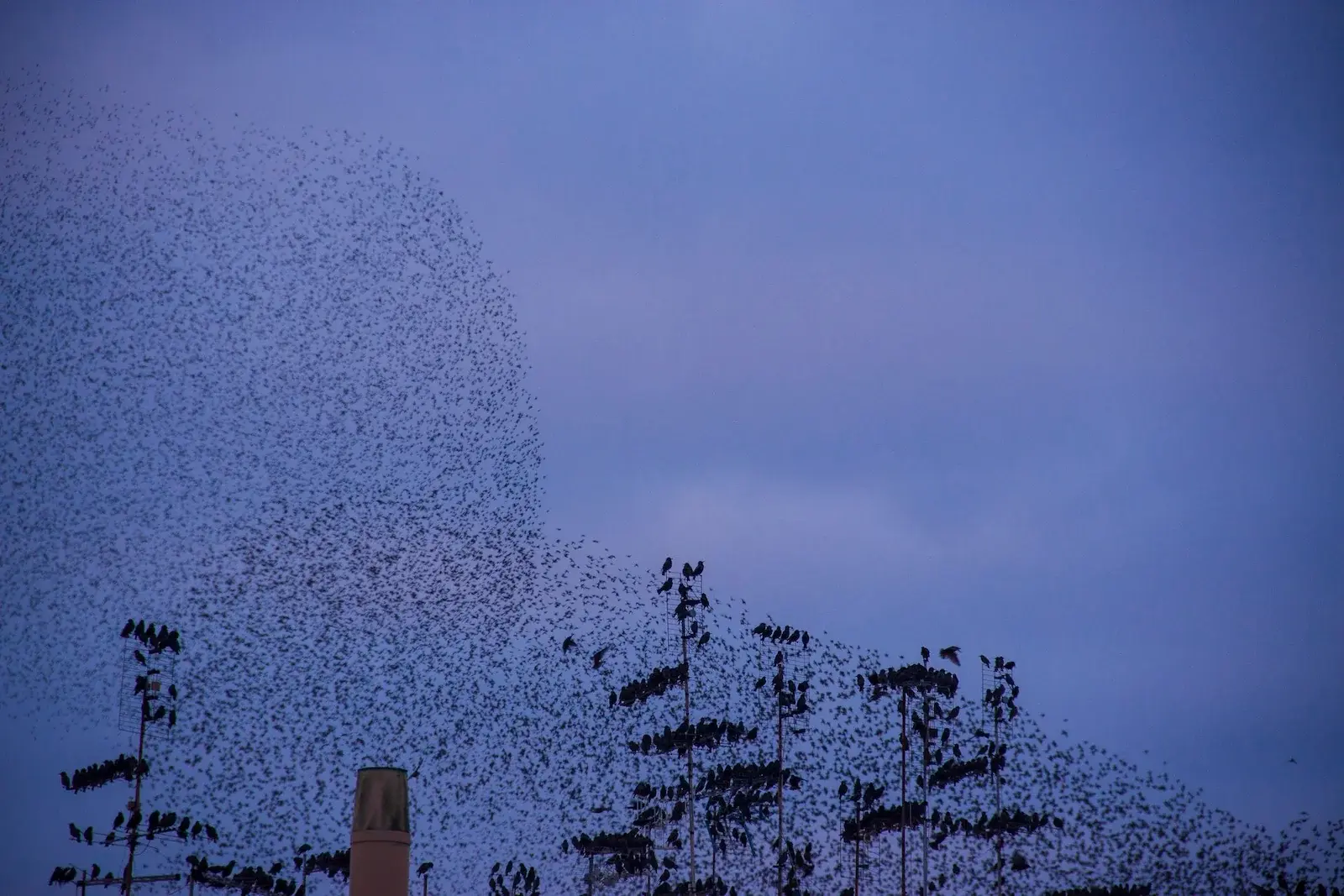
Flock of starlings at dusk | Photo: Francesco Rosati
One of the most striking moments comes when an almost transparent veil of birds turns into a dark patch. It is easy to assume the starlings have suddenly drawn closer together. Sometimes the distance between them does change, but what you see also depends on how much of the flock lies along your line of sight. A broad, relatively thin flock fills much of the sky when you see its full width. As it turns edge-on, more silhouettes overlap in a narrow strip.
The angle of the birds themselves adds another effect. When a starling banks, the amount of wing you can see from below changes. In models that reproduce the dark waves seen in flocks, birds banking one after another are enough to make a dark band appear to travel through the group. Researchers have proposed this as an explanation for certain waves of agitation, which are particularly difficult to follow bird by bird during an actual attack.
You can see the distinction without picking out individual wings. Fix your gaze on one edge of the flock as a wave passes. If the dark band sweeps through much of the group while the edge barely shifts, you have seen how a change in appearance can travel far faster than the flock itself. If you lose the outline as the birds turn edge-on, keep watching for a few seconds. The next turn may bring it back into view in the same patch of sky.
Which starlings form these flocks in Spain?
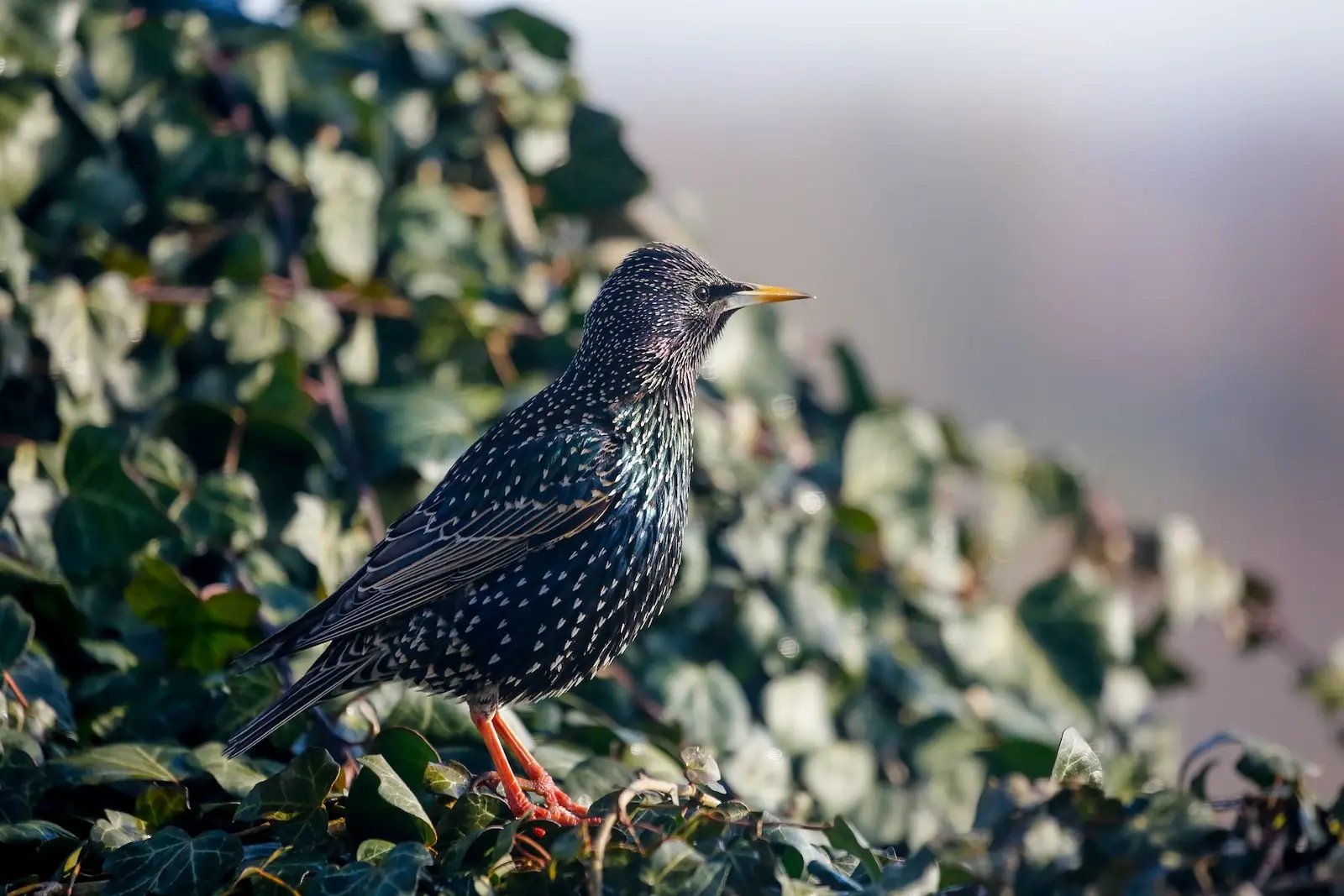
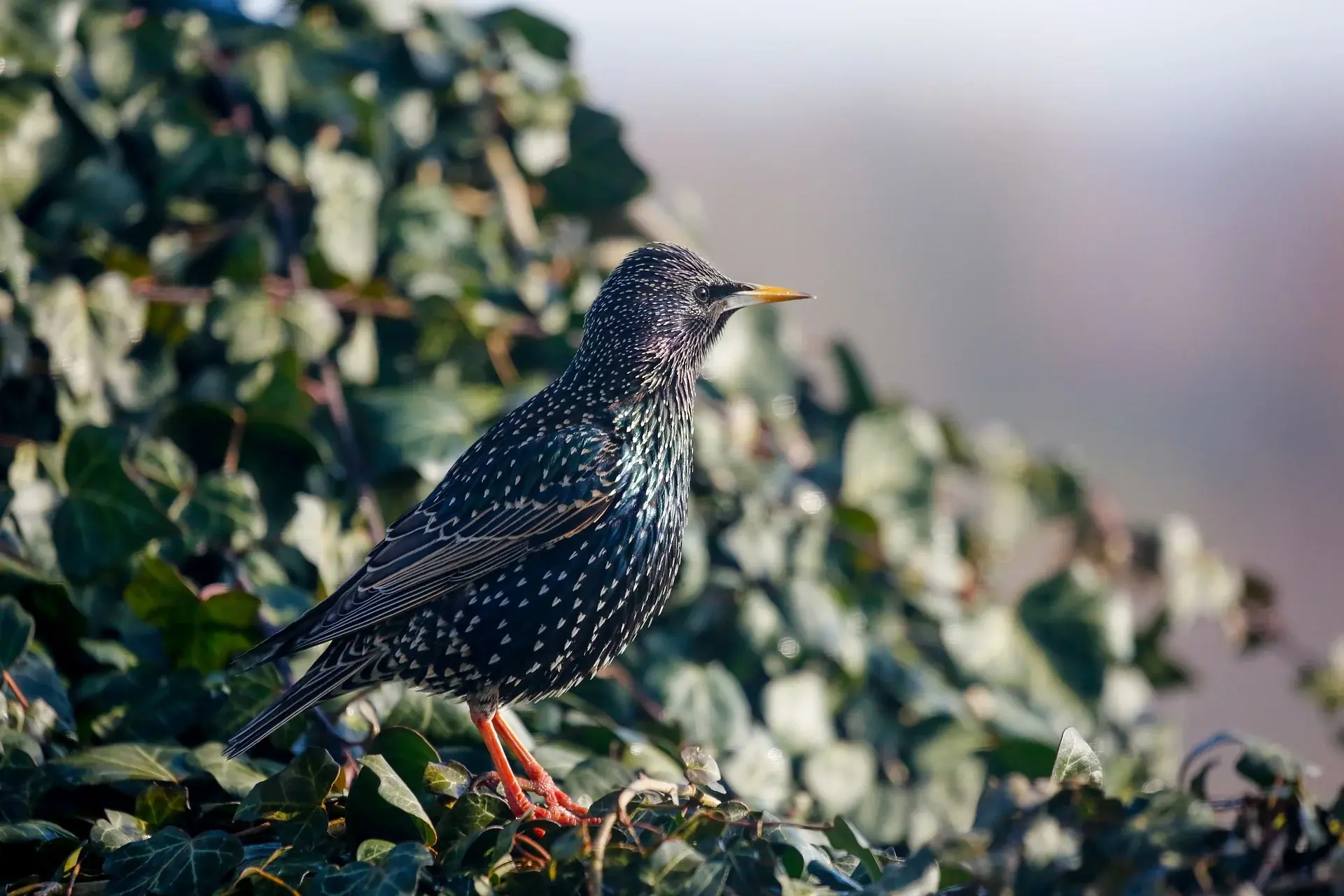
Common starling perched on ivy in soft natural light | Photo: Kurt Bouda
Much of the research into coordinated flight has focused on the common starling. Spain is also home to the spotless starling 'Sturnus unicolor', which lives across much of the Iberian Peninsula year-round. It too uses communal roosts and forms larger flocks in winter. Where the two species occur together, they can form mixed flocks. Once they are silhouetted against the sky, it is difficult to say which species you are watching.
Your best chance of telling them apart may come well before the display begins. Look for perched birds in good light and take a close look at their plumage. In winter, the common starling usually shows distinctive pale spots against a dark background. The spotless starling generally looks darker and more uniform. Compare several birds if you can. Even on the same individual, the sheen and contrast change with the angle of the light.
Once the birds are just specks against the sky, the curves they trace tell you about the flock’s behaviour but very little about its members’ plumage. If you keep a field notebook, you can write ‘flock of starlings’ and record separately which species you identified while they were perched. That preserves both observations without assuming that several thousand birds must all belong to the species you saw sitting on a wire.
How to watch a starling murmuration in Spain
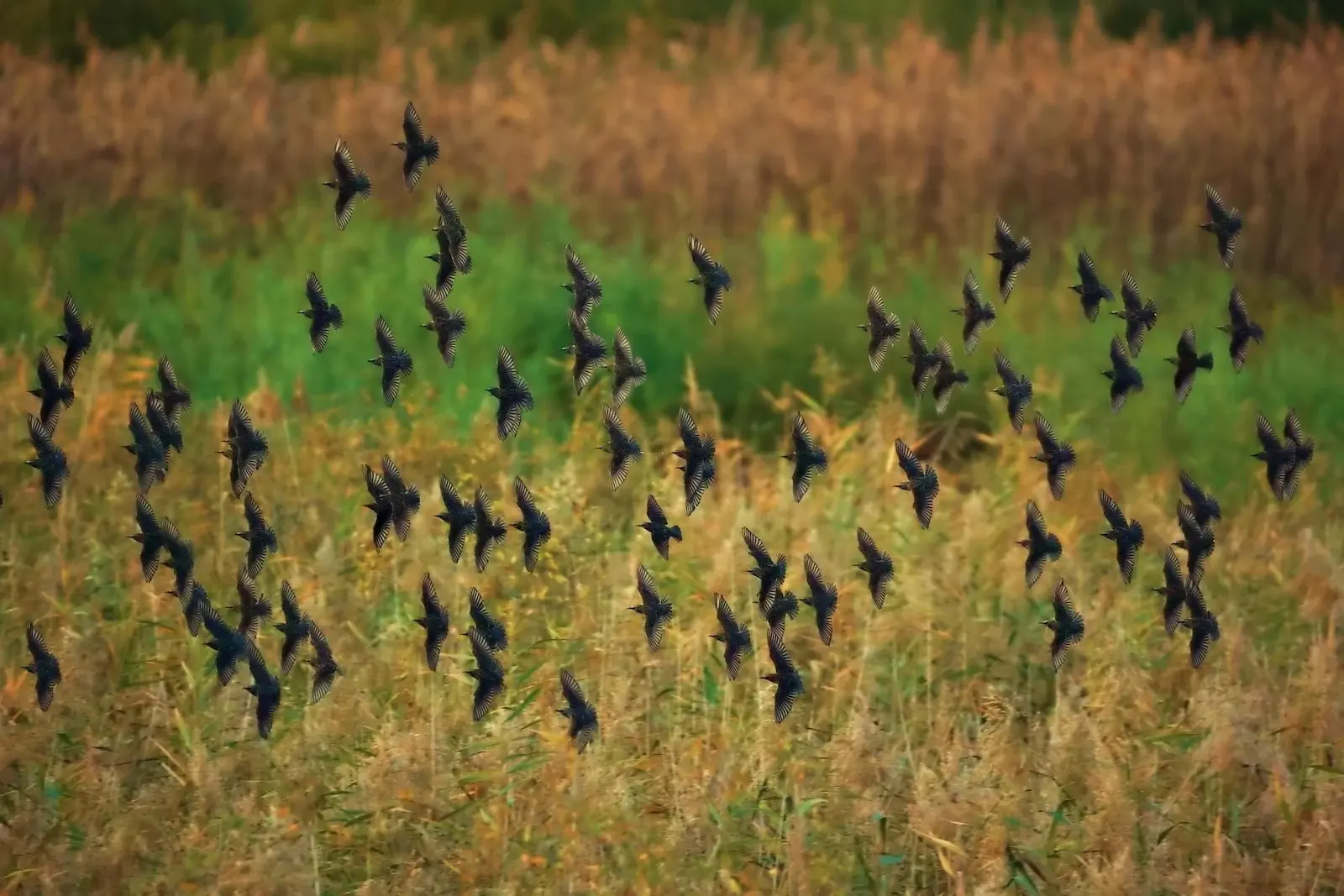
Flock of starlings | Photo: Heike Jäger
November is a good time to start looking. Before choosing a date, check whether anyone has recently seen starlings coming in to roost nearby and which public path offers a view of their flight. As a guide, arriving about an hour before sunset gives you time to find a good vantage point and catch the first small groups before the main gathering.
Two places in Spain where flocks have been recorded
In Girona, large flocks have been photographed at the Aiguamolls de l’Empordà wetlands. It is a good example of why it pays to look up recent sightings before heading out on the strength of an old photograph. Starlings in the area have changed their roost sites over the years. If you are planning a visit, staff at El Cortalet information centre can advise you on the park’s walking routes and viewpoints.
There are records well away from the Mediterranean coast too. At the Salburua wetlands in Vitoria-Gasteiz, bird monitoring documented a roost of more than 1,000 starlings at Betoño lagoon in the winter of 1997–98. The date matters as much as the count. The record tells you what happened that winter. To plan an evening visit this season, check with the Ataria interpretation centre before deciding which route to take.
Where to stand and what to look for
Choose a spot with public access where you can see plenty of sky and a fixed feature, such as the edge of the reedbed. Standing a little way back usually gives you a better view than being directly beneath the roost trees. You can take in the whole display with the naked eye. Binoculars come into their own earlier, when you want to identify perched birds, or when you spot a possible bird of prey at the edge of the flock.
If you want to film the display, try holding your phone still and keeping a little of the landscape in the frame. Follow every twist with the camera and it becomes hard to tell afterwards how much the flock moved and how much you did. One continuous shot that captures a small group arriving, a turn and the final descent tells you more about the evening than a series of close-ups of the densest patch of birds.
When the last birds drop into the reeds or branches, stay where you are for a moment. From the same path, you can hear the flock long after it has vanished from view. Moving closer and flushing the birds interrupts the very thing that brought them here. After a day spent scattered across their feeding grounds, the starlings have come together to sleep.
Frequently asked questions about starling flocks
What is it called when starlings make shapes in the sky?
The swirling group flight you sometimes see above a starling roost is called a murmuration. In Spanish, you may hear murmuración de estorninos. A flock is a broader term that also covers birds simply flying in the same direction.
How long does a starling murmuration last?
In a study of more than 3,000 sightings, the average display lasted about 26 minutes. Most of the reports came from the UK. On any given evening, the birds may drop into the roost almost straight away or stay in the air for longer.
How do starlings avoid collisions when they fly so close together?
Starlings adjust their flight paths in response to nearby birds and leave a small gap even at close quarters. Two birds that seem to cross paths from below may also be at different distances from the observer. Reconstructions of the spacing between birds let researchers measure gaps that are hard to judge from a photograph.
Do starlings only form these flocks in winter?
Starlings can gather at other times of year. In Spain, flocks are particularly conspicuous in autumn and winter, when large numbers of common starlings arrive to spend the colder months alongside resident birds.
Do starlings return to the same roost every night?
A roost may be used for many nights, although both its location and the number of birds using it can change over time. If you are planning a visit, a sighting from this week is a better guide than a photograph from last winter.