In south-western Asturias, there is a landscape where beech forests alternate with rugged mountains, glacial lakes and extensive pastures that have been part of the region's farming heritage for centuries.
This is Somiedo Natural Park, one of the most emblematic protected areas in the Cantabrian Mountains and one of the most important refuges for brown bears in Spain.
However, although this mammal has become the park's main symbol, Somiedo Natural Park is home to a much wider diversity of wildlife. Chamois moving across seemingly impossible slopes, red deer taking part in the autumn rut, large birds of prey soaring over the valleys and numerous woodland birds all form part of its ecosystems.
Its landscapes also tell a story of how nature and human activity have coexisted for generations, giving rise to traditional mountain pastures, historic paths and small villages that still preserve much of their identity.
But which animals can we actually find in Somiedo Natural Park? When is the best time to visit for wildlife watching? And which locations allow us to explore its landscapes without disturbing the animals?
A protected area in the heart of the Cantabrian Mountains
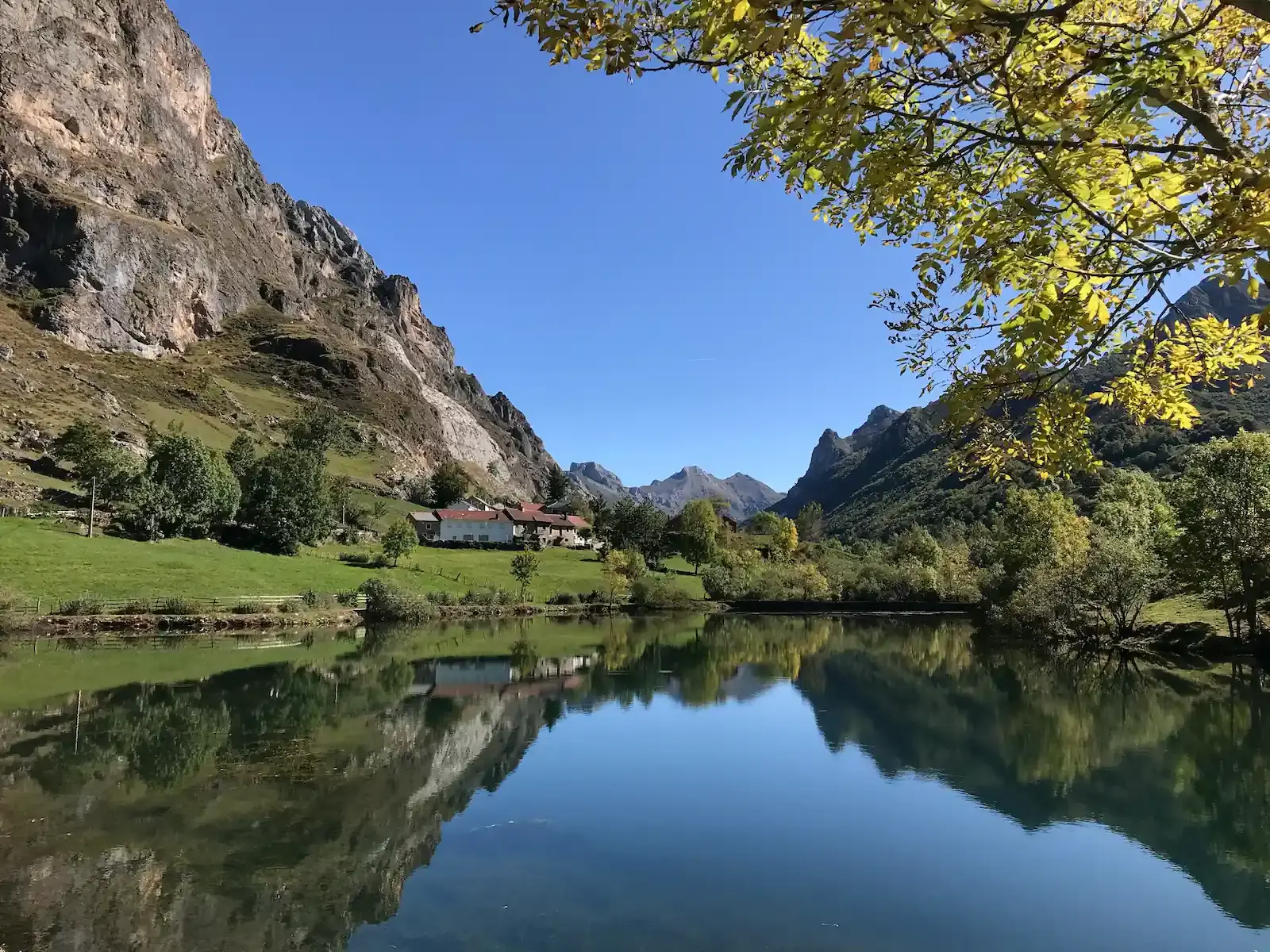
Somiedo Natural Park | Photo: Waltie, CC BY-SA 4.0
Somiedo Natural Park is located in south-western Asturias, close to the border with the province of León, and covers a mountainous area characterised by steep changes in elevation and a remarkable variety of landscapes.
It was declared a Natural Park in 1988 and recognised as a UNESCO Biosphere Reserve in 2000, two designations that reflect both its ecological value and the importance of preserving the relationship between local communities and their environment.
Much of its present-day landscape was shaped by the geological processes that formed the Cantabrian Mountains. During the ice ages, vast masses of ice carved out hollows and reshaped the valleys, leaving behind lakes and landforms that we can still recognise today.
Today, beech and oak forests alternate with pastures, scrubland and high-mountain environments, creating a mosaic of habitats that supports animals with very different ecological requirements.
Forests provide shelter for mammals such as bears and wildcats, while rocky outcrops and high-altitude grasslands offer suitable conditions for chamois. The valleys are used by red deer and numerous bird species, while open areas provide opportunities to observe different birds of prey.
This diversity also explains why visiting Somiedo Natural Park is not simply about following its best-known trails. Each environment offers different opportunities to interpret wildlife behaviour and understand the relationships animals have with their surroundings.
1. The brown bear, the great symbol of Somiedo Natural Park
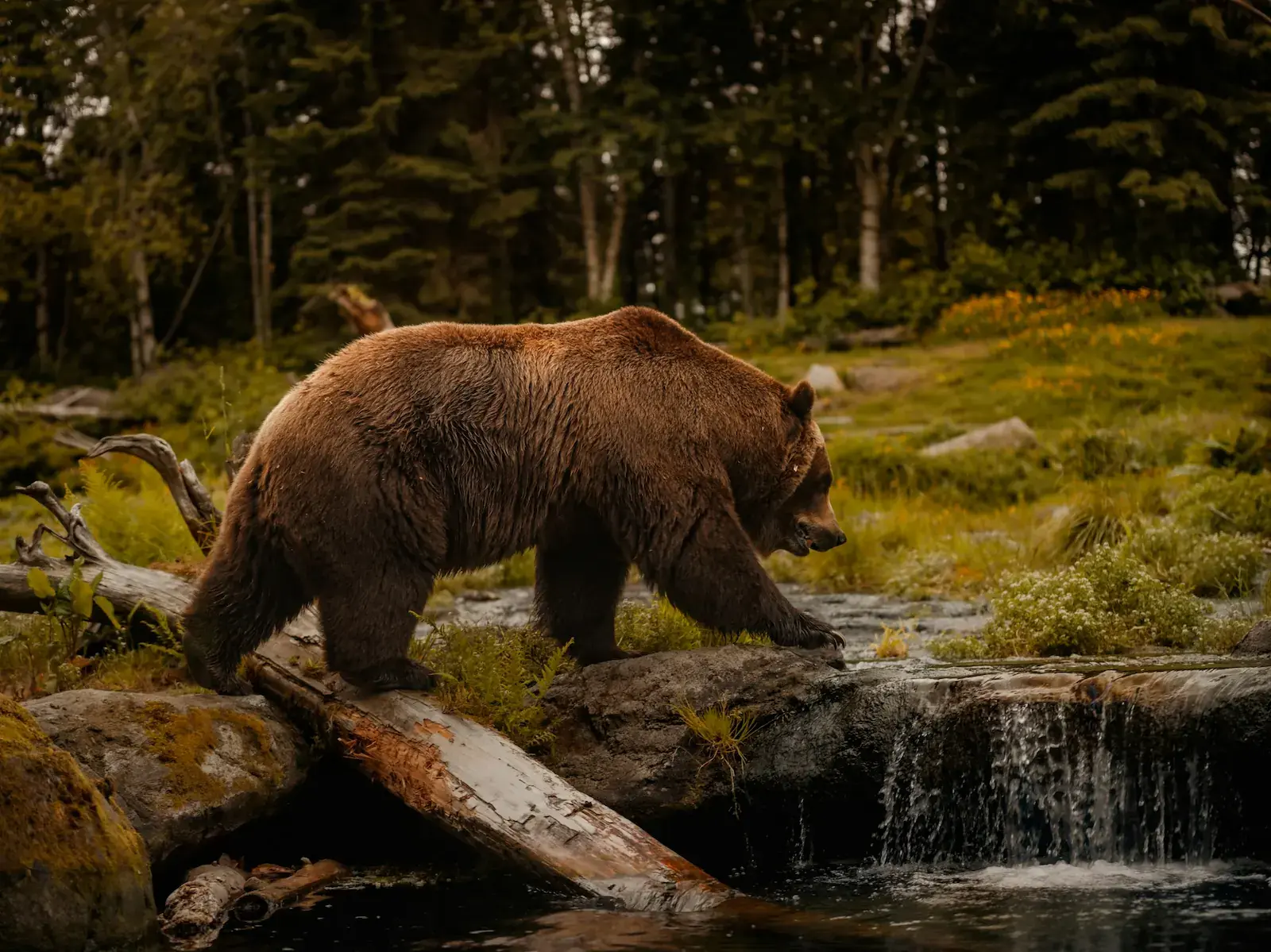
Brown bear | Photo: Kier in Sight Archives
If there is one animal that represents the importance of Somiedo Natural Park for biodiversity conservation, it is the brown bear ‘Ursus arctos’.
The park forms part of the western population of the Cantabrian brown bear, one of the most emblematic populations of large carnivores in the Iberian Peninsula.
Although this species was subjected to considerable pressure for decades due to human persecution and habitat transformation, various protection and conservation measures have helped improve its situation in the Cantabrian Mountains.
However, its presence does not mean it is easy to observe.
Brown bears generally avoid contact with people and use different environments throughout the year, from forests and scrubland to hillsides where they find food.
Their diet also changes considerably with the seasons.
During spring, they may feed on herbaceous vegetation and other resources available after winter. Later, they incorporate different fruits and animal-based foods into their diet, while towards the end of summer and during autumn they take advantage of energy-rich resources such as bilberries, hazelnuts and other fruits that help them build up reserves.
These seasonal changes influence their movements and the areas where they are active.
When is the best time to observe bears in Somiedo Natural Park?
Spring and the period from late summer into autumn are generally considered interesting times for brown bear watching, although opportunities depend on environmental conditions and the behaviour of individual animals.
During spring, some bears may use open hillsides where they can find food, while in late summer and autumn their activity is closely linked to fruit availability.
Dawn and dusk often provide favourable conditions for wildlife watching, although these are not the only times when bears may be active.
The important thing is to understand that responsible wildlife watching takes place from a considerable distance, using viewpoints and designated observation areas, with binoculars or spotting scopes.
One of the best-known locations in Somiedo Natural Park is the Mirador del Príncipe viewpoint, near La Peral, which offers extensive views of the park's hillsides.
However, visiting a viewpoint does not guarantee a bear sighting. Even during favourable periods, several hours may pass without a single bear appearing.
And this is precisely one of the differences between watching wild animals and other tourist activities. Animals do not follow schedules or remain where we expect to find them.
2. Cantabrian chamois, specialists of steep mountain terrain
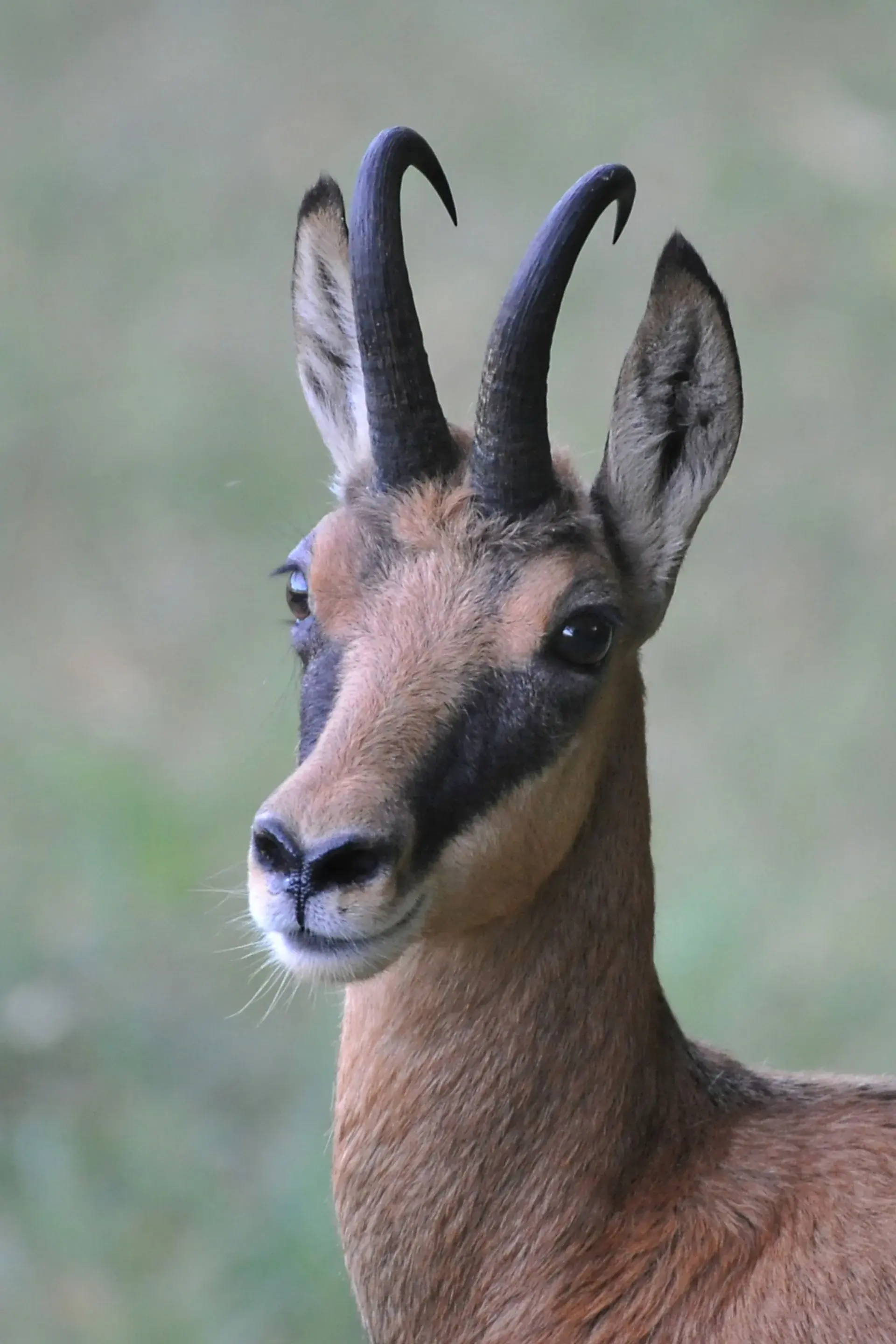
Chamois | Photo: Sylvain Rdlt
Although bears tend to attract much of the attention, the highest areas of Somiedo Natural Park are home to another of the Cantabrian Mountains' most characteristic animals.
This is the Cantabrian chamois ‘Rupicapra pyrenaica parva’, a subspecies adapted to living on rocky terrain, high-altitude grasslands and steep slopes.
Its relatively compact body, strong legs and specialised hooves allow it to move with extraordinary agility across surfaces that would be difficult for other mammals.
Its colouring also changes slightly with the seasons. During the warmer months, it has a shorter coat, while in winter it develops a denser covering that helps it withstand low temperatures.
Chamois feed mainly on vegetation and may move between grasslands and rocky areas depending on environmental conditions, food availability and the presence of potential threats.
In Somiedo Natural Park, open high-mountain landscapes offer opportunities to observe them from a distance, particularly when weather conditions make it possible to scan the slopes with binoculars.
However, they are not always easy to locate.
They can look tiny when they are far away, and their colouring allows them to blend into the terrain. Sometimes, the first thing that catches our attention is not the animal itself, but a small movement on an apparently empty slope.
That is why observing chamois requires patience and some practice in distinguishing shapes and movements at a distance.
It is also important to avoid approaching groups, particularly when young animals are present, as forcing them to move can cause unnecessary energy expenditure in an environment where conditions are not always favourable.
3. Red deer and the rut that transforms autumn
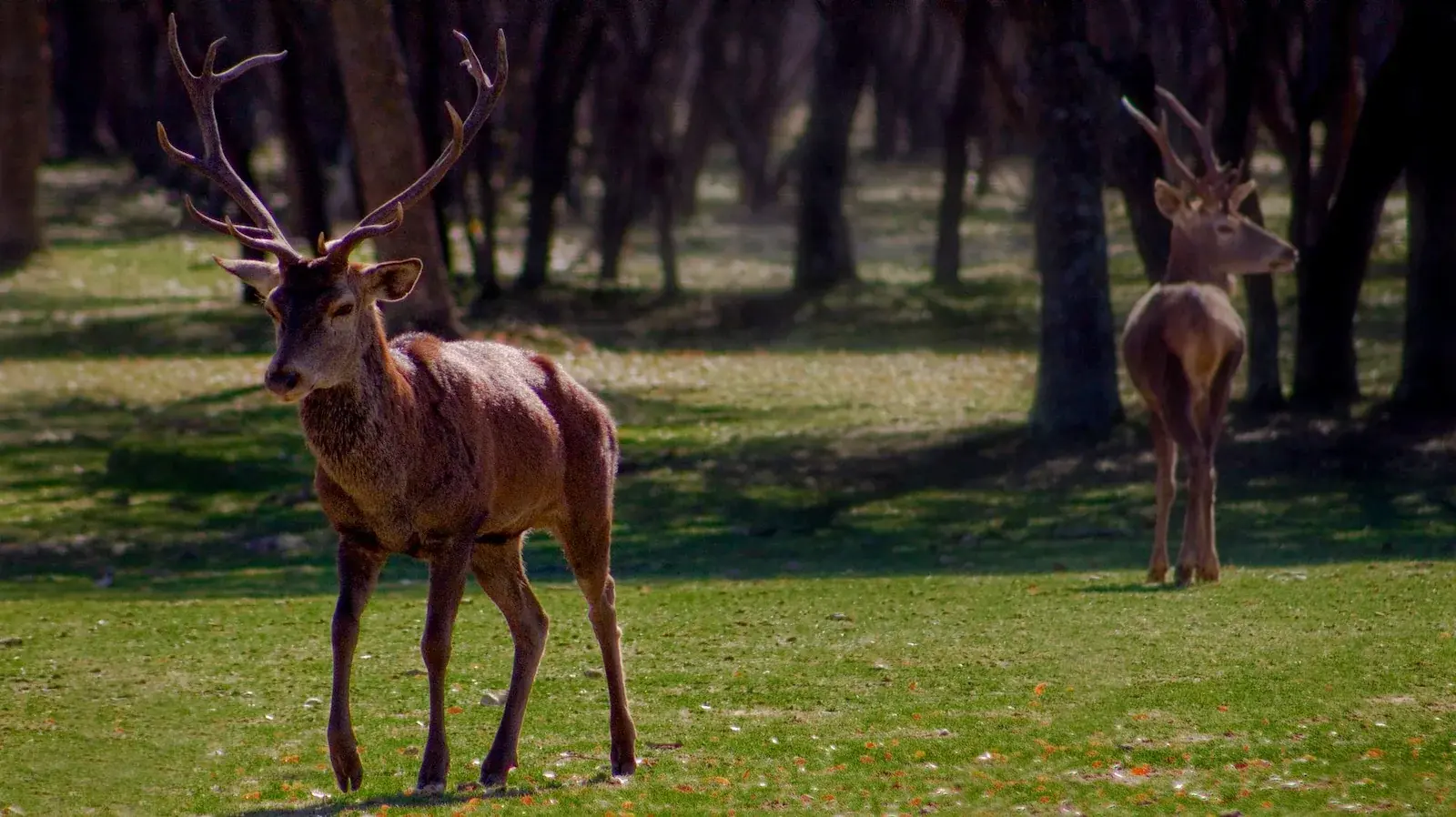
Two red deers | Photo: Francisco Fernández
Another of the main wildlife attractions in Somiedo Natural Park is the red deer ‘Cervus elaphus’, which inhabits different woodland and open environments throughout the park.
For much of the year, red deer can be relatively discreet, using areas where they find food and shelter.
However, with the arrival of autumn comes one of the best-known wildlife events in the Iberian Peninsula: the red deer rut.
During the breeding season, males produce powerful roars that can be heard from considerable distances and form part of competitive interactions between individuals.
These calls communicate their presence and condition to other males and females, while physical confrontations may occur when competition intensifies.
In Somiedo Natural Park, the beginning of autumn coincides with one of the most interesting periods for hearing the red deer rut, although its intensity and duration can vary depending on the conditions each year.
Interestingly, it is not always necessary to see the animals to enjoy this experience.
In a mountain valley, the roars can travel across slopes and through forests, allowing us to detect the activity of several males even when they remain hidden.
However, this is a particularly sensitive time.
During the rut, deer devote a considerable amount of energy to reproduction, so we should not approach them to provoke movement, chase them or use recorded calls.
The best strategy is to observe from permitted areas and maintain enough distance for the animals to continue their natural behaviour.
4. Golden eagles, vultures and other birds of the mountains of Somiedo Natural Park
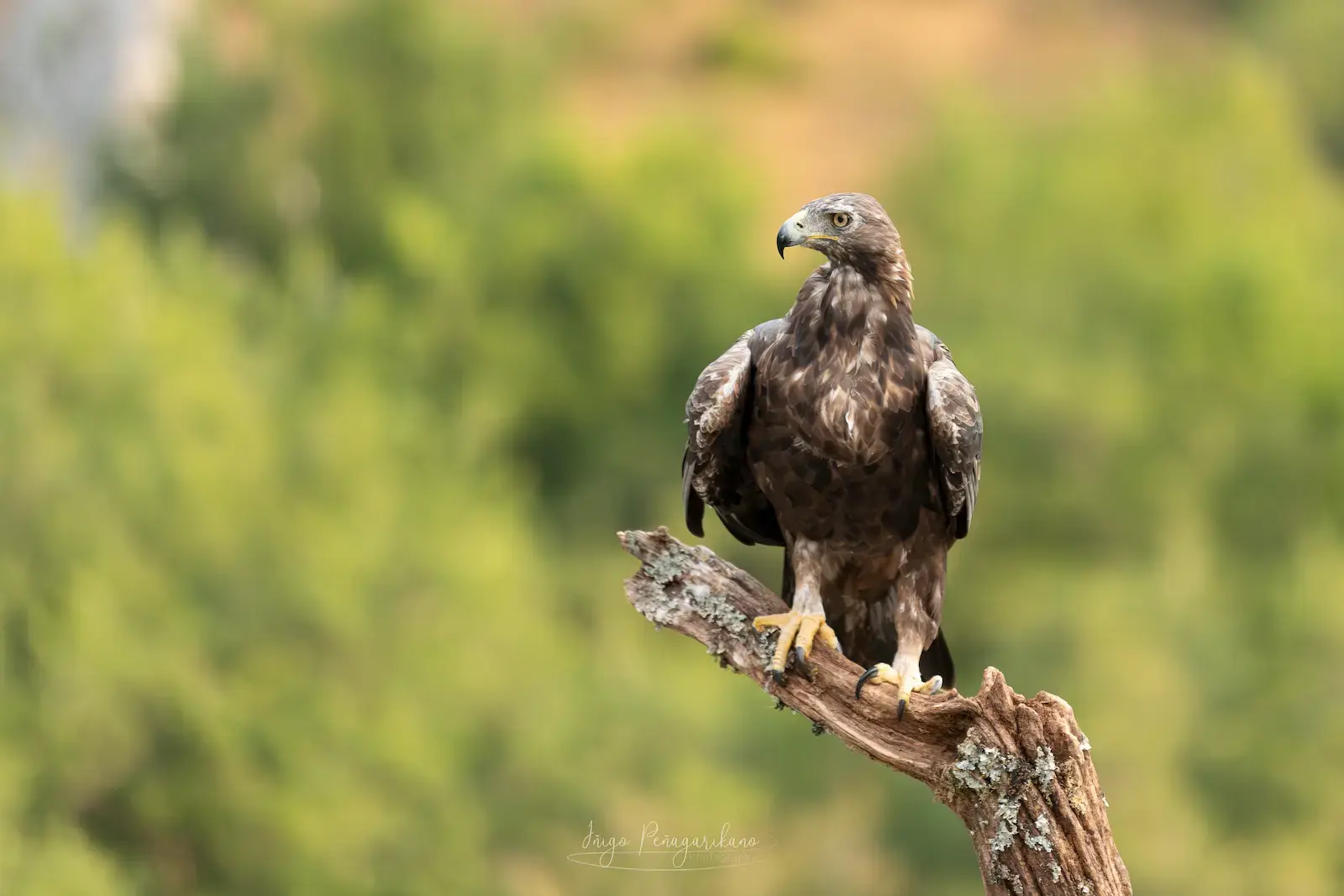
Golden Eagle | Photo: Iñigo Peñagarikano
Large mammals are not the only animals that make Somiedo Natural Park an interesting destination for wildlife watching.
Its mountains, rocky cliffs and open spaces provide suitable habitats for different birds of prey.
One of the most emblematic species is the golden eagle ‘Aquila chrysaetos’, a large bird of prey that can exceed two metres in wingspan and uses air currents to travel across extensive territories.
Although observing one at close range is unusual, its silhouette can sometimes be seen soaring over the mountains or moving above the ridgelines.
The griffon vulture ‘Gyps fulvus’ is also present, recognisable by its large wings, relatively long neck and ability to use thermal currents to remain airborne with minimal energy expenditure.
Another interesting species is the Egyptian vulture ‘Neophron percnopterus’, a migratory bird of prey whose adults have predominantly white plumage, black areas on their wings and a yellow face.
Unlike resident species that can be observed throughout the year, the Egyptian vulture is mainly associated with the warmer months, as it spends winter outside its European breeding grounds.
In addition to these large birds of prey, the park is home to numerous birds associated with forests, scrubland and mountain environments.
Woodpeckers, jays and various passerines can be found in the forests, while open mountain areas provide opportunities to observe other species adapted to higher altitudes.
This diversity of woodland and high-mountain birds also makes Somiedo Natural Park an interesting destination for birdwatching enthusiasts.
The Cantabrian capercaillie, a species that needs peace and quiet
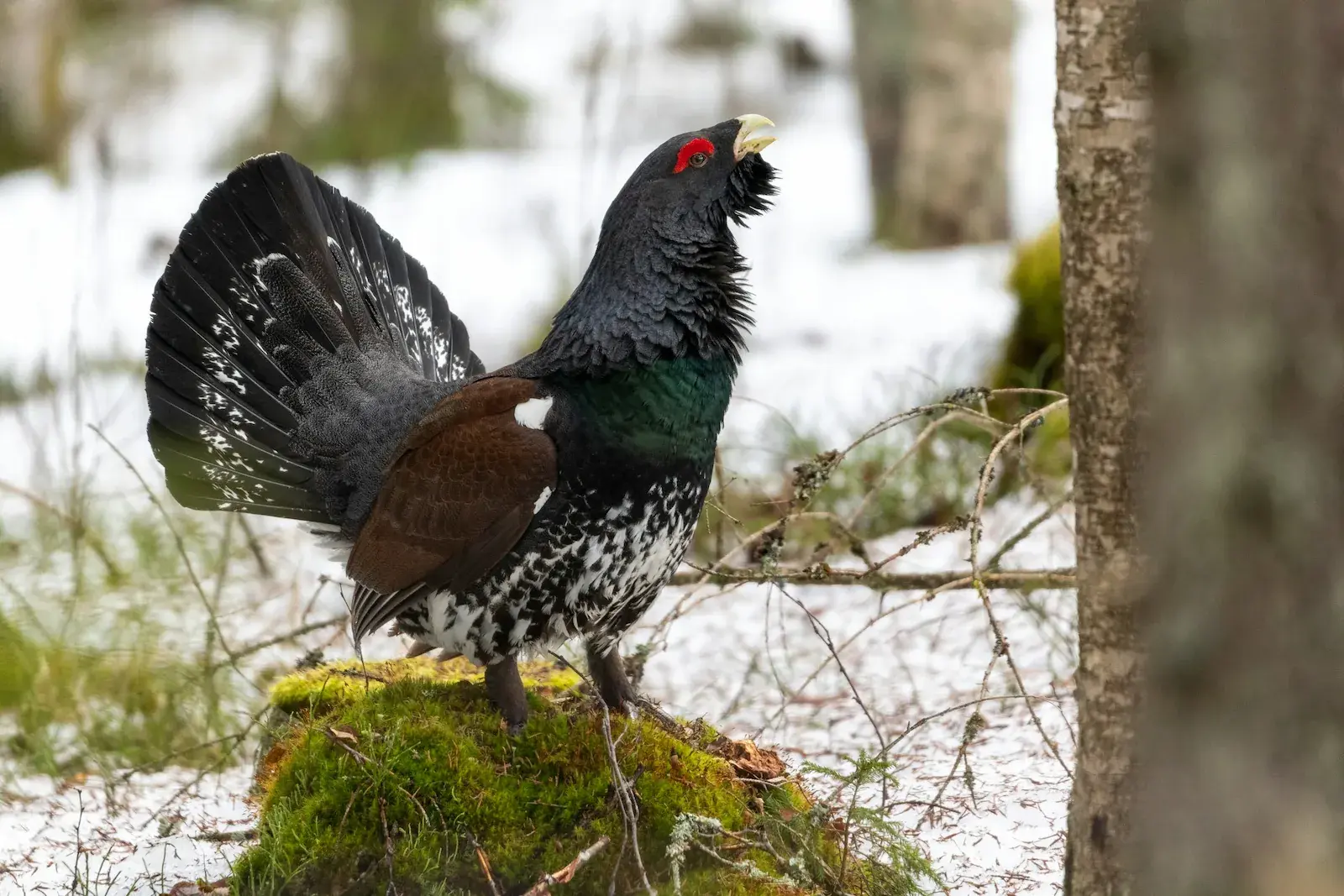
Cantabrian capercaillie | Photo: Mathijs de Koning
Among the most distinctive birds of the Cantabrian Mountains is the Cantabrian capercaillie ‘Tetrao urogallus’, which belongs to an extremely threatened population.
Its situation is particularly delicate due to several factors, including habitat fragmentation and degradation, as well as difficulties affecting its reproduction and survival.
Although it was historically part of the woodland ecosystems of Somiedo Natural Park, its presence is now very limited and it should not be considered a species to actively search for during an ordinary excursion.
Conserving this bird requires protecting its habitats and avoiding disturbance, particularly during the breeding season.
For this reason, attempting to locate display grounds, follow tracks or approach areas where the species is known to occur is not recommended.
In this case, knowing that a species exists and understanding its ecological importance is far more valuable than trying to obtain a sighting.
5. The other mammals that inhabit Somiedo Natural Park
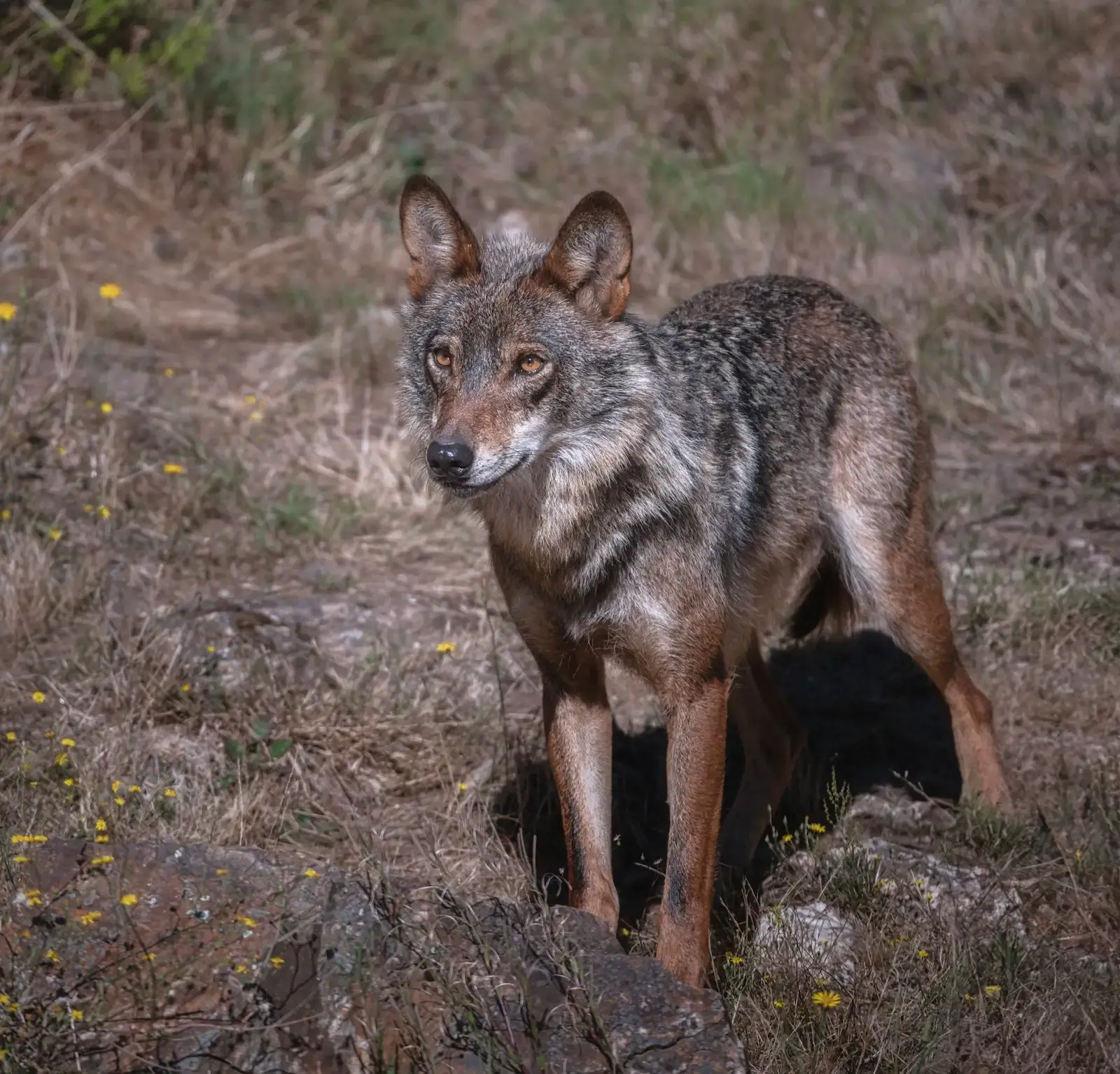
Iberian wolf | Photo: Jesús Esteban San José
In addition to bears, chamois and red deer, the park's different ecosystems support other mammals that are generally much more difficult to observe.
One of these is the wolf ‘Canis lupus’, whose presence forms part of the ecological dynamics of the Cantabrian Mountains.
This carnivore can travel across large territories and uses different habitats, but its elusive behaviour and the considerable distances it covers make encounters uncommon.
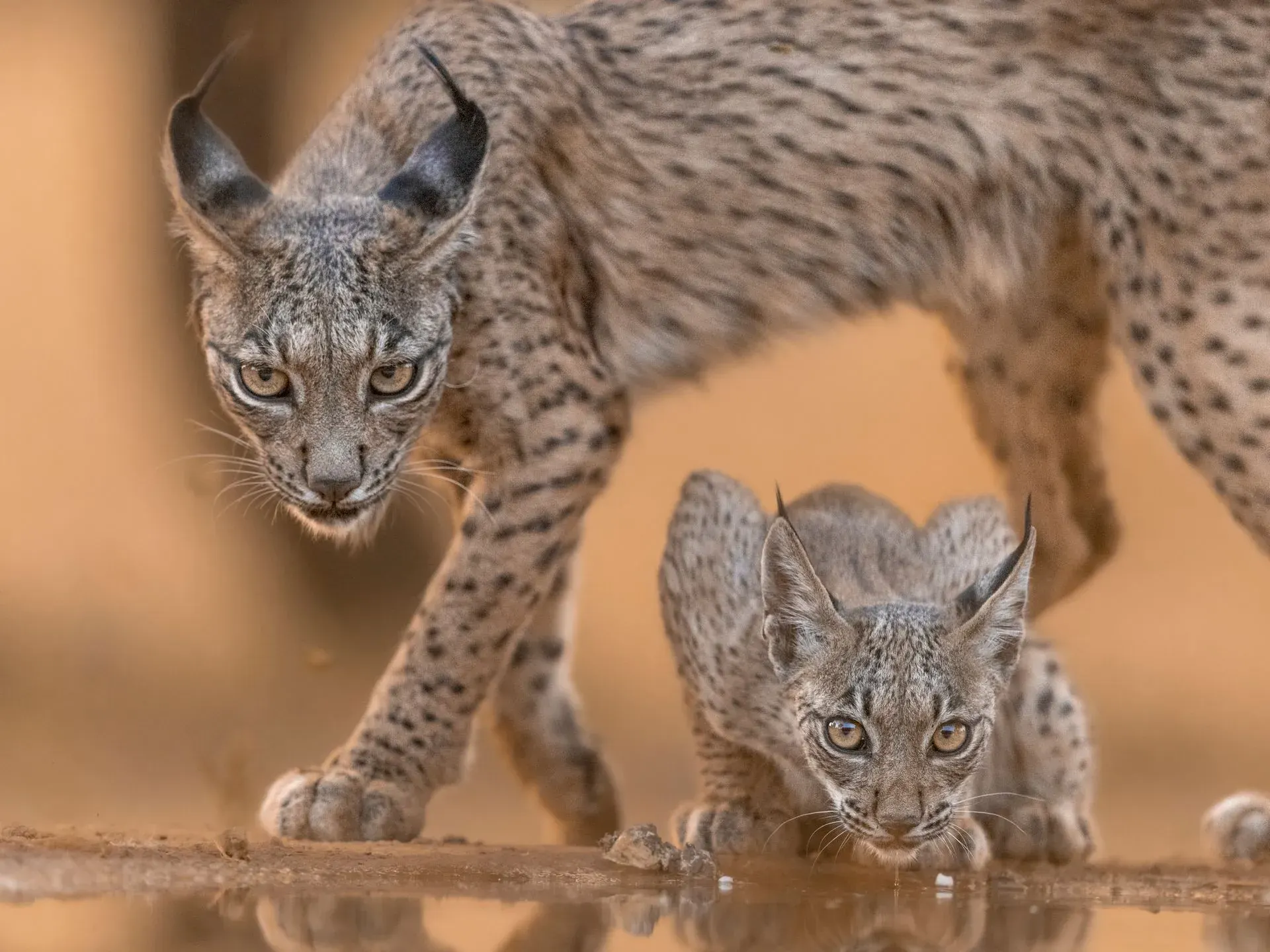
The European wildcat ‘Felis silvestris’ is also associated with woodland environments and transitional areas containing clearings and meadows, where it can find small mammals that form part of its diet.
Its appearance resembles that of a tabby domestic cat, although it has certain physical and behavioural characteristics that help distinguish it.
However, a brief observation from a considerable distance does not always allow for reliable identification.
Other mammals can also be found in different environments throughout the park, from small rodents and mustelids to species that use forests, riverbanks and grasslands.
This diversity is important because it reminds us that an ecosystem does not depend solely on its most striking animals.
Small mammals participate in food webs, consume seeds and invertebrates, and provide food for different birds of prey and carnivores.
In this way, many of the ecological relationships that allow the forests of Somiedo Natural Park to function take place without us ever observing them directly.
Where to watch wildlife in Somiedo Natural Park: viewpoints, trails and areas of interest
One of the park's attractions is that we can explore very different environments without having to travel great distances.
However, that does not mean all areas are equally accessible or suitable for wildlife watching.
Somiedo Natural Park has a network of marked trails and viewpoints that allow visitors to enjoy its landscapes while respecting protected areas and access restrictions.
Mirador del Príncipe, observing the mountains from La Peral
The Mirador del Príncipe viewpoint, located near La Peral, is one of the best-known places to appreciate the landscape of Somiedo Natural Park.
From this viewpoint, there are extensive views of the slopes and valleys that characterise the area, allowing visitors to see the landscape from a different perspective than when walking among the trees.
It is one of the park's notable wildlife observation points, particularly for those interested in watching animals from a distance using binoculars or a spotting scope.
But its appeal does not depend solely on finding a bear.
While waiting, we may discover birds flying over the hillsides, changes in the light across the mountains or even small movements revealing the presence of animals that are difficult to identify with the naked eye.
That is why it is a particularly interesting place to learn to observe patiently and interpret wildlife behaviour without leaving areas where access is permitted.
Saliencia Lakes, exploring glacial landscapes in the high mountains
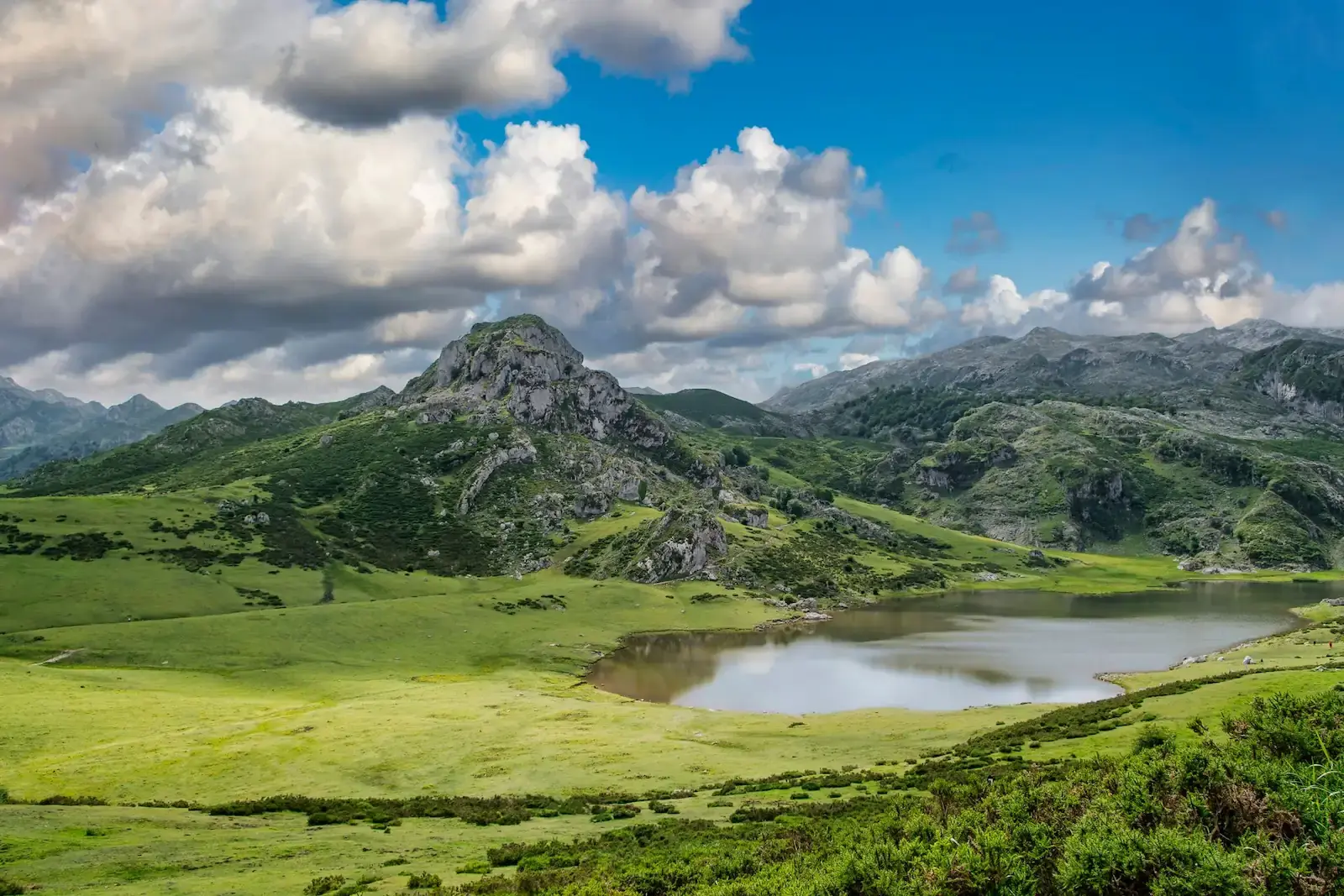
Saliencia Lakes | Photo: Enrique
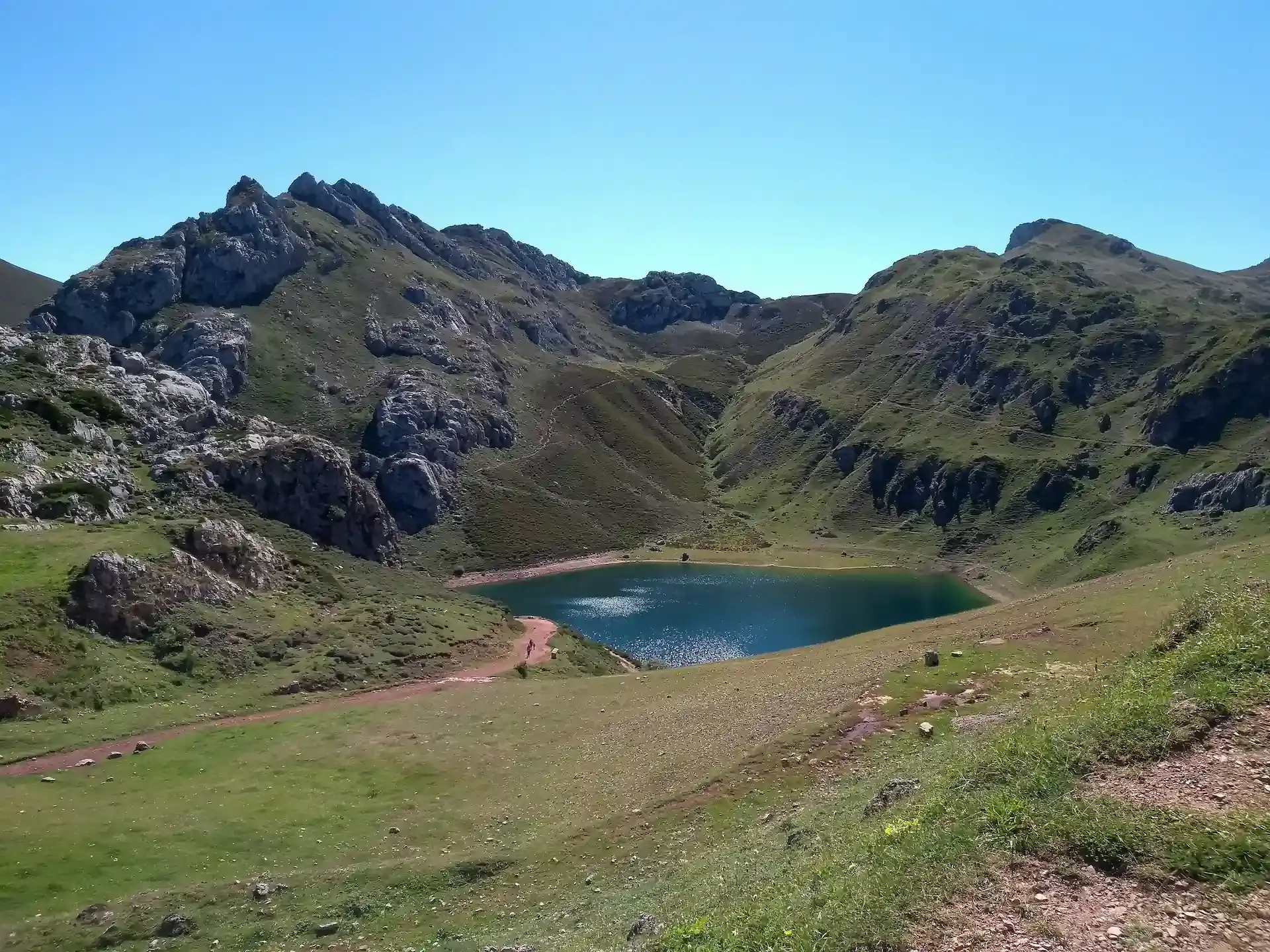
One of the best-known landscape features of Somiedo Natural Park is the Saliencia Lakes.
These are a group of glacial lakes surrounded by mountains, grasslands and rocky terrain, displaying some of the park's most characteristic landforms.
Among them are Lago de la Cueva, Cerveriz and Calabazosa, also known as Lago Negro, along with other small bodies of water in the area.
The official circular trail starting at Alto de la Farrapona allows visitors to explore this landscape on a route of approximately 7.6 kilometres, rated as moderate difficulty, with an estimated duration of between three and five hours.
The route crosses open mountain landscapes where it is worth paying attention to the slopes and the sky, as these environments are used by different species of birds and mammals.
However, the trail should not be confused with a route specifically intended for bear watching.
Its main value lies in discovering high-mountain ecosystems and understanding how the terrain, grasslands and lakes create different environments.
Furthermore, the Saliencia Lakes route is classified as moderate difficulty, so it is important to wear suitable footwear, carry warm clothing and check weather conditions before setting off.
In winter, snow and ice can significantly change the difficulty of the route and access conditions.
Lago del Valle, a trail through meadows and mountains
Another of the great landscapes of Somiedo Natural Park is Lago del Valle, a glacial lake located in a mountainous setting surrounded by grasslands and hillsides.
The usual access route begins in the village of Valle de Lago, from where different trails lead through a landscape combining meadows, traditional buildings and mountain areas.
The walk offers an interesting opportunity to observe how the surroundings change as we gain altitude.
At lower elevations, we encounter land associated with livestock farming, while higher up the landscape opens into grasslands and mountain terrain.
The circular route to Lago del Valle has an official length of approximately 14.6 kilometres, although alternative routes can change the total distance.
For this reason, it is worth checking the chosen route rather than assuming that all walks to the lake have the same level of difficulty.
This environment is particularly interesting for those who enjoy landscape photography and want to combine a walk with birdwatching and mountain wildlife observation.
However, the presence of visitors, livestock and changing weather conditions makes responsible behaviour essential.
Braña de La Pornacal, nature and traditional livestock farming
To understand Somiedo Natural Park, it is also important to explore its brañas, areas traditionally used by shepherds and livestock farmers during the months when cattle and other livestock grazed in the mountain pastures.
One of the most representative is La Pornacal, reached from Villar de Vildas by following the valley of the River Pigüeña.
This area preserves a group of traditional buildings known as teitos, characterised by roofs made from vegetation such as broom and other mountain shrubs.
These buildings are closely connected to the lives of the vaqueiros de alzada, livestock-farming communities that moved seasonally between different grazing areas.
But the importance of these brañas is not only cultural.
The landscapes of grasslands, forests and scrubland created and maintained over time also form part of the mosaic of habitats that characterises Somiedo Natural Park.
Along the route, visitors can observe changes in vegetation, birds using open spaces and different mountain environments.
The braña is located approximately 3.6 kilometres from the start of the route in Villar de Vildas, although the full official itinerary continues beyond it and covers around 13 kilometres as a return trip.
This allows visitors to adapt the walk according to the time available and the purpose of their visit, while always respecting designated paths.
Pola de Somiedo, the best starting point for exploring the park
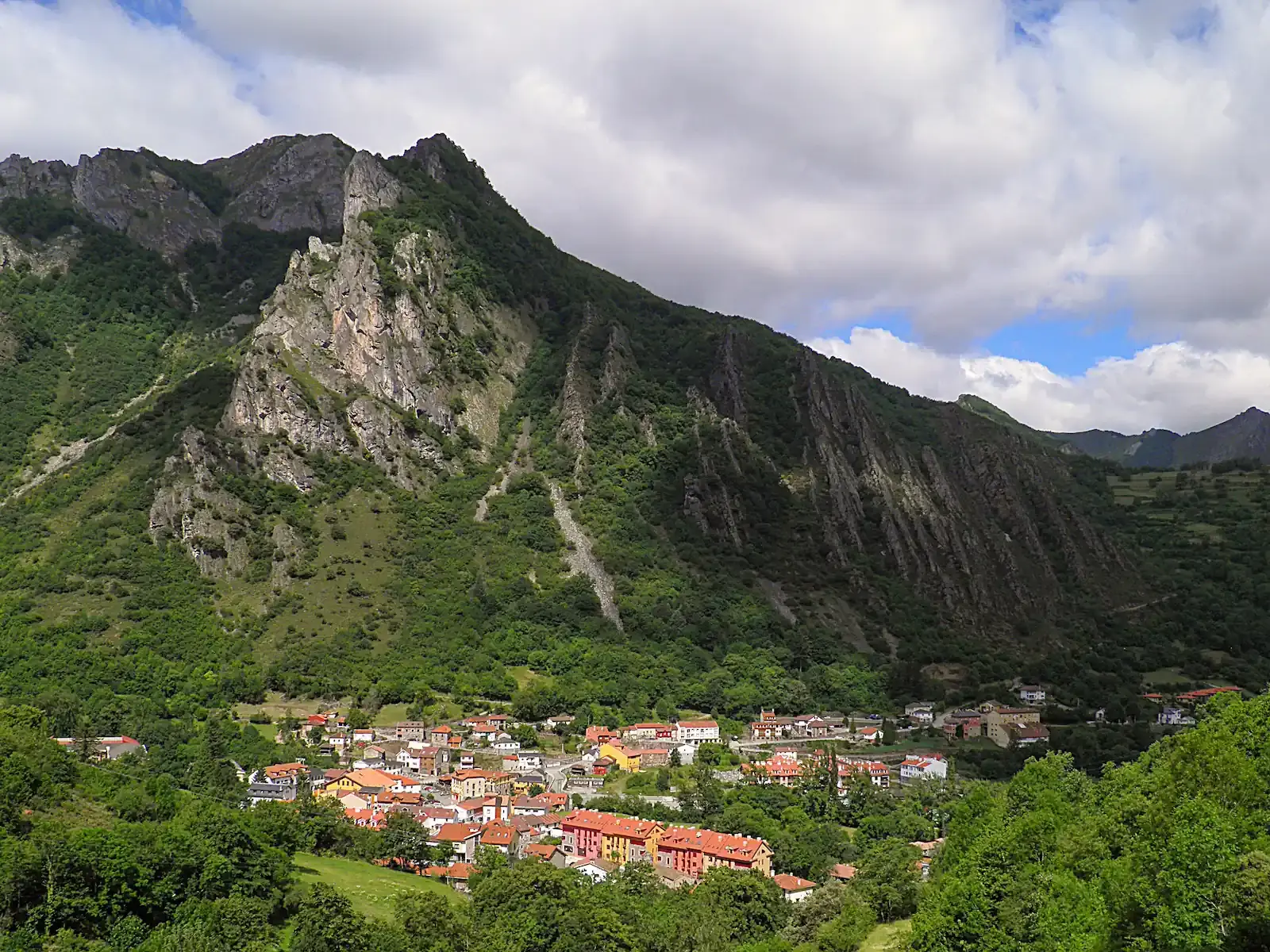
Pola de Somiedo | Photo: Carmenmoran, CC BY 4.0
The village of Pola de Somiedo is one of the main reference points for organising a visit.
It is home to the Natural Park Visitor and Interpretation Centre, where visitors can obtain information about the area, its natural values and the available trails.
Before starting an excursion, it is worth checking access conditions and any temporary restrictions, particularly if we plan to visit mountain areas or follow trails close to sensitive wildlife habitats.
The Somiedo Interpretation Centre also provides an opportunity to learn about the park's geology, vegetation and natural heritage.
It is a good place to start understanding the landscape before exploring it, particularly on a first visit.
What is the best time of year to visit Somiedo Natural Park and observe wildlife?
Although Somiedo Natural Park can be visited at different times of year, conditions change considerably from one season to another.
Wildlife activity, vegetation, weather and trail access all influence which experiences may be most interesting.
Spring, the return of activity
During spring, temperatures begin to rise and vegetation in many of the park's environments enters a new period of growth.
For brown bears, this season can provide feeding opportunities after the colder months, while different birds begin their breeding activities.
It is also an interesting time to observe changes in the forests and discover bird species that become particularly active again.
However, spring can coincide with snow at higher elevations and periods of particular sensitivity for wildlife, so it is important to respect any seasonal restrictions.
Summer, high-mountain landscapes
During summer, mountain trails generally offer more favourable conditions than in winter, although the weather can change rapidly even on seemingly clear days.
High-altitude grasslands become one of the most characteristic environments of Somiedo Natural Park, and open areas provide opportunities to spend time observing birds and chamois from a distance.
It is also an interesting season for exploring glacial lakes and traditional brañas.
However, high temperatures on some days can affect the visible activity of certain animals, so concentrating all observations around the middle of the day is not always advisable.
Autumn, the deer rut, fruits and colourful forests
Autumn is probably one of the most rewarding seasons for enjoying the diversity of landscapes and animal behaviour in Somiedo Natural Park.
Deciduous forests change colour, and different species begin preparing for the colder months.
Red deer take part in the rut, while bears take advantage of certain food resources to build up reserves.
The variety of colours in the beech and oak forests also makes the park particularly attractive for nature photography.
However, the days become shorter, temperatures can drop quickly and rainfall is common, so it is important to plan outings with sufficient time.
Winter, when the mountains change completely
In winter, Somiedo Natural Park takes on a very different appearance.
Snow can cover grasslands, trails and mountain roads, while low temperatures affect both animal activity and access possibilities.
Although the landscape can be spectacular, this is not the easiest season for exploring certain routes.
Some bears may also spend long periods in their winter dens, so winter should not be considered a favourable season for searching for them.
If visiting during these months, it is advisable to prioritise routes suited to the actual conditions and avoid entering high-mountain areas without the necessary preparation and equipment.
How to organise a nature visit to Somiedo Natural Park
One of the best ways to enjoy the park is to combine different types of landscape rather than dedicating the entire visit to searching for a single species.
We can begin in Pola de Somiedo to obtain up-to-date information about access and trails, then spend some time exploring one of the designated viewpoints.
Watching from these locations allows us to become familiar with the slopes and learn to recognise movements and silhouettes at a distance.
Another day can be devoted to exploring a different environment, such as the glacial lakes or traditional brañas, where the experience is more closely connected to the landscape, birds and interpretation of mountain ecosystems.
There is no need to try to visit every location in a single day.
In fact, spending more time in the same environment can provide observation opportunities that we might miss if we were constantly moving from one place to another.
For those who want to learn how to identify species, interpret animal signs from permitted trails or use spotting scopes correctly, outings accompanied by specialised professionals can be a good alternative.
On NatSnap, you can explore wildlife watching and photography experiences in animals' natural habitats, offering a way to discover these environments through knowledge and respect for wildlife.
What to consider when observing wildlife responsibly
Somiedo Natural Park is one of the most valuable natural areas in the Cantabrian Mountains, but it is also a place where the conservation of sensitive species requires particular care.
For this reason, not all wildlife watching activities are appropriate, and not every location should be used to try to find animals.
The park's good practice recommendations emphasise the importance of using established trails and observation points, respecting restricted areas and avoiding any behaviour that might disturb wildlife.
This is particularly important in areas inhabited by bears.
We should never follow tracks to try to locate a bear, enter vegetation in search of individuals or approach an animal that is feeding or resting.
When observing wildlife from a viewpoint, it is preferable to use binoculars or spotting scopes and avoid movements that could alter an animal's behaviour.
We should also avoid leaving food scraps, as they can attract animals and encourage them to associate human presence with feeding opportunities.
For red deer, chamois and birds, it is also important to avoid approaching them during the breeding season and maintain sufficient distance for them to continue their activities.
If we unexpectedly encounter a bear while walking, we should remain calm, avoid running and slowly move away without blocking its escape routes.
The brown bear conservation guidelines also emphasise the importance of not following animal tracks or leaving authorised paths.
It is equally important to respect livestock farms and avoid approaching the mastiffs working to protect grazing animals.
The best wildlife watching experience is not necessarily the one in which we get closest to an animal, but the one in which we can observe its behaviour without interfering with it.
Somiedo Natural Park, a destination where wildlife is only part of the story
The presence of brown bears has made Somiedo Natural Park one of Spain's best-known nature destinations, but reducing its value to this single species would mean overlooking much of what makes the area special.
Its forests support the survival of numerous animals, its mountain grasslands provide food for chamois and other herbivores, and its rocky outcrops form part of the environment used by large birds of prey moving across the Cantabrian Mountains.
At the same time, the glacial lakes remind us of the geological transformation of the landscape, while the brañas show how generations of livestock farmers have used these areas for centuries.
All of this forms part of an ecosystem in which nature, history and conservation are closely connected.
And perhaps that is why Somiedo Natural Park is so interesting for those who enjoy observing wildlife.
We may spend an entire morning without finding a bear and still discover a golden eagle in flight, spot chamois on a distant slope or hear the roars of red deer at the beginning of autumn.
Because getting to know a natural area is not simply about finding the animal we came to see, but learning to recognise everything happening around it.
Frequently asked questions about Somiedo Natural Park
Where is Somiedo Natural Park?
It is located in south-western Asturias, in the Cantabrian Mountains, close to the border with the province of León. It covers a mountainous landscape of forests, grasslands, valleys and glacial lakes.
What animals can you see in Somiedo Natural Park?
Some of the most representative species include the brown bear, Cantabrian chamois, red deer, golden eagle, griffon vulture and various woodland and mountain birds. The park is also home to species that are more difficult to observe, such as wolves and European wildcats.
What is the best time of year to see bears in Somiedo Natural Park?
Spring and the period from late summer into autumn often provide interesting opportunities. However, bears are elusive animals and sightings are never guaranteed. The appropriate approach is to observe them from designated points and at a considerable distance.
Where can you observe bears in Somiedo Natural Park?
Wildlife watching takes place from viewpoints and public access areas offering extensive views of the slopes, such as Mirador del Príncipe near La Peral. Following tracks or entering vegetated areas to try to find bears is not recommended.
When can you hear the red deer rut in Somiedo Natural Park?
The red deer rut usually takes place during the first few weeks of autumn, although the exact dates can vary depending on the conditions each year. It is important to maintain a respectful distance and avoid disturbing the animals during the breeding season.
What walking routes are available in Somiedo Natural Park?
Some of the best-known routes include the Saliencia Lakes, Lago del Valle and trails passing through traditional brañas, such as La Pornacal. Distance and difficulty depend on the chosen route, so it is advisable to consult the official trail information before setting off.
Can you visit Somiedo Natural Park in winter?
Yes, but conditions can be demanding due to snow, ice and low temperatures. Some mountain roads and trails may be difficult to access or subject to restrictions, so it is important to check their condition and adapt the visit to the weather.
Do you need to hire a guide to observe wildlife in Somiedo Natural Park?
A guide is not compulsory for visiting public viewpoints and trails, but a specialised professional can help identify animals, interpret the landscape and carry out observations with greater knowledge and respect for wildlife.