On Saturday 28 November 2026, Valdehornillos, in the province of Badajoz, hosts the Crane Festival (Festival de las Grullas). The day starts at 07:30, when a grey bird is still hard to pick out against the sky and you may hear a flock trumpeting before you see it. If you prefer to arrive later, you can still head out into the fields, explore the surrounding countryside by electric bike or visit the Casa de la Cultura, the village’s cultural centre, to hear the calls of the cranes that winter in Extremadura.
At the heart of the festival is the common crane 'Grus grus'. In late November, you can find these birds feeding in the stubble fields of the Vegas Altas del Guadiana, picking up grain left behind after the harvest. That link between cranes and rice runs through the whole festival, from the birdwatching trips to a discussion bringing together the people who study the birds and those who farm the fields.
All activities in the 2026 programme are free. When planning your visit, start with the time you can arrive and what you’d most like to do outdoors. Several tours set off at the same time, and while some family activities need to be booked online, you can join others on the day.
Visitor information updated on 18 November 2026.
When and where is the 2026 Crane Festival?
Cranes in flight | Photo: Péter Kövesi
The 18th edition of the festival takes place on a single day, Saturday 28 November, in Valdehornillos, a village in the municipality of Don Benito. If you’ve been before, check this year’s venue before setting your satnav. In 2026, the talks and prize-giving take place at the Casa de la Cultura in Valdehornillos. You can also see the entries in the children’s drawing competition under the arches in the village square from early morning.
If you’re joining a field trip, check the meeting point for the activity you’ve booked. The Casa de la Cultura is the venue for the talks, so if you’re coming for breakfast or a tour, look up where your group is meeting. If you’re driving to the first outing, allow time to park and walk to the meeting point before 07:30.
Programme for 28 November
- 07:30 — Breakfast with the cranes.
- 10:00 — Soundscapes and new technology session.
- 10:30 — Bird photography workshop.
- 11:00 — Minibus tour.
- 11:00–17:00 — Children’s workshops run by conservation groups.
- 11:30–14:30 — Talks and panel discussion at the Casa de la Cultura.
- 12:00–14:00 — Guided nature walk with games for children.
- 12:30 — Guided minibus, walking and electric bike tours, plus the ‘In Search of the Lost Crane’ treasure hunt.
- 14:30 — Rice tasting.
- 15:30 — Second guided walk, electric bike tour and treasure hunt. Final minibus tour.
- 16:00 — Prize-giving for the children’s drawing competition at the Casa de la Cultura.
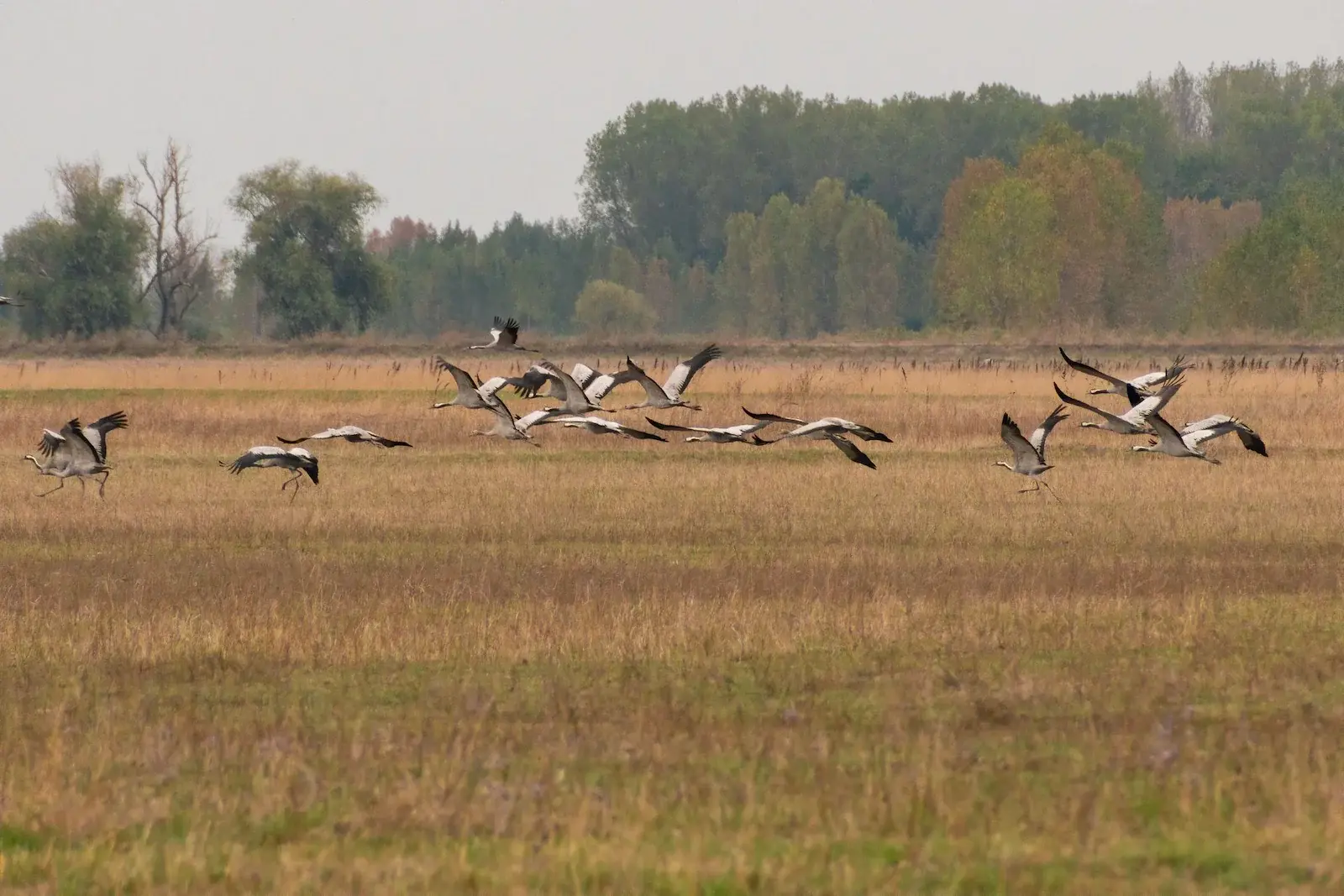
How to book and get to Valdehornillos
Man looking at a map | Photo: cottonbro studio
Which activities should you book online?
Open the festival programme, find your activity and follow the booking link beside its start time. There’s a single booking form for breakfast, the soundscape session and the walking, cycling and minibus tours. The photography workshop has a link next to its 10:30 start time. For the treasure hunt, choose the time you want first, as the morning and afternoon sessions have separate links.
You can still enjoy the festival if you haven’t booked a tour. The children’s workshops run for six hours, and you can drop in on the talks or join the rice tasting without booking. There’s also a children’s nature walk that you can sign up for in person at the ADENEX marquee.
Buses from Plasencia, Cáceres, Badajoz and Mérida
The festival runs two return bus services, each with its own booking form. Both buses leave Valdehornillos for the return journey at 17:30.
The Plasencia–Cáceres bus leaves Hotel Los Álamos in Plasencia at 07:30 and picks up passengers at the bullring in Cáceres at 08:30.
For the Badajoz–Mérida bus, you can board at 08:00 at the TUBASA stop in Plaza de la Libertad in Badajoz, or at 08:50 at the Palacio de Congresos in Mérida.
It’s easy to mix up the bus bookings. These two services bring you to the village, while the minibus tours at 11:00, 12:30 and 15:30 take you out into the countryside once you’re at the festival. If you want to use both, book each separately. For breakfast with the cranes, you’ll need to make your own way there, as the first bus will still be in Plasencia when breakfast starts at 07:30.
Which tour should you choose for crane watching?
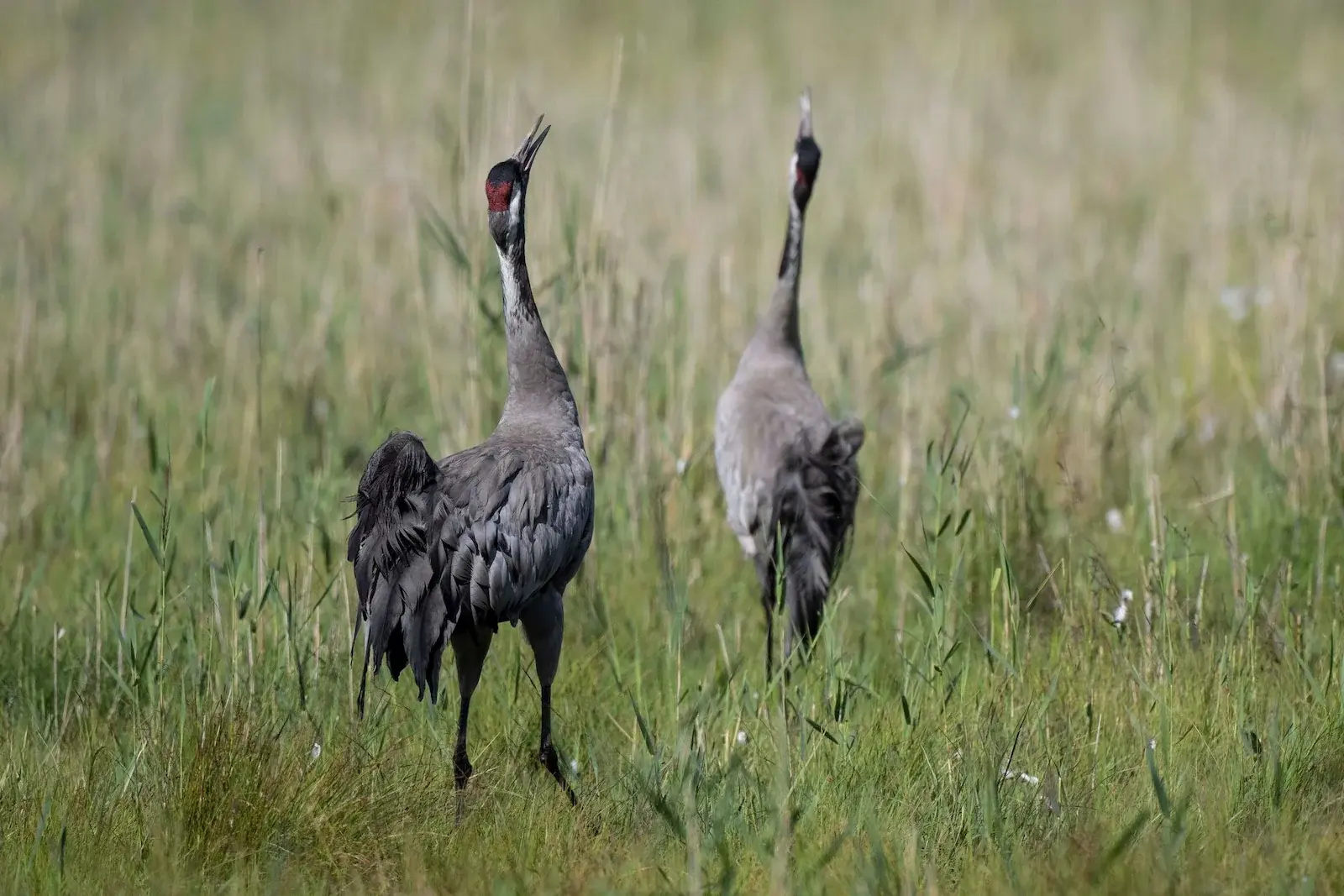
Two cranes in a field | Photo: Seppo Vänni
Breakfast at 07:30 and the first flights of the day
It’s worth getting up early to see the cranes leave their roosts. They gather to spend the night together, then spread out at first light to feed for the day. Even before there’s enough light to make out their plumage, you can follow a flock’s direction by listening to the birds call to one another. Breakfast with the cranes is the earliest outing if you’d like to catch that moment.
When you hear the first flock, try spotting it with the naked eye, then raise your binoculars without looking away. If you start by scanning through binoculars, you’ll see just a small patch of sky and may miss the flock altogether. Once you’ve found it, follow a single bird for a few seconds. Its neck stretches forwards and its legs trail behind, two features you can pick out even in silhouette.
On foot, by electric bike or by minibus
If it’s your first outing with binoculars, the guided walk lets you follow the group’s pace and use each stop to look and listen. From the track, scan the field edges as well as the open ground. A crane standing still and side-on can be easy to spot, while just a few metres away several birds of the same colour can all but disappear as they lower their heads into the stubble.
An electric bike gives you another way to explore the fields. In 2026 there are guided rides at 12:30 and 15:30, and you can also use the bikes without a guide throughout the day. If you’d like to look through your binoculars or take a photograph, wait until you can pull over and leave the track clear.
The minibus offers an extra departure at 11:00 and may suit you if you prefer to explore by vehicle. If you need to check wheelchair access or how much walking is involved at each stop, ask the organisers before choosing a tour. When deciding between morning and afternoon, think about what else you’d like to do that day. It’s hard to predict when a particular field will hold the most cranes.
Cranes and the rice fields of the Vegas Altas
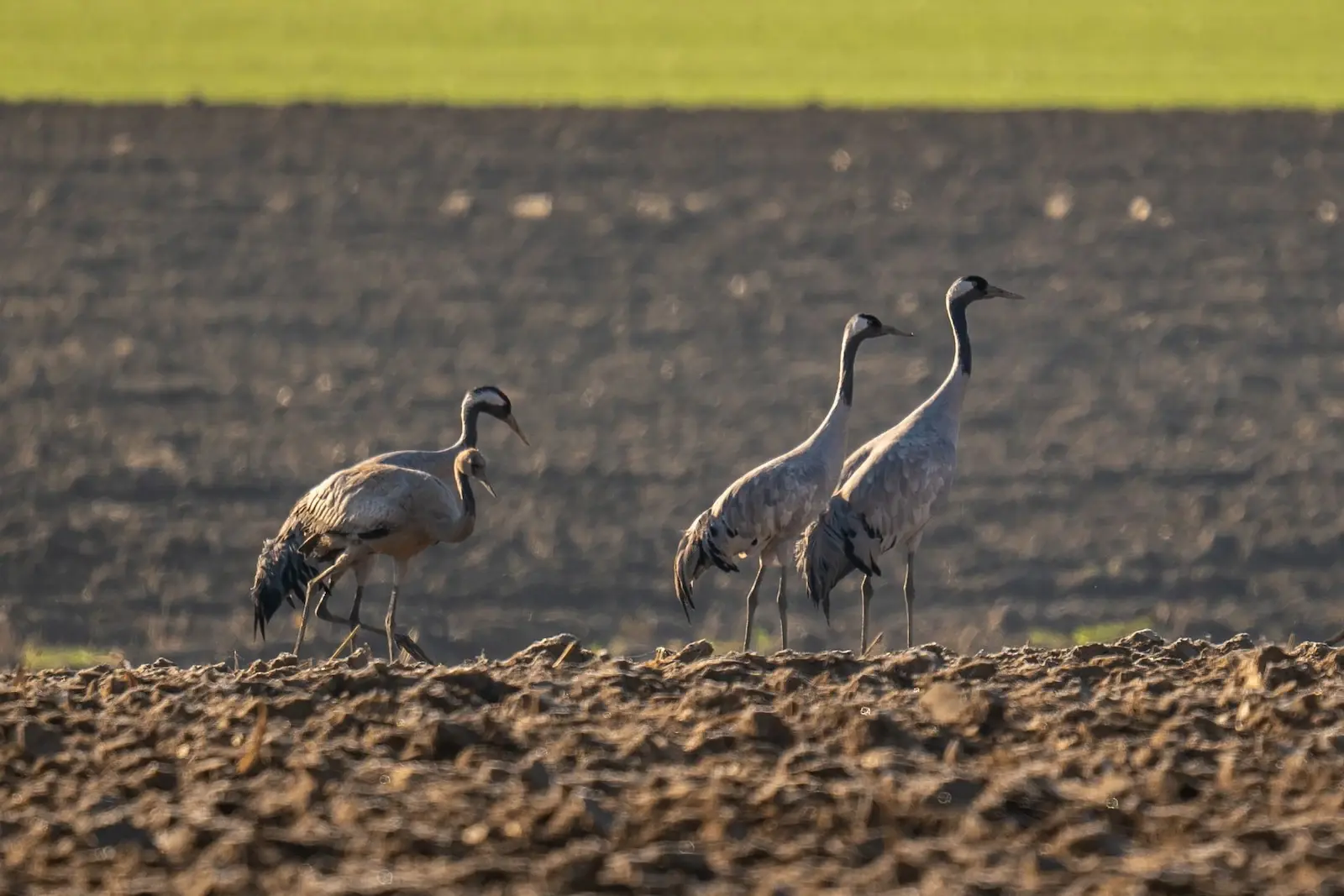
Eurasian cranes | Photo: Vladimir Srajber
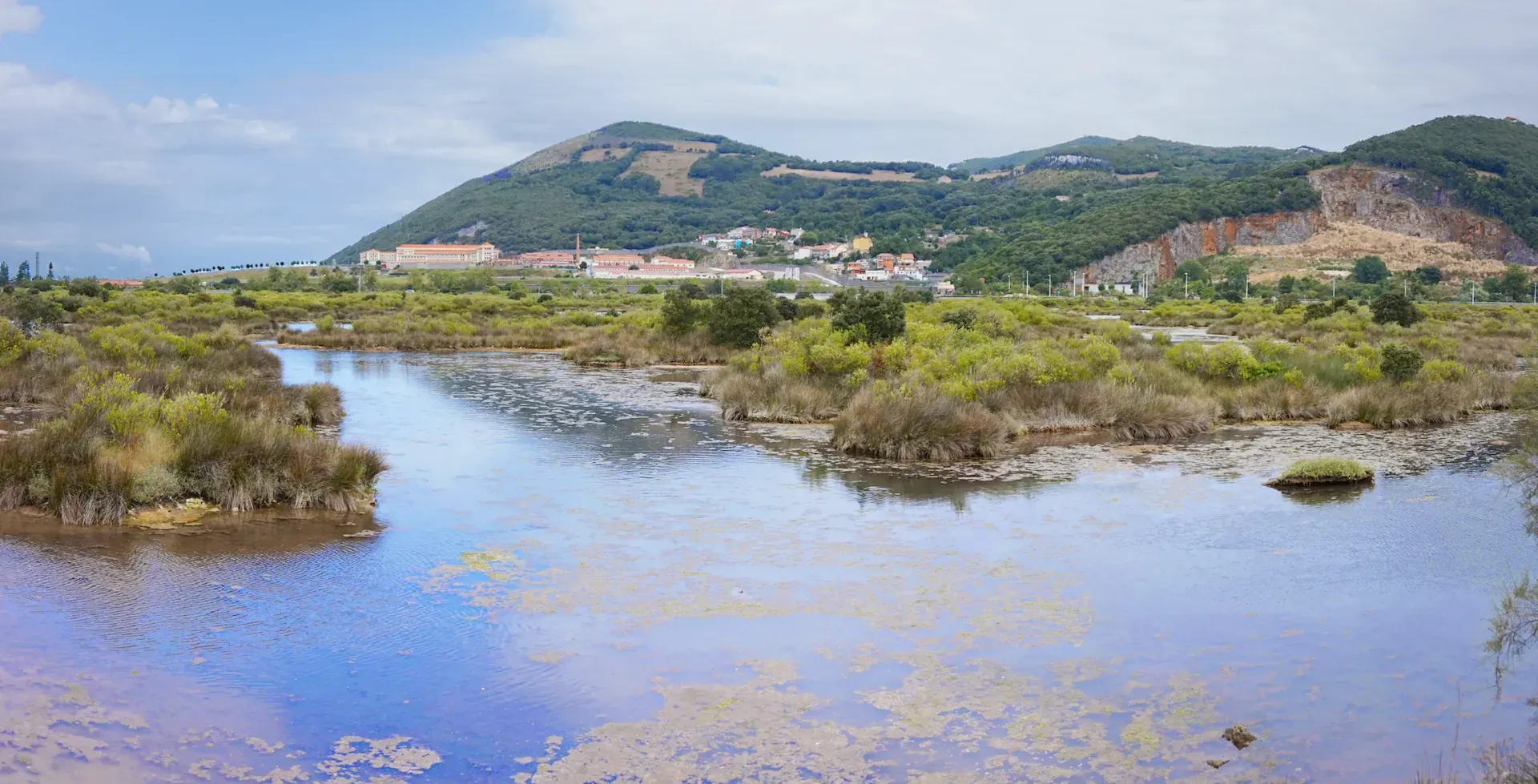
Why look for a migratory bird in a rice field after the harvest? Because some of the grain stays on the ground. In the Vegas Altas del Guadiana, rice and maize fields provide food through the winter, while areas of shallow water give the birds somewhere to roost together. Even two fields planted with the same crop can serve different purposes. Cranes may feed among the stubble in one, while a rice field ploughed after harvest can become a night-time roost if it holds a shallow layer of water.
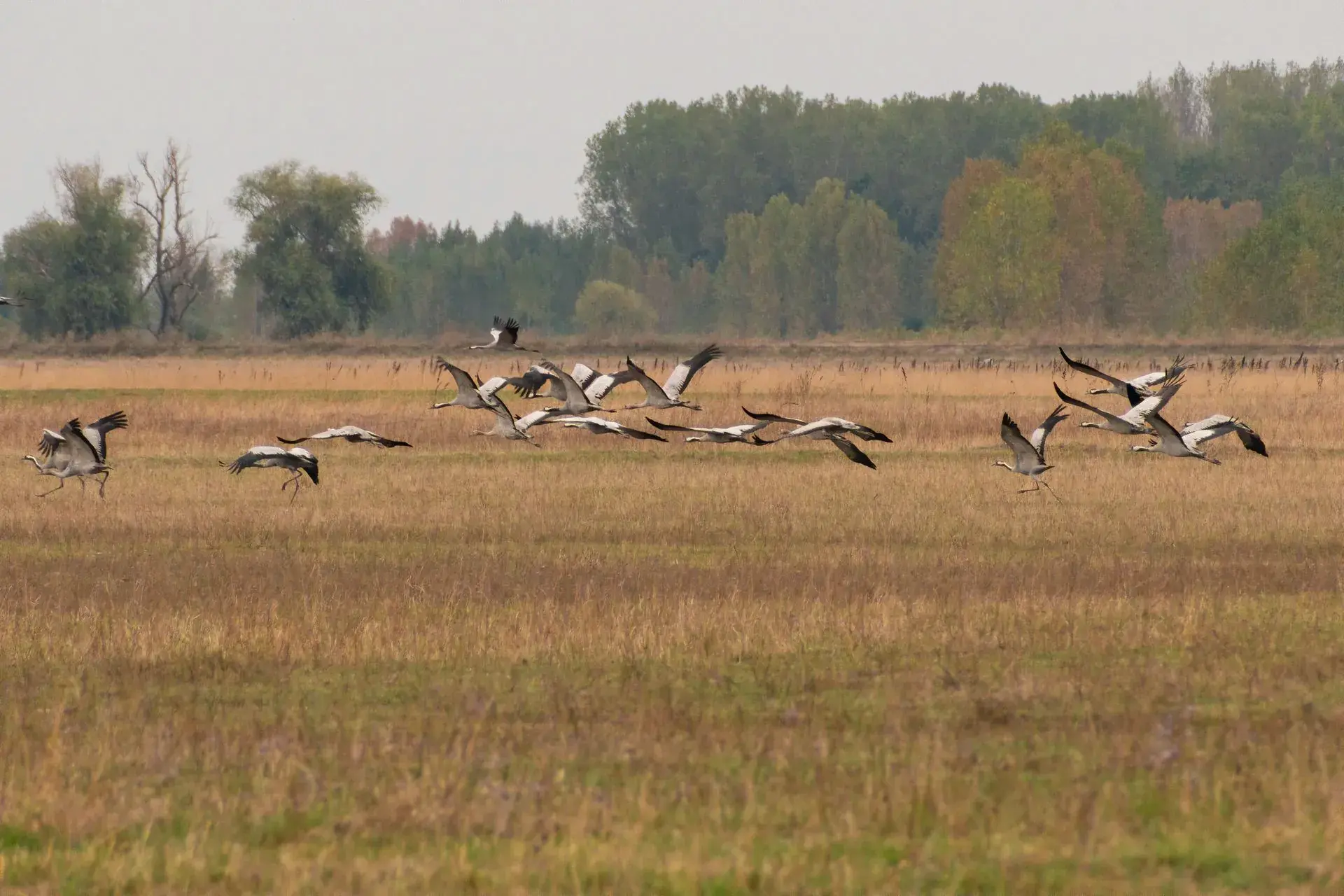
That distinction helps explain some of the flights you might see on a tour. A flock crossing the sky in November may be travelling only a few kilometres from its roost to a feeding ground. The V-shaped formation and trumpeting calls help you recognise cranes from a distance, but tell you little about how far they’re going. Watch what the flock does next. Does it fly straight on, lose height or drop down to join birds already on the ground?
What to listen for at the Casa de la Cultura
The talks begin at 11:30 in the main hall, where Carlos de Hita will explore the sounds cranes make. If you’ve been out at dawn, you may recognise something you heard in the fields. Listen closely and, among the deeper calls of the adults, you may hear the higher-pitched whistles of the young birds travelling with them. If you’ve ever recorded a flock on your phone, try playing it back with that sound in mind.
At 12:30, José Antonio Román Álvarez of Grus Extremadura presents ‘Memorias grulleras’. At 13:30, the group joins representatives of the local rice industry for a panel discussion. It’s a chance to look at the fields you’ve seen from the tracks through the eyes of the people who grow the rice and those who return each winter to watch the birds. The rice tasting follows at 14:30 and is open to everyone without booking.
Visiting the festival with children
There are three children’s activities, each with a different booking arrangement. The conservation groups’ workshops run from 11:00 to 17:00 and you can drop in between other activities. The guided nature walk with games runs from 12:00 to 14:00 and you can sign up on site. For the ‘In Search of the Lost Crane’ treasure hunt, choose one of the two sessions and book it online.
If your children are using binoculars for the first time, the drawings under the arches in the square make a good place to practise before heading out. Pick a detail in one of the drawings, take a few steps back and find it first with the naked eye, then through the binoculars. When a crane comes into view, they’ll already know where to point the binoculars and how to focus.
Once you’re out in the fields, give them something they can work out from a distance. How many cranes are feeding and how many have their heads up? Can they hear the next flock before they see it? If young birds are standing beside adults, take a moment to compare them. Adults have a pale stripe running down the neck, while the heads of young birds are browner. In good light, these are two features that help you tell the ages apart.
Getting your binoculars and camera ready
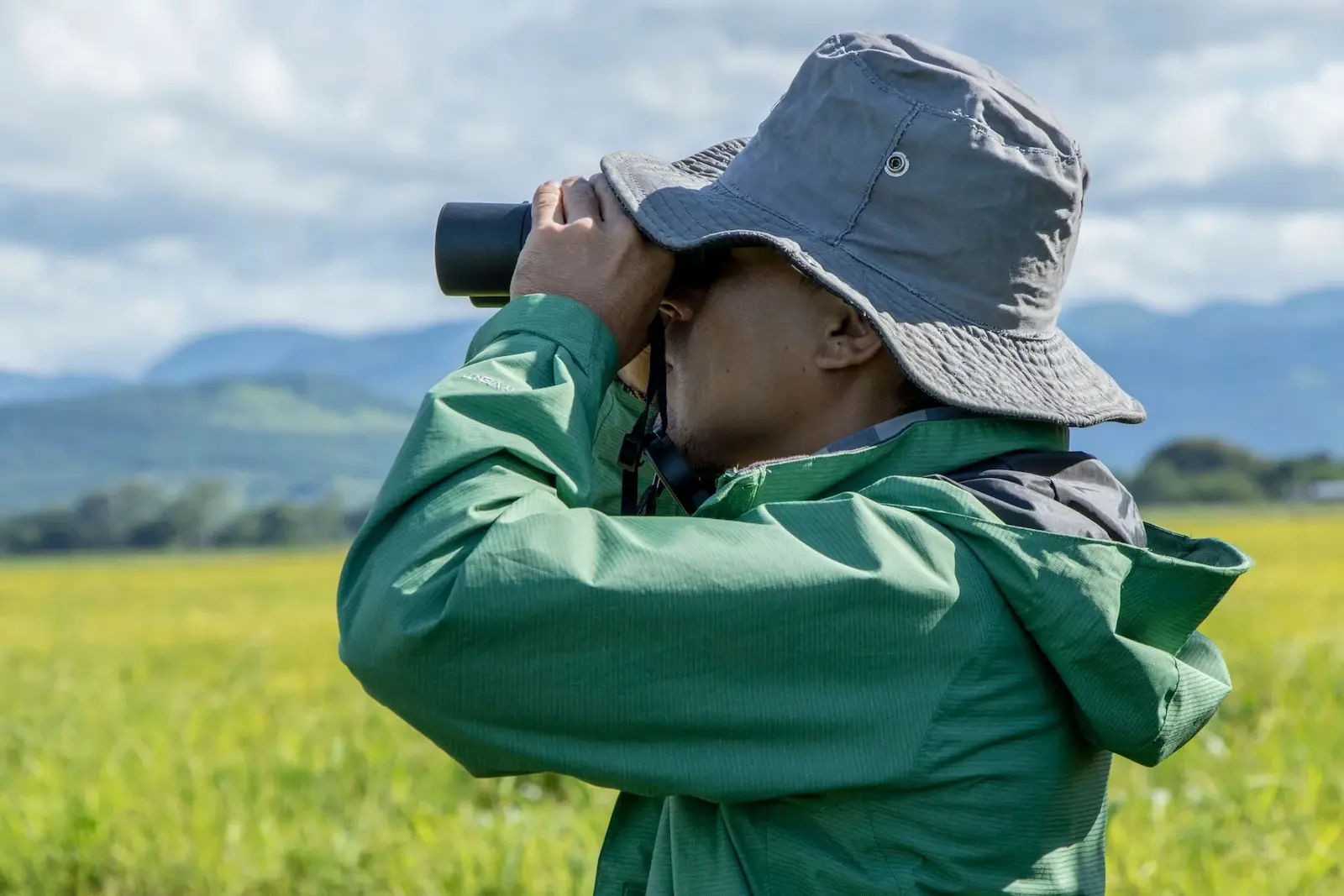
Man with binoculars | Photo: Daly Selva Lira
A pair of 8× or 10× binoculars is enough for a birdwatching trip if you want to travel light. When you arrive, focus on a distant, stationary object so that you’ll only need a small adjustment when the first flock appears. If you’re wrapping up warm for breakfast, check that you can turn the focus wheel with your gloves on. You’ll appreciate the extra warmth when you’re standing still between sightings.
If you’re joining the bird photography workshop at 10:30, bring a question you’d like to explore. How do you keep a group of birds in silhouette sharp when the camera keeps focusing on the background? How do you frame a photograph when the birds are too far away to fill it? In a rice field, including the furrows, water or tree line can tell you more about what the cranes are doing there than a tight crop of a single bird.
To photograph a feeding flock, choose your framing from the track and wait for a crane to raise its head or step away from the others. That gives you a recognisable outline without having to move closer. If several birds stop feeding at once, keep watching you or start moving away, step back. As the flocks gather again towards the end of the day, find an open spot with a good view of the sky so you can watch them fly past and give them space to land. Keeping your distance from roosts is part of the birdwatching code of conduct for Extremadura.
Can you still see cranes if you miss the festival?
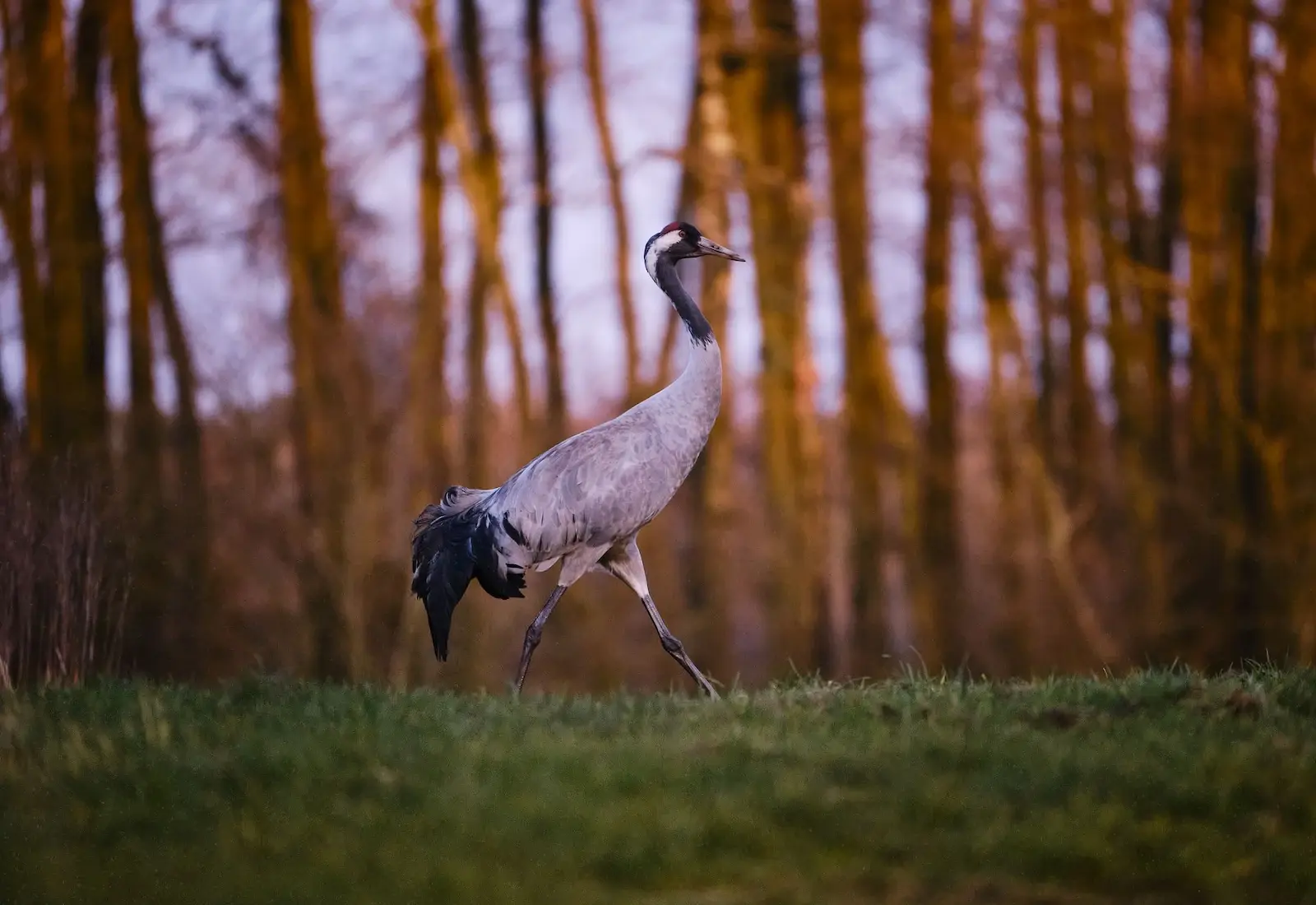
Crane in an autumn landscape | Photo: Till Rottmann
Yes. The festival takes place on 28 November, and the cranes stay for the winter. The first birds reach the Iberian Peninsula in October, and the return to their breeding grounds starts in February and continues into March. If the festival gives you a taste for the area, December and January are also good months to come back for a longer visit.
One option for another day is the Vegas Altas del Guadiana birdwatching route, which starts by the bridges over the River Guadiana in Villanueva de la Serena. An early stretch follows the road to Palazuelo through the rice fields. Further on, towards Madrigalejo, there’s a raised observation point in a former quarry. The route is separate from the festival tours, so you can pick a stretch and spend the morning exploring it.
In the rice fields, find somewhere you’re allowed to stop with a clear view and scan slowly with your binoculars. A flock in flight may be the first thing that catches your eye, but as you follow it down you may spot another group that’s been on the ground all along. Keep your binoculars trained on the field a little longer and you can watch the newcomers land, fold their wings and mingle with the birds already feeding.
Frequently asked questions about the Valdehornillos Crane Festival
Is the 2026 festival in Valdehornillos or Moheda Alta?
The 2026 festival takes place in Valdehornillos, in the municipality of Don Benito, in Badajoz province. Directions to the Moheda Alta dehesa in Navalvillar de Pela will take you to a different venue.
What can I do at the Crane Festival without booking?
You can attend the talks, drop in on the children’s workshops and join the rice tasting, all free of charge. If you’re bringing children, you can also sign them up for the guided nature walk with games at the ADENEX marquee on the day.
Can I take the festival bus to breakfast with the cranes?
You’ll need to make your own way to Valdehornillos for breakfast at 07:30. That’s when the first festival bus leaves Plasencia, and the bus from Badajoz sets off at 08:00.
Where can I watch cranes independently near Valdehornillos?
In winter you can follow the canal keepers’ huts trail, a four-kilometre route near Valdehornillos. It’s an option for a return visit if you’d like to bring your binoculars and spend a morning watching the birds at your own pace.