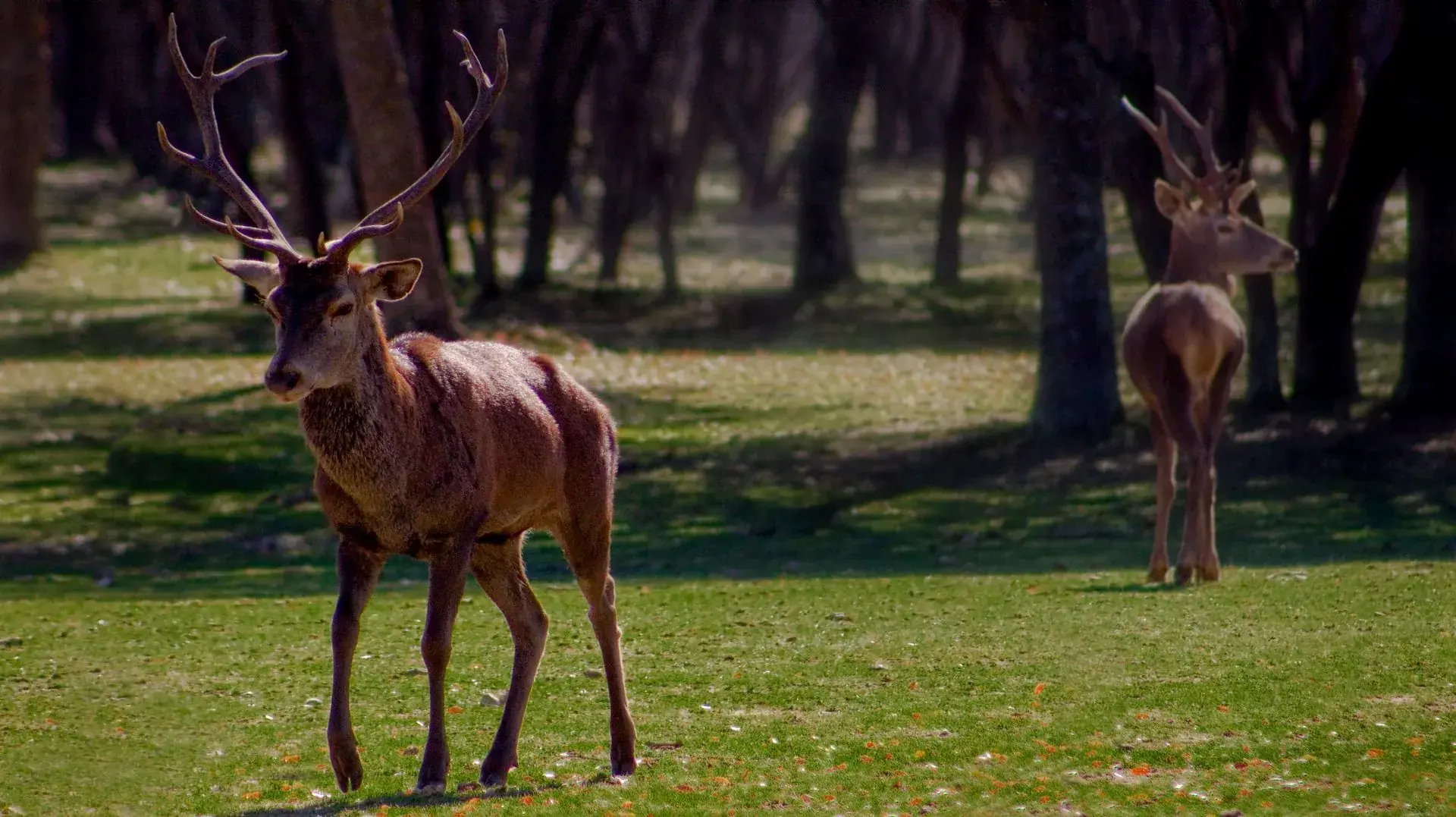
The red deer rut in Spain usually takes place between September and October, especially at dawn, at dusk and during the first hours of the night. Some of the best-known places to see or hear it are Cabañeros, Monfragüe, Sierra de la Culebra, Sierra Morena, Alto Tajo, Doñana, Cazorla, Gorbeia and several areas of the Pyrenees and the Cantabrian Mountains.
Although we often talk about “seeing the rut”, the experience often begins with sound, because first comes a deep roar from the mountains, then another one further away and, little by little, the whole landscape seems to answer. At that moment, the red deer ‘Cervus elaphus’, enters one of the most intense periods of its annual cycle.
The rut is not just an autumn spectacle, but a mix of mating behaviour, competition, territory, physical exhaustion and natural selection. That is why it is worth knowing when to go, where to look for it and, above all, how to experience it without disturbing the animals at such a sensitive time.
What is the red deer rut?
Deer | Photo: Jesús Esteban San José
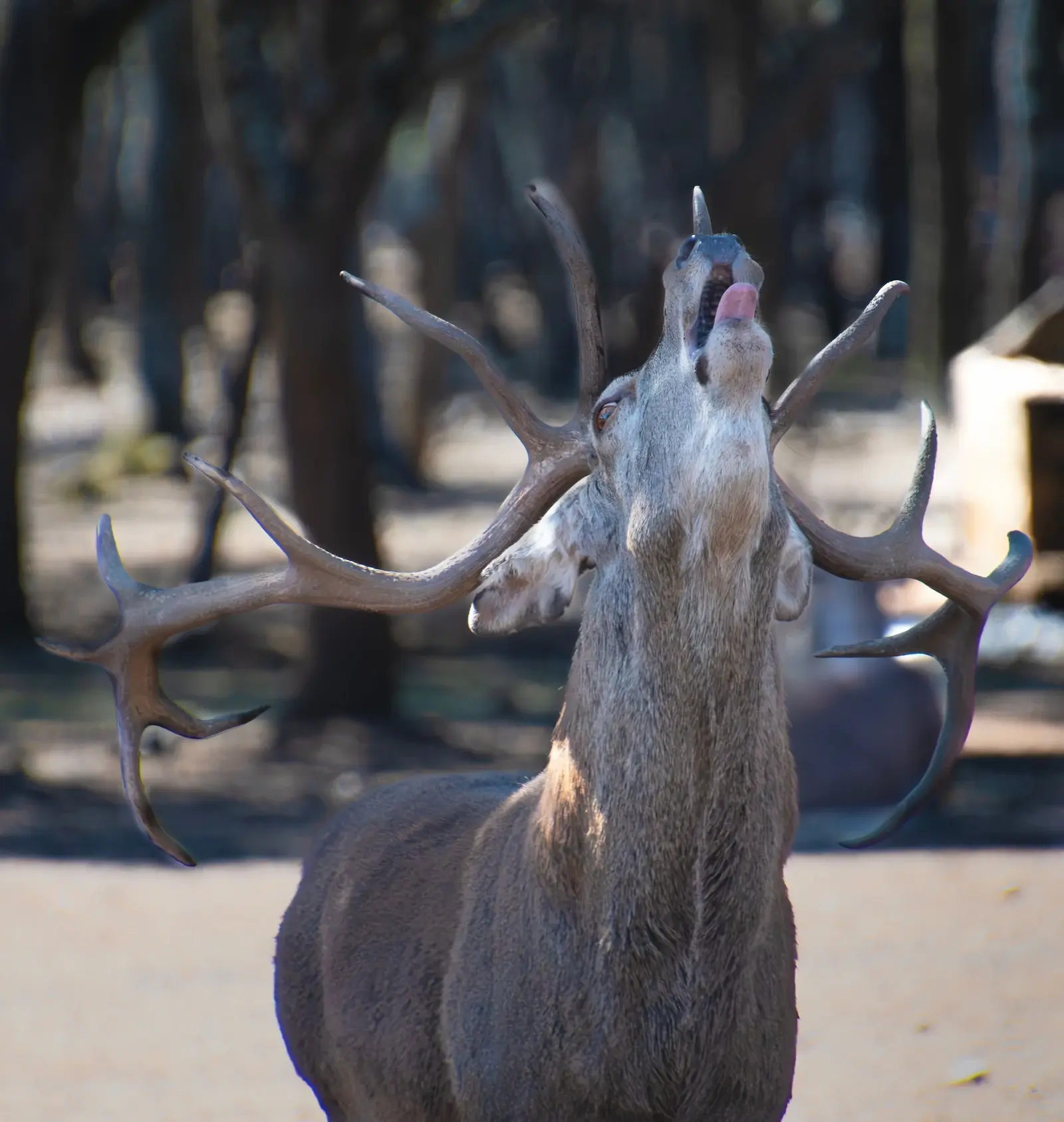
The rut is the red deer’s mating season, when males emit powerful roars to attract females and warn other males of their presence. During these weeks, they may also mark territory, watch over groups of females, chase rivals and even clash antlers in direct fights.
Sound is the most characteristic part of the rut, although it is not the only thing happening. Males eat less, move more, lose weight and focus much of their energy on reproduction, while females gather in favourable areas and males try to stay close to them.
That is why the rut is so impressive, because it is not a tourist attraction built around an animal, but a real scene of wild behaviour that happens for only a few weeks each year.
When is the red deer rut in Spain?
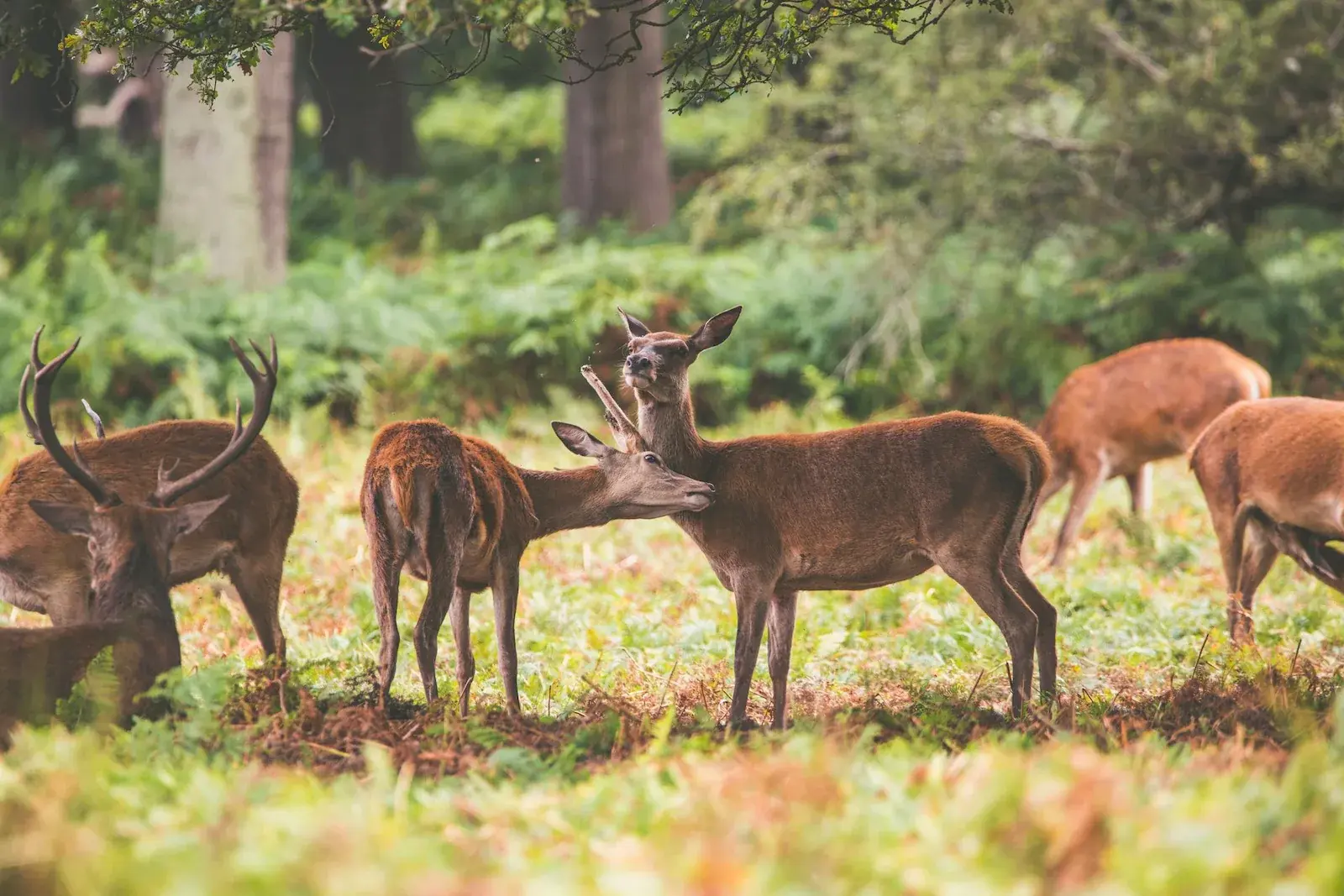
Herd of deer | Photo: Ian Probets
The most common period to hear the red deer rut in Spain is from mid-September to mid-October, although the dates vary depending on the area, altitude, temperature, the first rains and the physical condition of the animals.
In places such as Cabañeros, the season is usually concentrated in September and October, conditioned by the weather and often linked to the first rains, while in Alto Tajo it usually runs from mid-September to mid-October, with the most intense period generally between the second half of September and the first half of October. In warmer areas it may start earlier and, in mountain or colder areas, it may vary slightly from year to year.
The time of day also matters, as at dawn, at dusk and during the first hours of the night there is usually less heat, less human movement and better conditions for the sound to travel through valleys, dehesas and hillsides.
Even so, the rut does not work like a scheduled performance. You can arrive at the perfect place and hear very little, or stop quietly in a discreet spot and feel the whole valley begin to roar.
Where to see the red deer rut in Spain
Spain has many territories where the rut can be heard, although not all of them offer the same ease of access, density of deer or infrastructure for observing without causing disturbance. These are some of the most interesting places, always understood as general areas rather than exact points.
1. Cabañeros and Montes de Toledo
Cabañeros is one of the great classics for experiencing the rut in Spain, because the National Park and its surroundings bring together rañas, Mediterranean scrubland, holm oak woods, rockrose thickets and gentle sierras where deer find food, shelter and open spaces that make observation from a distance easier.
The area is shared between Ciudad Real and Toledo, and connects very well with the wider landscape of Montes de Toledo. In autumn, the roars can be heard in open areas and transition zones between woodland and raña, especially when the light fades and the males become more active.
Here, the rut has a strong visual component, as the open landscape makes it possible to see deer from a certain distance, although that does not mean getting closer or leaving authorised routes. The experience is much better with local guides or from prepared observation points, because they know the timings, the permitted access points and the areas where interference must be avoided.
2. Monfragüe and the dehesas of Extremadura
Monfragüe is often associated with vultures, black storks, Spanish imperial eagles and large cliffs, but in autumn the red deer also takes centre stage. The National Park and its surroundings combine dehesas, river valleys, low sierras, Mediterranean scrubland and open areas where the roars can be heard with great intensity.
In Monfragüe, the rut is experienced as a soundscape linked to the first autumn rains and the males’ roars over several weeks, so the experience is not only about looking towards a specific point, but also about listening to the sound echoing between dehesas, gullies and hillsides.
Beyond the park, the Monfragüe Biosphere Reserve and other areas of Cáceres offer very suitable landscapes for the rut, although precisely because it is a well-known place, it is worth avoiding crowds, respecting closures, not blocking tracks and checking local information before going.
3. Sierra de la Culebra, Zamora
Sierra de la Culebra, in north-western Zamora, is one of those places where the rut blends with a strong feeling of wild territory. It lies between areas such as Aliste, Tábara, Carballeda and Sanabria, in a landscape of long mountain ridges, pinewoods, heaths, rockrose scrub, oak woods and small villages.
Although many people associate the area with the Iberian wolf, there are also important populations of red deer and roe deer. In late September and early October, the rut can be felt with particular intensity in this territory of woodland, waiting and large mammals, where sounds travel between mountain ridges, pinewoods and open landscapes of north-western Zamora.
Here, the experience is usually more rugged than in other destinations, with a stronger sense of waiting, enclosed woodland and distance. That is why it is not a place for improvising by driving into tracks or looking for animals at any cost, but rather a territory where it makes much more sense to go with a local guide, check access conditions and understand that responsible observation is part of the experience.
4. Sierra Morena and the Andalusian Mediterranean woodland
Sierra Morena is another great rutting territory, although we are not talking about a single point, but about a vast strip of Mediterranean woodland that crosses several Andalusian provinces and connects sierras, dehesas, estates, incised rivers and natural spaces with a long history of big-game hunting.
With the arrival of autumn, the roars once again fill the mountains of Sierra Morena, especially in areas where dehesas, slopes, scrubland, holm oak woods and large expanses of Mediterranean woodland come together. Sierra de Andújar, Sierra Norte de Sevilla, Hornachuelos, Cardeña-Montoro and other Andalusian areas are some of the territories where this phenomenon is especially present.
Sierra de Andújar is particularly interesting because it combines red deer, Mediterranean woodland and a naturalist culture strongly linked to wildlife observation, although it is also an area where caution is needed, as many properties are private, hunting estates or have regulated access. The key is to look for authorised experiences and not confuse “going to the countryside” with being able to enter anywhere.
5. Sierras de Cazorla, Segura y Las Villas
The Sierras de Cazorla, Segura y Las Villas Natural Park is another powerful destination for the rut, especially because of its mix of pinewoods, ravines, high sierras, valleys and large ungulates. It is one of Andalusia’s major natural areas and is home to red deer, fallow deer, mouflon, Iberian ibex and wild boar in different parts of the park.
In Sierras de Cazorla, Segura y Las Villas, autumn combines the red deer rut and colourful landscapes, so the experience goes beyond hearing roars. It also has to do with the changing light, the drop in temperatures, the pinewoods, the valleys and that sense of transition that transforms the mountains for a few weeks.
Here it is important to choose the area well and not try to cover everything, because this is a huge space, with mountain roads, trails, viewpoints and public-use areas. Wildlife does not appear by calendar or obligation, so the best experience usually comes from combining patience, binoculars, a guide or local information, and a calm attitude towards observation.
6. Alto Tajo, Serranía de Cuenca and the Iberian System
Alto Tajo is one of the most interesting places to hear the rut in central-eastern Spain, as its pinewoods, river canyons, high plateaus, gorges and mountains create landscapes where the sound of red deer can travel a long way, especially as the afternoon fades.
The season usually falls between mid-September and mid-October, with greater intensity between late September and early October. The area around Molina de Aragón, Peralejos de las Truchas and other nearby villages works well as a base for getting to know the territory, although it is always important to move along permitted routes and not enter private tracks or quiet zones.
Close to this wider area, Serranía de Cuenca, Sierra de Albarracín and other parts of the Iberian System also stand out, as red deer find extensive forests, cool mountains and relatively quiet areas there. In Sierra de Albarracín, the rut also usually coincides with mid-September to mid-October, with more activity at dawn and dusk.
7. Doñana and the south-west
Doñana offers a different kind of rut from the mountain areas, because here the landscape is not dominated by rocky outcrops or high pinewoods, but by marshes, cotos, vera, scrubland, dehesas and open areas where autumn feels different.
In Doñana, the start of the rut is closely linked to the first rains and the first fresh grasses after the summer drought. That relationship explains the difference in this territory very well, where the sound of red deer arrives with the change of season, but also with the relief of water after summer.
It is a very delicate place, so it makes no sense to present it as a destination for moving around freely in search of deer. The most responsible option is to join authorised visits, respect restricted areas and understand that Doñana is not a backdrop for chasing wildlife, but a complex natural system where every disturbance can have an impact.
8. The Catalan Pyrenees and Pre-Pyrenees
In Catalonia, the rut is experienced especially in the Pyrenees and Pre-Pyrenees. Areas such as Cadí-Moixeró, Alt Pirineu, Boumort, Alt Pallars and the Cadí National Hunting Reserve are key references for hearing the deer’s rut in mountain landscapes, forests, valleys and high pastures.
In the Catalan Pyrenees, the rut can usually be felt from the first weeks of September until mid-October, when males emit powerful roars to attract females in forest, valley and mountain landscapes. In addition, some areas provide observation and information points so visitors can experience it with guidance, telescopes and enough distance.
This approach is very interesting for NatSnap, because it shows that the rut does not have to be experienced as an improvised search, but can instead be organised through environmental interpretation, with small groups, clear rules and optical equipment that allows people to observe without getting too close.
9. Gorbeia and other northern mountains
Gorbeia Natural Park, between Álava and Bizkaia, is another good example of how the rut requires management, because the red deer mating season is an especially sensitive period that requires tranquillity.
In Gorbeia, the rut usually lasts between two and five weeks, with a period that can extend into the first week of October. Precisely for that reason, the park applies measures to reduce disturbance, especially in areas where visitor pressure could alter the behaviour of the deer.
Beyond Gorbeia, other northern areas such as the Cantabrian Mountains, Montaña Palentina, Alto Campoo, Somiedo, Redes or Aller can also offer listening and observation experiences, although in these territories it is even more important to consider weather, access, fog, slopes and local regulations.
Best times to hear the rut
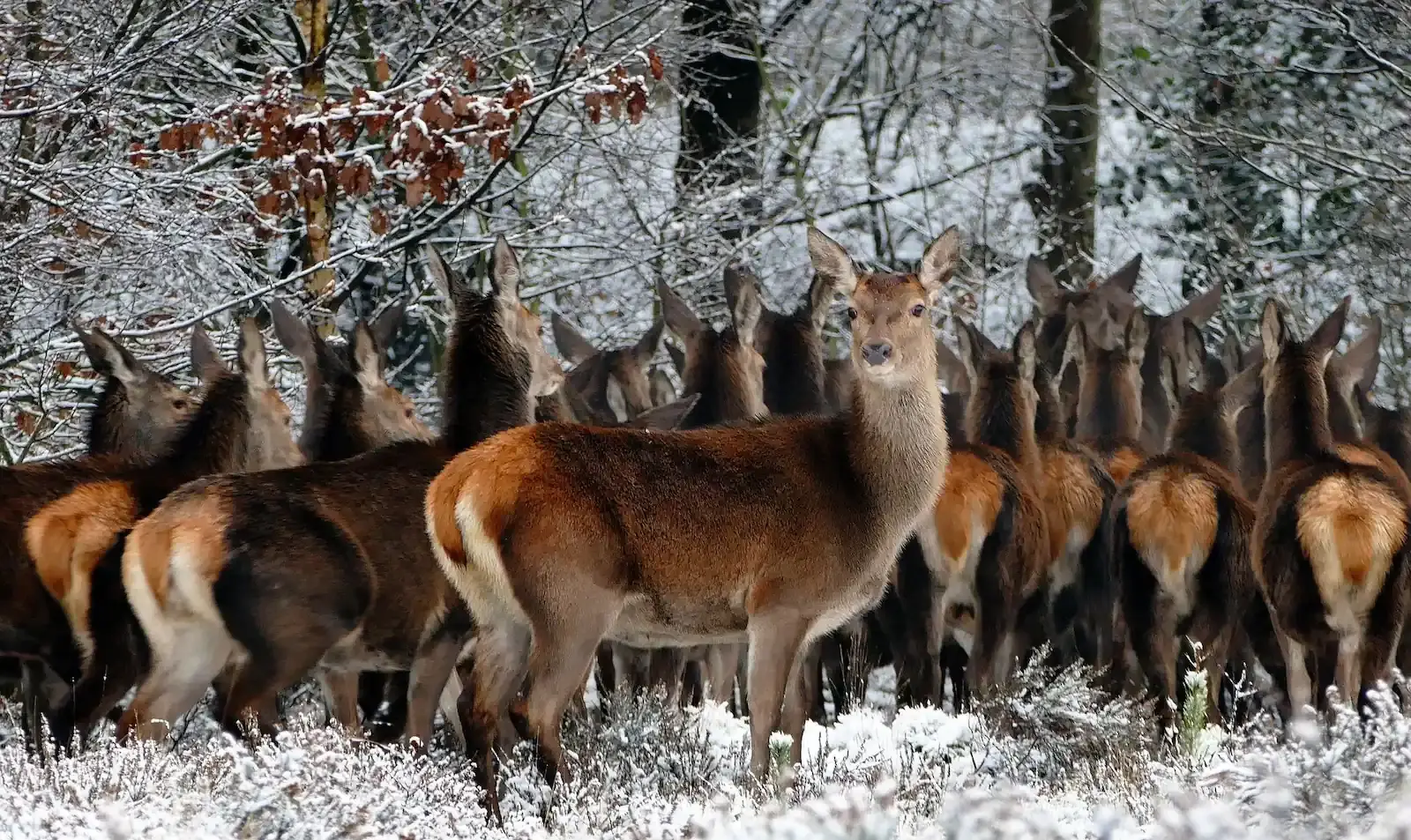
Herd of deer in winter | Photo: Anthony
The best times to hear the rut are usually dawn and dusk, not only because the deer are more active, but because the air is cooler, there is less human noise and the sound travels better through valleys, dehesas and hillsides.
At dawn, the experience can be cleaner and quieter, as the mountains slowly wake up, the roars are easier to distinguish and it is easier to work out where they are coming from without moving too much. At dusk, on the other hand, activity often increases as the light fades, although there is also a greater risk of more visitors at well-known spots.
Night can be very powerful in terms of sound, but it is not always the best time to move around, both for safety and out of respect for the wildlife. There is no point in chasing sounds with torches, spotlights or cars along tracks, because the rut is best enjoyed from stillness.
How to see the rut without disturbing wildlife
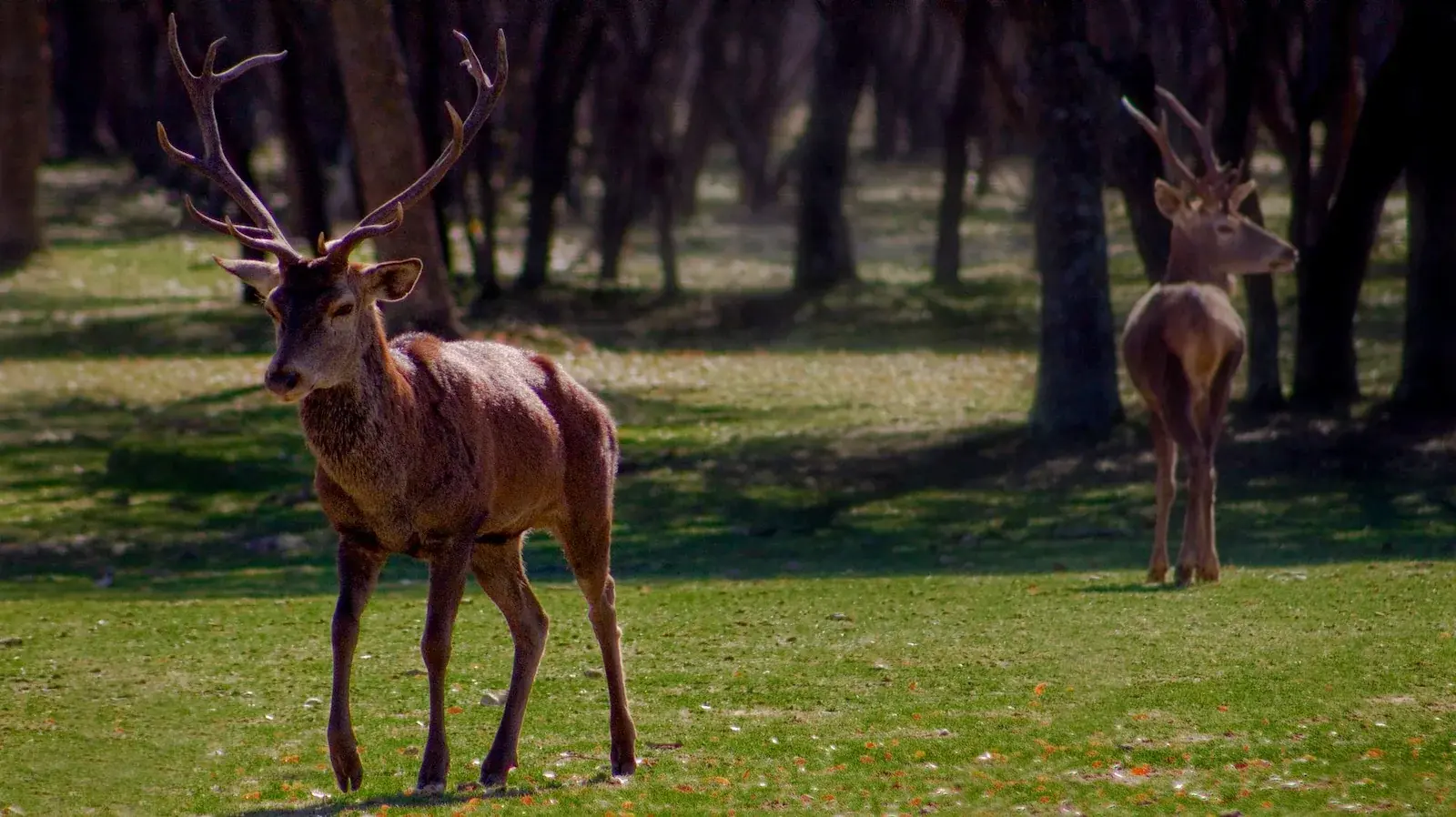
Two deer under the sun | Photo: Francisco Fernández
The rut happens at a key moment for red deer, so the priority must be not to interfere. That does not mean not going, but going properly.
The most important thing is to keep your distance, use binoculars or a spotting scope, stay silent and avoid sudden movements. It is also important not to use calls, rutting audios or imitations to attract males, because that alters their behaviour and adds stress during a period when they are already using a lot of energy.
It is also important not to leave permitted paths, enter private estates, block tracks, approach groups of females, shine lights on animals at night or ignore any temporary closures. In places such as Gorbeia, special protection measures may be applied during the rut to reduce disturbance at this especially sensitive time.
Seeing the rut should not be about getting closer than anyone else. In fact, very often the best experience is the opposite, because arriving early, staying far away, waiting, listening and letting the behaviour unfold without changing what the animals were doing is usually far more respectful and far more exciting.
What to take to see the rut
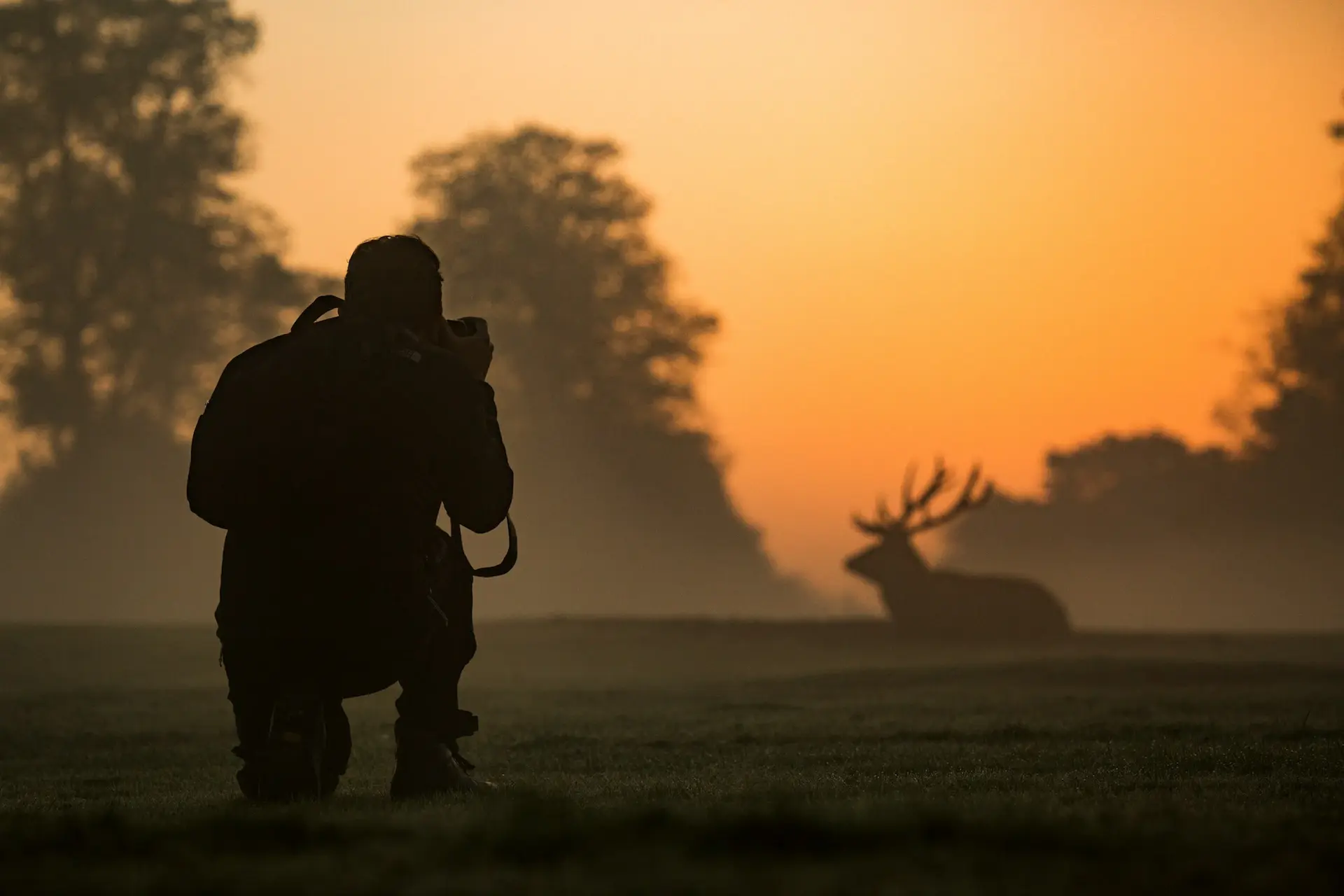
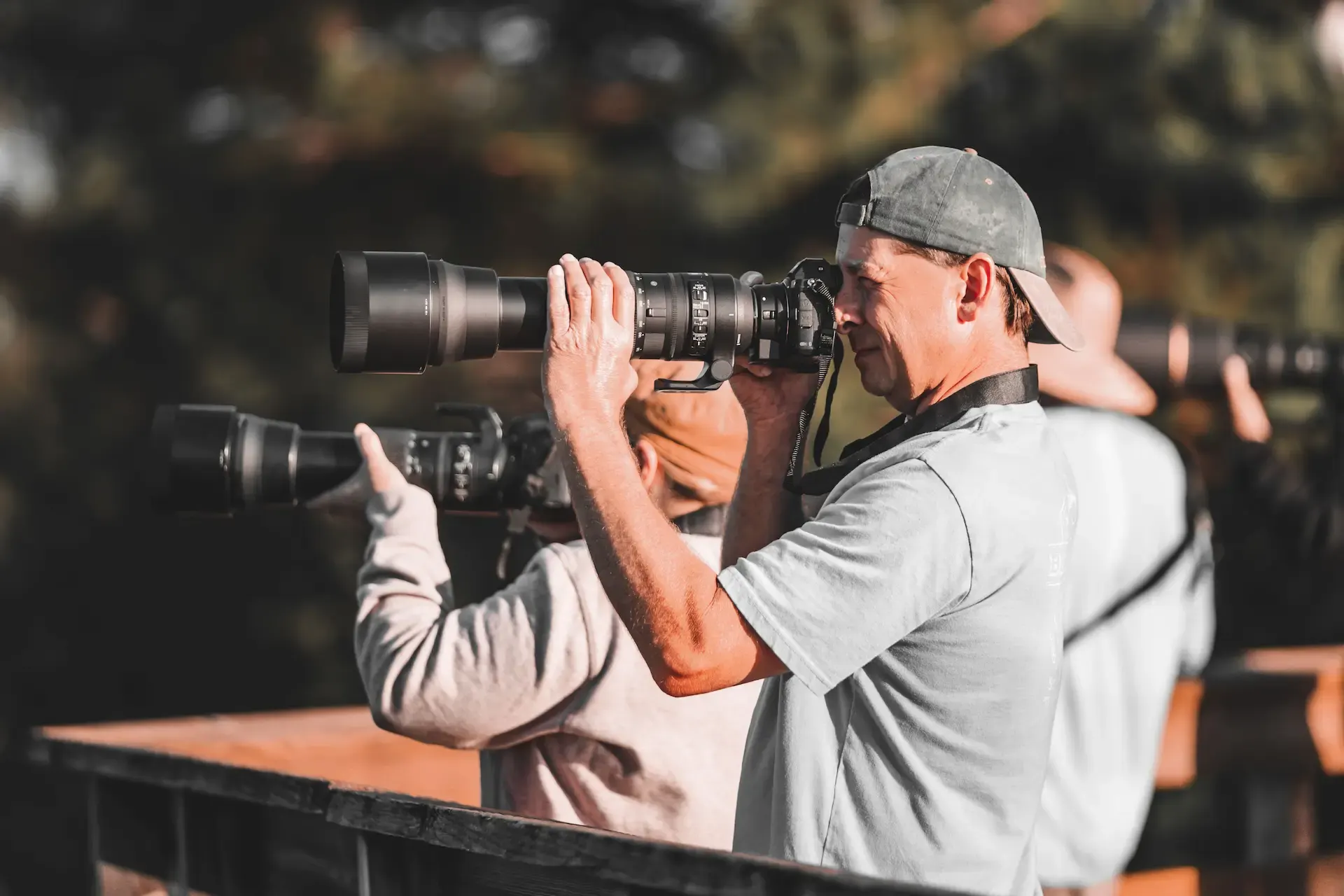
Wildlife photographer | Photo: Diana Parkhouse
You do not need to carry a lot to enjoy the rut, but it is worth preparing the outing well. Binoculars are almost essential, because they allow you to observe without getting closer, and if you are going with a guide or to a prepared observation point, a spotting scope can make a big difference.
It is also worth bringing warm clothing, even if it is hot during the day, because in September and October the first and last hours of the day can be cold, especially in mountain areas. Comfortable footwear, discreet colours, water, some food, a head torch for moving before or after daylight, and an external battery may seem like small details, but they help a lot.
For photography, the ideal option is to use a telephoto lens and accept that there may not always be an image, because the rut should not become a pursuit for the sake of a photo. If an animal changes its behaviour because of our presence, we have already come too close.
Common mistakes when going to see the rut
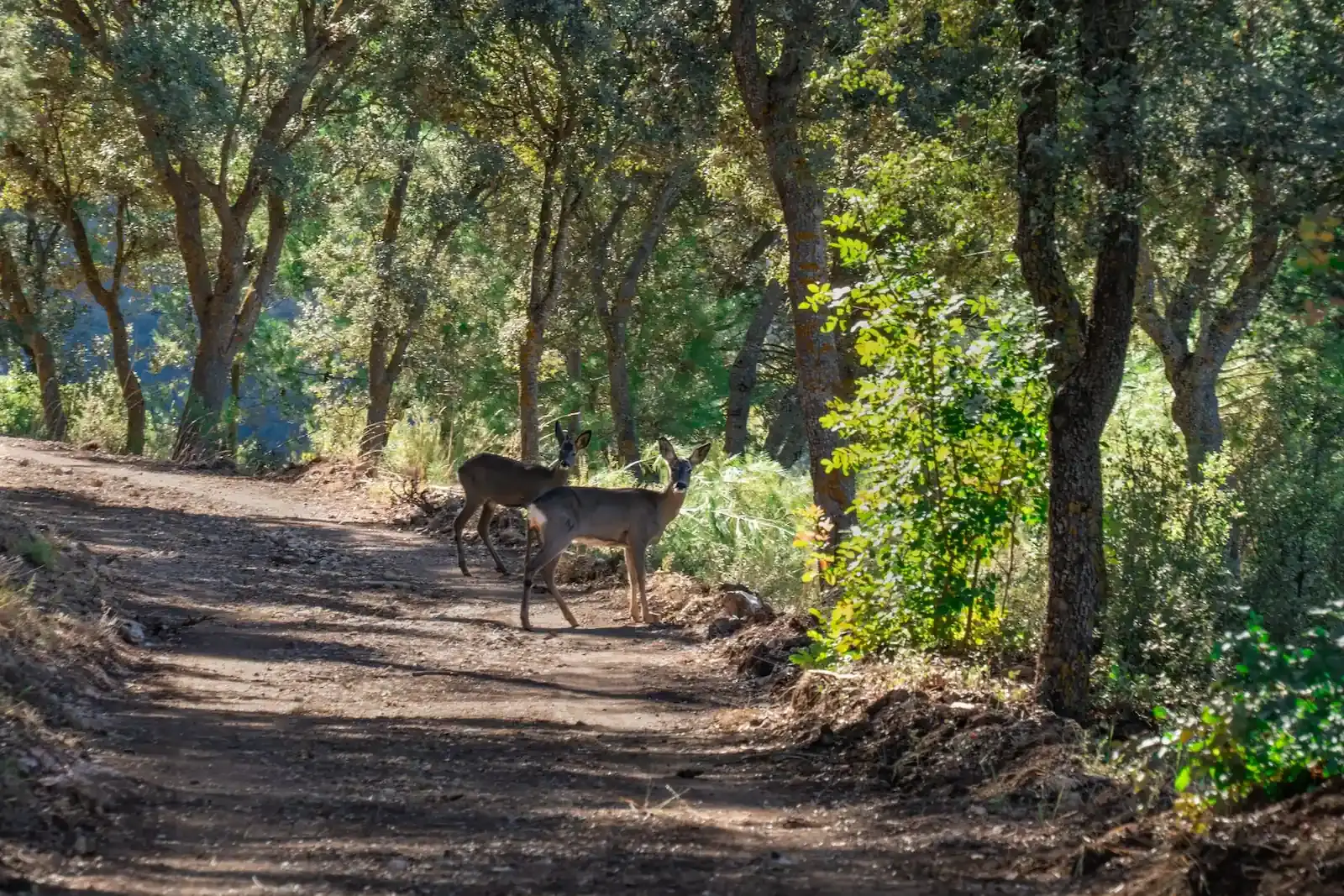
Deer on a forest path | Photo: Emilio Sánchez Hernández
One of the most common mistakes is thinking that the rut is always visible, when sometimes you hear a lot and see little, or hear distant roars without ever seeing a male. That does not mean the outing has gone badly, because listening to the landscape without interfering can already be a powerful experience.
Another common mistake is arriving late, making noise or moving too much. Many people walk, talk, open and close car doors, use torches or look for “the best spot” just when the animals are starting to become active, when in reality the rut requires exactly the opposite: patience and discretion.
It is also worth avoiding the obsession with the biggest male, because the rut is not a competition to find visual trophies, but a complex natural behaviour. There are females, young animals, secondary males, changes of position, silences, tension and sounds that say far more than a single image.
Seeing the rut with a guide or independently
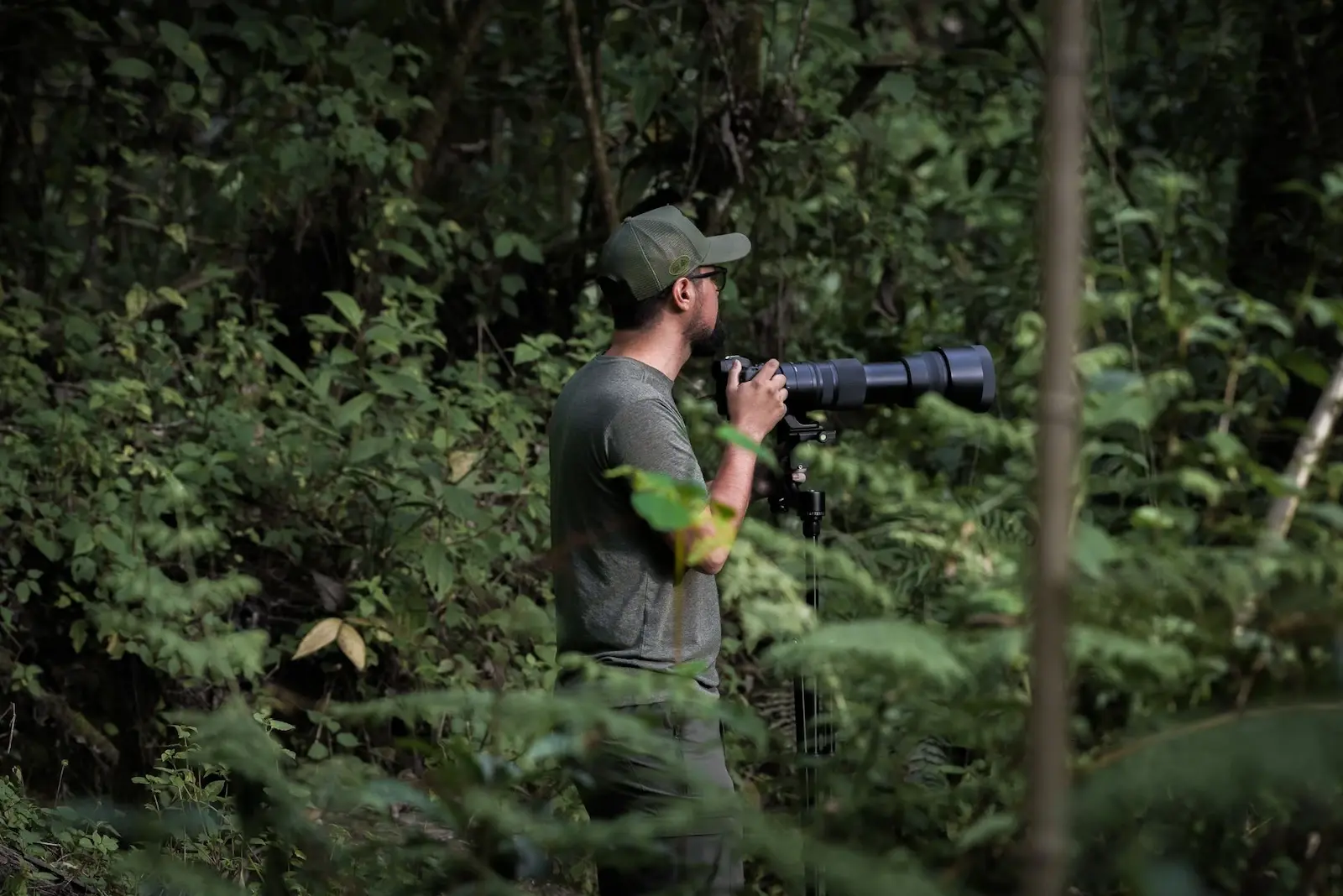
Photographer in the middle of the forest | Photo: Jean Paul Montanaro
It is possible to enjoy the rut independently in many places, as long as paths, rules and distances are respected. However, in very popular destinations or sensitive areas, going with a local guide is usually the better option.
A good guide not only increases the chances of hearing or seeing deer, but also helps interpret what is happening, from why a male roars to what a posture means, why some deer move towards a particular area or why it is better not to move any further.
Guides also know the local regulations, permitted access points, private areas and the moments when it is best to leave, which in an experience like the rut is worth far more than getting closer without judgement.
The rut as a way of listening to autumn
The red deer rut is one of Spain’s great autumn moments, but it should not be experienced as a simple seasonal attraction. Instead, it is an opportunity to better understand the mountains, wildlife cycles and the relationship between landscape, climate and animal behaviour.
Each territory tells it in a different way. In Cabañeros, it sounds between rañas and Mediterranean woodland; in Monfragüe, it mixes with dehesas and river valleys; in Sierra de la Culebra, it appears among rugged sierras and pinewoods; in Doñana, it arrives with the first rains; and in the Pyrenees, it is heard between forests and mountain valleys.
Perhaps that is why the rut is so impressive, because it is not just about seeing a deer, but about being in the right place, at the right time, and understanding that nature is not performing for us. It follows its own rhythm, and our best way of approaching it is with respect.
Frequently asked questions about the red deer rut in Spain
When does the red deer rut start in Spain?
It usually starts in mid-September, although it can begin earlier or later depending on the area, temperature, rainfall and the condition of the animals. In many places, it lasts until mid-October.
What is the best time to hear the rut?
The best times are usually dawn and dusk, although it can also be heard at night. Even so, it is not advisable to move around natural areas without control or use lights to look for animals.
Where is the best place to hear the rut in Spain?
Some of the best-known places are Cabañeros, Monfragüe, Sierra de la Culebra, Sierra Morena, Alto Tajo, Doñana, Cazorla, Gorbeia and areas of the Pyrenees and the Cantabrian Mountains. The best choice depends on distance, regulations, the type of landscape and whether you want to go with a guide.
Is it better to see or hear the rut?
Both are part of the experience, although very often the rut is more enjoyable to hear than to see. Sound allows you to understand the scale of the phenomenon without needing to get too close to the animals.
Can you see the rut without a guide?
Yes, in some places it can be done independently, as long as paths, distances and rules are respected. Even so, in sensitive, private or very busy areas, a guided outing is usually more advisable.
Is it dangerous to approach deer during the rut?
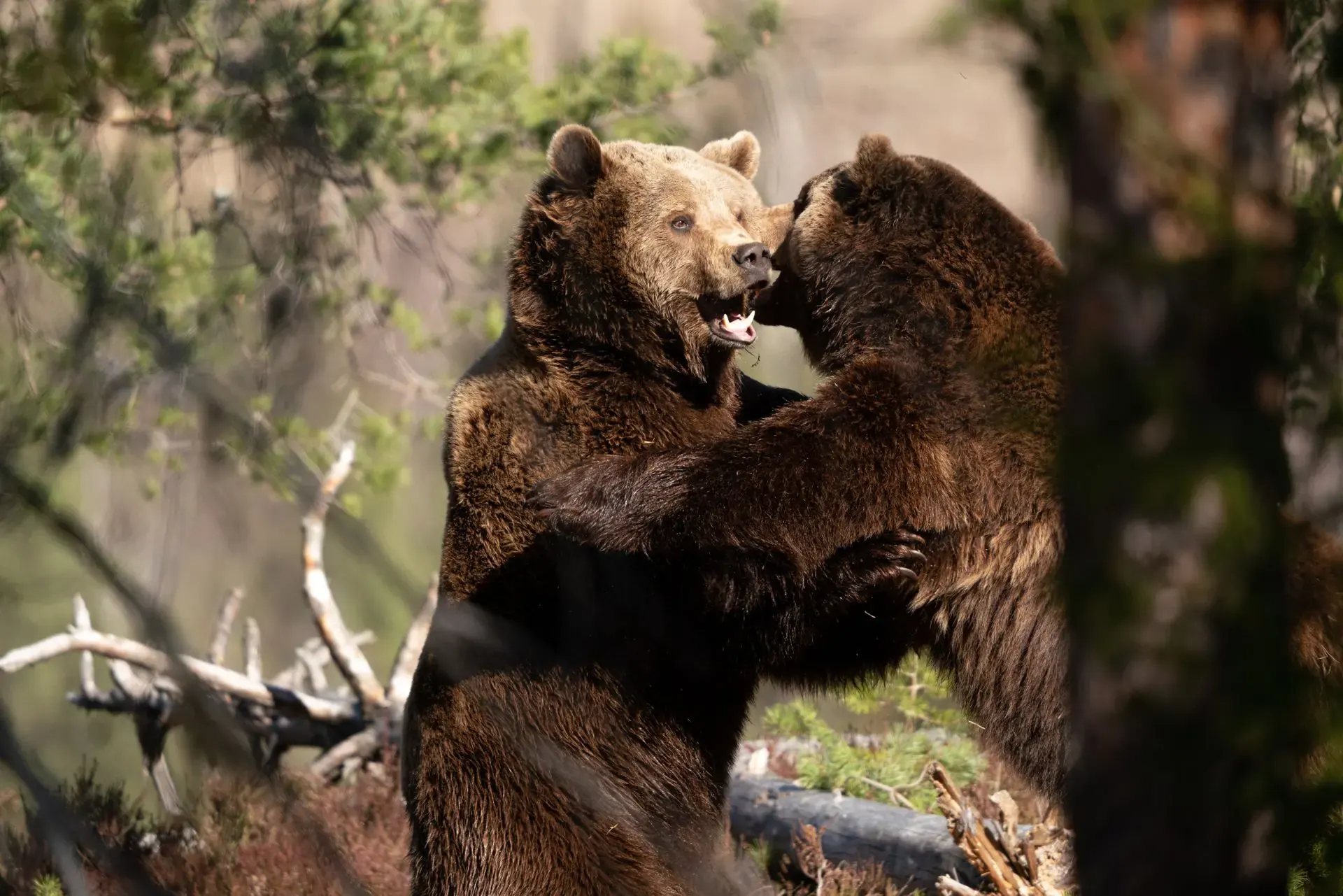
Yes, it can be, because males are in rut, compete with each other and may react unpredictably if they feel cornered or disturbed. Distance is important for both safety and respect for wildlife.
What should you not do during the rut?
You should not use calls, audios or imitations of roars. You should also avoid getting too close, shining lights on animals at night, leaving permitted paths, entering private estates or blocking tracks and access points.