The Bearded Vulture is not just any bird of prey. At first glance, it may resemble other vultures because of its gliding silhouette, long wings and life linked to carrion, but once you get to know its behaviour a little, it becomes clear that it occupies a very particular place among mountain birds.
While many birds of prey hunt live prey and other scavengers feed on the soft parts of carcasses, the Bearded Vulture has specialised in a part of the food that almost no other species uses: bones. Its name is no coincidence. This species can carry bone remains and drop them from the air onto rocky areas to break them into pieces and feed on them.
That is why talking about the Bearded Vulture in Spain is not only talking about a striking species for birdwatchers or wildlife photographers. It is talking about a bird of prey with an extreme diet, highly specialised behaviour, high mountain landscapes and a conservation story that is still being written.
A mountain bird of prey with a unique strategy
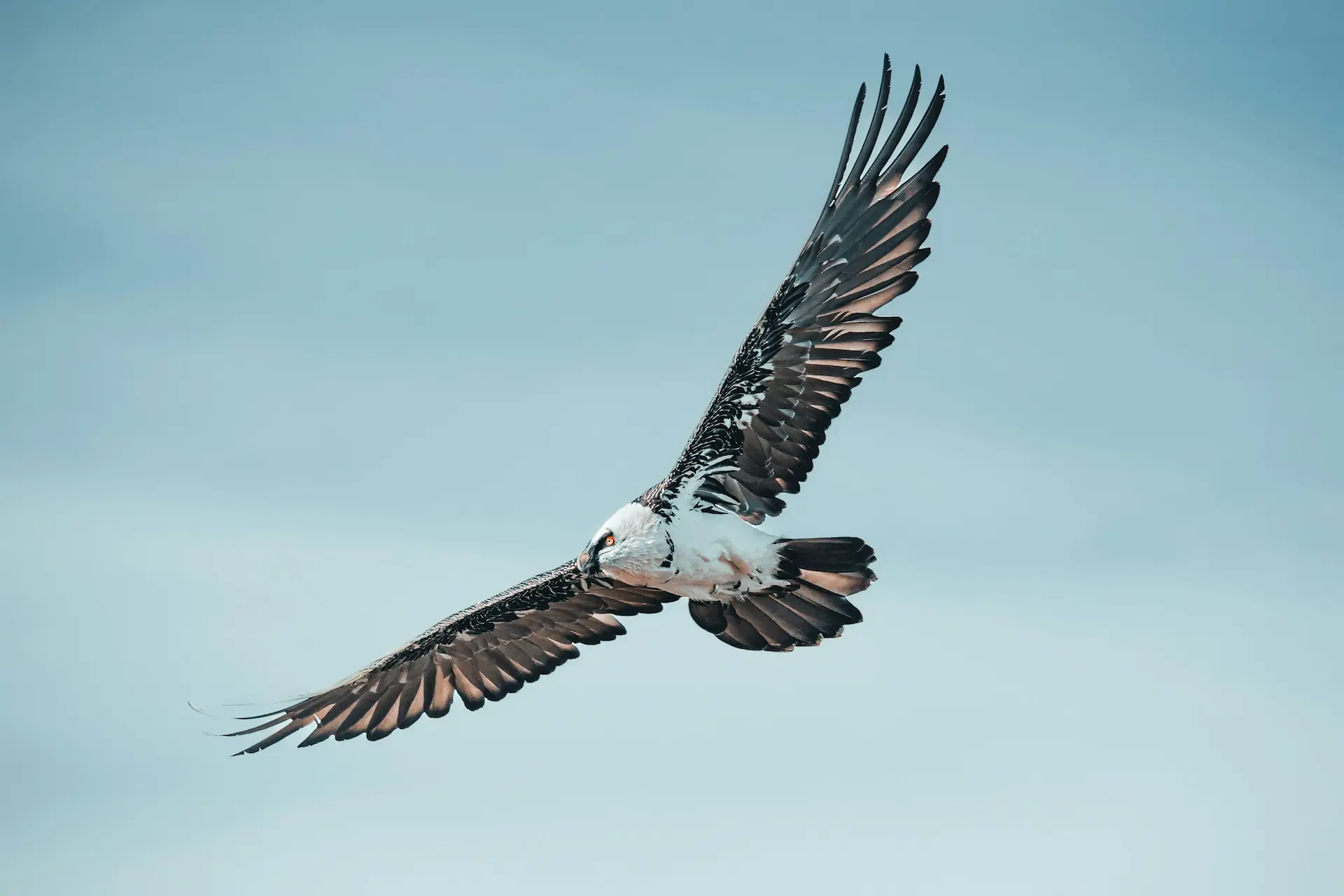
Bearded Vulture flying | Photo: Susanne Jutzeler
The Bearded Vulture ‘Gypaetus barbatus’, is a large scavenging bird of prey from the Accipitridae family, the same group that includes many diurnal raptors such as eagles, vultures, kites and goshawks. Although it is often included among Old World vultures, its appearance and behaviour make it quite different from the more classic image we have of a vulture.
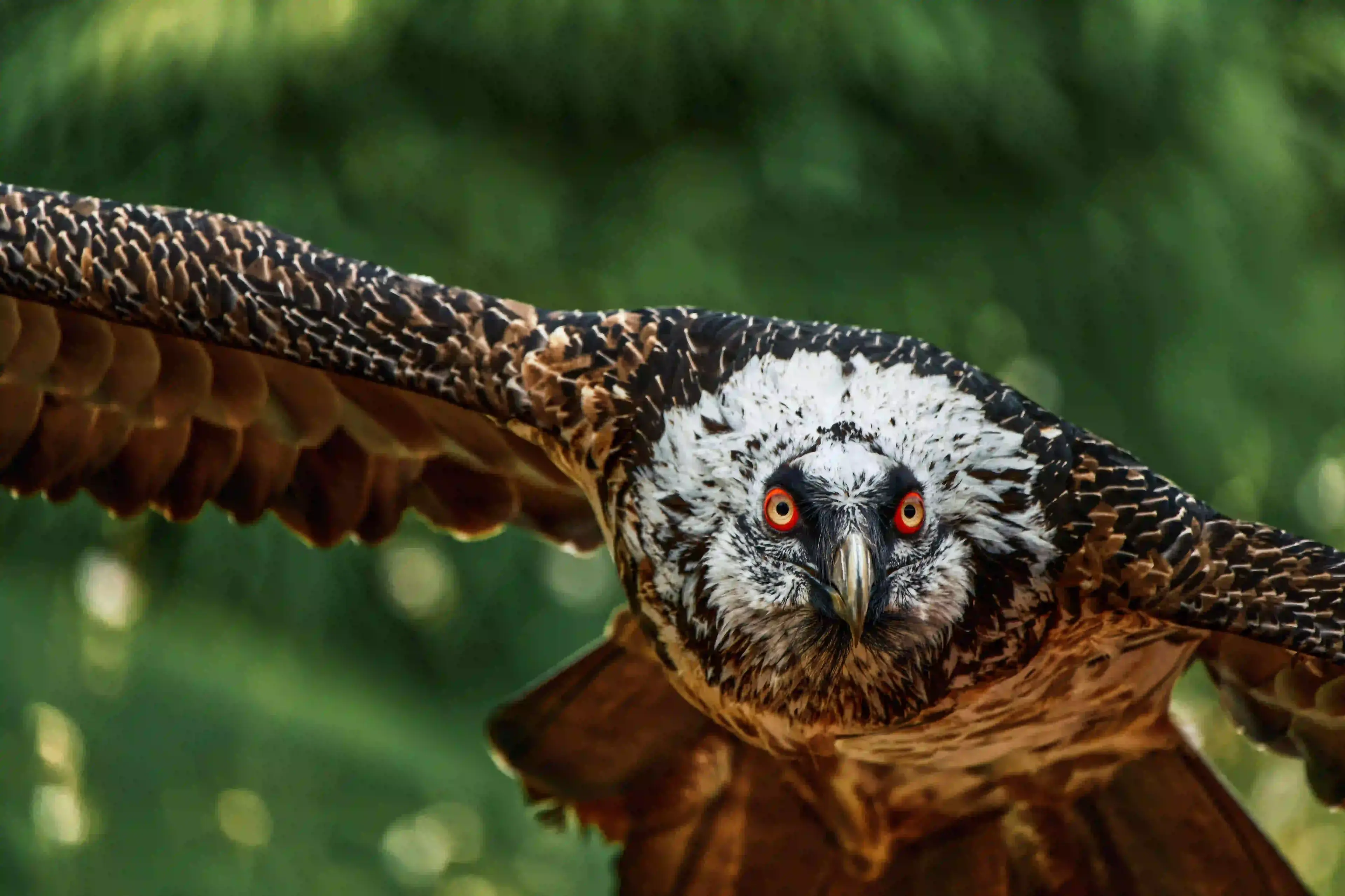
It has long, narrow wings, a wedge-shaped tail and a very recognisable silhouette in flight. Adults show orange or reddish tones on the chest and belly, a pale head, a kind of dark mask and black feathers under the bill that resemble a beard. That is where its English name, Bearded Vulture, comes from.
It is a species closely linked to mountain systems, cliffs, ravines and steep areas. It needs large areas to move through, suitable places to nest, available food and tranquillity in sensitive areas. It is not a bird for close or easy observation, but a species usually seen from a distance, flying over slopes, valleys and rock faces.
In Spain, its recent history is strongly marked by conservation. During the 20th century, it suffered a very sharp decline and its distribution became limited mainly to the Pyrenees. In recent decades, thanks to conservation and reintroduction programmes, the species has begun to recover its presence in other areas, although it remains a vulnerable bird of prey that requires delicate management.
The bird that feeds on bones
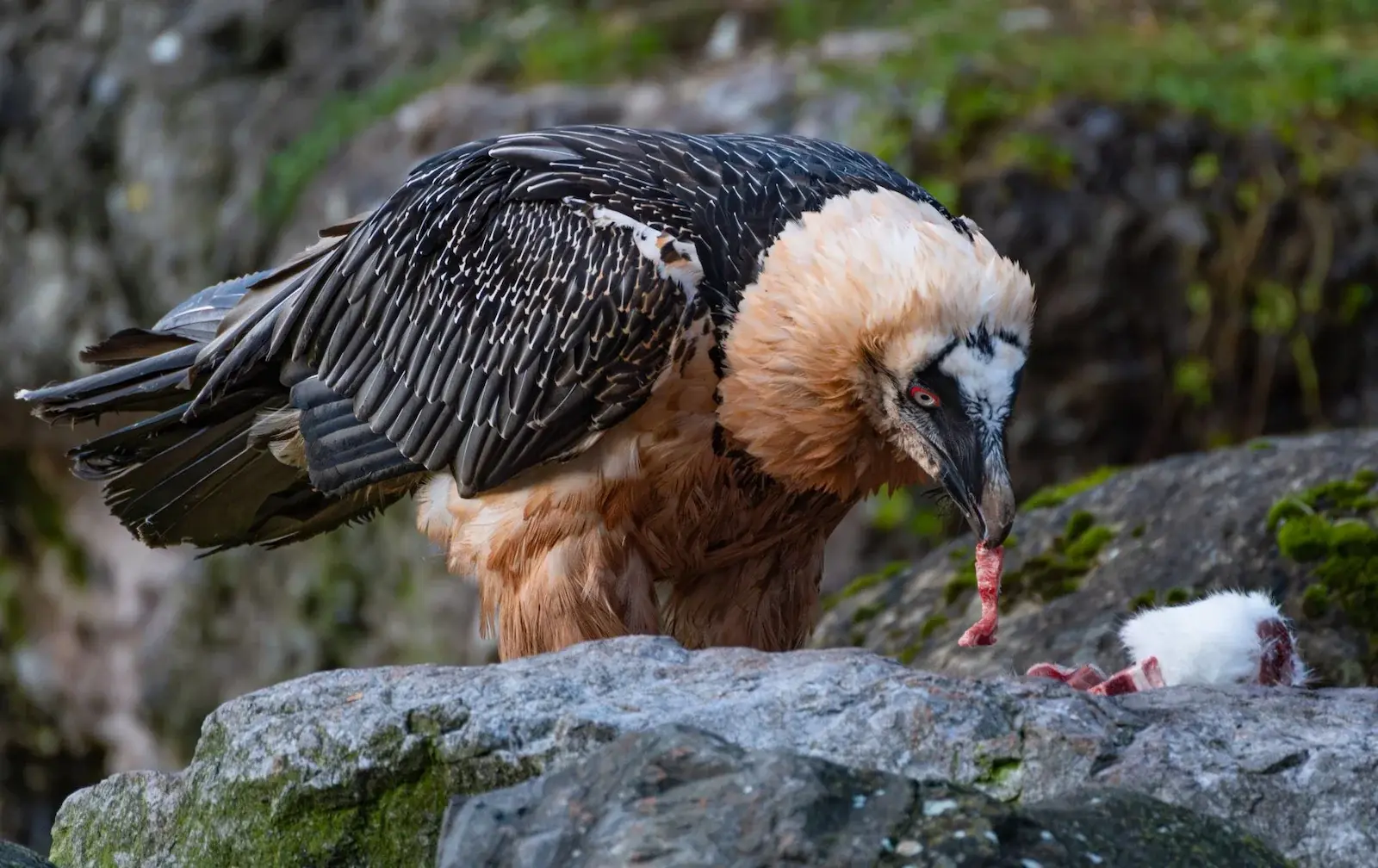
Bearded Vulture eating | Photo: David Ruh
What makes the Bearded Vulture truly unique is its diet. It is a scavenger, yes, but it does not consume carrion in the same way as other vultures. Its speciality is the hardest remains of carcasses, especially bones, cartilage and tendons.
This may seem strange, but it makes a lot of ecological sense. When an animal dies in the mountains, different scavengers can use different parts of the carcass. Some consume viscera, others meat, others soft tissues. The Bearded Vulture often arrives later, when what remains is difficult for other animals to use.
Its digestive system is adapted to this type of food and can process bones very efficiently. In addition, when it finds pieces that are too large to swallow whole, it uses a very characteristic technique: it carries them in flight and drops them onto rocks, scree or hard surfaces to break them. It then descends and feeds on the fragments.
This behaviour is what gives the species its name. It does not break bones by direct force with its bill, but by using height, gravity and the terrain. Instead of competing for exactly the same food as other scavengers, it occupies a highly specialised niche within the ecosystem.
Why it is unlike other birds of prey
The Bearded Vulture is a bird of prey, but its way of life is far removed from the typical image of a hunting bird. Its strategy is not based on chasing live prey, nor on catching small mammals, nor on feeding mainly on fresh meat. Its success lies in making use of what is left behind.
That makes it a very singular piece within the scavenger community. Where other animals see a difficult remain to eat, the Bearded Vulture finds food. Where others finish their turn at the carcass, it can begin its own.
It also differs in its relationship with the landscape. It needs open spaces, relief, air currents, rocky areas where it can break bones and quiet cliffs for breeding. It is not just a vulture that flies over mountains: it is a species deeply linked to the structure of the territory.
It also has a slow biology. As with many large birds of prey, it does not reproduce quickly or abundantly. Productivity is low, pairs need suitable territories and any problem in breeding areas can have important consequences. That is why, although its image is powerful, its conservation requires a great deal of patience.
The Bearded Vulture in Spain
In Spain, the Bearded Vulture has had a complicated history. After disappearing from much of its former range, the population became concentrated mainly in the Pyrenees. That Pyrenean population has been key to the survival of the species in the country and to later recovery projects.
The conservation strategy for the Bearded Vulture in Spain and Portugal reflects precisely that trajectory: a sharp decline during the 20th century, a partial recovery in recent decades and the need to consolidate new populations outside the Pyrenees.
Today, the Pyrenees remain the main reference core, but there are also reintroduction and recovery projects in areas such as Sierra de Cazorla, Segura y Las Villas, the Cantabrian Mountains, Picos de Europa, the Maestrazgo and other mountain systems where the aim is to favour the expansion and connection of the species.
This does not mean that the Bearded Vulture is an easy species to see or that it should be searched for independently. Its presence remains localised, depends on monitoring and conservation programmes, and in many areas the important sites for the species require special caution.
From the mountains where it disappeared to the territories where it is beginning to return
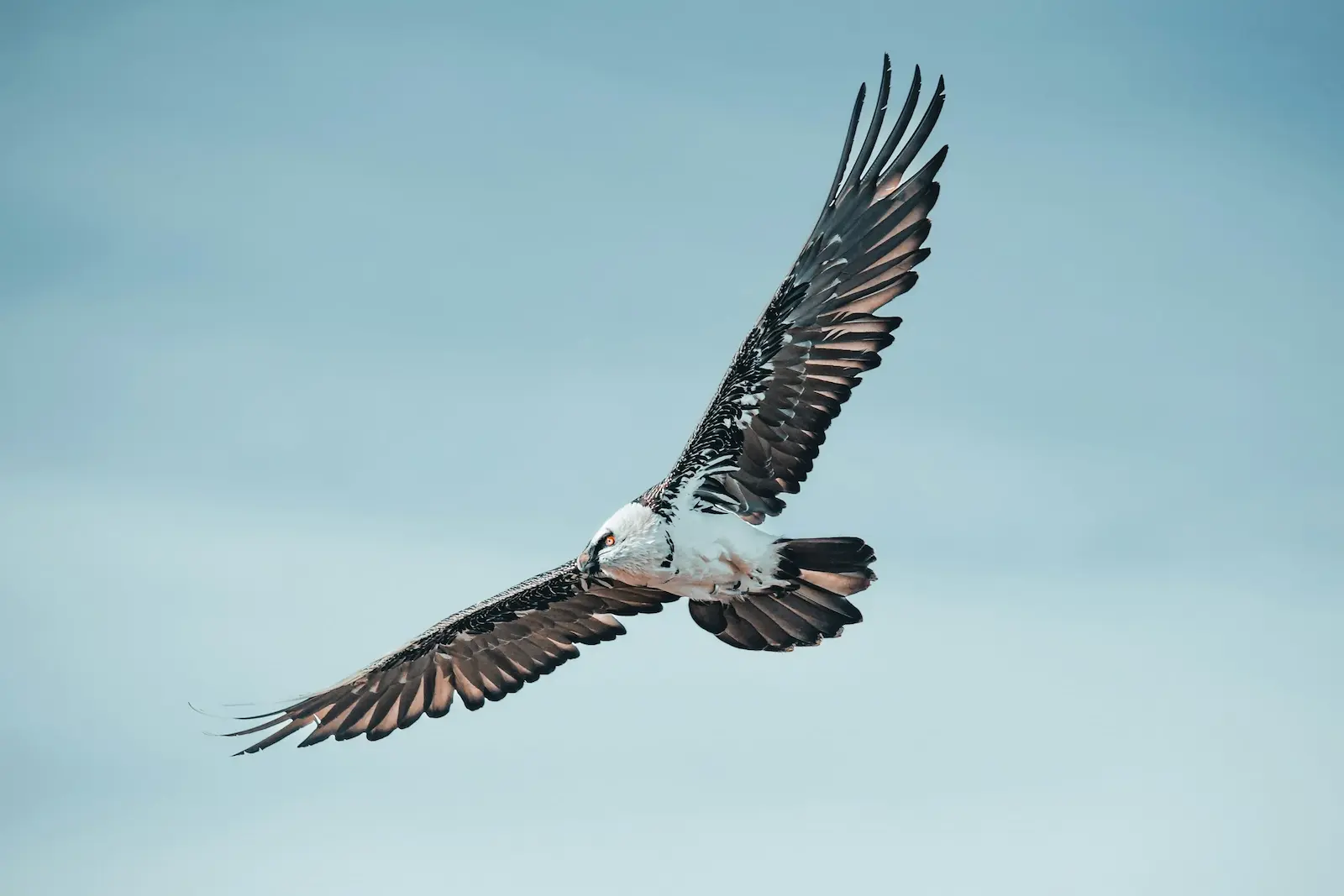
Bearded Vulture flying | Photo: Frida Lannerström
The Bearded Vulture is not a new species in Spain. Its history forms part of many Iberian mountains, although during the 20th century it disappeared from much of its former range. Direct persecution, the use of poison, changes in the territory and other factors led to a very sharp regression, until its presence became concentrated mainly in the Pyrenees.
That confinement turned the Pyrenean population into the great refuge of the species in Spain, but also into a vulnerable point. When a species becomes limited to a single large area, any sanitary, environmental or human problem can have a much greater impact on its future.
That is why Bearded Vulture conservation has not focused only on protecting what remained, but also on encouraging its return to the mountains where it had disappeared. Reintroduction projects in places such as Cazorla, Picos de Europa, the Cantabrian Mountains and the Maestrazgo seek precisely to rebuild a wider distribution that is less dependent on a single core population.
Talking about the Bearded Vulture in Spain is, therefore, talking about a species that survived in the Pyrenean mountains and is now beginning to recover part of a lost territory. A slow, technical and closely monitored return, where every released individual, every pair formed and every recolonised area counts.
A bird of prey linked to the high mountains
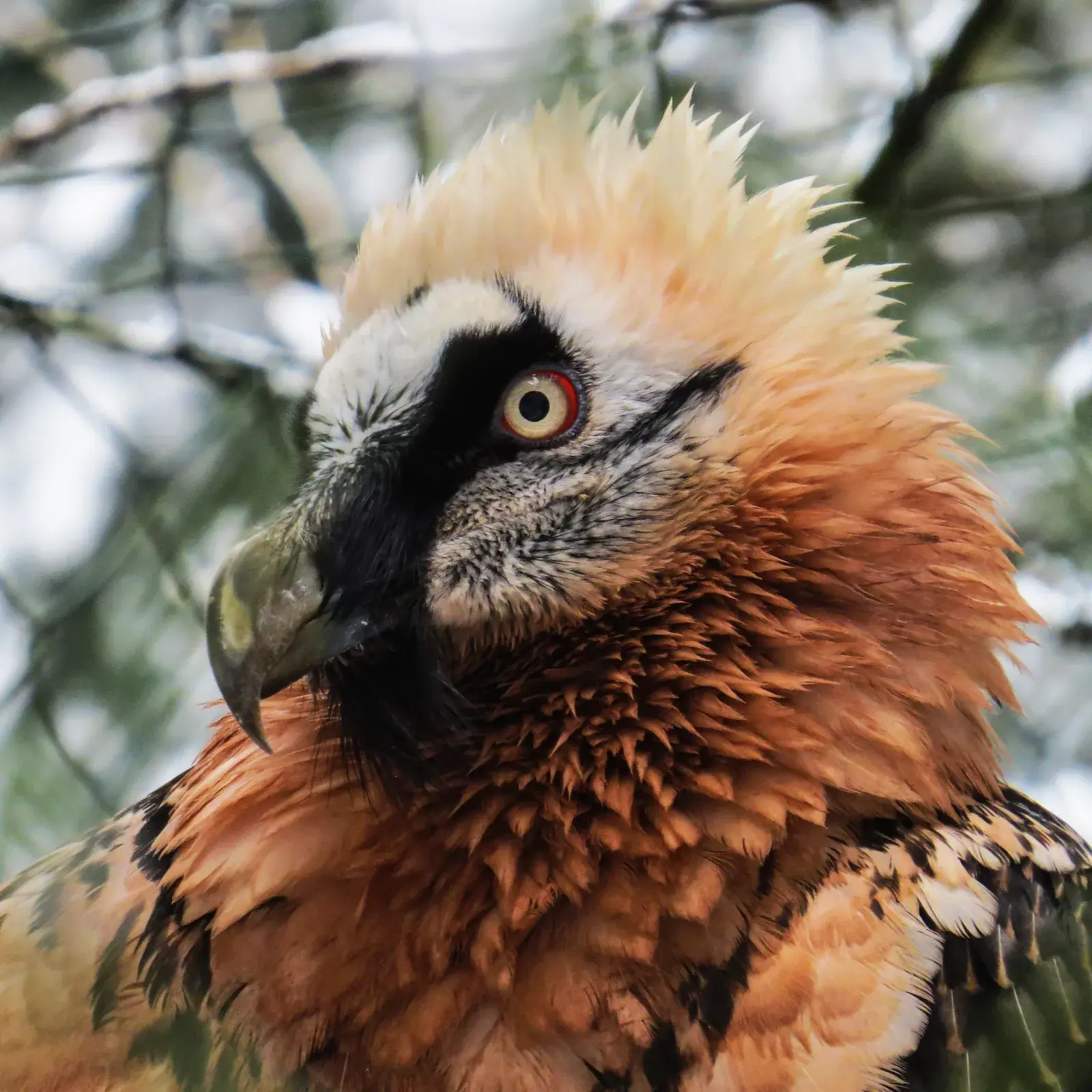
Close-up of a Bearded Vulture | Photo: garten-gg
The Bearded Vulture is inseparable from the mountains. Its long flights, its way of gliding and its dependence on rock faces link it to rugged landscapes, deep valleys, cliffs, mountain passes and areas where relief shapes the life of species.
These environments offer it several things at once. On one hand, suitable nesting places, usually on ledges or cavities in rock faces. On the other, air currents that facilitate gliding flight and movement across large areas. And, in addition, open areas where it can locate the remains of dead animals or bones left behind by other scavengers.
But this relationship with the mountains also brings vulnerability. Many breeding areas are sensitive to human disturbance, especially during reproduction. Activities such as climbing, low-altitude flights, movement near nests, certain sporting events or repeated disturbance can affect the species if they coincide with critical places and moments.
That is why, when talking about Bearded Vultures, it is not enough to say that they live in mountains. We need to understand that they need functional mountains, with available food, tranquillity, connectivity and management compatible with their conservation.
Why it fascinates birdwatchers and photographers
The Bearded Vulture is one of those species that leaves an impression even when seen from very far away. Its silhouette in flight, its long diamond-shaped tail, its size and the way it moves along slopes make it highly recognisable to those familiar with mountain birds of prey.
For birdwatchers, it has the appeal of rare, specialised species linked to very specific landscapes. It is not just “seeing a vulture”, but observing a species with a very different natural history. For photographers, its flight, adult colouring and the environment it lives in can be very powerful, as long as photography is approached from a distance and without altering its behaviour.
The problem appears when that fascination turns into pressure. A species can be visually very attractive and, at the same time, not suitable for close approaches, insistent searches or the disclosure of sensitive points. In the case of the Bearded Vulture, admiration must always be accompanied by caution.
The best observation is not necessarily the closest one. Sometimes, seeing a Bearded Vulture calmly crossing a valley from an authorised viewpoint or during a responsible guided outing says much more than a photograph obtained by getting too close.
Threats and conservation
The Bearded Vulture has improved its situation in some areas thanks to decades of conservation, but it still faces important threats. These include low reproductive productivity, disturbance in breeding areas, the illegal use of poison, lead poisoning, collisions with infrastructure, food availability and population fragmentation.
Its own biology also plays a role. As a long-lived, territorial and slow-breeding species, any loss of adult individuals or repeated breeding failure can weigh heavily. It does not recover quickly, and the creation of new stable cores requires years of monitoring, releases, adaptation and management.
Reintroduction programmes have been essential in beginning to return the species to areas where it had disappeared. But a reintroduction does not end when an individual is released. Afterwards, monitoring, supplementary feeding where appropriate, risk reduction, protection of sensitive areas and coordination between administrations, scientists, conservation organisations and the local territory are needed.
The Bearded Vulture is not only a protected species: it is a species that requires very active conservation. Its recovery depends on decisions sustained over time.
How to observe Bearded Vultures without disturbing them

Nature photographer | Photo: Tam Freemanfreemind
Observing Bearded Vultures requires distance, patience and judgement. It is not advisable to look for nests, approach breeding cliffs or try to locate sensitive points. It is also not recommended to share specific locations, especially if they could lead to breeding, feeding or resting areas.
The most responsible approach is to observe from viewpoints, authorised routes or broad points where human presence does not alter the species’ behaviour. In mountain areas, it is also important to respect temporary closures, signs, climbing regulations, access restrictions and recommendations from protected areas.
Photography should follow the same logic. A telephoto lens should not be used to justify an excessive approach, but to work from farther away. If the bird changes its flight, avoids an area, moves away from a cliff or shows any response to human presence, disturbance has already occurred.
In guided outings, the value of a good professional is not only in knowing where the species might appear, but in knowing when not to get closer, which areas to avoid and how to explain its behaviour without putting it at risk.
The role of the Bearded Vulture in the ecosystem
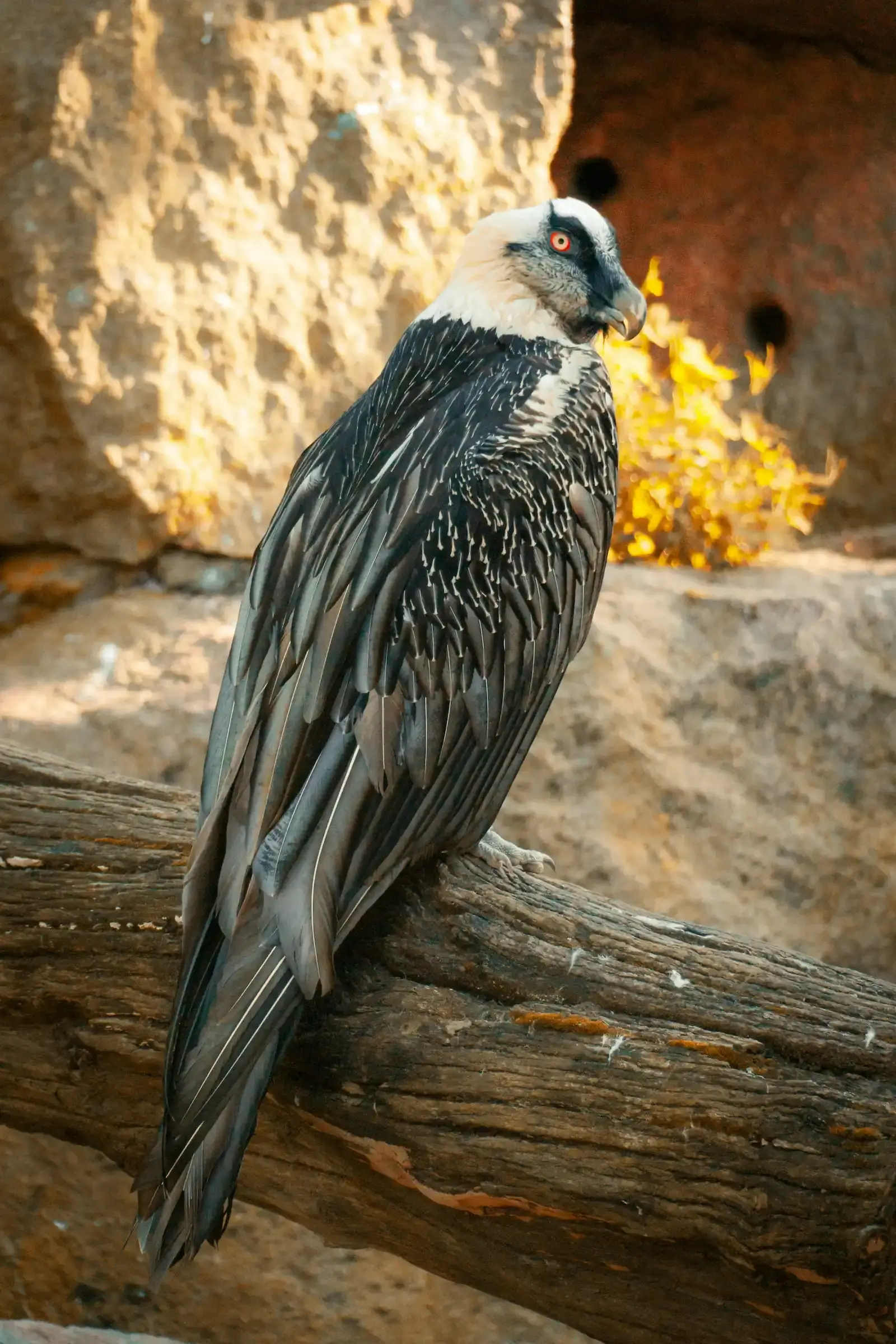
Bearded Vulture | Photo: Robert Schwarz
The Bearded Vulture occupies a very special role in mountain ecosystems because it makes use of a resource that few species can exploit so efficiently. By feeding on bones and hard remains, it completes the work of other scavengers and contributes to the natural recycling of nutrients.
Its presence also speaks of the health of the territory. For a viable population to exist, mountains need food, tranquillity, breeding areas, connectivity and low mortality from human causes. That is why conserving the Bearded Vulture means looking beyond the bird and thinking about the whole system that sustains it.
In a way, it is a species that connects many pieces: large herbivores, extensive livestock farming, scavengers, rocky cliffs, protected areas, food management, mountain culture and long-term conservation.
Perhaps that is why it feels so special. It does not fascinate only because it eats bones or because its flight is spectacular. It fascinates because it shows just how precisely a species can find its exact place in the ecosystem.
A bird of prey made of bones, mountains and patience
The Bearded Vulture is unlike any other bird of prey because its natural history seems designed around the improbable. It lives on what others leave behind, breaks bones using the mountains, travels across large territories in silence and depends on patient, technical and sustained conservation.
It is not a species to chase or to turn into a simple photograph. It is a species to watch from a distance, understand calmly and protect with great responsibility.
At NatSnap, we believe that observing wildlife also means understanding the place each animal occupies in its ecosystem. In the case of the Bearded Vulture, that place is among bones, wind and mountain walls. And perhaps that is exactly why it is so hard to find another bird of prey like it.
Frequently asked questions about the Bearded Vulture
What is the Bearded Vulture?
The Bearded Vulture, Gypaetus barbatus, is a large scavenging bird of prey specialised in feeding on bones and hard remains from carcasses. It is linked to mountain areas, cliffs and rugged landscapes.
Is the Bearded Vulture a vulture?
Yes. The Bearded Vulture is an Old World vulture and belongs to the Accipitridae family, like other diurnal birds of prey. However, its appearance, diet and behaviour make it very different from other better-known vultures.
Why is it called the Bearded Vulture?
It is called the Bearded Vulture because of the black feathers under its bill, which resemble a beard. In Spanish, its name “quebrantahuesos” refers to its ability to carry bones and drop them from height onto rocky areas to break them.
What does the Bearded Vulture eat?
Its diet is based mainly on bones, cartilage and hard remains from carcasses. Unlike other scavengers, it uses parts that many species cannot consume easily.
Where does the Bearded Vulture live in Spain?
Its main recent historical core is in the Pyrenees, although there are also recovery and reintroduction projects in areas such as Cazorla, Picos de Europa, the Cantabrian Mountains, the Maestrazgo and other mountain systems. It is always better to speak in broad areas, not specific locations.
Is it easy to see Bearded Vultures?
Not always. In some mountain areas, they can be observed with patience and from suitable points, but the species remains localised and sensitive. The recommended approach is to observe from a distance, in permitted areas and without searching for breeding areas or sensitive points.
Why is the Bearded Vulture threatened?
Its threats include low reproductive productivity, human disturbance in breeding areas, the illegal use of poison, lead poisoning, collisions with infrastructure, population fragmentation and food availability.
How can you observe Bearded Vultures responsibly?
The best approach is to use binoculars or a spotting scope, stay on authorised routes and viewpoints, avoid approaching nests or breeding cliffs, avoid sharing sensitive locations and respect the instructions of protected areas, specialised guides and environmental authorities.