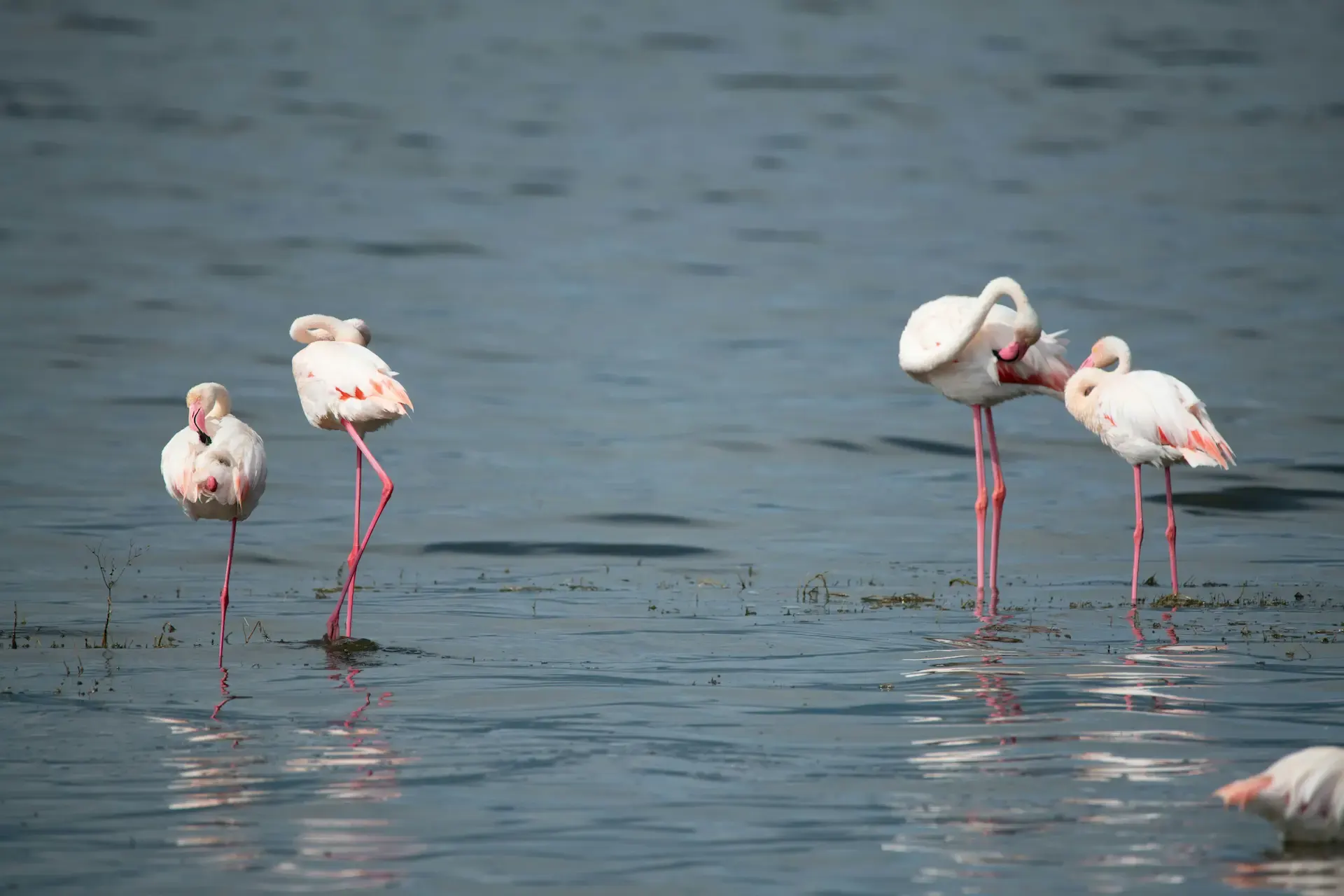
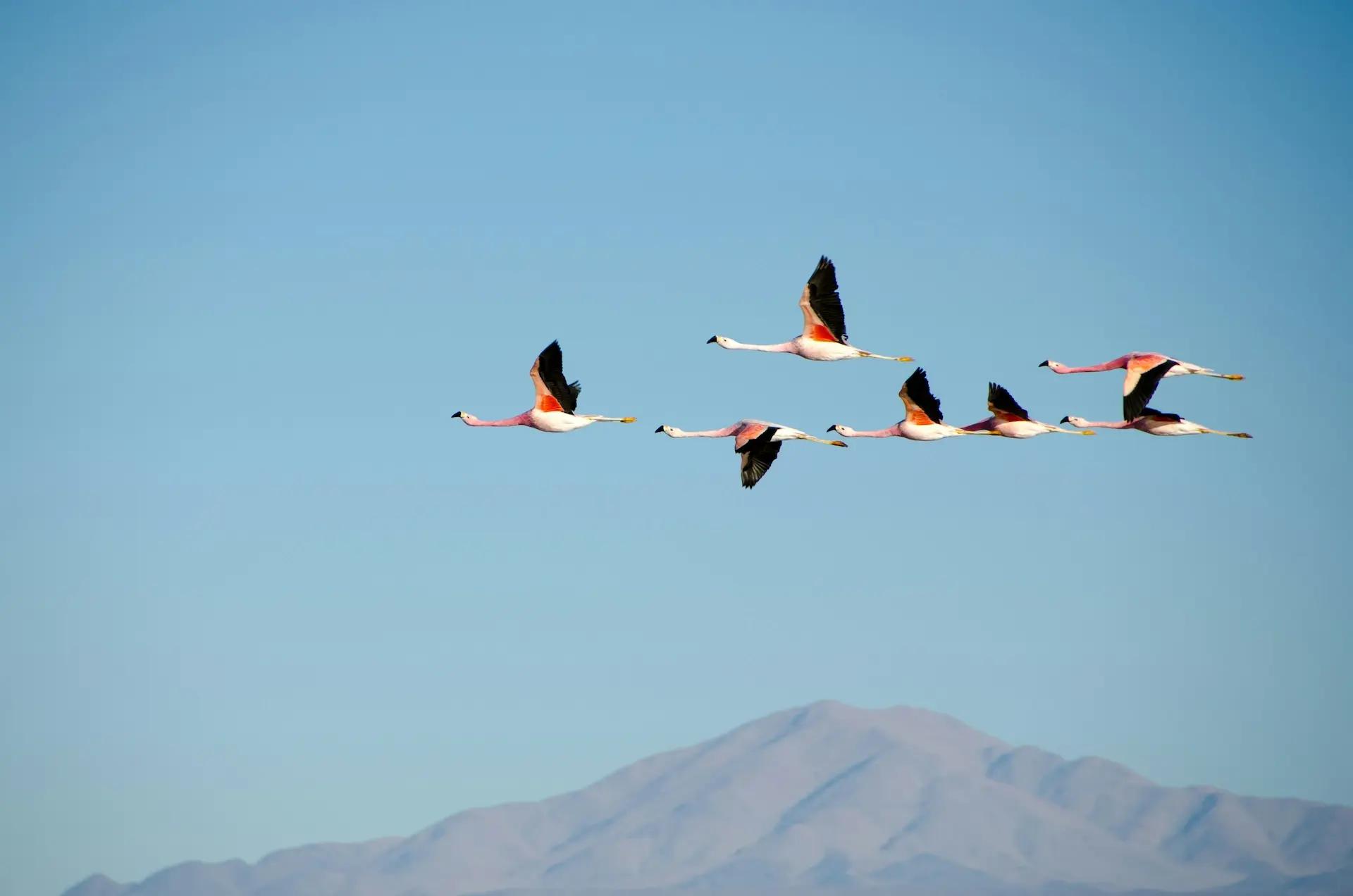
In autumn, Spain enters one of the most interesting phases of the ornithological calendar. During the post-breeding migration, many birds that have bred in Europe move towards their wintering areas, while others cross the Iberian Peninsula on passage and some species from northern and central Europe begin to arrive as winter visitors.
That is why talking about migratory birds in autumn is not simply about birds that “leave” or birds that “arrive”. It means talking about different migratory strategies: summer visitors moving out, trans-Saharan migrants, pre-Saharan migrants, passage birds, temporary stopover, first wintering contingents, partial movements and increasingly visible phenological changes.
Spain also occupies a key position within the migratory routes of the Western Palearctic. The MITECO census of wintering waterbirds highlights the country’s importance for migratory passage and the wintering of waterbirds, while the Strait of Gibraltar acts as one of the major migratory bottlenecks between Europe and Africa.
Autumn migration is not a single migration
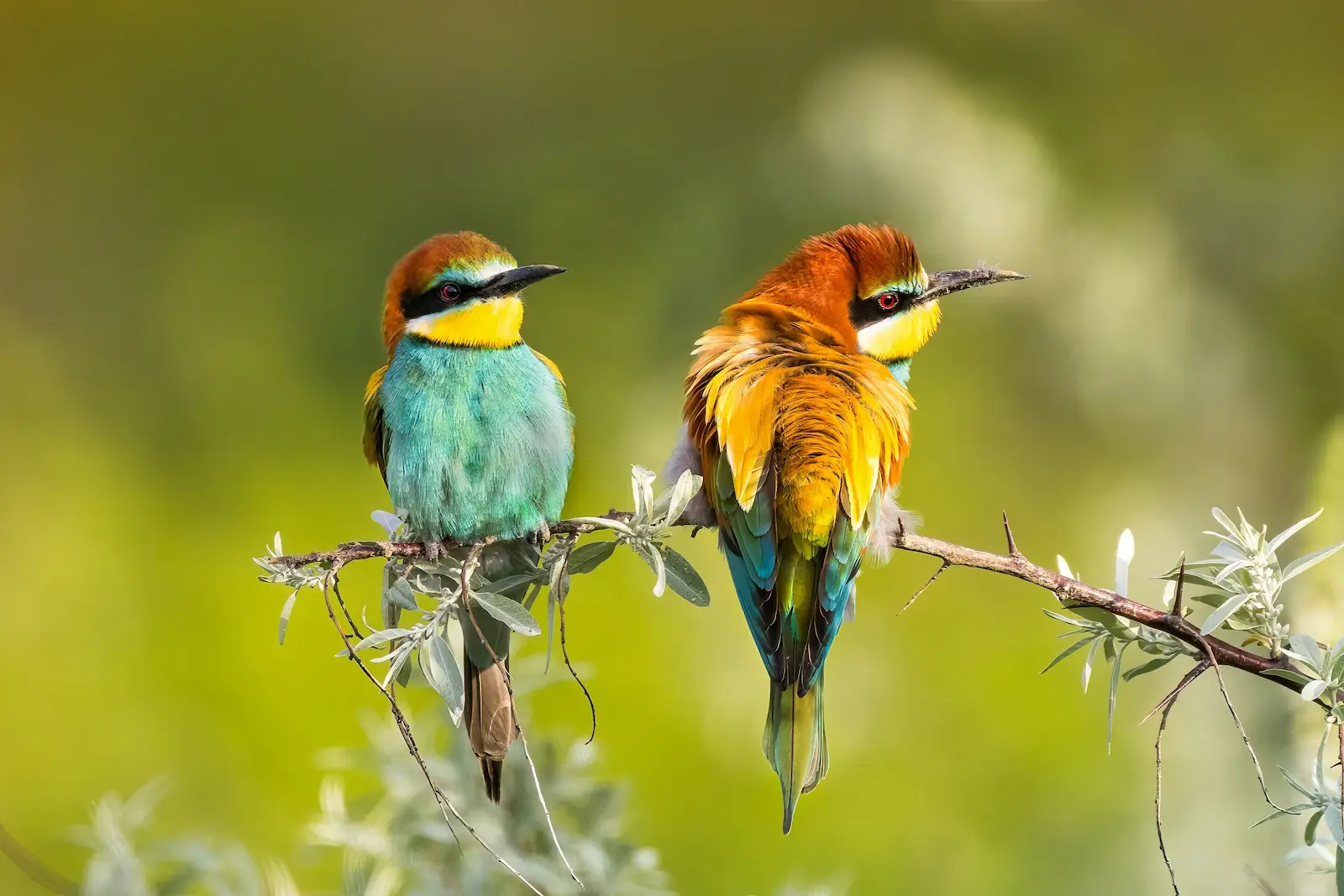
Pair of European bee-eaters | Photo: Paul Bulai
Although we often speak about “autumn migration” in general terms, this period actually brings together several processes at the same time. From an ornithological perspective, the main concept is post-breeding migration: the movement many birds make after the breeding season, from their breeding areas towards their wintering areas.
In some species, this movement begins very early, even in July or August. In others, it intensifies in September and October. And in certain groups, such as waders, passerines, seabirds or some raptors, October remains a very interesting month for detecting passage, stopover or the arrival of individuals from more northerly latitudes.
That is why, in autumn, it is useful to distinguish between several migratory profiles.
Summer visitors are species that arrive in Spain or other parts of Europe to breed during spring and summer, and then leave all or part of their breeding areas. Trans-Saharan migrants cross the Sahara to winter south of the desert, while pre-Saharan or short- to medium-distance migrants usually spend the winter closer by, in North Africa, the Mediterranean basin, southern Europe or milder Atlantic regions.
There are also passage birds, which use Spain as a migratory corridor or temporary stopover area, and winter visitors, which arrive to spend the colder months here. In addition, there are partial migrants, altitudinal movements, irruptions linked to cold weather or food availability, and birds that remain for days or weeks in favourable stopover sites.
Autumn migration is better understood as an overlap of different flows, rather than as a single movement.
October, a hinge month for birdwatching
October is especially interesting because it works as a hinge month. Many post-breeding movements have already peaked in August or September, but migration has not ended. It simply changes in composition.
By this point, many Common Swifts, Apus apus, have disappeared from most of their breeding areas, the bulk of European Honey-buzzards ‘Pernis apivorus’, and Black Kites ‘Milvus migrans’, have already crossed the Strait earlier, and several trans-Saharan species are in the final stages of departure. However, Barn Swallows, Hirundo rustica, Western House Martins, Delichon urbicum, late raptors, passage waders, grounded passerines, moving seabirds and species delaying their crossing due to weather conditions can still be observed.
At the same time, the first winter visitors begin to become more visible. Common Cranes, Grus grus, arrive, thrushes and chiffchaffs increase, and Northern Lapwings ‘Vanellus vanellus’, European Golden Plovers ‘Pluvialis apricaria’, Great Cormorants, Phalacrocorax carbo, ducks and other contingents from northern and central Europe begin to appear.
In a single field outing, especially in wetlands, coastal areas, headlands, farmland or migration points, birds completing their post-breeding migration may mix with others beginning to settle for the winter. That overlap is one of the reasons October is such an interesting month for birdwatching.
Summer visitors leaving after the breeding season
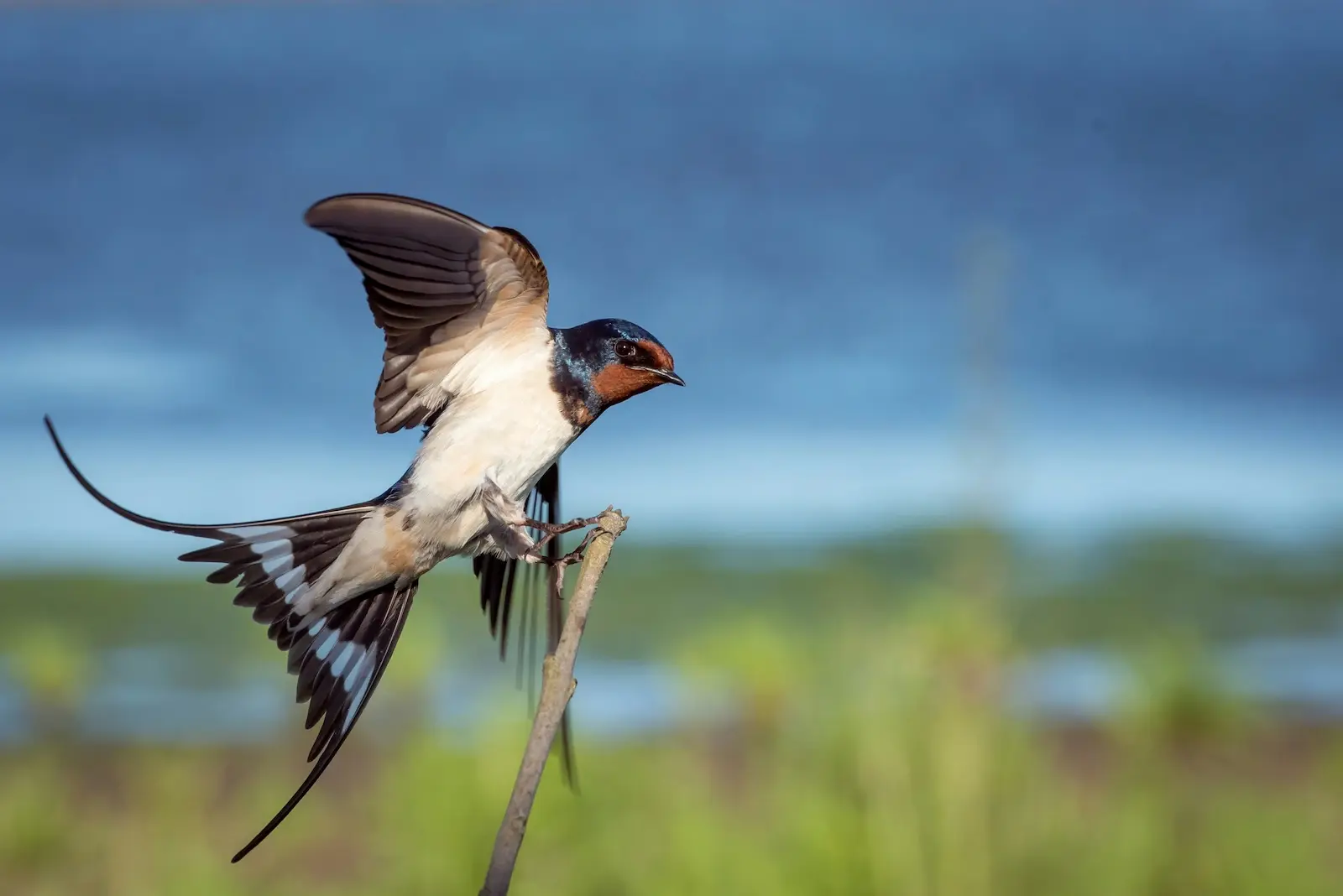
Barn swallow | Photo: Vincent van Zalinge
A significant part of autumn migration is made up of summer visitors. These are birds that have used the Iberian Peninsula as a breeding area and, once reproduction is over, begin their journey towards their wintering areas.
The Barn Swallow ‘Hirundo rustica’, is one of the most recognisable examples. After breeding, it gradually leaves its breeding areas and can still be observed on passage during September and October, especially along coastal corridors, farmland, wetlands and favourable stopover areas. Many autumn records do not necessarily correspond to local breeding birds, but to individuals actively migrating or temporarily grounded.
The Western House Martin ‘Delichon urbicum’, also has a prolonged departure. Its colonies gradually empty from summer onwards, although late concentrations can still be seen in favourable areas, especially when weather conditions favour the temporary accumulation of individuals before they continue their route.
The Common Swift ‘Apus apus’, tends to disappear earlier. In much of Spain, departure from breeding colonies takes place in midsummer, and late autumn observations require careful identification, especially in areas where the Pallid Swift ‘Apus pallidus’ may also occur. In this group, date, structure, colouration, silhouette and observation context are key to avoiding rushed identifications.
The European Bee-eater ‘Merops apiaster’, is another clearly summer and trans-Saharan species. After breeding in banks, cuttings, ravines or sandy substrates where it excavates its nests, it migrates towards tropical Africa. Its autumn passage can often be detected by vocal flocks in flight, sometimes before the observer has even located them visually.
Among summer raptors, the calendar varies greatly depending on the species. The Short-toed Snake Eagle ‘Circaetus gallicus’, maintains visible post-breeding passage between late summer and early autumn, while the Booted Eagle ‘Hieraaetus pennatus’, may delay its crossing at certain points, especially when wind conditions are not favourable. By contrast, species such as the Common Cuckoo ‘Cuculus canorus’, or the Egyptian Vulture ‘Neophron percnopterus’, usually have earlier passages, meaning that October records would often be late or highly dependent on the area.
This distinction matters: not all summer visitors “leave in autumn” in the same way, nor do all remain visibly present into October. To interpret an observation properly, species, date, age, location and weather conditions all need to be considered together.
Passage migrants and stopover areas
An essential part of autumn migration is not found in the species that leave or those that arrive to stay, but in the birds that use Spain as a passage area. In these cases, the key concept is migratory stopover: birds temporarily interrupting their journey to rest, feed or wait for better conditions.
Wetlands, marshes, estuaries, rice fields, saltpans, beaches, rías and inland lagoons are especially important for waders and waterbirds. Dunlins ‘Calidris alpina’, Sanderlings ‘Calidris alba’, redshanks, godwits, curlews, plovers, ringed plovers and other species can appear in varying numbers depending on tides, water levels, food availability, wind and human disturbance.
For waders, October can be excellent for observing transitional plumages, juveniles of the year and differences between passage birds and early wintering individuals. It also requires close attention, because the same group may contain birds stopping over for only a few days alongside others that will remain for much of the winter.
There is also movement among passerines. Common Chiffchaffs ‘Phylloscopus collybita’, late flycatchers, wagtails, wheatears, pipits, stonechats, warblers and thrushes may appear in agricultural mosaics, hedgerows, riparian woodland, coastal vegetation or well-oriented patches of cover. In many small species, nocturnal migration and daytime stopover make the first hours of the morning especially interesting after favourable nights.
Passage is not always seen as a large flock crossing the sky. Sometimes it is detected through a sudden increase in discreet birds in a reedbed, waders feeding at low tide or passerines occupying a headland after a night of active migration.
The Strait of Gibraltar and soaring birds
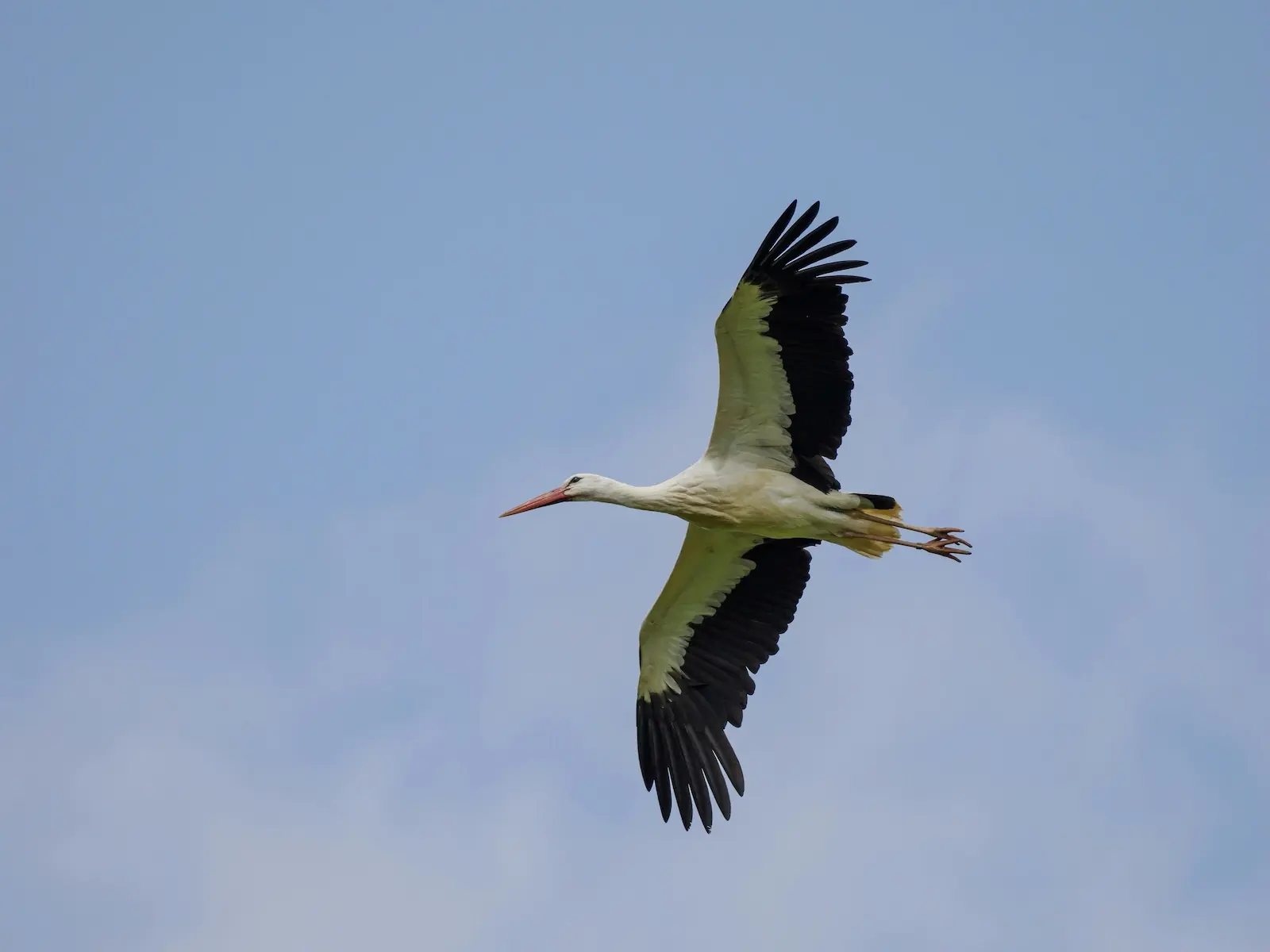
White stork in flight | Photo: Stuart Bartlett
The Strait of Gibraltar is one of the most important places for understanding autumn migration in Spain. For many soaring birds, crossing large bodies of water involves a high energetic cost, because they rely on thermals to travel efficiently. That is why they concentrate at narrow points where the sea crossing is shorter.
The Migres Programme by Fundación Migres describes the Strait as a natural bottleneck for bird migration between Europe and Africa, with post-breeding passage of soaring birds taking place between mid-July and mid-October.
This means that October, especially the first half of the month, can still be relevant for certain species, even if the peaks of many soaring birds have already occurred earlier. White Storks ‘Ciconia ciconia’, Black Storks ‘Ciconia nigra’, European Honey-buzzards, Booted Eagles, Short-toed Snake Eagles, Egyptian Vultures, harriers and other raptors do not all share the same phenology, and wind can greatly alter the daily visibility of passage.
In the Strait, a quiet day does not always mean an absence of birds. It may mean that conditions are not favourable for crossing, that birds are waiting, that the flow has shifted, or that the bulk of movement passed through on previous days. To read migration properly, it is necessary to consider the date, wind, cloud cover, thermals, visibility and the behaviour of birds before crossing.
That is why October should not be understood simply as the end of migration, but as a terminal phase for certain groups and an entry phase for others.
Seabirds in autumn movement
October is also a very interesting month to look out to sea. At many coastal points, especially well-oriented headlands and promontories, it is possible to detect seabird passage that is not always visible from land at other times of year, or that requires specific conditions to bring birds closer to shore.
The Northern Gannet ‘Morus bassanus’, is one of the most representative species of autumn passage. After the breeding season, many individuals move south and can be seen from Atlantic and Cantabrian coasts, especially on days with favourable wind.
Skuas are also part of this autumn seawatching picture. The Great Skua ‘Stercorarius skua’, can show very interesting autumn passage, while the Pomarine Skua ‘Stercorarius pomarinus’, is usually observed more regularly during migration periods, especially from suitable seawatching points and in favourable weather conditions.
Terns, shearwaters, gulls, early auks and other pelagic or coastal species may also appear. In this case, observation requires a different reading from that used in wetlands or for soaring raptors: a telescope, flight experience, attention to wingbeat patterns, distance from shore, direction of movement, age, moult and weather conditions.
For experienced birdwatchers, October is not only a month for wetlands or the Strait. It is also a month for seawatching.
Winter visitors beginning to arrive
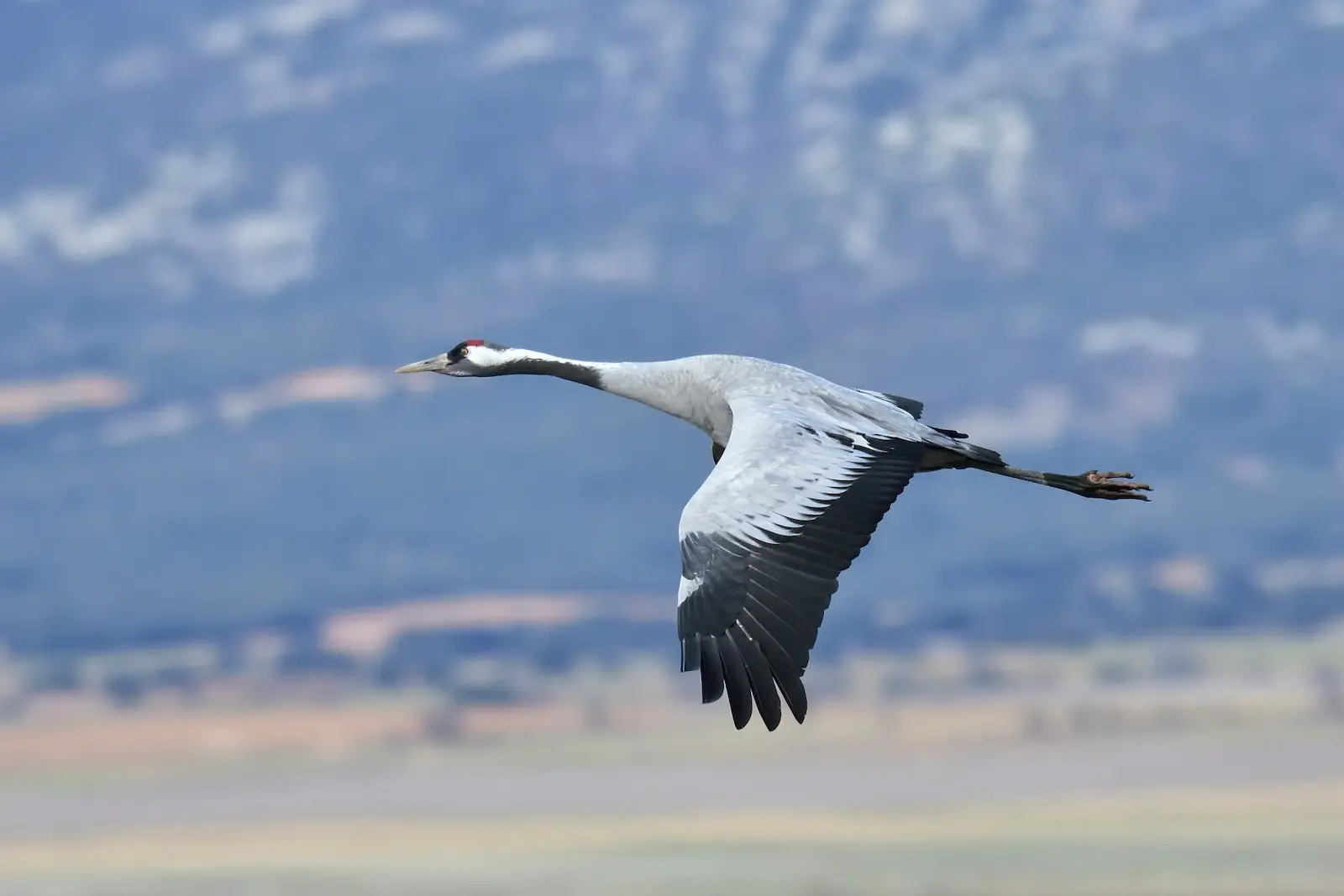
Common crane in flight | Photo: Santiago Lacarta
As some post-breeding flows fade, the first winter visitors begin to gain presence. October marks the beginning of a new avifaunal composition in many Spanish landscapes.
The Common Crane ‘Grus grus’, is one of the most anticipated species. Its arrivals begin to become visible in October and consolidate as winter progresses, with movements towards areas such as Gallocanta, Extremadura, La Mancha and other passage or wintering sites. Its arrival is one of the clearest signs of a shift in the ornithological calendar.
The Greylag Goose ‘Anser anser’, is also part of the move towards wintering. It comes from breeding areas in northern Europe and settles in favourable sites across the peninsula, especially wetlands, marshes and agricultural areas where it can find food and tranquillity.
In October and November, many ducks begin to increase in number. Eurasian Teal ‘Anas crecca’, Eurasian Wigeon ‘Mareca penelope’, Northern Pintail ‘Anas acuta’, Northern Shoveler ‘Spatula clypeata’, Common Pochard ‘Aythya ferina’, Gadwall ‘Mareca strepera’, and other species appear in wetlands, reservoirs, marshes and rice fields, often in numbers that will continue to grow as winter advances.
Northern Lapwings, European Golden Plovers, Meadow Pipits ‘Anthus pratensis’, White Wagtails ‘Motacilla alba’, Bramblings ‘Fringilla montifringilla’, in some contexts, Common Chiffchaffs and thrushes also enter or become more visible. The Song Thrush ‘Turdus philomelos’, and the Redwing ‘Turdus iliacus’, begin to increase in wooded areas, farmland, open countryside and agricultural mosaics, depending on the region and the intensity of movements from the north.
October, therefore, is not yet full wintering season, but it is the moment when wintering begins to take shape.
Where to observe birds during the autumn migration in Spain
Autumn migration is best observed by choosing the habitat according to the group of birds you want to detect.
For soaring raptors and storks, the Strait of Gibraltar remains one of the main reference points, especially during the first half of October. Pyrenean passes, mountain cols and upland corridors can also be interesting for certain movements, although timing and intensity depend greatly on the group.
For waders, ducks and waterbirds, wetlands, lagoons, saltpans, estuaries, marshes, rías and rice fields are key places to look. Doñana, the Ebro Delta, the Albufera de Valencia, the Santoña marshes, Villafáfila, Gallocanta, the wetlands of La Mancha, Mediterranean saltpans and many coastal areas can act as passage points, stopover sites or entry areas for winter visitors.
For seabirds, Cantabrian and Atlantic headlands, as well as some well-oriented Mediterranean points, can offer good seawatching days, especially under wind conditions that bring birds closer to shore.
For passerines, the best places are not always the most spectacular. Headlands, riparian woodland, hedgerows, patches of coastal vegetation, reedbeds, islands, peri-urban parks, abandoned fields and river corridors can concentrate birds after nights of active migration.
The key is not to look for “a place to see migration” in a generic way, but to connect each group with its strategy: soaring birds and thermals, waders and intertidal zones, waterbirds and wetlands, seabirds and coastal winds, passerines and stopover after nocturnal flights.
How to read a migration day in October

Man reading | Photo: Ben White
To observe migration in October with real criteria, it is not enough to arrive at a well-known site. You need to interpret the conditions.
For soaring raptors, thermals, prevailing wind, visibility and crossing direction all matter. Unfavourable wind can hold birds back, shift the flow or concentrate it at different points. A change in wind can activate passage after hours of apparent calm.
For seabirds, wind and storms are decisive. Certain winds can bring pelagic birds closer to the coast, while others push passage too far offshore to be detected well from land. That is why, in seawatching, weather is not just context: it is part of the observation strategy.
For waders, tides, water level and the availability of mudflats or feeding areas strongly influence visible presence. The same estuary can appear empty at high tide and become full of activity when the tide exposes feeding areas.
For passerines, mornings after nights of migration can be especially productive, particularly after weather changes that favour stopover. Sometimes passage is detected more through local accumulation than through birds visibly crossing.
October is a month for observing, but also for interpreting. The species list matters, although the real interest lies in understanding why the birds appear there, at that moment and under those conditions.
Migration, climate change and phenological shifts
Migrations are not rigid phenomena. Arrival, departure, permanence and wintering dates can shift depending on temperature, food availability, habitat transformation and conditions in breeding and wintering areas.
Phenological records from monitoring programmes such as Aves y Clima help detect first arrivals, first passage birds, first wintering individuals and changes in migratory calendars. This information is especially relevant because familiar species can change their patterns without us noticing unless observations are recorded consistently.
In recent years, advances, delays, route shortening and changes in wintering behaviour have been documented in different species. Some birds that once made longer movements may remain further north if winter conditions allow, while others adjust their departure or arrival dates according to food availability and temperature.
This means October needs to be read with caution. General patterns remain useful, but it is increasingly important to compare observations with updated data, phenological records, censuses, monitoring programmes and local knowledge.
For advanced birdwatchers, this is one of the most interesting aspects of field observation today: not only seeing species, but detecting changes in their movement patterns.
How to observe migratory birds without interfering
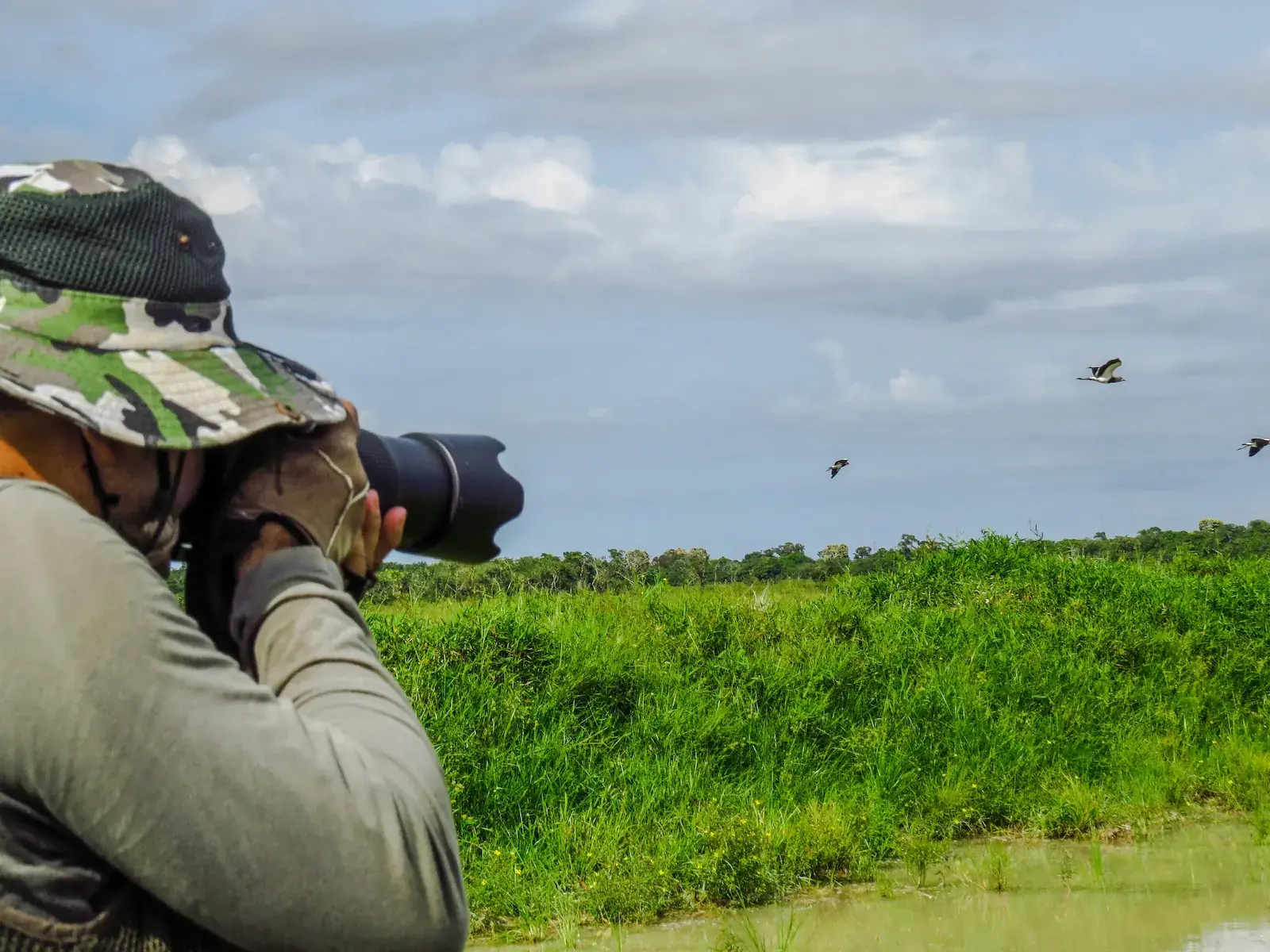
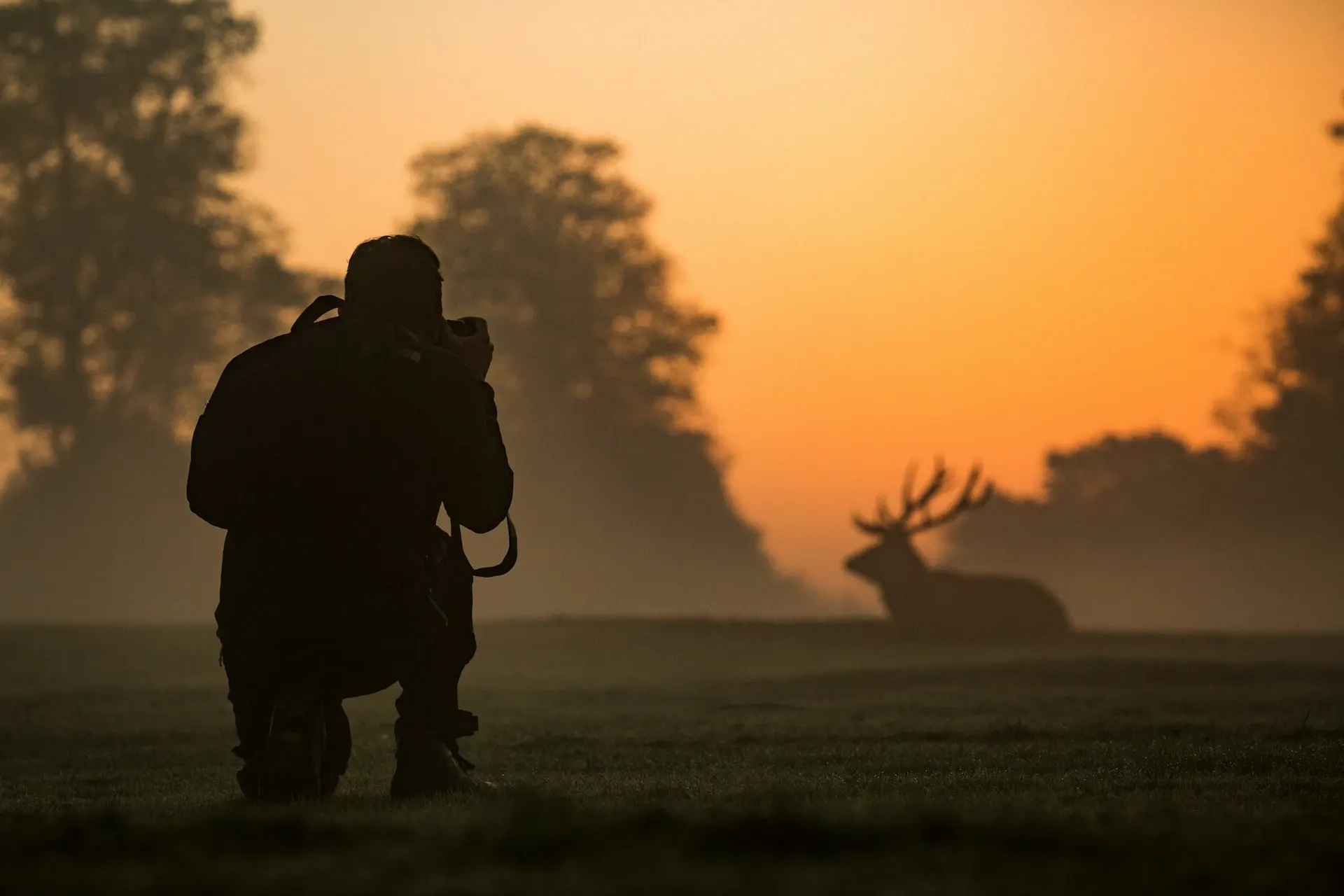
Bird photographer | Photo: Dieny Portinanni
Migration is a time of high energy expenditure. Many birds arrive exhausted at stopover areas, need to feed quickly or depend on specific roosts and resting points to continue their journey.
That is why observation should take place from paths, observatories, viewpoints or authorised areas, avoiding entry into resting sites, roosts, beaches with grounded waders, sensitive reedbeds or feeding areas. Flushing a group of birds in order to see them better may seem like a minor disturbance, but during migration it can mean unnecessary energy loss.
It is also important to avoid calls, direct approaches, chasing birds to obtain a photograph, irresponsible use of torches at roosts or publishing exact locations of sensitive species. In birdwatching, good field practice means keeping distance, minimising stress, avoiding interference with essential behaviour and always prioritising the conservation of the bird and its habitat.
In October, a good observation is not always the closest one. Very often, it is the one that allows you to read the movement without disturbing the birds’ rest, feeding or route.
Autumn as a living map of migration
Autumn migration is especially interesting because it brings several calendars together at once. On the one hand, the last summer visitors, trans-Saharan migrants and passage species finish leaving or crossing the peninsula. On the other, the first winter visitors begin to occupy wetlands, coasts, open fields, dehesas, rivers and reservoirs.
That overlap makes autumn a very rich season for birdwatching, but it also demands precision. Not every bird we see is “leaving”, not every bird has “just arrived” and not all of them will remain in the area. Some are only resting, others feed for a few days, some wait for a weather window and others are beginning a wintering period that will become more established later.
Watching birds in autumn means watching routes, rhythms and strategies. It means understanding that the landscape is not still, even when it appears unchanged. And that every flock, every absence and every first arrival tells a different part of the same phenomenon.
At NatSnap, we believe birdwatching becomes truly interesting when we stop looking only at isolated species and begin to read the movements that connect territories. Autumn migration is one of those moments when the sky, the coast and the wetlands say much more than they seem to.
Frequently asked questions about migratory birds in Spain during autumn
What migratory birds can be seen in Spain during autumn?
During autumn, it is possible to observe summer visitors moving out, passage migrants and winter visitors beginning to arrive. These include Barn Swallow, Western House Martin, European Bee-eater, Booted Eagle, Short-toed Snake Eagle, Dunlin, Sanderling, Northern Gannet, Great Skua, Common Crane, Greylag Goose, Northern Lapwing, European Golden Plover, Great Cormorant and several duck species.
What is post-breeding migration?
Post-breeding migration is the movement many birds make after reproduction, from their breeding grounds towards their wintering areas. In Spain, it can begin in summer for some species and continue through autumn, with different peaks depending on the bird group.
Which summer visitors leave Spain in autumn?
In autumn, many summer visitors or trans-Saharan migrants leave Spain, including Barn Swallow, Western House Martin, European Bee-eater, Booted Eagle, Short-toed Snake Eagle, European Honey-buzzard and Egyptian Vulture, although each species has a different phenology and some concentrate their passage before October.
Which birds arrive in Spain in autumn to winter?
In autumn, winter visitors such as Common Crane, Greylag Goose, several ducks, Great Cormorant, Northern Lapwing, European Golden Plover, Song Thrush, Redwing and Common Chiffchaff begin to arrive or become more visible, among others.
Is October a good month to observe bird migration?
Yes. October is a very good month because it combines late post-breeding migration, passage of waders, passerines and seabirds, and the progressive arrival of winter visitors. It does not always hold the peak numbers for every group, but it does offer a wide range of migratory strategies.
Where can you see migratory birds in Spain during autumn?
Important places include the Strait of Gibraltar, Doñana, the Ebro Delta, Gallocanta Lagoon, the Santoña marshes, Villafáfila, the Albufera de Valencia, the wetlands of La Mancha, the Galician rías, the Cantabrian coast, Atlantic headlands and various Mediterranean saltpans.
What is the difference between a summer visitor, a passage migrant and a winter visitor?
A summer visitor arrives to breed during spring and summer, then leaves. A passage migrant uses a territory as a corridor or temporary stopover during its route. A winter visitor arrives to spend the colder months in an area where it finds food and more favourable conditions.
How can you observe migratory birds in autumn without disturbing them?
The best approach is to observe from authorised points, keep your distance, avoid entering resting or feeding areas, avoid flushing waders, stay away from roosts, avoid using calls and avoid sharing exact locations of sensitive species or sites.