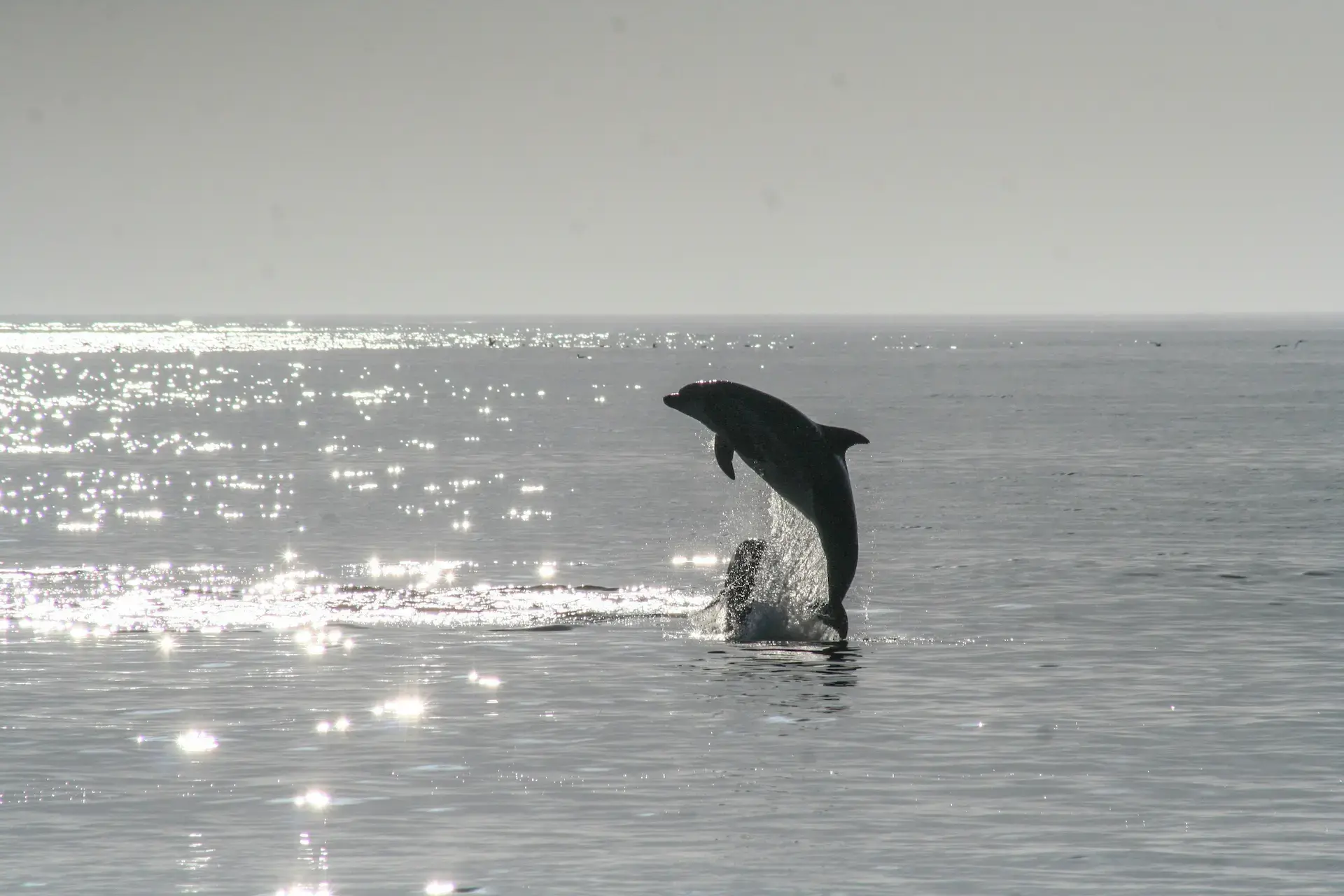
Spain has an enormous diversity of marine wildlife. Its coasts connect the Mediterranean, Atlantic, Cantabrian Sea, Strait of Gibraltar, Balearic Islands and Canary Islands, so we are not talking about a single sea or one type of landscape, but very different regions where cetaceans, sea turtles, seabirds and many other species associated with marine environments can be found.
In this guide, we explore some of Spain’s major marine areas to discover which species can be spotted in each one. To organise the route, we use the five Spanish marine subdivisions as a reference: North Atlantic, South Atlantic, Strait and Alboran, Levantine-Balearic and Canary Islands, although we will also treat the Balearic Islands separately because of their particular importance within the Mediterranean.
Some species are easier to recognise, such as dolphins, turtles at the surface or certain seabirds, while others depend much more on the time of year, distance from the coast, sea conditions or simply luck. Observing marine wildlife is not just about going out to look for specific animals. It also means understanding the places where they live, feed, migrate and rest.
After all, looking out over the Mediterranean from a rocky cove is very different from watching seabirds pass along the Cantabrian coast, heading out to observe cetaceans in the Canary Islands or exploring a coastal wetland where land and sea meet.
Why Spain is so interesting for marine wildlife watching
Marine wildlife in Spain is so diverse because its waters do not belong to a single environment. The Mediterranean offers warmer waters, seagrass meadows, islands, cliffs and migration corridors, while the Atlantic and Cantabrian Sea connect with more open, productive and exposed waters.
Then there is the Strait of Gibraltar, one of the great natural passages between the Mediterranean and Atlantic, and the Canary Islands, where deep waters lie very close to the coast. This variety creates very different opportunities for wildlife watching. In some areas, seabirds are the main attraction, while in others cetaceans stand out, and elsewhere turtles, underwater habitats or coastal wetlands complete the experience.
It is also important to remember that many species move. Some use certain areas for feeding, others pass through during migration and some maintain more stable populations in particular waters. Rather than imagining a fixed map, it is better to think of Spain as a collection of marine landscapes, each with its own rhythm.
1. Mainland Mediterranean, between dolphins, turtles and seabirds
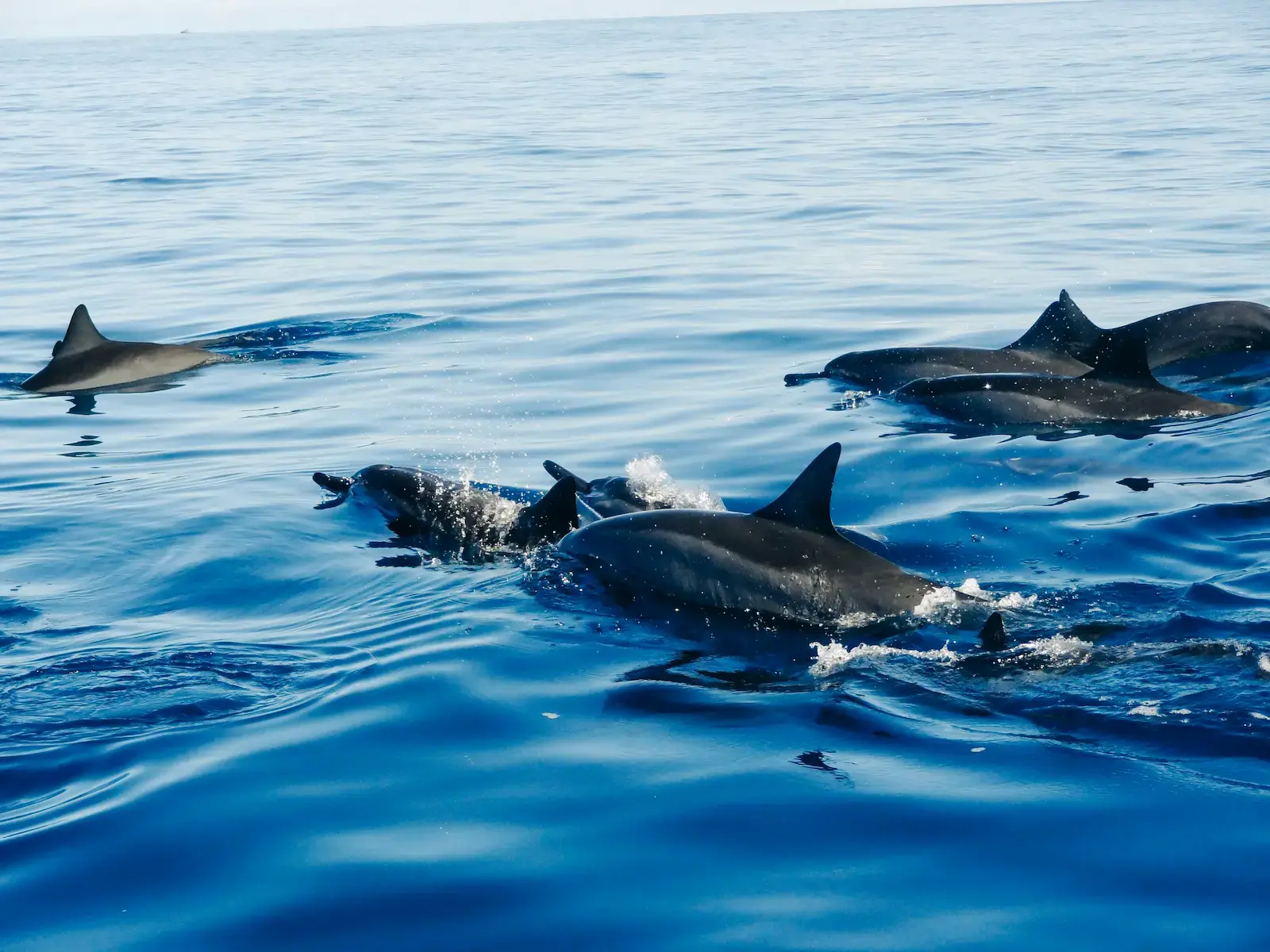
Common Bottlenose Dolphins | Photo: Shelby Cohron
The mainland Mediterranean includes a wide variety of coastal landscapes, from Catalonia and the Valencian Community to Murcia and part of the Andalusian coast. Species that may be found in these waters include the common bottlenose dolphin, striped dolphin, common dolphin, fin whale, loggerhead turtle and different seabirds associated with cliffs, wetlands, beaches, harbours and feeding grounds.
One of the most important areas here is the Mediterranean Cetacean Migration Corridor, located between the coasts of Catalonia, the Valencian Community and the Balearic Islands. Fin whales, bottlenose dolphins, striped dolphins, common dolphins, long-finned pilot whales, Risso’s dolphins, sperm whales and Cuvier’s beaked whales have all been recorded in this area, as well as loggerhead turtles, sharks and seabirds.
The fin whale is one of the most impressive species that can use these waters. It is the second-largest animal on the planet after the blue whale, and although it is not a species that is easily seen from shore, its presence is a reminder that the western Mediterranean is neither small nor poor in wildlife, but an important area for large migratory animals.
Seabirds are also extremely important. Around areas such as the Ebro Delta, the Columbretes Islands, Mediterranean headlands and some rocky stretches of coastline, you may see gulls, terns, cormorants, shearwaters and other species that depend on the sea for food. In fact, the Ebro Delta–Columbretes Islands marine area is considered one of the most important marine feeding areas for seabirds in the entire Mediterranean.
The mainland Mediterranean is therefore a fascinating place to start looking at marine wildlife more closely. Sometimes the experience may come from seeing dolphins offshore, but at other times it may be seabirds following shoals of fish, turtles at the surface or small movements that reveal just how alive the sea really is.
2. Balearic Islands, a key area for cetaceans and seabirds
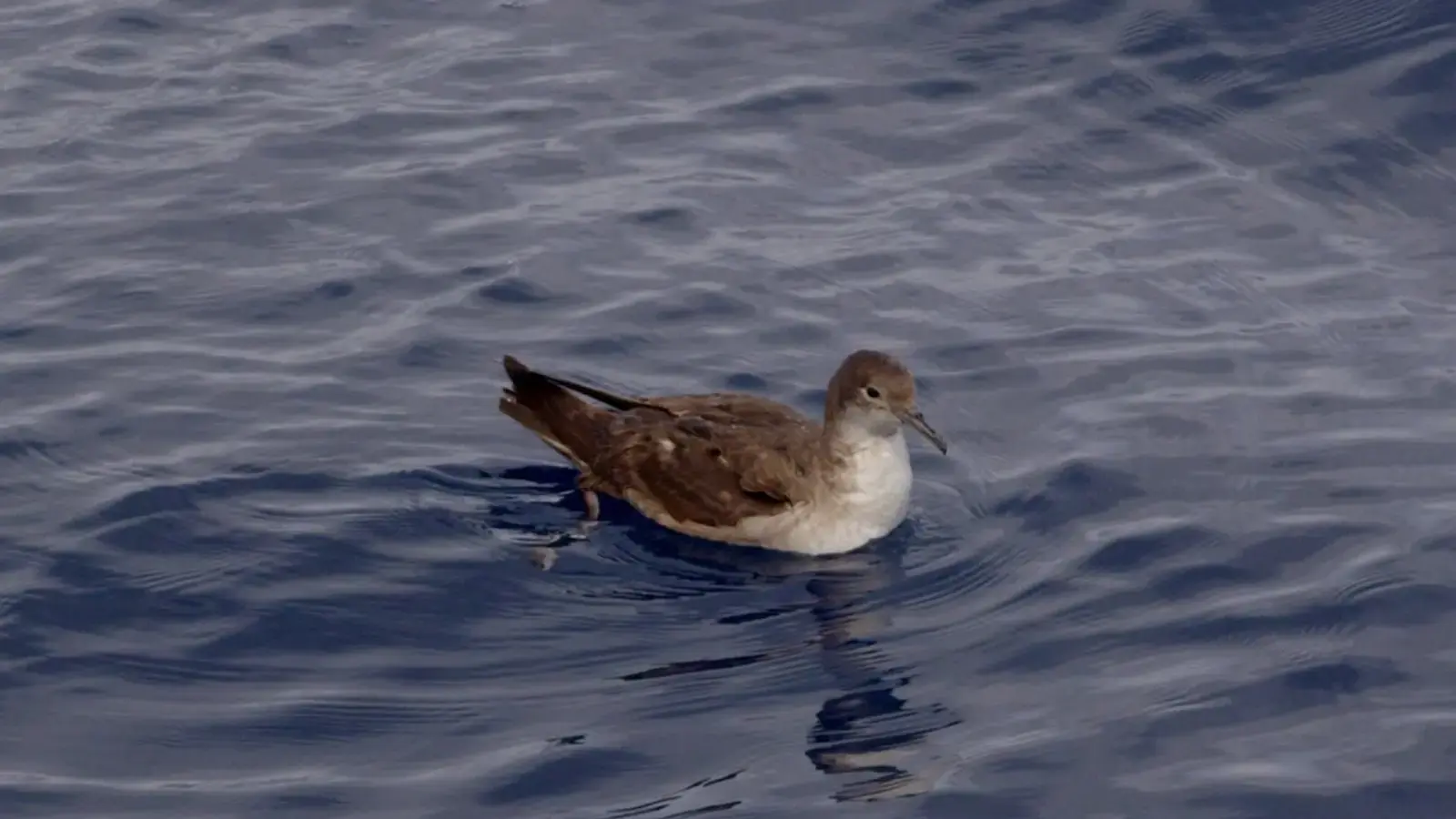
Balearic Shearwater | Photo: Fundación Aquae
The Balearic Islands deserve a section of their own because their marine importance cannot simply be understood as an extension of the mainland Mediterranean. Surrounded by deep waters, channels, cliffs, islets and feeding grounds, the archipelago is an essential area for many marine species.
Bottlenose dolphins, striped dolphins, common dolphins, sperm whales, fin whales, long-finned pilot whales, Risso’s dolphins, Cuvier’s beaked whales and loggerhead turtles may all occur in Balearic waters. Some species are easier to observe than others, and many sightings depend on the type of trip, the location and the time of year, but together they make the archipelago one of the most important areas in the Spanish Mediterranean for marine wildlife.
The Balearic Islands are also essential for seabirds. The Balearic shearwater is particularly important because it is Spain’s only endemic seabird and breeds exclusively in this archipelago, making it a key species when talking about marine conservation in the Mediterranean.
Other notable seabirds include the Cory’s shearwater, European storm petrel, European shag and Audouin’s gull. Some protected marine areas in Spanish waters are linked to breeding colonies, feeding grounds and migration areas for these species.
So, when talking about marine wildlife in Spain, the Balearic Islands should not be seen simply as a beach destination. They are home to unique seabirds, cetaceans, turtles and underwater habitats that form part of an extremely valuable Mediterranean biodiversity.
3. Strait of Gibraltar and Alboran Sea, the great crossroads between two seas
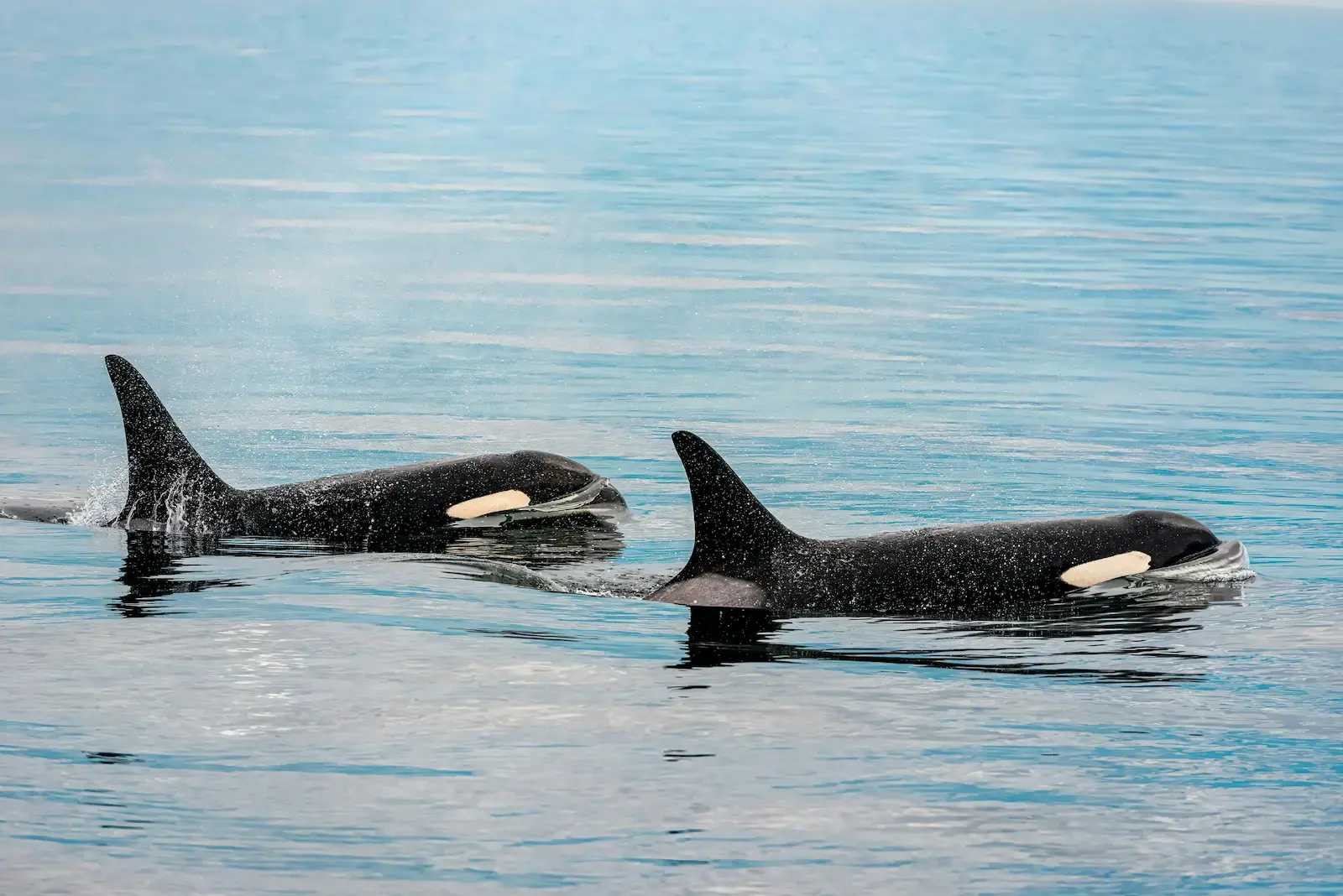
Orcas | Photo: Stephen Walker
The Strait of Gibraltar and the Alboran Sea are among the most interesting areas for understanding marine wildlife in Spain. This is where the Atlantic and Mediterranean meet, turning the area into a natural corridor for many species.
Cetaceans that may be observed here include common dolphins, striped dolphins, bottlenose dolphins, long-finned pilot whales, Risso’s dolphins, sperm whales, fin whales, Cuvier’s beaked whales and orcas. The Eastern Strait Special Area of Conservation, for example, records the presence of several of these species within and around the protected area.
The orca is one of the best-known species in this region, although it also requires particular care when communicating about it. The orca population of the Strait of Gibraltar and Gulf of Cádiz has a specific conservation plan and is closely monitored because of its interactions with vessels and the need to better understand its distribution and behaviour.
The Alboran Sea also plays a very important role for dolphins. In this transition zone, influenced by both Atlantic and Mediterranean waters, the striped dolphin, common dolphin, bottlenose dolphin and long-finned pilot whale have been described as resident species, although deeper-water or transient species such as sperm whales and fin whales may also appear.
This wider region also includes marine environments around southern mainland Spain, Ceuta, Melilla, Alboran Island and areas near the Chafarinas and Alhucemas islands, which helps explain why it should not simply be reduced to “the Andalusian coast”. It is a complex and dynamic area where marine wildlife intersects with migration, currents, shipping and significant human pressure.
4. Gulf of Cádiz and the Andalusian Atlantic coast
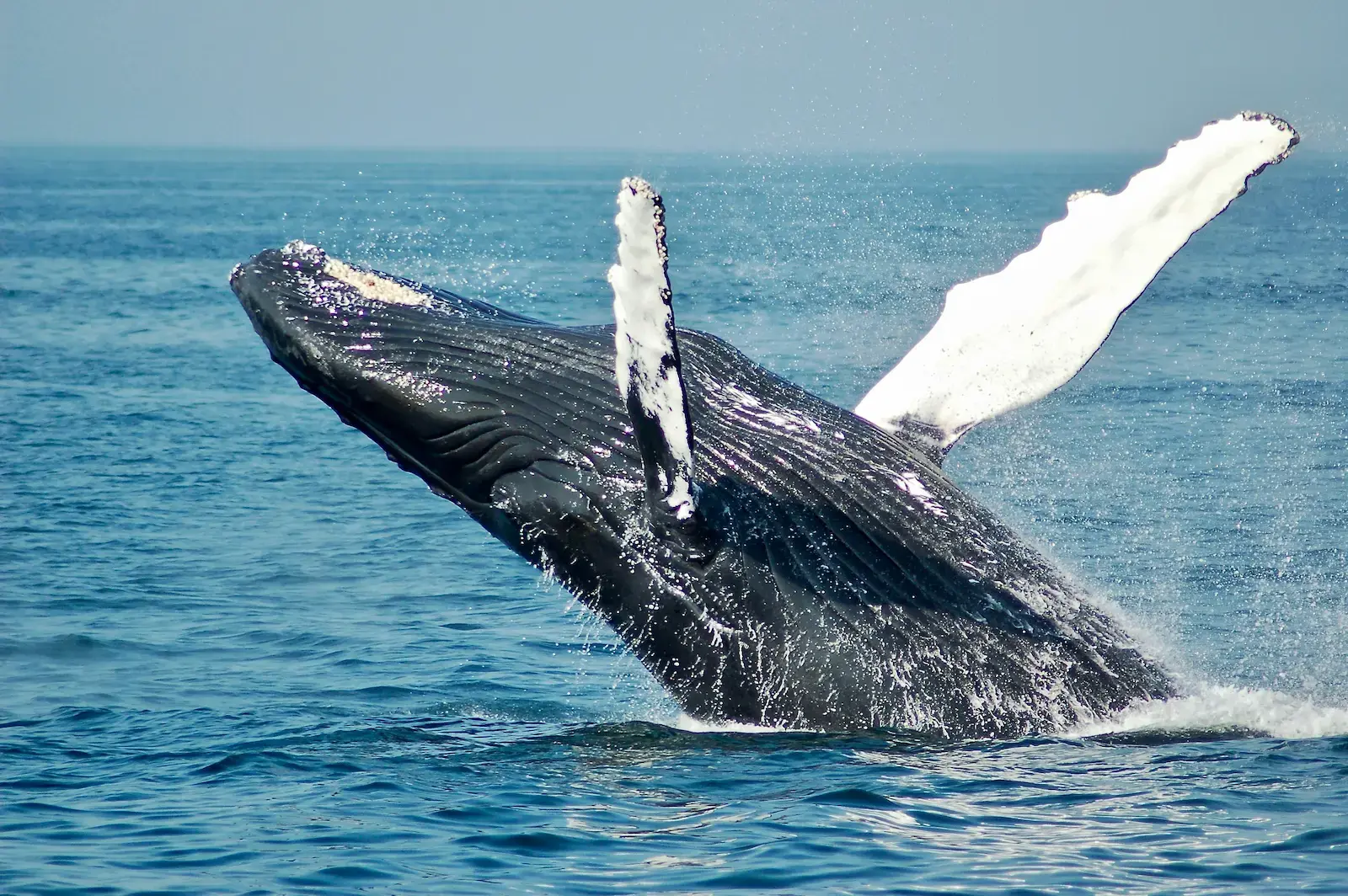
Humpback Whale | Photo: Todd Cravens
The Gulf of Cádiz and the Andalusian Atlantic coastline form another major region for marine wildlife in Spain. Here, the Atlantic opens up before reaching the Strait, making the area particularly important for species moving between Atlantic and Mediterranean waters.
The orca is again one of the key species, especially because of the Strait of Gibraltar and Gulf of Cádiz population, but it is far from the only one. Dolphins, sea turtles, seabirds and species associated with estuaries, salt marshes, beaches, river mouths and open waters may also be found here.
In this region, marine wildlife watching means looking both out to sea and along the coast. Marshes, salt pans and river mouths can attract waterbirds and seabirds, while open waters may serve as feeding grounds or migration routes for cetaceans. That is why areas around Cádiz, Huelva and the connection with Doñana are especially valuable for people interested in marine and coastal wildlife.
This is also an area where it is important to be particularly cautious about promises of sightings. Some species may be seasonal or move depending on food availability, so the key is not to guarantee encounters but to understand what makes these waters important for wildlife.
5. Galicia and the North Atlantic, marine wildlife among estuaries, islands and open sea
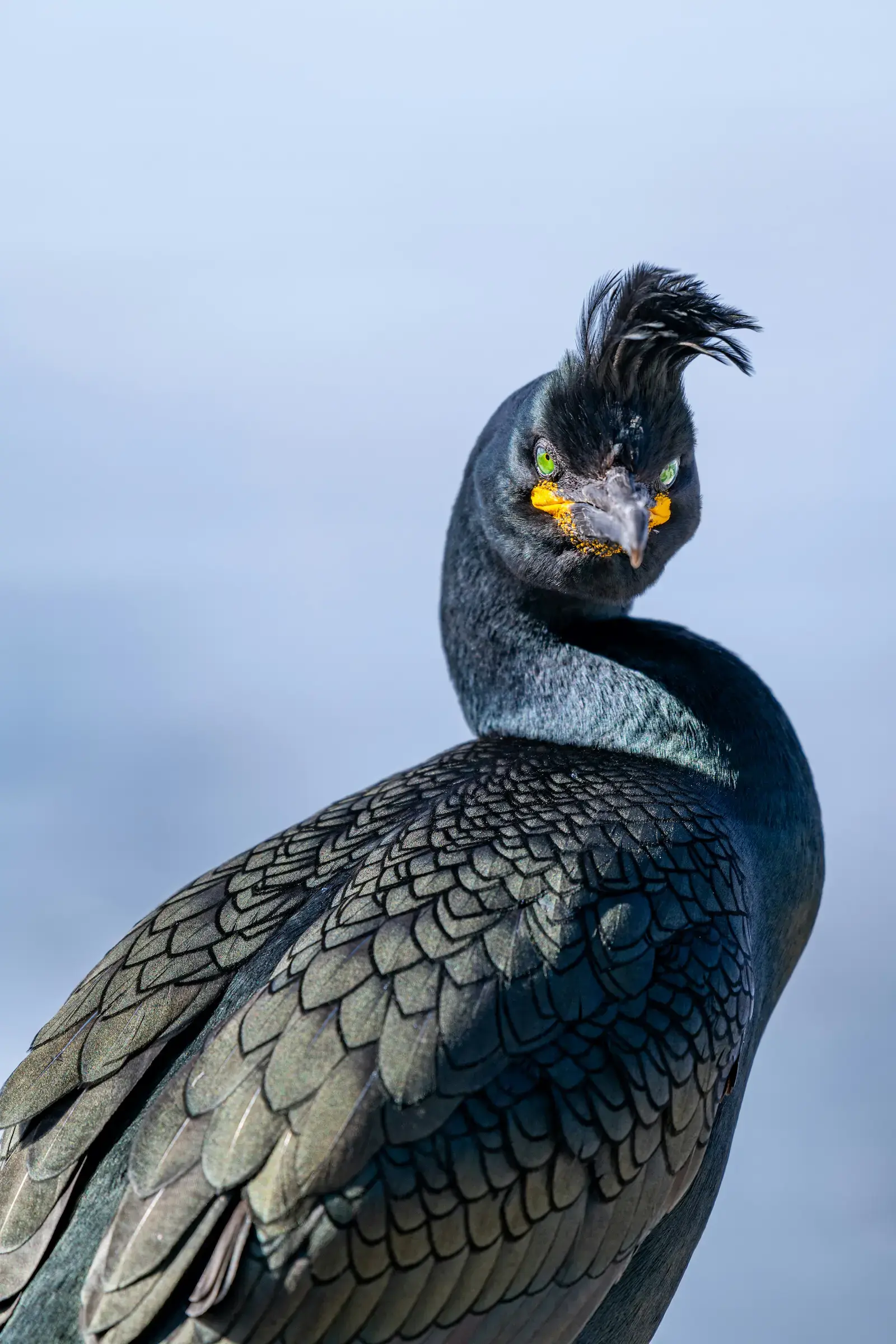
European Shag | Photo: Kjell-Jostein
Galicia is one of Spain’s major marine regions thanks to its direct connection with the Atlantic, its rías, headlands, islands, cliffs and protected areas such as the Atlantic Islands of Galicia Maritime-Terrestrial National Park. Here, marine wildlife watching is closely linked to seabirds, cetaceans, rocky coastlines and migration routes.
Species that may occur in Galician waters include common dolphins, bottlenose dolphins, the harbour porpoise and fin whales. The Galician-Cantabrian Migratory Corridor SPA, which extends around the entire Galician coast, is an important area for marine biodiversity and supports populations of harbour porpoises, common dolphins, bottlenose dolphins and fin whales.
The harbour porpoise deserves a special mention because it is the smallest cetacean in the North Atlantic. In Spain, it occurs regularly in the North Atlantic and South Atlantic marine subdivisions, while it is considered extinct from the Spanish Mediterranean.
Galicia is also highly important for seabirds such as European shags, European storm petrels, black-legged kittiwakes, shearwaters and other species that use the coast for breeding, feeding or migration. In this context, observing marine wildlife does not always mean watching large animals leap from the water. Sometimes it means looking at a cliff, an island or a coastline and recognising the life that depends on that boundary between land and ocean.
6. Cantabrian Sea, seabirds and cetaceans in northern waters
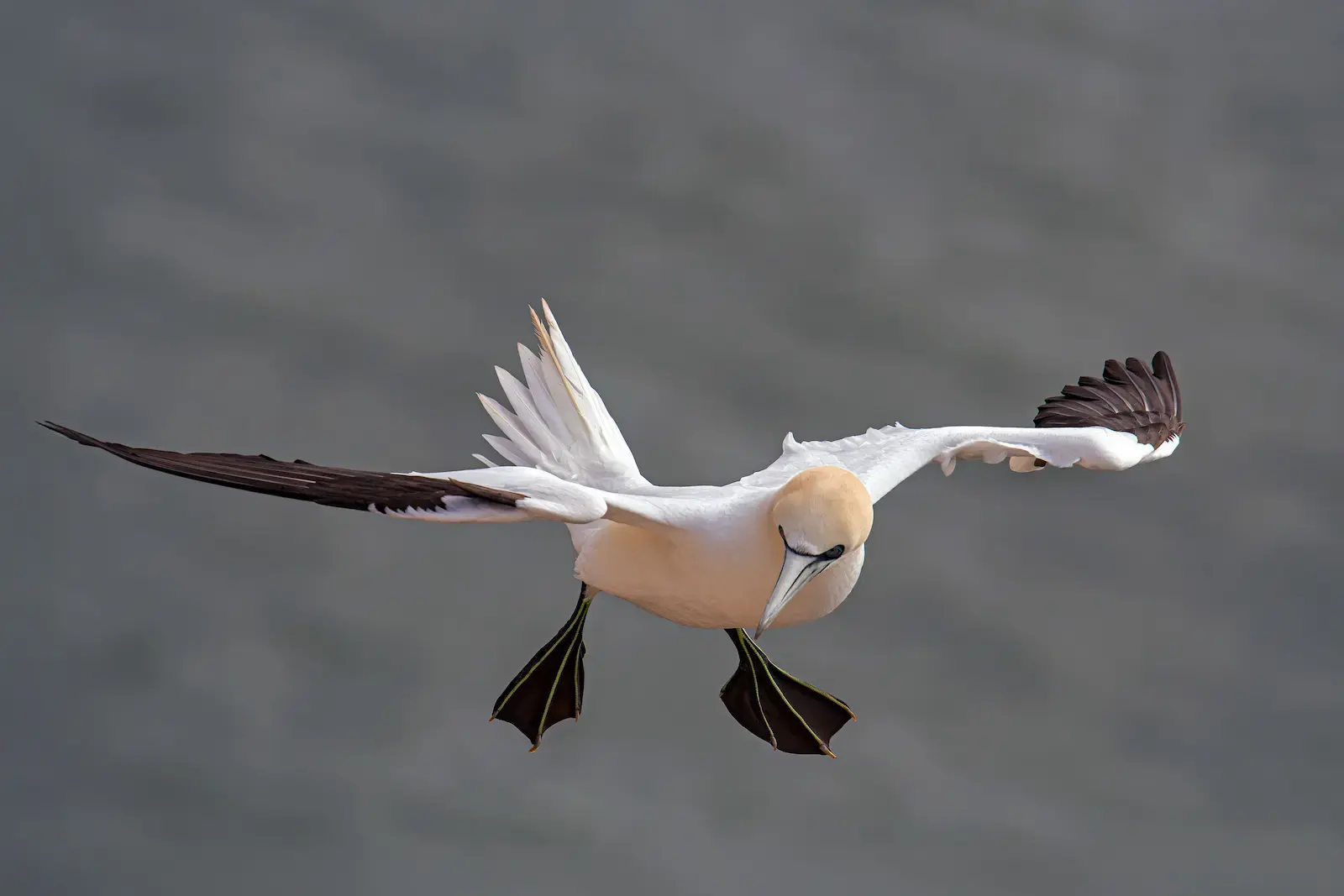
Northern Gannet | Photo: Georg Wietschorke
The Cantabrian Sea, along the coasts of Asturias, Cantabria and the Basque Country, offers a very different type of marine landscape. The sea is generally more open and exposed than in the Mediterranean, with cliffs, beaches, rías, harbours, headlands and waters where cetaceans and Atlantic seabirds may occur.
Species recorded or observed in this region include common dolphins, bottlenose dolphins, harbour porpoises, long-finned pilot whales, striped dolphins, fin whales and, in certain circumstances, other species passing through offshore waters. MITECO also notes that the harbour porpoise is regularly present in the North Atlantic marine subdivision, where it finds important feeding habitats.
The Cantabrian Sea is also particularly interesting for seabirds. Northern gannets, shearwaters, cormorants, gulls, skuas and other species can be seen from headlands, harbours or coastal viewpoints, especially during migration, storms or weather conditions that bring pelagic species closer to shore.
Unlike some destinations more closely associated with organised cetacean-watching trips, many observations here depend more heavily on patience, the chosen coastline and sea conditions. That is part of what makes the Cantabrian Sea so special: it encourages you to watch the horizon, interpret flight patterns, understand the wind and realise that marine wildlife does not always reveal itself easily.
7. Canary Islands, one of Spain’s great regions for cetacean watching
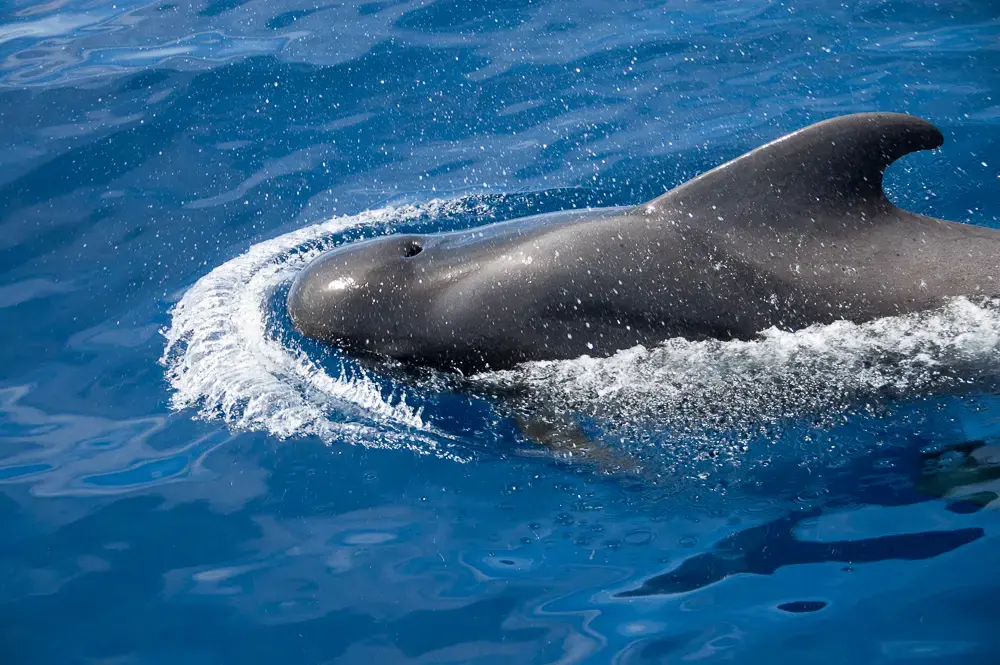
Short-finned Pilot Whale | Photo: Gustavo Perez
The Canary Islands are one of the strongest destinations in Spain for marine wildlife, particularly when it comes to cetaceans. The Canary Islands Government explains that the islands have deep waters very close to the coast, which favours the presence of cetacean communities, and states that up to 28 cetacean species have been documented across the archipelago.
Some of the most representative species include the short-finned pilot whale, bottlenose dolphin, Atlantic spotted dolphin, striped dolphin, Risso’s dolphin, sperm whale, Cuvier’s beaked whale, Blainville’s beaked whale and Bryde’s whale. Some can be observed more frequently in certain areas or on specialist outings, while others are much harder to see and depend heavily on distance, depth and conditions.
Sea turtles are also present. Five species of sea turtle have been recorded in the Canary Islands, including the loggerhead turtle, which is the most frequent, as well as the green turtle, hawksbill turtle, olive ridley turtle and leatherback turtle.
The archipelago is also important for seabirds. Species found in Canary Island waters include Cory’s shearwater, Bulwer’s petrel, little shearwater, European storm petrel and Madeira storm petrel, which use cliffs, rocky outcrops and islets for breeding, feeding and resting.
What makes the Canary Islands particularly interesting is that marine wildlife can feel very close without being easy or guaranteed. Deep waters lie close to shore, cetaceans can move between islands and some areas have become well known for wildlife-watching trips. Even so, these are still wild animals, and every encounter depends on the sea, the behaviour of the animals and how responsibly the activity is carried out.
What marine species can you see in Spain depending on the type of area?
Although organising marine wildlife by region is useful, it also helps to think in terms of landscape. In deep, open waters, cetaceans such as rorquals, sperm whales, beaked whales, pilot whales and dolphins may occur, while in coastal waters, bays and shallower areas you may find dolphins, turtles, seabirds and species associated with rocky seabeds or seagrass meadows.
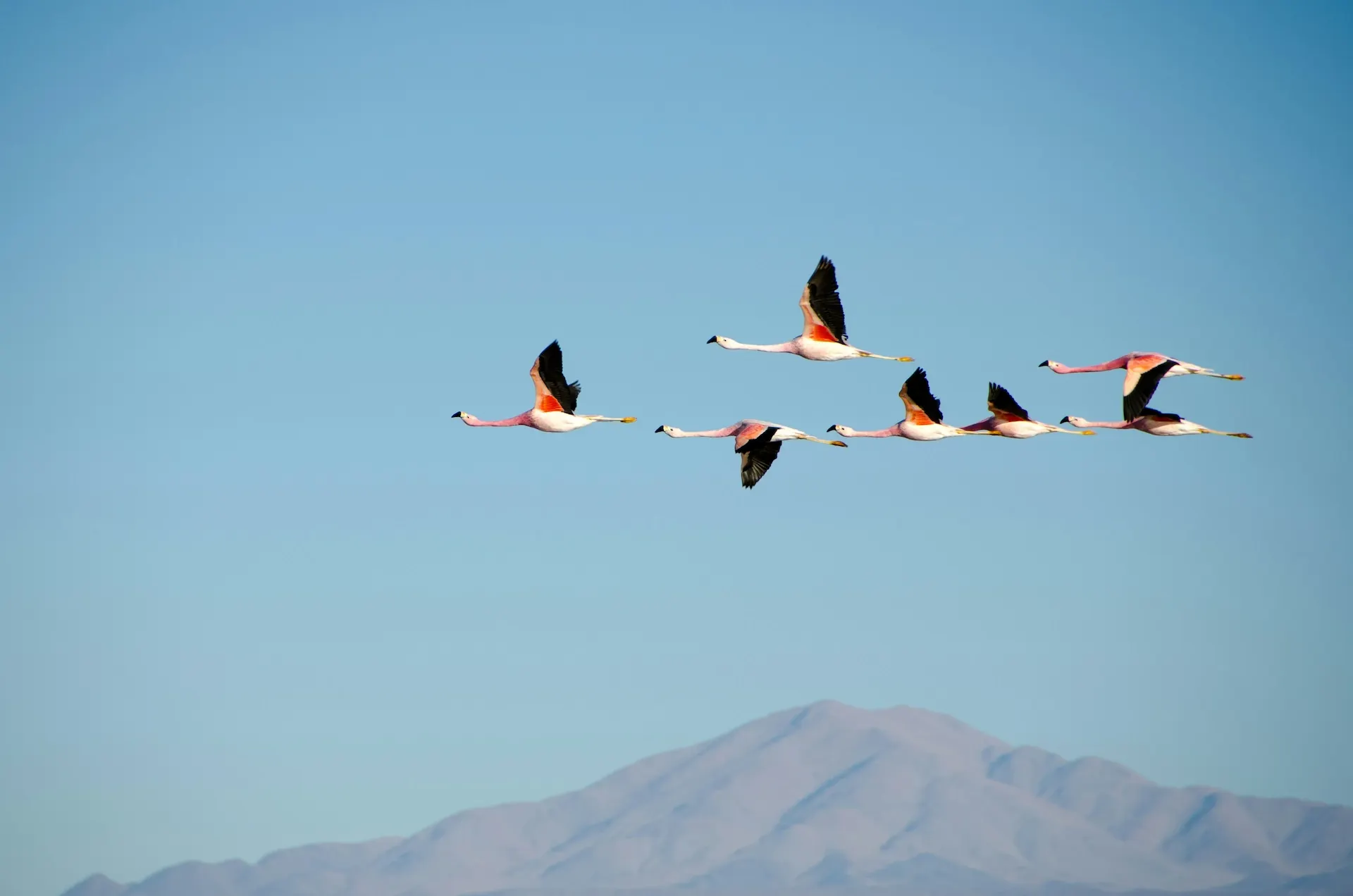
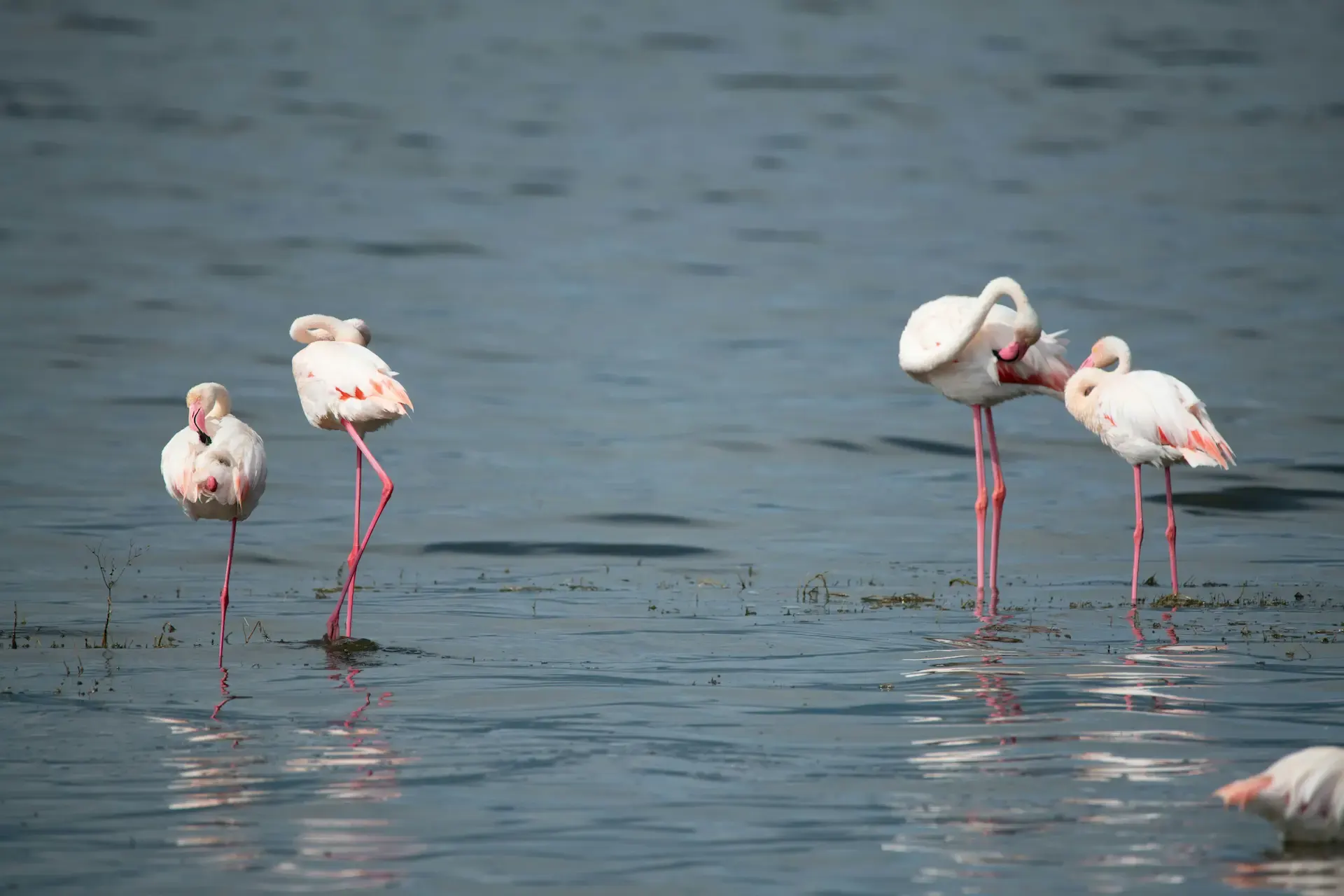
In coastal wetlands, salt pans, marshes and deltas, marine wildlife overlaps with waterbirds and waders. Flamingos, terns, gulls, avocets, black-winged stilts, herons and cormorants can all form part of the experience, even though not all of them are strictly marine in the same sense as a cetacean or sea turtle.
On cliffs, islands and islets, breeding and migratory seabirds are often the main attraction. Shearwaters, storm petrels, cormorants and gulls need quiet areas for breeding, feeding and resting, and they often depend on inaccessible places precisely because these reduce human disturbance.
That is why, when talking about marine wildlife in Spain, it helps to broaden your perspective. Not everything happens underwater and not everything has to be observed from a boat. Sometimes the best way to discover marine life is from a headland, coastal viewpoint, beach, island or wetland connected to the sea.
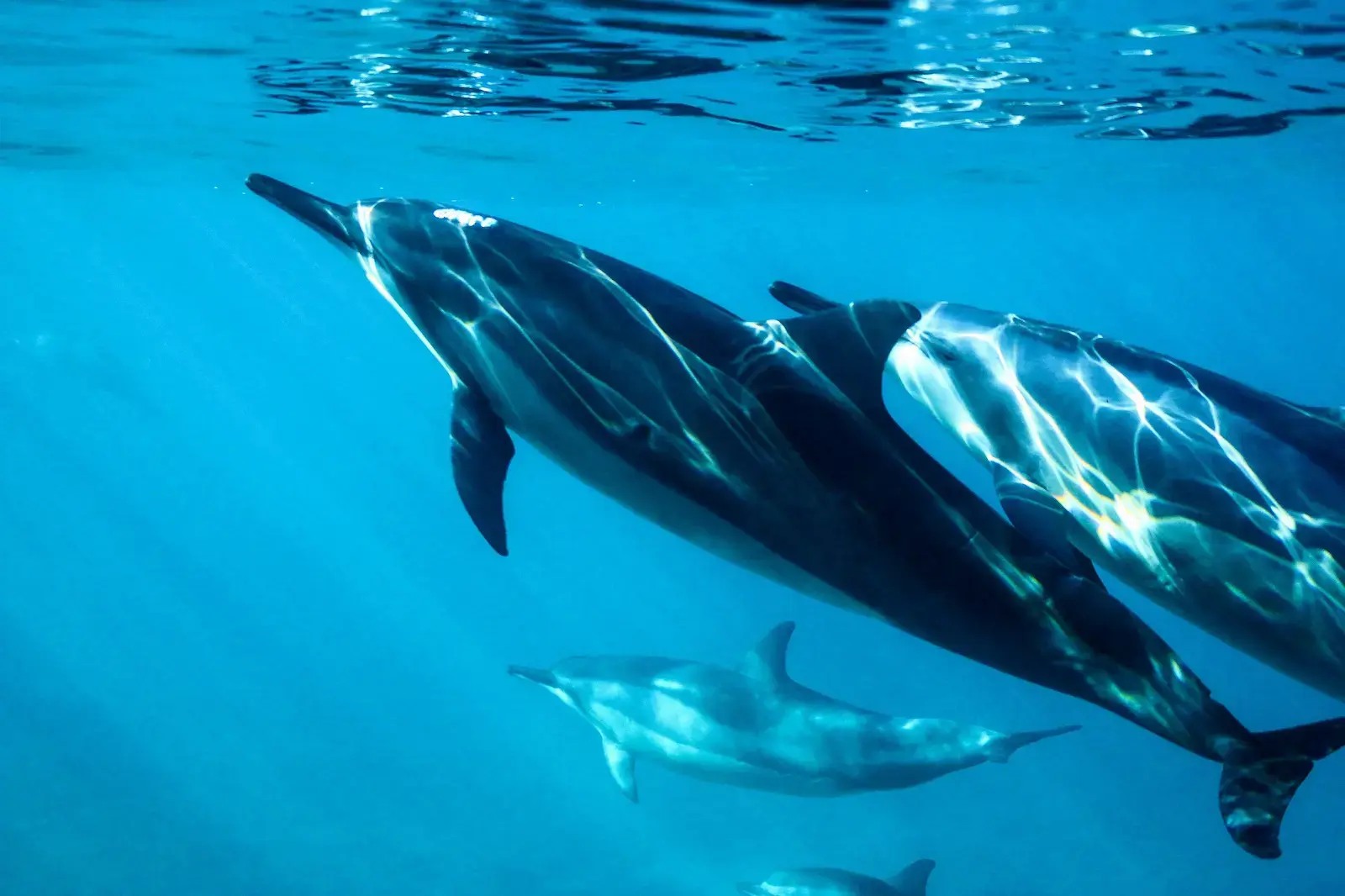
Group of dolphins | Photo: TJ Fitzsimmons
Tips for watching marine wildlife without disturbing it
The most important thing when watching marine wildlife in Spain is to remember that we are entering the territory of wild animals. In the case of cetaceans, sea turtles or seabirds, both distance and human behaviour can make a major difference.
If you go out by boat, it is advisable to choose authorised cetacean-watching companies, follow the crew’s instructions and avoid any activity that involves chasing, surrounding, touching or feeding animals. In addition, Royal Decree 1727/2007 establishes specific protection measures designed to reduce disturbance to cetaceans during this type of activity.
For seabirds, the best approach is to observe from paths, viewpoints, beaches or permitted areas without approaching breeding colonies or entering restricted zones. It is also worth researching before you go, because some species are more likely at certain times of year, others are easier to see from specific places and many depend on sea conditions, wind, light or food availability.
Keeping realistic expectations makes the experience much more enjoyable, even if the species you had in mind does not appear. Marine wildlife watching should not become a race to see as many animals as possible, but a way of better understanding the seas and coastlines around us.
A different way to look at the sea
Marine wildlife in Spain is much more diverse than many people realise. Fin whales and turtles can pass through the Mediterranean, unique seabirds breed in the Balearic Islands, species move between two seas through the Strait, the Atlantic supports cetaceans and migratory birds in Galicia and the Cantabrian Sea, and the deep waters close to shore make the Canary Islands an important area for many marine species.
Each region has its own wildlife, rhythms and ways of observing it. Some invite you to watch the horizon, others to explore cliffs, head out with specialist guides, visit coastal wetlands or learn to recognise seabirds that can easily go unnoticed if you do not know where to look.
At NatSnap, we will continue creating guides to help you discover animals, destinations and nature experiences from a responsible perspective, without promising sightings and without putting the wildlife we want to observe at risk.
Frequently asked questions about marine wildlife in Spain
Where can you see marine wildlife in Spain?
Marine wildlife can be seen in many parts of Spain, especially in the Mediterranean, Balearic Islands, Strait of Gibraltar and Alboran Sea, Gulf of Cádiz, Galicia, Cantabrian Sea and Canary Islands. Each area has different marine landscapes and species.
What marine wildlife can you see in Spain?
In Spain, you may see dolphins, fin whales and other rorquals, sperm whales, pilot whales, beaked whales, orcas, harbour porpoises, sea turtles and many seabirds such as shearwaters, storm petrels, cormorants, gulls and terns.
Where is it easiest to see cetaceans in Spain?
The Canary Islands are one of the best-known areas for cetacean watching because deep waters are found close to the coast. The Strait of Gibraltar, Alboran Sea, Levantine-Balearic Mediterranean, Galicia and the Cantabrian Sea are also important, although the likelihood of sightings depends on the species, season and sea conditions.
What sea turtles can be seen in Spain?
The loggerhead turtle is one of the most frequently encountered sea turtles in Spanish waters. Other species can also occur, including green turtles, hawksbill turtles, leatherback turtles and olive ridley turtles, although their presence varies greatly depending on the region.
What is the best time of year to watch marine wildlife in Spain?
It depends heavily on the area and species. Some species are present throughout the year, while others are more visible during migration, seasonal movements, feeding periods or specific moments in their natural cycle.
Can marine wildlife sightings be guaranteed?
No. Marine wildlife is wild and moves according to food availability, weather, currents, breeding, migration and many other factors. Sightings should therefore never be treated as guaranteed, but as an opportunity to discover the sea in a respectful way.