Spain is one of Europe’s great territories for observing steppe birds. Great Bustards, Little Bustards, sandgrouse, Stone-curlews, Lesser Kestrels, Montagu’s Harriers and Dupont’s Larks form part of a landscape that does not always receive as much attention as wetlands or large forests, but which has enormous value for birdwatching and conservation.
When we talk about steppe birds in Spain, we are not only talking about natural steppes. In many cases, we are talking about agricultural pseudo-steppes: cereal plains, fallows, rough ground, dry grasslands, dryland farming mosaics and open areas with little tree cover. These are wide, apparently empty landscapes where every detail matters: a silhouette on the horizon, a distant call, a flock taking off or a female disappearing into low vegetation.
That is why knowing where to see steppe birds in Spain does not mean looking for exact coordinates. It means understanding which habitats they use, when they are most detectable, which broad areas hold important populations and how to observe them without adding pressure to species that, in many cases, are in decline.
What are steppe birds?
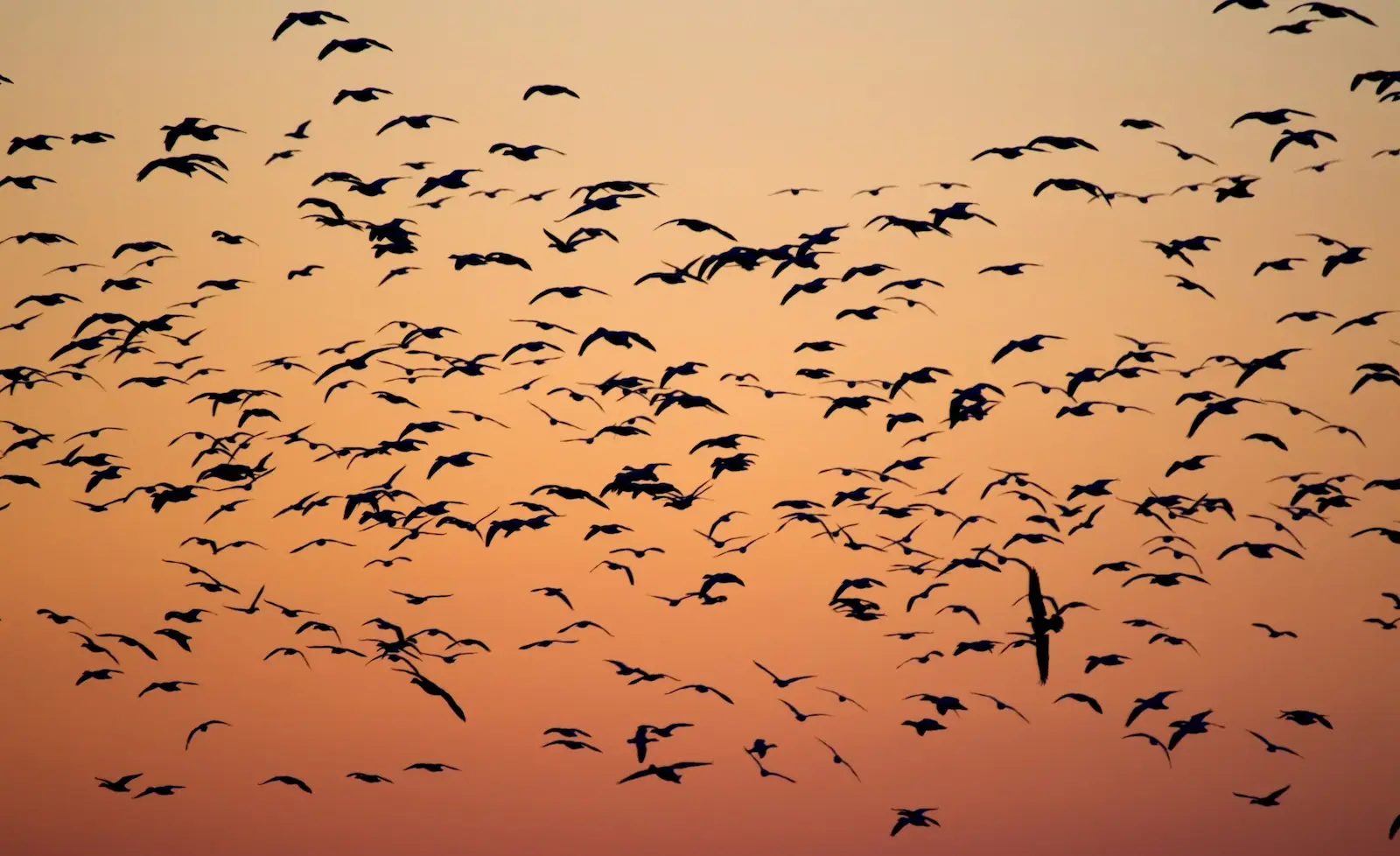
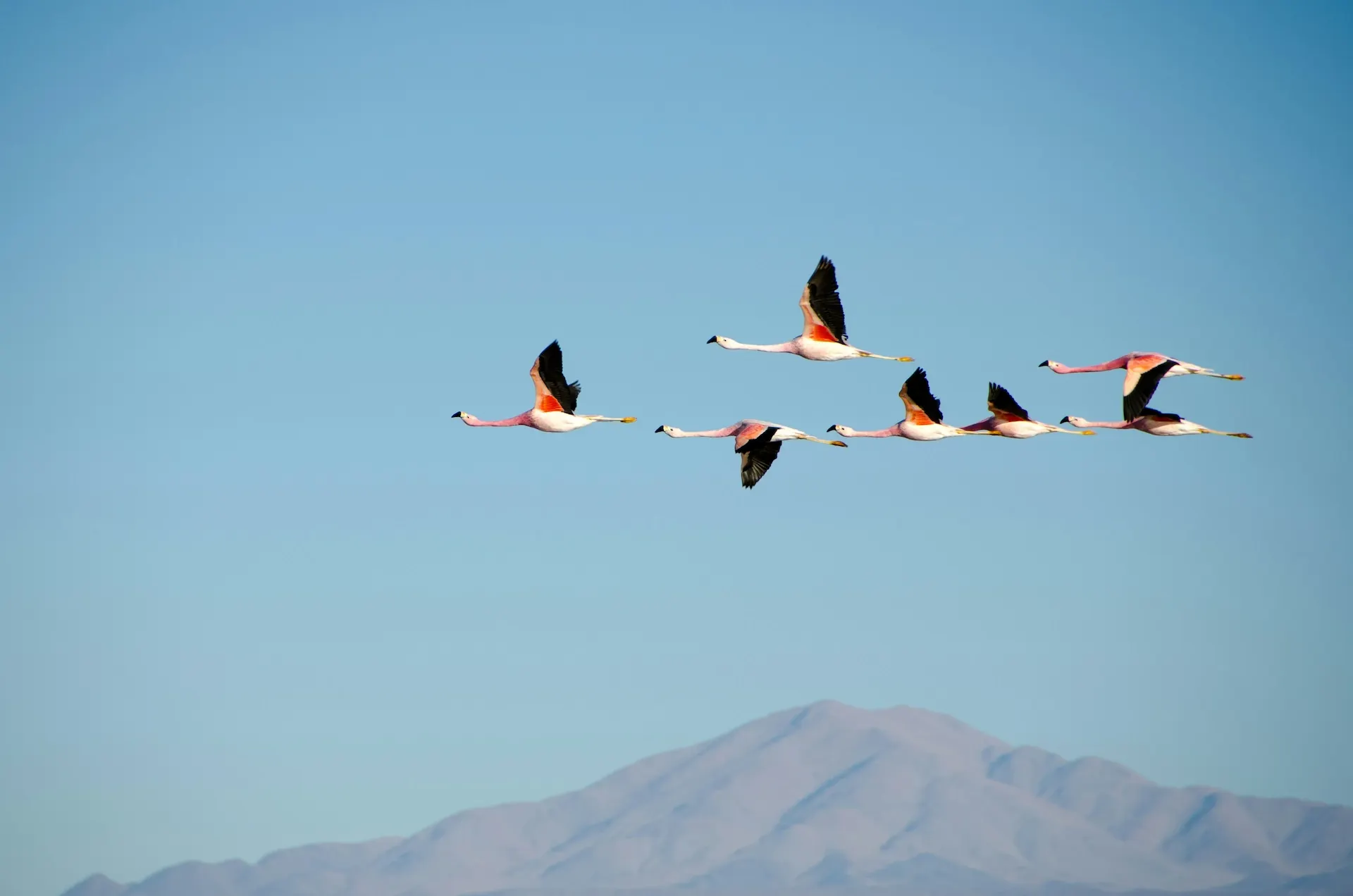
Birds in flight | Photo: Barth Bailey
Steppe birds are species adapted to open habitats, with little vertical vegetation and broad visibility of the surrounding landscape. Many depend on extensive agricultural landscapes, dry grasslands, fallows, cereal plains or semi-arid areas where they can feed, breed and detect predators from a distance.
In Spain, this group includes highly emblematic species such as the Great Bustard ‘Otis tarda’, the Little Bustard ‘Tetrax tetrax’, the Pin-tailed Sandgrouse ‘Pterocles alchata’, the Black-bellied Sandgrouse ‘Pterocles orientalis’, and the Eurasian Stone-curlew ‘Burhinus oedicnemus’. Other birds are also associated with these habitats, such as the Lesser Kestrel ‘Falco naumanni’, the Montagu’s Harrier ‘Circus pygargus’, the Dupont’s Lark ‘Chersophilus duponti’, the Greater Short-toed Lark ‘Calandrella brachydactyla’, the Calandra Lark ‘Melanocorypha calandra’ or the Collared Pratincole ‘Glareola pratincola’, depending on the area and habitat type.
The fact that MITECO has a specific strategy for threatened birds linked to agricultural and steppe environments already gives an idea of the importance and fragility of this group. Many of these species depend on low-intensity agricultural systems, and when the landscape changes too quickly, their populations feel the impact.
The paradox is that some of the best places to see steppe birds do not look spectacular at first glance. There are not always mountains, lagoons or dense forests. Sometimes there is a secondary road, a cereal plain, a fallow field, a ploughed field and a lot of silence. But for those who know how to look, that landscape is full of signals.
Great Bustard, the great species of the cereal plains
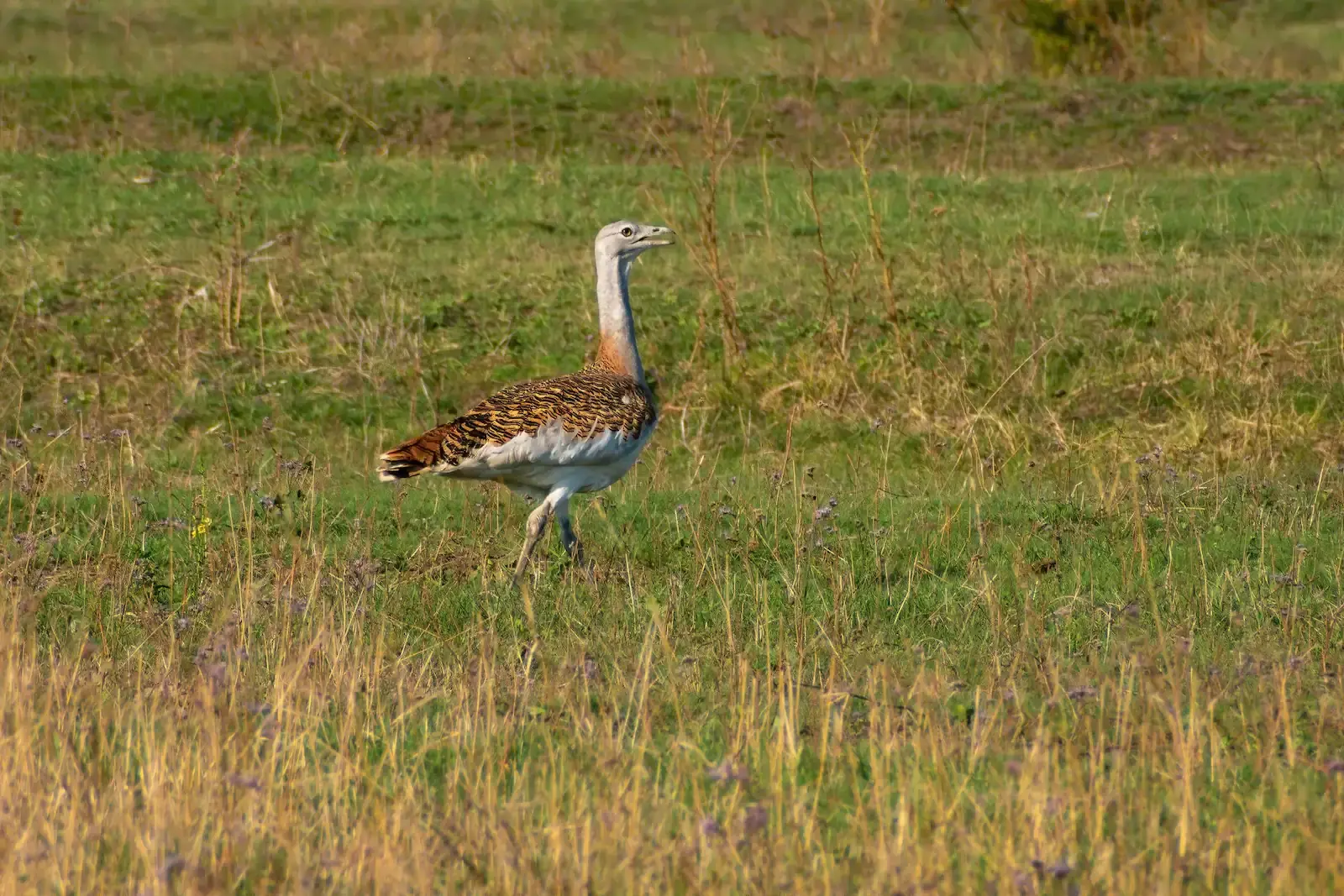
Great Bustard | Photo: Péter Kövesi
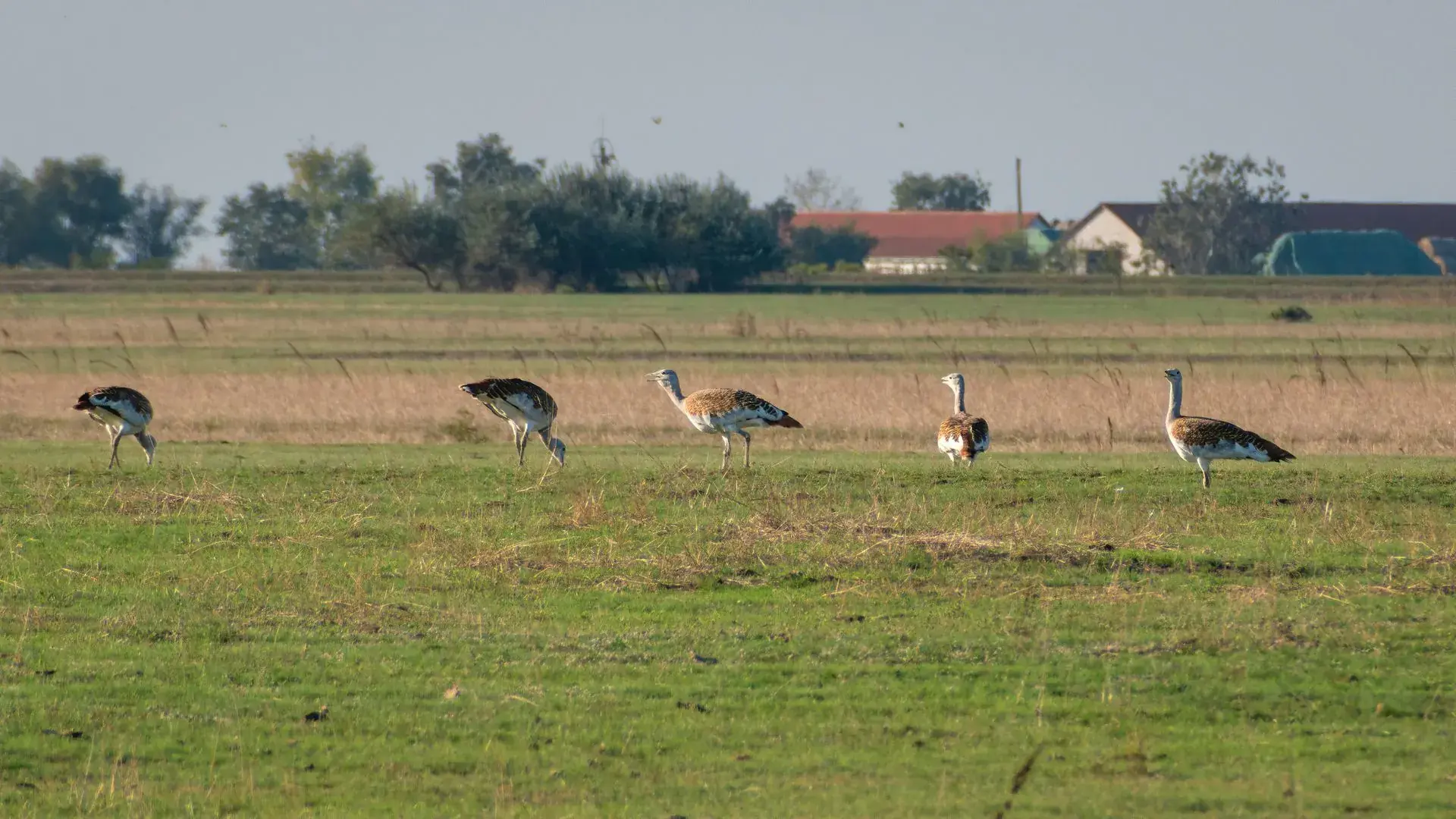
The Great Bustard, Otis tarda, is probably the most iconic steppe bird in Spain. Its size, breeding behaviour and presence in large open spaces make it one of the most sought-after birds for birdwatchers and wildlife photographers.
Males are especially striking during the breeding season, when they perform their well-known lekking displays. At these moments, Great Bustards use open areas where males display and females select mates. From an observation perspective, it is one of the great spectacles of Iberian wildlife, but also one of the moments when the greatest caution is needed.
Its largest and most continuous distribution areas in Spain are concentrated in central Castile and León and Castile-La Mancha, especially in large cereal plains and open agricultural mosaics. There are also important populations in Extremadura, Madrid, Aragón and Andalusia, although distribution varies greatly depending on the territory.
To observe Great Bustards, the ideal approach is to look for large cereal plains, dryland farming areas, fallows and open landscapes with good visibility. There is no need to get too close. In fact, you should not. A spotting scope and observation from tracks or permitted points are usually the best way to enjoy the species without interfering with its behaviour.
The Great Bustard is not a species to chase by car or approach on foot across open fields. If it raises its neck, walks away, changes direction or eventually flies, a limit has probably already been crossed.
Little Bustard, an increasingly difficult species to observe
The Little Bustard, Tetrax tetrax, is one of the most interesting steppe birds and, at the same time, one of the most worrying. At first glance, it may seem less spectacular than the Great Bustard, but for many birdwatchers it is just as exciting, or even more so, precisely because it is becoming increasingly difficult to detect in many areas.
The male in breeding plumage is unmistakable, with its black and white neck pattern and territorial behaviour. In spring, it can produce its characteristic dry call, very useful for locating it in cereal plains, grasslands and agricultural mosaics. Outside the breeding season, observation can be more complex, as the species gathers in groups, moves around and becomes less obvious.
The decline of the Little Bustard in Spain is very severe. Its situation is especially delicate: in recent decades it has suffered a very marked reduction in distribution and population in Spain. Therefore, although it remains a key species for understanding agricultural steppes, it should not be presented as an easy observation.
The best opportunities to see it are usually found in large open cereal landscapes, grasslands, fallows and extensive agricultural areas, especially in Castile-La Mancha, Castile and León, Extremadura, Aragón and some parts of Andalusia. But always with one clear idea: seeing Little Bustards does not depend only on going to “a good area”, but on understanding the season, behaviour, weather, agricultural use and level of human pressure.
For a birdwatching trip, this is one of those species where going with a local guide or a well-designed experience can make a real difference. Not because it guarantees a sighting, but because it helps interpret the landscape with proper judgement.
Pin-tailed Sandgrouse and Black-bellied Sandgrouse, specialists of open drylands
Sandgrouse are birds closely linked to dry, open habitats with low vegetation cover. Both the Pin-tailed Sandgrouse, Pterocles alchata, and the Black-bellied Sandgrouse, Pterocles orientalis, are highly sought-after by observers and photographers, but they also require patience and distance.
The Pin-tailed Sandgrouse is usually associated with fallows, dry grasslands, extensive cereal crops and open dryland areas. In winter, it can form flocks and, in some contexts, mix with other steppe species. The Pin-tailed Sandgrouse is closely linked to open agricultural environments, especially fallows, dry grasslands, extensive cereal crops and dryland areas.
The Black-bellied Sandgrouse, meanwhile, tends to occupy arid and semi-arid areas, with low vegetation and very open landscapes. In the Black-bellied Sandgrouse, breeding and wintering areas overlap to a large extent, although the winter distribution may become more concentrated.
To observe sandgrouse, it is not enough to look at any open plain. They are discreet, highly cryptic birds with a great ability to go unnoticed. They are often detected first by flight, by call or through the observer’s experience in recognising the kind of terrain where they may occur.
In Spain, some of the broad areas of interest for sandgrouse are found in steppe landscapes of Castile-La Mancha, the Ebro Valley, Monegros, semi-arid areas of the south-east, Extremadura, inland Andalusia and certain island or arid sectors, depending on the species. The key is to look for extensive drylands, fallows, rough ground and open plains, while avoiding entering plots or approaching perched flocks.
Eurasian Stone-curlew, the steppe bird with a nocturnal gaze
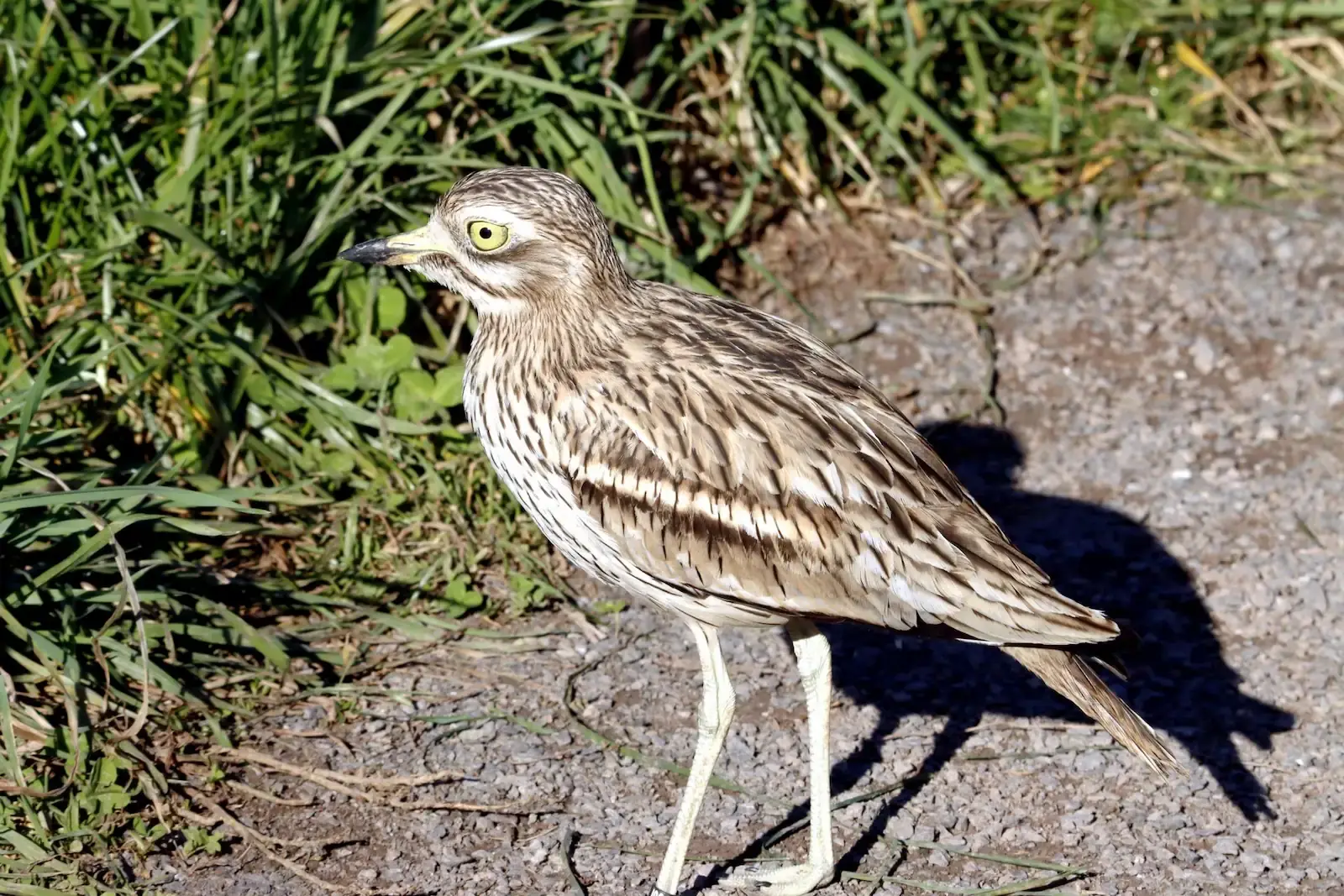
Eurasian Stone-curlew | Photo: Patrice Schoefolt
The Eurasian Stone-curlew, Burhinus oedicnemus, has a different presence within the world of steppe birds. Although it is related to waders, it is often associated with dry, open, stony, agricultural or semi-arid terrain. Its appearance, large yellow eyes and crepuscular and nocturnal habits make it a very special species.
The Spanish Inventory of Natural Heritage and Biodiversity describes the Eurasian Stone-curlew as a bird of flat or gently undulating terrain, often arid or semi-arid, with little or no tree cover. This breadth of habitat explains why it can appear in different open landscapes, from drylands and rough ground to certain agricultural or steppe areas.
Unlike the Great Bustard or the Little Bustard, the Stone-curlew can be harder to observe well during the day. Its cryptic plumage, tendency to remain still and crepuscular activity mean that many observations depend more on hearing, timing and knowledge of the terrain than on direct visual searching.
To photograph it or observe it in detail, caution is essential. This is not a species to illuminate invasively with torches or chase at dusk. In responsible guided outings, the ideal approach is to work from a distance, with knowledge of local behaviour and without altering its resting or feeding areas.
Major areas to see steppe birds in Spain

Globe | Foto: Colin White
Spain has many suitable landscapes for observing steppe birds, but it is better to talk about broad areas rather than exact points. Many of these species are sensitive, some are in decline, and others depend on specific places for breeding, resting or feeding.
Castile and León is one of the most important regions for steppe birds. Tierra de Campos, La Moraña and other cereal plains offer extensive habitats for species such as Great Bustard, Little Bustard, Montagu’s Harrier, Lesser Kestrel, sandgrouse and other birds associated with dryland farming. It is a highly relevant area for those looking for large open landscapes and classic steppe bird observation.
Castile-La Mancha is also key, especially in areas of La Mancha, cereal fields, open plains and agricultural mosaics. It is an important region for Great Bustards, Little Bustards, sandgrouse, Stone-curlews and other species linked to extensive agricultural environments. Its scale makes planning essential, because not all open areas have the same interest or the same conservation status.
Extremadura combines plains, open dehesas, extensive crops and cereal areas where many steppe species can be observed. The Extremaduran plains are especially well known among international birdwatchers, not only for the Great Bustard, but also for the presence of other open-country birds and raptors associated with these landscapes.
The Ebro Valley, Monegros and Belchite form another major setting for steppe birds. Here, arid landscapes, salt flats, drylands and open areas appear, very interesting for sandgrouse, Stone-curlews, larks and other species adapted to dry habitats. This is one of the areas where the difference between “open countryside” and true steppe habitat becomes very clear.
Inland Andalusia preserves important areas for birds of agricultural and steppe environments, although the situation varies greatly depending on the province and the way the land is managed. Cereal farmland, plains, extensive crops and open areas can be interesting for Great Bustards, Little Bustards, harriers, sandgrouse, pratincoles and Stone-curlews. The Andalusian Regional Government has a Recovery and Conservation Plan for Steppe Birds, which reflects the importance and vulnerability of this group in the region.
The semi-arid south-east can also be interesting for those looking for species adapted to dry, open landscapes with low vegetation. It does not always match the classic image of cereal plains, but it can offer good opportunities to observe Stone-curlews, sandgrouse and other birds of arid habitats.
In all these cases, the recommendation is the same: work with broad areas, public tracks, observation from a distance and, whenever possible, guided outings with local professionals who know the limits of the terrain and the sensitivity of each species.
Best time to observe steppe birds
Spring is one of the best times to observe steppe birds because it coincides with breeding activity. Male Great Bustards perform their displays, Little Bustards are more detectable through song and territorial behaviour, and many species show increased activity. But precisely for that reason, it is also the season that requires the greatest care.
During the breeding season, you should not enter crops, approach display areas, chase birds or try to get photographs by altering behaviour. In species such as Great Bustards or Little Bustards, repeated disturbance can affect breeding, habitat use or the presence of individuals in an area.
Autumn and winter are also very interesting. Some species form flocks, use specific feeding areas or gather in open areas where they can be observed from a distance. During these months, it can be easier to detect movements, concentrations or changes in habitat use, although some species lose part of the visibility associated with display behaviour.
The first and last hours of the day are often especially good, both because of the light and because of the activity of many species. In summer, heat can greatly reduce activity during the middle of the day, while in winter fog, wind or rain can shape observation conditions.
For photographers, this means planning is just as important as equipment. It is not enough to know that a species is present in an area. You need to understand when it moves, how it responds to distance, what backgrounds the landscape offers, where it can be observed from without causing disturbance and what behaviour can reasonably be expected.
How to observe steppe birds without disturbing them

Hombre observando con prismáticos| Foto: Pavel Danilyuk
Steppe birds live in open landscapes, which means they detect human presence very well. A car stopping badly, a person getting out in the middle of a track, a photographer walking across fields or a group getting too close can disturb the birds long before it seems obvious.
The first rule is not to leave tracks, authorised paths or permitted areas. Many of these habitats are crops, private plots or sensitive breeding areas. Entering them can disturb birds, damage crops and create conflict with landowners or land managers.
The second is to use suitable optics. Binoculars and a spotting scope allow observation from a distance without forcing approaches. In photography, a telephoto lens should not be an excuse to insist, but a tool to reduce impact.
It is also important to avoid approaching Great Bustard leks, Little Bustard song areas, sandgrouse flocks, roosts, water points or areas where birds are feeding. If a flock takes off, changes direction or walks away, the observation has already had an effect.
And, of course, exact locations of sensitive species should not be shared, especially during the breeding season. In steppe birds, a post with coordinates or overly specific references can increase pressure on areas that are already highly threatened.
Why steppe birds are in decline
The decline of many steppe birds cannot be explained by a single cause. It is the result of several accumulated changes in the agricultural landscape.
Agricultural intensification, the loss of fallows, the reduction of field margins and boundaries, the use of pesticides, the conversion of drylands into irrigated land, the disappearance of traditional mosaics, the expansion of intensive woody crops, infrastructure, power lines, urban pressure and poorly planned energy developments can all affect these species.
Many steppe birds need open landscapes, but not just any open landscape. They need food, tranquillity, suitable vegetation structure, safe breeding areas and enough territorial continuity. When the landscape becomes too simplified, intensified or fragmented, populations lose their ability to persist.
That is why observing steppe birds should not be separated from understanding their conservation. A Great Bustard on a cereal plain, a Little Bustard calling in spring or a flock of sandgrouse on a fallow field are not just beautiful observations. They are signs of a very fragile balance between agriculture, biodiversity and territory.
Trips and outings to see steppe birds
Steppe birds are a highly attractive group for birdwatching trips and wildlife photography, but they also require an especially careful form of observation. These are not species for improvising an exact route downloaded from the internet or chasing sighting points without context.
A good outing to observe steppe birds should take into account the season, species behaviour, minimum distance, permitted access, the condition of crops, weather conditions and the sensitivity of the area. It should also explain which species are likely, which are difficult, which observations depend more on luck and which behaviours should not be forced.
In these experiences, the value of a local guide or photographer is not only in “knowing where the birds are”. It is in knowing how to read the landscape, how to avoid disturbance, when to wait, when to step back and how to turn an apparently empty plain into a meaningful outing.
For NatSnap, this is precisely one of the types of experiences that best represents a responsible way of approaching wildlife: observing without invading, learning before photographing and understanding that the value of the trip is not only in seeing a species, but in understanding the territory that sustains it.
A landscape that looks empty, but is not
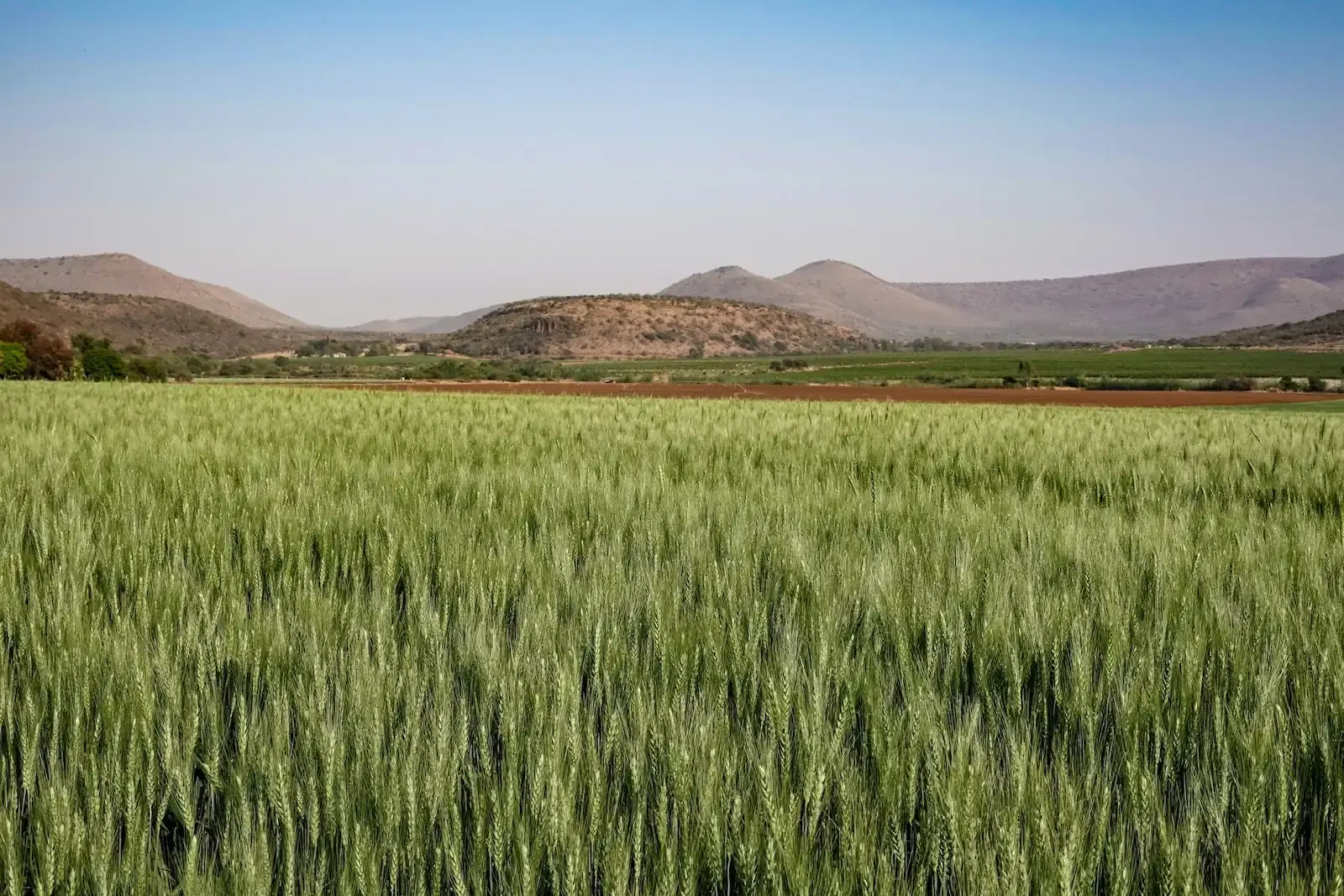
Landscape | Photo: Magda Ehlers
Steppe birds force you to look differently. They do not always appear nearby, they do not always show themselves clearly and they do not always turn an outing into a spectacular scene. But once you learn to read their landscapes, the plains no longer seem empty.
A Great Bustard silhouette on the horizon, the dry call of a Little Bustard, a flock of sandgrouse rising in the distance or the yellow stare of a Stone-curlew at dusk say much more than a simple species list. They speak of a discreet, demanding form of biodiversity deeply tied to the way we use the land.
That is why seeing steppe birds in Spain is not only about knowing which region to visit. It is about understanding what to look for, how to look and when to keep your distance. Because in these open landscapes, the best observation is often the one that lets the birds continue behaving as if we were not there.
Frequently asked questions about steppe birds in Spain
What are steppe birds?
Steppe birds are species adapted to open landscapes, with little tree cover and low vegetation. In Spain, many live in agricultural pseudo-steppes, cereal plains, fallows, dry grasslands, rough ground and semi-arid areas.
What steppe birds can be seen in Spain?
Some of the most representative species are the Great Bustard, Little Bustard, Pin-tailed Sandgrouse, Black-bellied Sandgrouse and Eurasian Stone-curlew. Other species associated with agricultural and open habitats may also appear, such as the Lesser Kestrel, Montagu’s Harrier, Dupont’s Lark, Calandra Lark or Collared Pratincole.
Where can you see Great Bustards in Spain?
Great Bustards are mainly observed in large cereal plains and open dryland farming areas. Castile and León, Castile-La Mancha, Extremadura, Madrid, Aragón and some parts of Andalusia are important regions, although they should always be observed from a distance and without approaching display areas.
Where can you see Little Bustards in Spain?
The Little Bustard can be found in extensive agricultural landscapes, grasslands, fallows and cereal plains, especially in regions such as Castile-La Mancha, Castile and León, Extremadura, Aragón and Andalusia. It is a species in sharp decline, so observation requires caution and local knowledge.
What is the best time to see steppe birds?
Spring is very interesting because of breeding activity, calls and displays, but it is also the most sensitive season. Autumn and winter can be good for observing flocks, local movements and feeding areas, always from a distance and without interfering.
Is it advisable to photograph steppe birds from the car?
In some contexts, the car can work as a less invasive observation point than approaching on foot, as long as it remains on permitted tracks, does not block access, does not get too close and does not pursue the birds. The key is that the animal does not change its behaviour because of our presence.
Why are many steppe birds threatened?
Many steppe birds are threatened by the loss and transformation of extensive agricultural habitat, agricultural intensification, the disappearance of fallows, conversion to irrigation, landscape fragmentation, certain infrastructures and human pressure in sensitive areas.
How can you observe steppe birds responsibly?
The best approach is to use binoculars or a spotting scope, stay on authorised tracks and observation points, avoid entering crops, avoid approaching display or breeding areas, never chase flocks, avoid publishing exact locations and always prioritise the birds maintaining their natural behaviour.