The Ebro Delta is one of Spain’s great birdwatching destinations. Its lagoons, rice fields, bays, beaches, salt marshes and reedbeds create a mosaic of habitats where flamingos, kingfishers, herons, waders, wetland raptors and seabirds live side by side.
If you are wondering what birds you can see in the Ebro Delta, the answer depends on the time of year, the type of habitat you visit and how patiently you watch. It is not simply about looking for a particular species, but about understanding how a living, constantly changing wetland works, where water, rice, wind and the seasons completely transform the birdwatching experience.
That is why a birdwatching trip in the Ebro Delta can be such a complete way to discover the natural richness of this area. In a single day, you may see flamingos feeding in shallow water, herons moving through rice fields, waders searching for food in the mud or a kingfisher flashing across a canal like a streak of blue.
Why the Ebro Delta is so special for birdwatching
The Ebro Delta is not a uniform landscape, and that is precisely one of its greatest strengths. Within just a few kilometres, freshwater habitats mix with brackish areas, lagoons, rice fields, beaches, dunes, shallow bays and marsh vegetation. For birds, this variety provides food, shelter, resting areas, breeding sites and stopover points during migration.
For birdwatchers, that diversity also changes the experience. One lagoon may be full of flamingos and waterfowl, while a narrow canal may hide kingfishers, herons or small birds associated with waterside vegetation. In the rice fields, meanwhile, the landscape becomes more open and species such as glossy ibises, egrets and black-winged stilts appear alongside other birds that use flooded fields for feeding.
Talking about the birds of the Ebro Delta is not simply about listing species; it is about a landscape where water, rice, the sea and the seasons set the rhythm of wildlife.
Greater flamingo, the Delta’s most iconic species
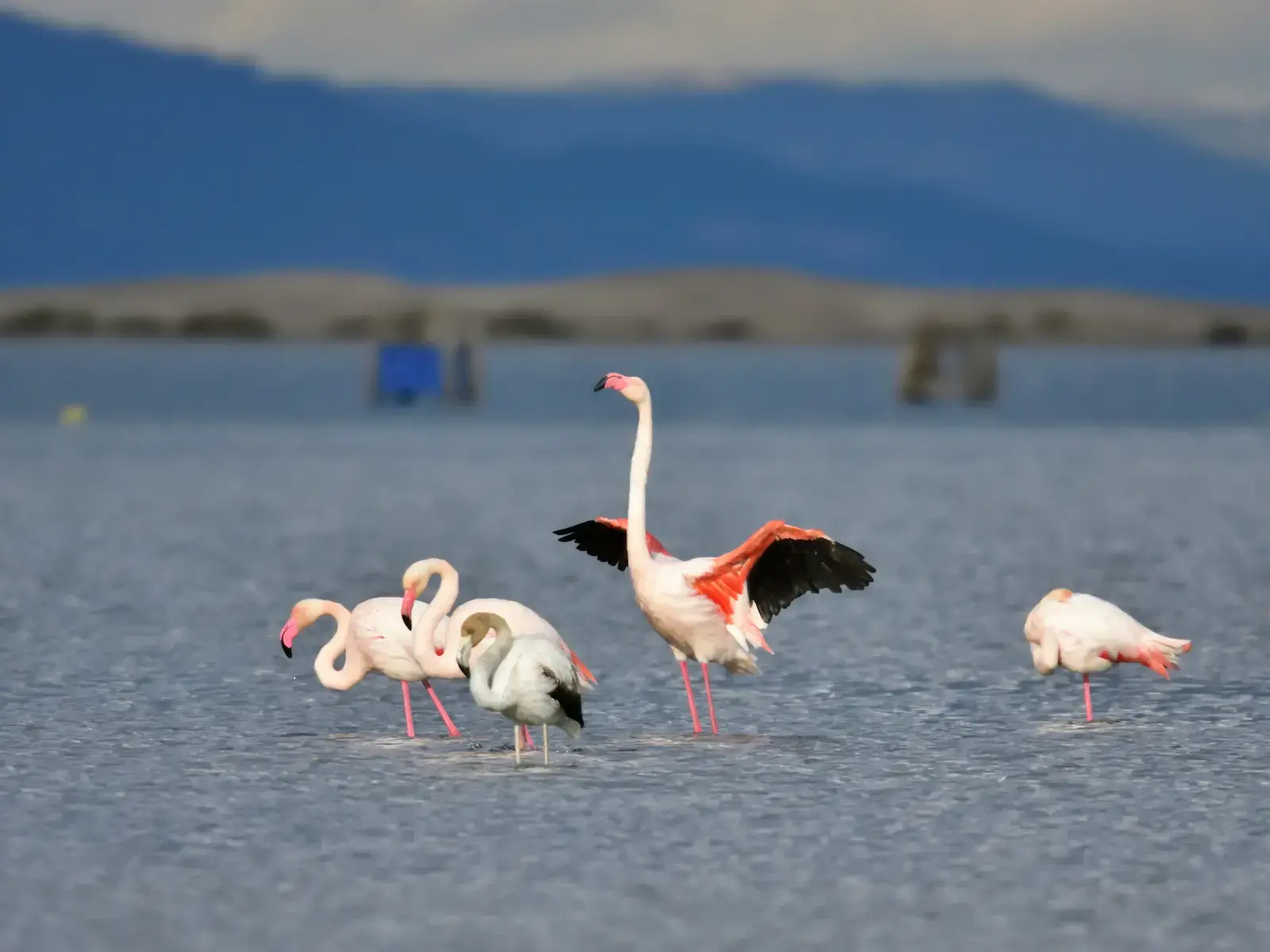
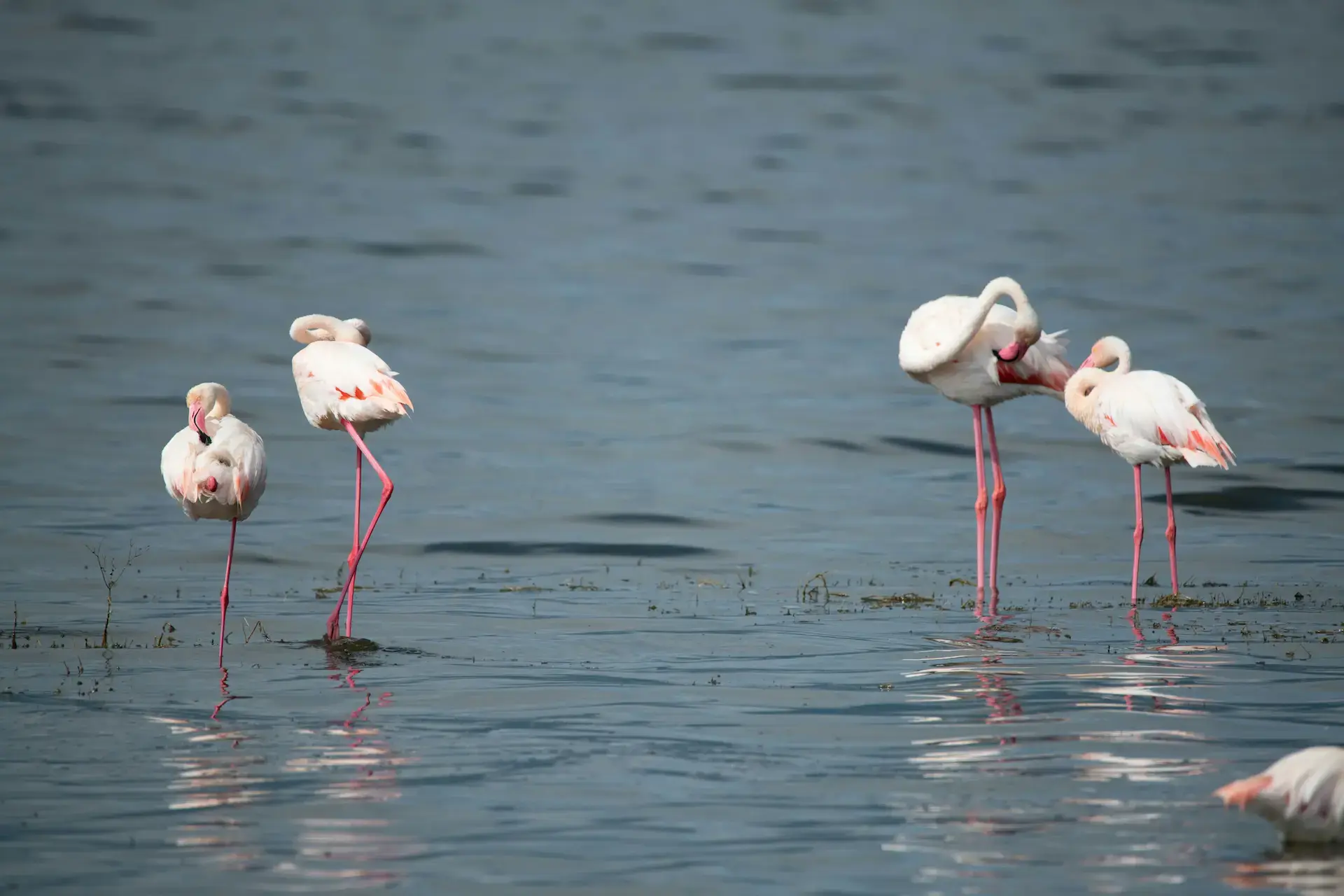
Flamingos in the Ebro Delta | Photo: Santiago Lacarta
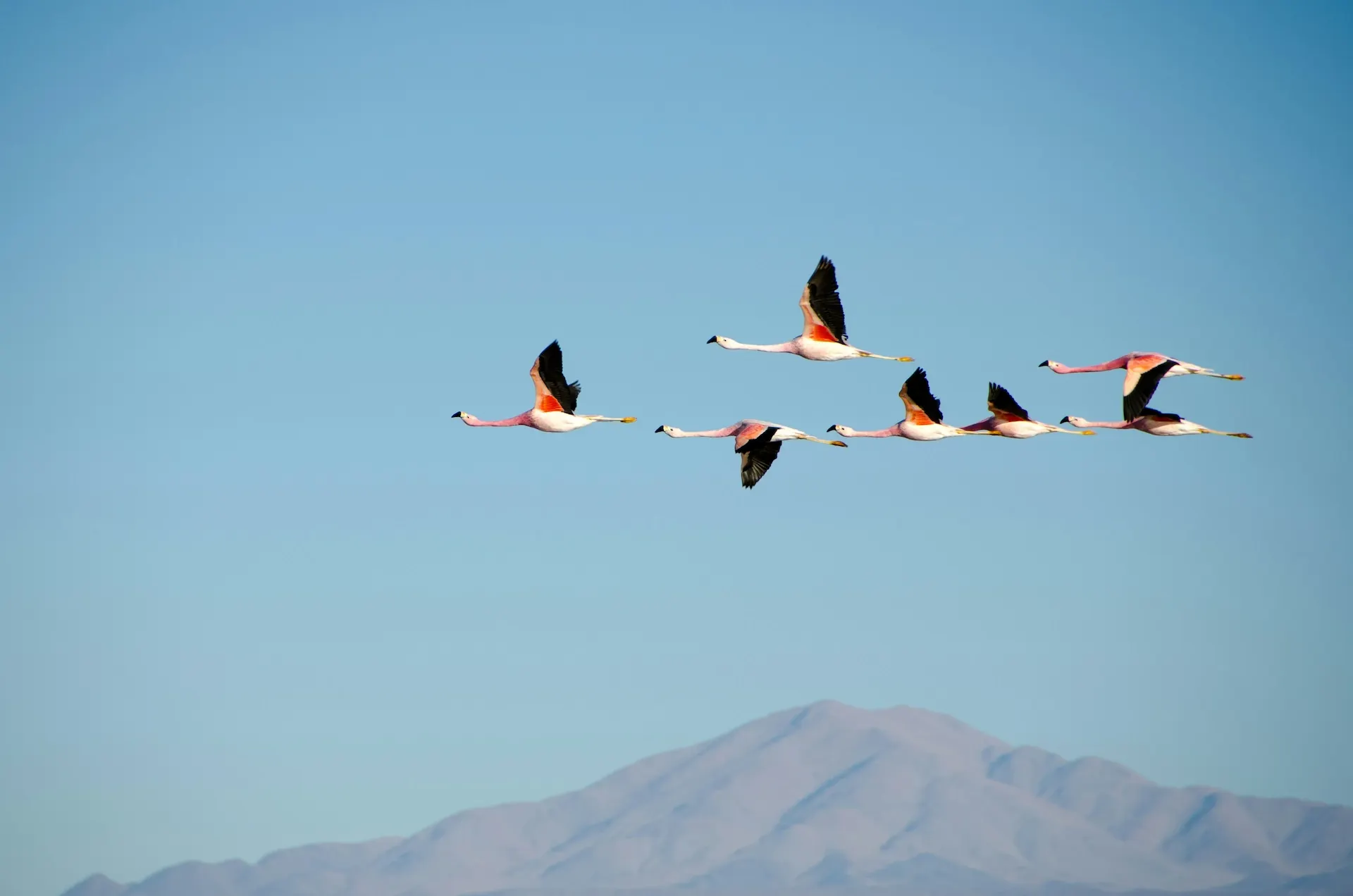
The greater flamingo is probably the bird most strongly associated with the Ebro Delta. Its tall silhouette, long legs and pink colouring make it one of the wetland’s most recognisable species, even for people trying birdwatching for the first time.
It is usually seen in shallow water, where it feeds by filtering small organisms, algae, crustaceans and other invertebrates. Although many people recognise flamingos by their colour, one of the most interesting things about them is the way they feed. Rather than pecking like many other waterbirds, they filter water and sediment through a specially adapted bill that separates food from the surrounding material.
On a birdwatching trip, flamingos are often a great introduction to the Delta. They are visible, elegant and easy to recognise, but they also encourage you to look more carefully, because many less conspicuous species can often be found moving around them and offer a deeper understanding of wetland life.
Common kingfisher, the wetland’s flash of blue
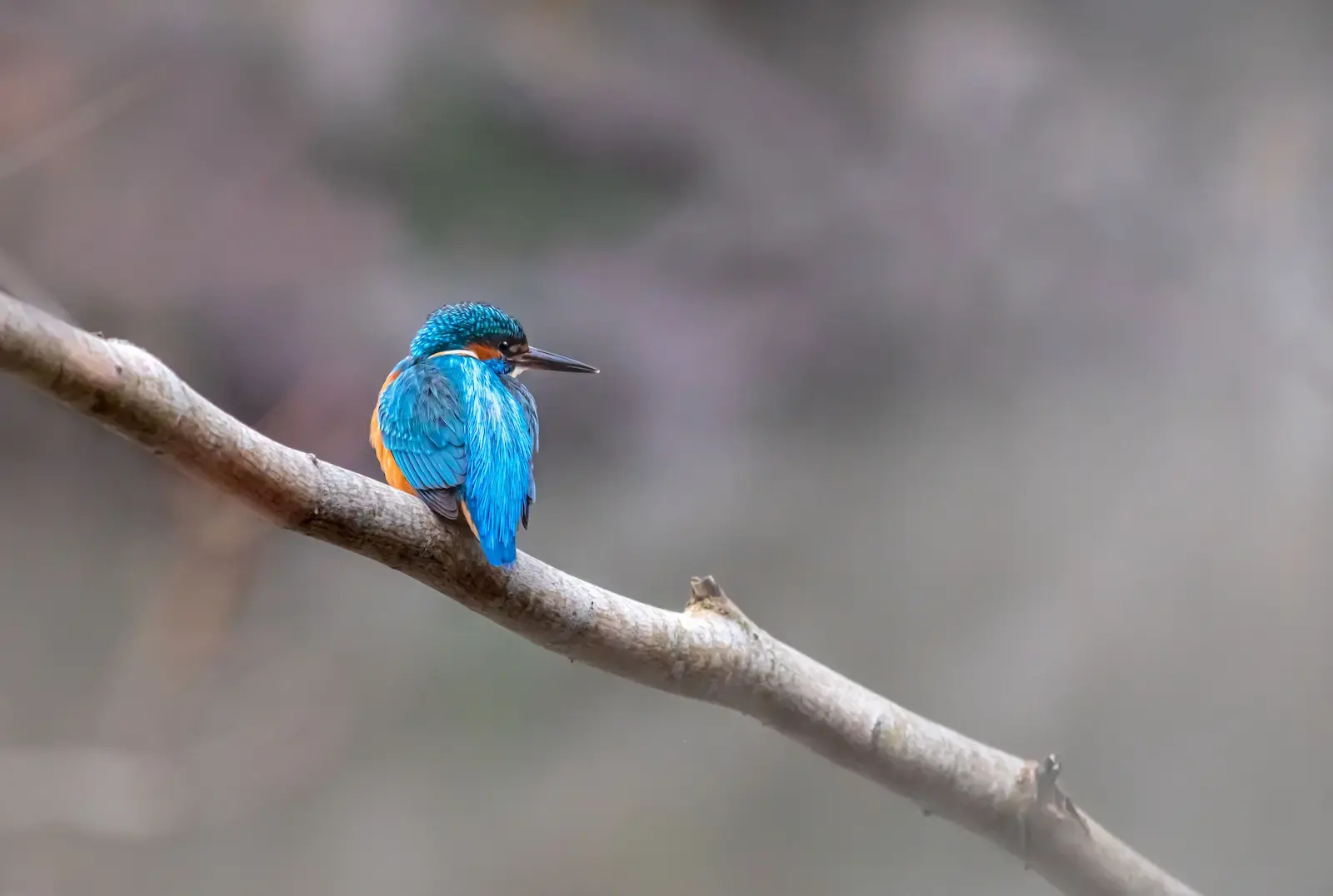
Common kingfisher | Photo: Erik Karits
The common kingfisher is one of those birds that can look almost unreal when it appears. Small, fast and intensely coloured, it is often seen around canals, lagoons, riverbanks and areas of calm water, where it can dive from a perch to catch fish.
Unlike flamingos, kingfishers are not always easy to spot. They are often detected through a sudden movement, a low flight over the water or a brief call before landing on a branch, reed or another perch overlooking the surface. That difficulty is part of their appeal, because seeing a kingfisher is rarely a long encounter. It is often a fleeting moment that rewards close attention to the landscape.
Its presence reflects the relationship between water, vegetation and small aquatic prey. Seeing one in the Ebro Delta is not just about spotting a beautiful bird, but about recognising a specialist with a compact body, a long bill and a diving technique perfectly adapted to fishing.
Herons, egrets and night herons among lagoons and rice fields
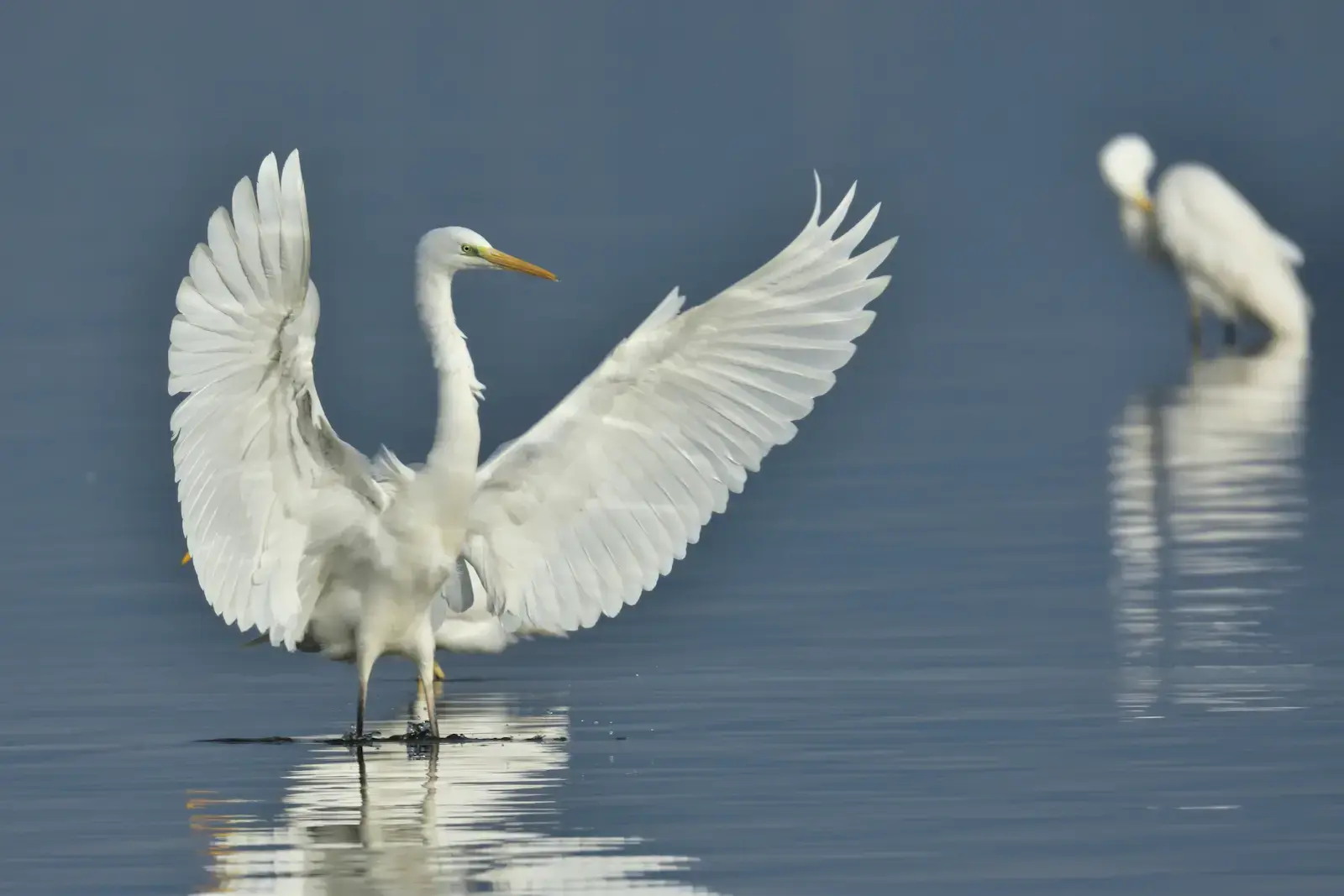
Great egret | Photo: Santiago Lacarta
Herons and egrets are an essential part of the Delta landscape. The grey heron, purple heron, little egret, great egret and black-crowned night heron can all appear around lagoons, canals, rice fields and areas of dense vegetation, although each uses the habitat in a slightly different way.
Some move slowly through shallow water, waiting for exactly the right moment to catch fish, amphibians or small invertebrates. Others remain almost completely still, camouflaged among reeds or waterside vegetation until a slight movement gives away their presence.
The grey heron is often seen as a large, patient figure along banks, in rice fields or beside open water, while egrets stand out because of their white plumage and light-footed movements through shallow areas. The little egret is smaller and more agile, while the more slender great egret can be confused at a distance with other white herons if size and posture are not observed carefully.
The purple heron, by contrast, is more closely associated with reedbeds and marsh vegetation. Its darker colouring and the way it moves through dense cover mean that it is not always as obvious as a white egret in the open. The black-crowned night heron can also go unnoticed because it is more discreet and often remains sheltered among trees, reeds or quiet areas for much of the day.
That is why watching herons in the Delta is about more than recognising silhouettes. It also means learning to scan the edges of the water, banks, rice fields and those places where vegetation seems to move for no apparent reason, because that is often where some of the most interesting species appear.
Swamphens, glossy ibises and other birds that bring the wetland to life
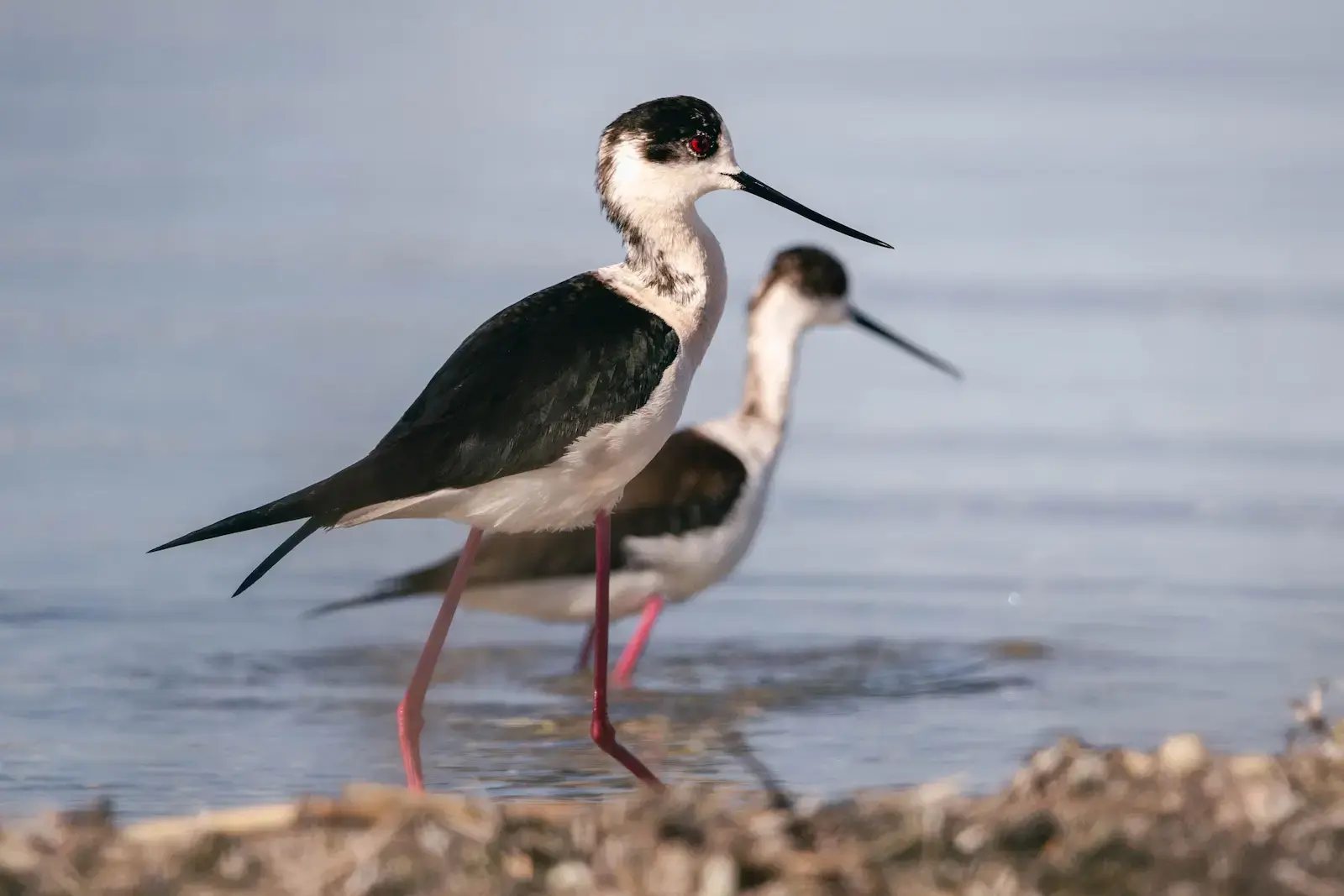
Black-winged stilts | Photo: Erik Karits
Beyond the best-known species, the Ebro Delta is also a fascinating place to observe wetland birds such as the western swamphen, glossy ibis, black-winged stilt and pied avocet. These species help reveal the richness of the landscape beyond the flamingos, appearing in flooded areas, rice fields, along shorelines and wherever shallow water creates feeding opportunities and shelter.
The western swamphen stands out for its deep blue plumage, red bill and distinctive way of moving through aquatic vegetation. It is strongly associated with wetlands containing reeds and dense cover, so it does not always show itself in the open, but when it does appear it is difficult to mistake.
The glossy ibis, meanwhile, is notable for its elegant silhouette and curved bill. It can be seen feeding in wetlands, rice fields and flooded areas, probing the mud for small invertebrates. Its dark plumage may look understated from a distance, but in good light it reveals very characteristic metallic reflections.
It is also worth looking out for black-winged stilts and pied avocets, two waders that seem perfectly designed for walking through shallow water. The stilt, with its extraordinarily long legs, and the avocet, with its upward-curving bill, are excellent examples of why mudflats, shorelines and shallow-water areas are so important for many of the Delta’s birds.
Western marsh harrier, a raptor over the reedbeds
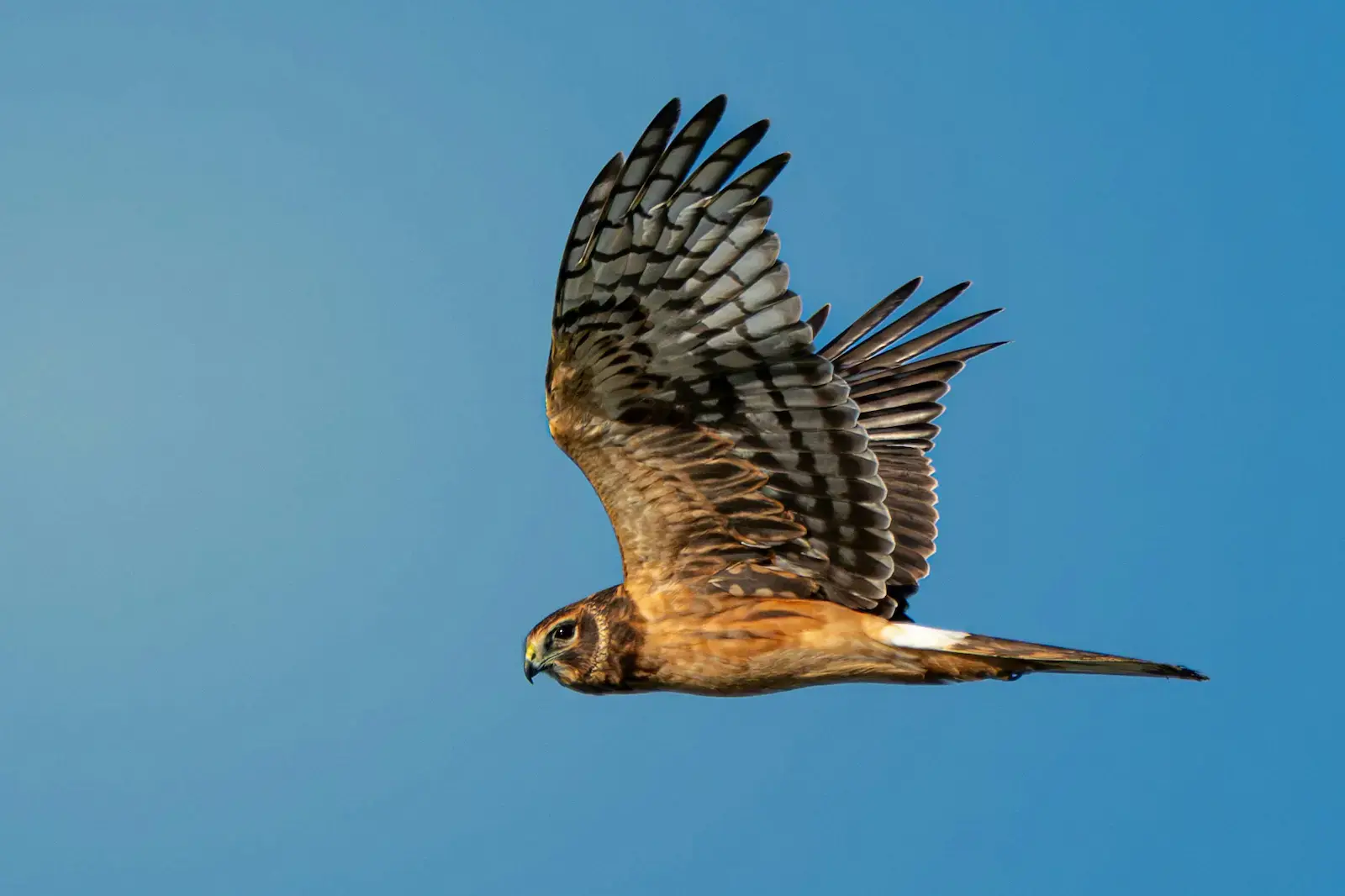
Western marsh harrier | Photo: Joseph Corl
Not all of the Ebro Delta’s birds are found in the water. The wetland is also home to raptors, and one of the most representative is the western marsh harrier.
This species is often seen flying low over reedbeds, lagoons and open areas, using a slow, attentive flight to search for food as it moves across the landscape. Its presence adds another layer to the Delta ecosystem, showing that the wetland supports not only waterbirds but also predators that depend on these habitats for hunting and breeding.
Watching a marsh harrier helps you see the Delta from a different perspective. While flamingos, herons and waders occupy the water and shoreline, this raptor moves across the landscape from above, linking vegetation, flooded fields and open spaces.
Seabirds and waders on beaches, bays and salt pans
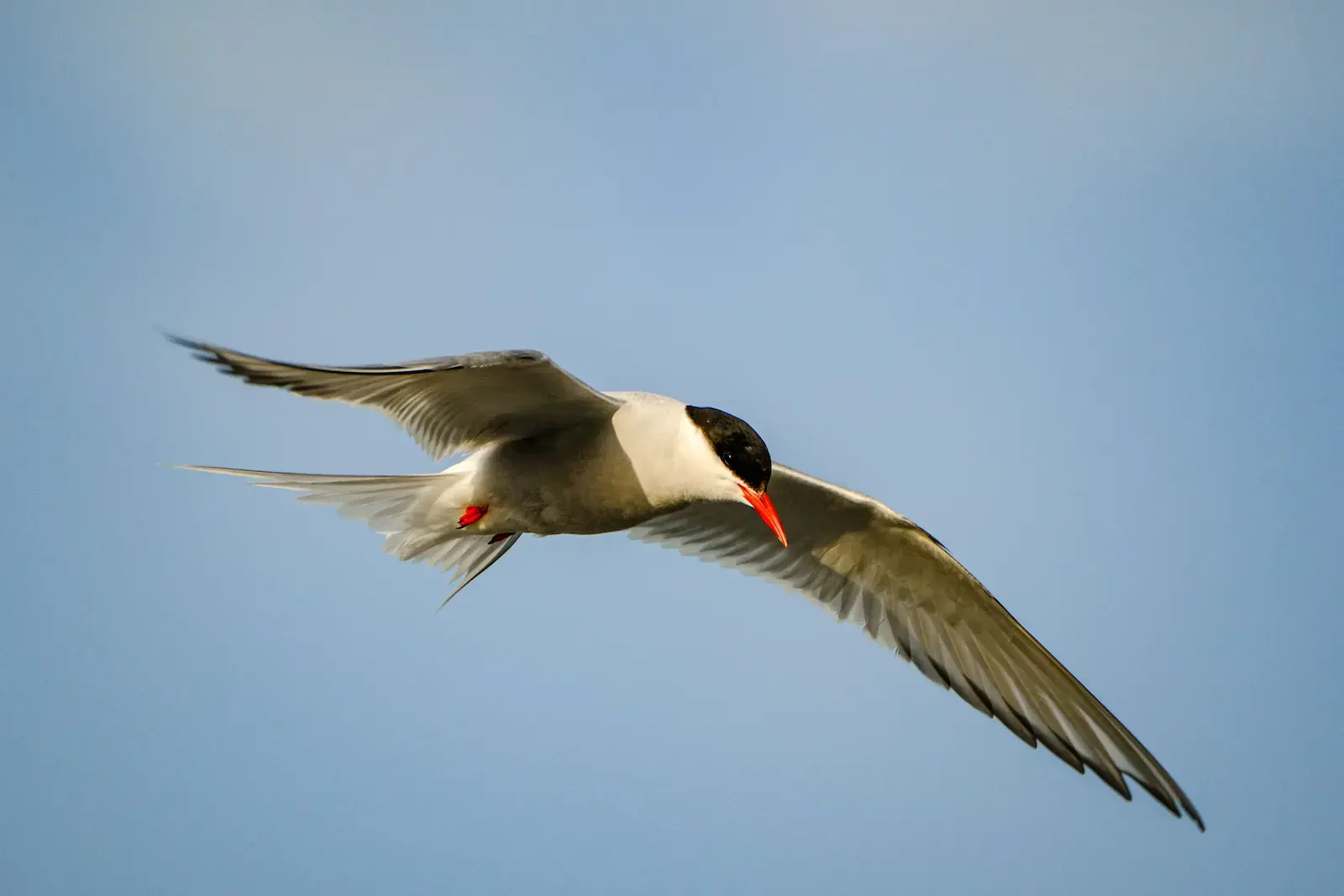
Common tern | Photo: Francesco Ungaro
The Ebro Delta also has an important marine dimension. Its beaches, bays, sandy spits and brackish areas are home to gulls, terns, waders and other birds associated with the coast.
One of the most interesting species is Audouin’s gull, one of the Mediterranean’s most emblematic seabirds. Terns, marsh terns, slender-billed gulls, sandpipers, redshanks and other birds can also be seen using open areas, mud, sand and shallow water.
These species are a reminder that the Delta is not simply an inland wetland. It is a meeting point between the river and the sea, and that transition creates highly valuable areas for birds that rest, feed or pass through during migration.
What birds can you see at different times of year?
The Ebro Delta changes considerably throughout the year, so the birdwatching experience is never exactly the same. Some species can be seen in several seasons, while others become more prominent during migration, wintering or the breeding season.
In winter, the Delta can be particularly interesting for waterbirds, wildfowl and species arriving from colder regions to spend the season in Mediterranean wetlands. During the spring and autumn migration periods, the chances of seeing birds in transit increase, particularly waders and other species that use the Delta as a resting and feeding area.
In spring and summer, many birds are closely linked to breeding activity in lagoons, reedbeds, rice fields and coastal areas. It is a particularly rewarding time of year, but also an especially sensitive one, so birds should always be observed from paths, viewpoints and designated areas.
One of the most appealing things about the Delta is that there is no single way to experience it. Each season changes the landscape, the water, the rice fields and the species that can be seen.
Tips for a birdwatching trip in the Ebro Delta
You do not need to be an expert to enjoy the birds of the Ebro Delta, although taking your time certainly helps. Binoculars, a bird guide or an identification app can make a big difference, particularly with small species, waders or birds seen at a distance.
It is also worth visiting early in the morning or late in the afternoon, when the light is softer and many birds are more active. In open wetlands, distance matters. Some species may appear close, but repeated disturbance can cause them to leave feeding, resting or breeding areas.
The best approach is to use hides, viewpoints and marked routes. This makes it possible to enjoy birdwatching without entering sensitive areas or getting too close to the birds. In places such as the Delta, watching well does not mean getting closer; it means learning to observe better.
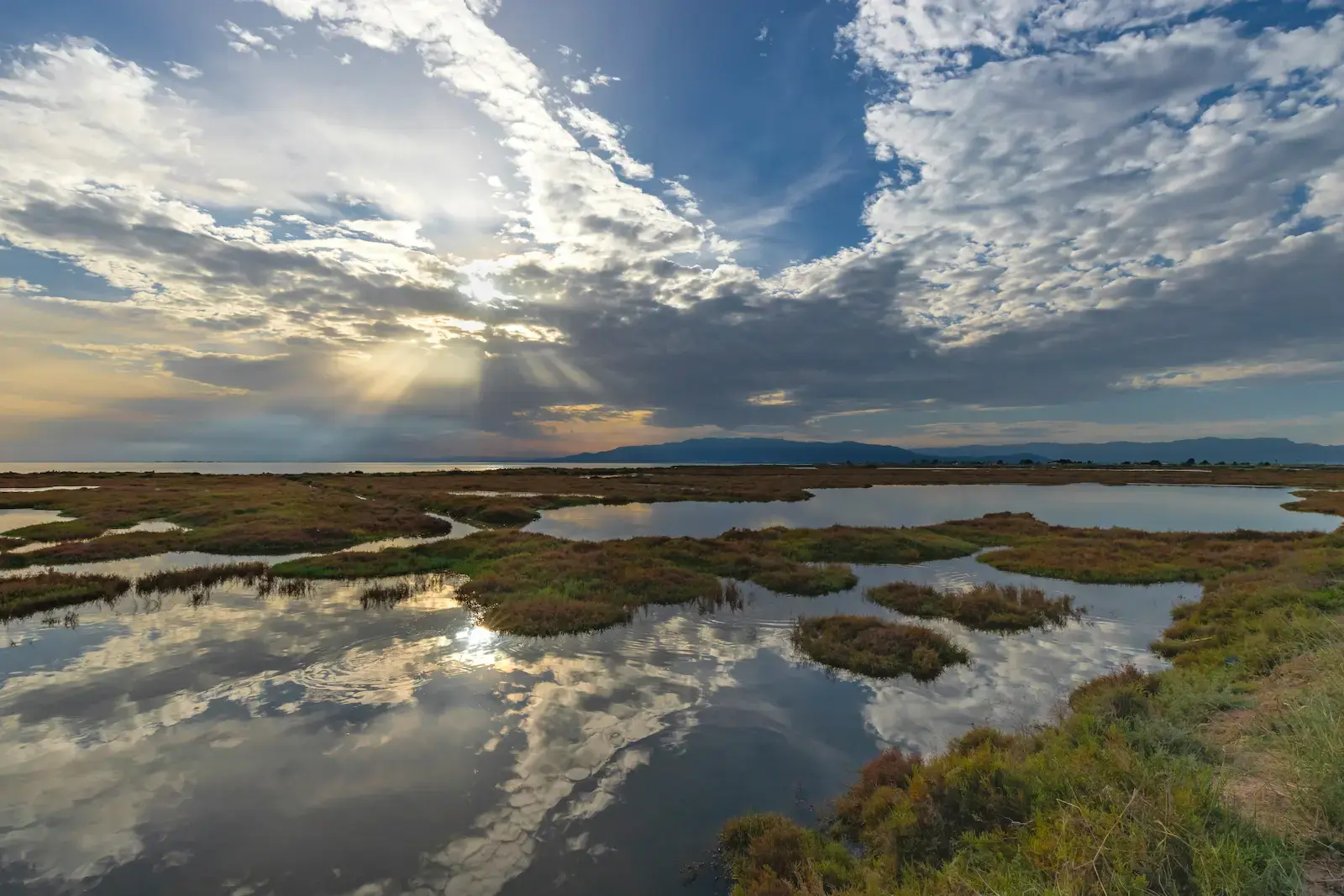
Ebro Delta | Photo: Jordi Vich Navarro
A different way to discover the Ebro Delta
The Ebro Delta is much more than a beautiful landscape. It is a living environment where every bird tells us something about the water, vegetation, seasons and relationship between the river and the sea.
Flamingos reflect the calm of shallow waters, while kingfishers reveal the hidden life of canals and banks. Herons are a lesson in patience and precision, swamphens and glossy ibises show the richness of wetlands, and seabirds remind us that the Delta also belongs to the Mediterranean.
That is why a birdwatching trip in the Ebro Delta is not simply about ticking species off a list. It is about learning to read an ecosystem in which every movement, every flight and every silence forms part of a much bigger story.
At NatSnap, we continue to create guides to help you discover animals, destinations and nature experiences from a responsible perspective, without promising sightings and without putting at risk the wildlife we want to observe.
Frequently asked questions about the birds of the Ebro Delta
What birds can you see in the Ebro Delta?
In the Ebro Delta you can see flamingos, kingfishers, herons, egrets, swamphens, glossy ibises, black-winged stilts, avocets, marsh harriers, gulls, terns, waders and many other waterbirds, seabirds and migratory species.
Is the Ebro Delta a good birdwatching destination?
Yes. The Ebro Delta is one of Spain’s leading birdwatching destinations because of the variety of habitats it contains and the number of waterbirds, waders, seabirds, migratory species and winter visitors that can be observed there.
What is the best time of year to see birds in the Ebro Delta?
The Ebro Delta can be visited throughout the year, but each season offers something different. Winter is interesting for waterbirds and winter visitors, spring and autumn are ideal for migration, and spring and summer are rewarding for observing many species associated with breeding activity and the wetland’s seasonal cycle.
Where can you see flamingos in the Ebro Delta?
Flamingos are usually found in shallow-water areas, lagoons, salt pans and bays across the Delta. The recommended approach is to watch them from viewpoints, hides or designated observation points without approaching their resting or feeding areas.
Can you see common kingfishers in the Ebro Delta?
Yes. Common kingfishers can be seen around calm water, canals, lagoons and vegetated banks. They are small and fast, so patience helps, as does watching carefully for low flights over the water.
Do you need a guide to go birdwatching in the Ebro Delta?
No, a guide is not essential, but it can greatly enrich the experience. A specialist guide can help identify species, interpret behaviour and choose suitable areas according to the season, while always respecting the rules of the natural area.